Crossroads at Mezőcsát

下载的 PDF 是图像副本。如需可选中文本及更好的辅助技术支持,请使用打印功能。

Crossroads at Mezőcsát

揭开一个失落的文明

正在加载考古记录……

正在收集古代记录

跳转到主内容
Crossroads at Mezőcsát
文明焦点

Crossroads at Mezőcsát

Four Late Chalcolithic–Early Bronze Age individuals linking Baden landscapes to steppe echoes

3330 CE - 3000 BCE
Mezőcsát-Hörcsögös, Hungary (Carpathian Basin)
滚动开始
Chapter I

剧情

了解 Crossroads at Mezőcsát 文化

Archaeological and genomic data from Mezőcsát-Hörcsögös (3330–3000 BCE) reveal a small, intriguing assemblage showing local Baden roots alongside steppe-associated signals. Limited samples mean conclusions are preliminary but illuminate population dynamics in Bronze Age Hungary.

Time Period

3330–3000 BCE

Region

Mezőcsát-Hörcsögös, Hungary (Carpathian Basin)

Common Y-DNA

G (observed in 2 of 4 samples)

Common mtDNA

W, K, H-c, J (each represented)

Chapter II

时间线

这种文化历史上的关键时刻

3200 BCE

Mezőcsát burials and mixing

Archaeological and genetic traces at Mezőcsát-Hörcsögös indicate Baden cultural continuity with incoming steppe-related ancestry in a small sample of individuals.

Chapter III

Origins & Emergence

Along the flat, winter-burnt plains of the Tisza River valley, archaeological data indicates a living landscape reshaped between the Late Chalcolithic and the Early Bronze Age. At Mezőcsát-Hörcsögös (northern Hungary), burial contexts and material culture show continuity with the Baden horizon while also bearing traces of incoming forms and practices often associated with early steppe-derived groups. The time window for these four individuals spans roughly 3330–3000 BCE, a period when mobility intensified across the Carpathian Basin.

Limited evidence suggests this community occupied a cultural crossroads rather than a homogeneous population: pottery styles, burial goods, and settlement patterns retain Baden characteristics, yet subtle changes in artifact assemblages hint at external contacts. Genomic data — though based on only four samples — detect admixture patterns consistent with increasing steppe-related ancestry in the region at this time. Archaeological layers at Mezőcsát and nearby sites record exchange networks along river courses that could have carried people, animals, and ideas.

Because the sample count is small, these origins should be framed as provisional: the available genetic signals are evocative but not yet definitive. Future finds will clarify whether Mezőcsát represents a local Baden group absorbing steppe newcomers, a mixed frontier community, or episodic mobility into an otherwise stable population.

  • Site: Mezőcsát-Hörcsögös, Hungary; date range 3330–3000 BCE
  • Cultural context: Late Chalcolithic to Early Bronze Age, Baden horizon with external influences
  • Evidence suggests local continuity with incoming steppe-linked contacts
Chapter IV

Daily Life & Society

Archaeological traces at Mezőcsát evoke a textured everyday life of mixed rhythms: fields of spelt and barley punctuated by herds moved seasonally, homes built of timber and daub, and ritual practices tied to the landscape’s riverine edges. Finds from contemporary Baden contexts in the Carpathian Basin indicate households organized around both crop cultivation and caprine/cattle management, while ornaments and pottery styles reflect local traditions punctuated by novel motifs — likely the visual imprint of interpersonal networks.

Grave goods associated with these burials are modest: pottery, simple beadwork, and occasionally metal items that signal the rising importance of bronze-related technologies. Social differentiation appears present but muted; mortuary variability suggests lineage- or household-based status distinctions rather than sharply hierarchical elites.

Mobility would have shaped daily life: exchange of raw materials like copper and seasonal movement for pasture or trade may have brought visitors and new ideas. Archaeological data indicates that river corridors such as the Tisza served as arteries for exchange, allowing both objects and people — including those carrying steppe-associated ancestries — to enter Baden landscapes. As with genetic interpretations, conclusions about social organization remain tentative given the small skeletal sample.

  • Economy: mixed farming with domesticated herds and cultivation of cereals
  • Social structure: modest burial wealth, household-based differentiation
Chapter V

Genetic Profile

Genome-wide data from four individuals at Mezőcsát-Hörcsögös provide a tantalizing — but preliminary — window into population dynamics at the Baden–Yamnaya frontier. Two male individuals carry Y-chromosome haplogroup G, a lineage often associated with Neolithic and local Carpathian farmers rather than classic steppe male lineages (such as R1a/R1b). This persistence of G suggests that male lines from earlier Neolithic or local Chalcolithic communities continued alongside incoming influences.

Mitochondrial diversity among the four includes haplogroups W, K, H-c, and J. This mixture of maternal lineages is consistent with a heterogeneous maternal pool and mirrors broader European mtDNA diversity during the Late Chalcolithic–Early Bronze Age. The presence of haplogroup W, less common in some earlier farmer groups, may reflect maternal lineages moving along long-distance networks.

Genome-wide ancestry profiles indicate detectable steppe-related components in some individuals, pointing to admixture between local Baden-descended groups and populations carrying western steppe ancestry. However, with only four samples, statements about admixture proportions, timing, and directionality remain provisional. Archaeological data indicates connectivity across river corridors, and the genetic signals align with a scenario of episodic mobility and intermarriage rather than wholesale population replacement. In sum: the genetic evidence illuminates contact and mixture at Mezőcsát, but further sampling is essential to move from suggestion to robust inference.

  • Two males with Y-DNA G: continuity of local male lineages
  • mtDNA diversity (W, K, H-c, J) indicates heterogeneous maternal ancestry
Chapter VI

Legacy & Modern Connections

The Mezőcsát assemblage captures a moment when the Carpathian Basin braided old and new threads — local Baden lifeways braided with steppe-derived lines — shaping the genetic and cultural tapestry of later Central Europe. Archaeological data indicates that the region’s networks would continue to funnel people and technologies, contributing to demographic shifts in subsequent Bronze Age horizons.
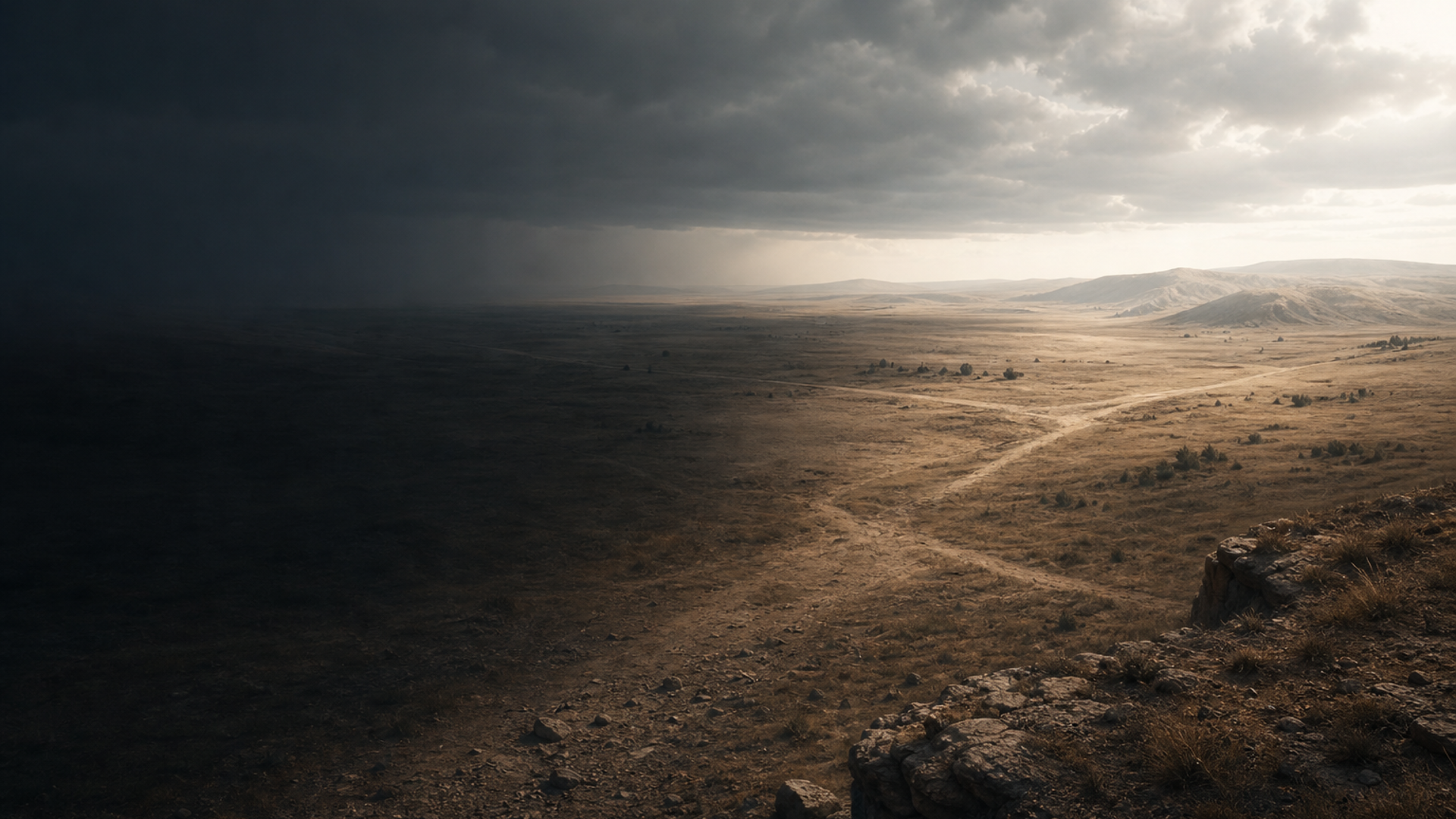

Genetically, the persistence of Y-haplogroup G alongside steppe-related ancestry in genome-wide data signals that cultural change did not necessarily erase local lineages. Limited samples mean modern connections are speculative, but these individuals point to complex ancestries that feed into the genetic heritage of later populations across Hungary and neighboring regions. As more ancient genomes from the Carpathian Basin are recovered, Mezőcsát will stand as an early, cinematic glimpse of contact, exchange, and the layered origins of modern European diversity.

  • Shows admixture pathways that influenced later Bronze Age populations
  • Suggests local male lineages persisted during early influxes of steppe ancestry
AI 电源

AI 助手

就 Crossroads at Mezőcsát 文化提问

AI 助手 由DNAGENICS公司制作

解锁此特性
Ask questions about the Crossroads at Mezőcsát culture. Our AI assistant can explain genetic findings, historical context, archaeological evidence, and modern connections.
AI 样本分析

Crossroads at Mezőcsát 文化是人类历史中值得了解的一章……

遗传分析揭示了与早期种群的联系,同时显示了独特的适应和文化创新的证据。 古代DNA样本提供了对迁徙模式、社会结构以及古代种群之间的生物关系的深刻见解。

这是人工智能分析的预览。 解锁全AI 助手, 以探索关于:

  • 遗传组成和祖先
  • 移徙模式和起源
  • 日常生活和文化习俗
  • 现代遗传遗产

探索更古老的文化

揭开古代世界文明的故事

使用优惠码 可减免 35% • 11月12日 到期




