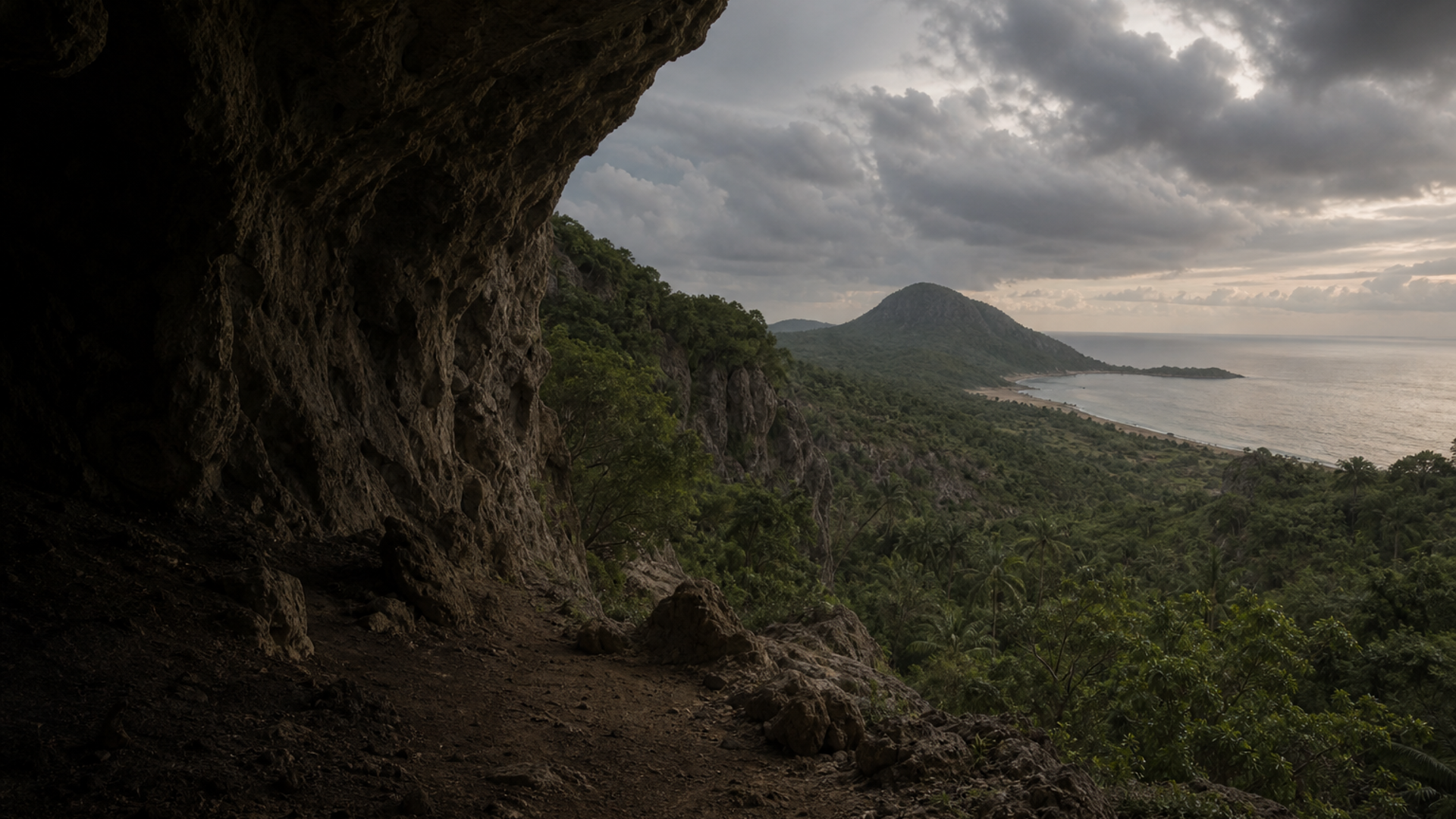
Cueva Juana Ceramic People

下载的 PDF 是图像副本。如需可选中文本及更好的辅助技术支持,请使用打印功能。

Cueva Juana Ceramic People

揭开一个失落的文明

正在加载考古记录……

正在收集古代记录

跳转到主内容
Cueva Juana Ceramic People
文明焦点

Cueva Juana Ceramic People

Samana's Ceramic-period islanders revealed through pottery, shells and ancient DNA

652 CE - 994 CE
Samaná Peninsula, Dominican Republic
滚动开始
Chapter I

剧情

了解 Cueva Juana Ceramic People 文化

Archaeological remains from Cueva Juana (Samaná, Dominican Republic) dated 652–994 CE link ceramic traditions to Indigenous American maternal and paternal lineages. Limited samples (n=4) show haplogroups D1, A, C and Q, offering a preliminary genomic window into pre-contact Caribbean lifeways.

Time Period

652–994 CE

Region

Samaná Peninsula, Dominican Republic

Common Y-DNA

Q (observed)

Common mtDNA

D1 (2), A (1), C (1)

Chapter II

时间线

这种文化历史上的关键时刻

652 CE

Earliest dated occupation samples

Earliest radiocarbon-dated materials from Cueva Juana place human activity at or before 652 CE within the Ceramic Period.

994 CE

Latest dated occupation in current dataset

The most recent dates associated with the current set of samples reach 994 CE, framing late Ceramic-period presence.

Chapter III

Origins & Emergence

Along the sheltered coves of the Samaná Peninsula, archaeological data indicates a vibrant Ceramic-period occupation at Cueva Juana between the mid-7th and late 10th centuries CE. Pottery fragments, tempering styles and shell-rich midden deposits place these people within the broader Ceramic horizon of the Greater Antilles — a sweeping cultural phase marked by the intensive use of fired ceramics, coastal foraging, and established settlement nodes.

The ceramic assemblage from Cueva Juana ties the site to island-wide networks of craft and exchange. Limited evidence suggests stylistic affinities to other Dominican and Hispaniolan ceramic traditions, implying a shared vocabulary of shapes and decorations rather than isolated invention. The site’s coastal location implies a maritime-oriented settlement economy that exploited fish, mollusks and perhaps cultivated plants introduced earlier in the Ceramic Period.

Archaeological interpretation must remain cautious: preservation biases, episodic excavation, and a small genetic sample size complicate broad claims. Still, the material culture at Cueva Juana frames a people who lived in close relationship with the sea and with regional Ceramic-era traditions that spanned the Greater Antilles and connected to mainland South American influences.

  • Site: Cueva Juana, Samaná Peninsula, Dominican Republic
  • Dates: Radiocarbon and contextual dating place occupation between 652 and 994 CE
  • Material culture: Ceramic assemblage and shell middens link to Greater Antilles traditions
Chapter IV

Daily Life & Society

Archaeological remains evoke a cinematic daily world: hands shaping clay by the shore, smoke rising from hearths, and the steady work of fishers and foragers. The density of shell midden deposits at Cueva Juana indicates repeated food processing on coastal resources — oysters, gastropods and fish bones are typical traces of a diet rooted in the sea. Charred botanical remains and tool fragments suggest limited horticulture and intensive use of local plants, though preservation is uneven.

Pottery forms hint at household activities: cooking, storage and serving. The presence of similarly styled ceramics across nearby sites points to shared craft knowledge and possibly seasonal mobility between coastal camps and inland gardens. Social organization is difficult to reconstruct in detail; there is little direct evidence for hierarchical structures at Cueva Juana. Instead, the archaeological picture supports a resilient, adaptive coastal community embedded in regional exchange networks.

Archaeological interpretations remain provisional: excavations at Cueva Juana are limited in scope, and many behavioral inferences come from comparative ceramic and ecofact patterns elsewhere in the Caribbean.

  • Economy: Coastal foraging, fishing, and possible small-scale horticulture
  • Material life: Household ceramics indicate cooking and storage practices
Chapter V

Genetic Profile

Four individuals from Cueva Juana, dated between 652 and 994 CE, provide a narrow but informative genetic snapshot. Maternal lineages consist of D1 (two samples), A (one), and C (one) — haplogroups that are well-documented among Indigenous peoples of the Americas. The single observed paternal lineage is Q, a Y-chromosome haplogroup commonly associated with Native American populations. Collectively, these markers are consistent with longstanding Indigenous ancestry in the pre-contact Caribbean.

These genetic signals resonate with archaeological expectations: maternal haplogroups D1, A and C trace deep continental origins associated with the initial peopling of the Americas via Beringia and subsequent southward population movements. Their presence at Cueva Juana supports a narrative of ancestral continuity in the Greater Antilles during the Ceramic Period and suggests that at least some island communities retained predominantly Indigenous genetic lineages into the later first millennium CE.

Crucially, the sample count is small (n=4). Limited evidence suggests patterns but cannot resolve finer questions — for example, the degree of genetic continuity with earlier Archaic inhabitants, the presence of substructure across Hispaniola, or low-level admixture events. Future, larger-scale sampling and contextualized radiocarbon dating are required to move from preliminary inference to robust population history.

  • Maternal haplogroups: D1 (2), A (1), C (1) — Indigenous American lineages
  • Paternal haplogroup: Q (1) — consistent with Native American ancestry; conclusions are preliminary (n=4)
Chapter VI

Legacy & Modern Connections

Cueva Juana’s ceramics and genomes form part of a living archive that links contemporary Caribbean peoples to their pre-contact past. The mtDNA and Y-DNA signals underscore ancestral threads that persist in the region, even as centuries of migration and colonial disruption altered demographic landscapes. For communities and descendants, these findings can illuminate ancestral geographies and support cultural heritage initiatives.

For scientists, the Cueva Juana data offer a cautionary lesson: small sample sizes can spark hypotheses but are not definitive. Responsible communication emphasizes uncertainty, supports collaborative research with local stakeholders, and prioritizes expanded sampling under ethical, community-informed frameworks. In the end, the evocative fragments of pottery and the faint signatures of ancient genomes together help reconstruct the rhythms of life on the Samaná coast and contribute to a broader understanding of Ceramic-period societies in the Caribbean.

  • Modern relevance: Genetic lineages connect pre-contact inhabitants to Indigenous American ancestry
  • Research imperative: Expanded, community-engaged sampling is needed to clarify population history
AI 电源

AI 助手

就 Cueva Juana Ceramic People 文化提问

AI 助手 由DNAGENICS公司制作

解锁此特性
Ask questions about the Cueva Juana Ceramic People culture. Our AI assistant can explain genetic findings, historical context, archaeological evidence, and modern connections.
AI 样本分析

Cueva Juana Ceramic People 文化是人类历史中值得了解的一章……

遗传分析揭示了与早期种群的联系,同时显示了独特的适应和文化创新的证据。 古代DNA样本提供了对迁徙模式、社会结构以及古代种群之间的生物关系的深刻见解。

这是人工智能分析的预览。 解锁全AI 助手, 以探索关于:

  • 遗传组成和祖先
  • 移徙模式和起源
  • 日常生活和文化习俗
  • 现代遗传遗产

探索更古老的文化

揭开古代世界文明的故事

使用优惠码 可减免 35% • 11月12日 到期