Dali Mid-Late Bronze: Steppe Echoes

下载的 PDF 是图像副本。如需可选中文本及更好的辅助技术支持,请使用打印功能。

Dali Mid-Late Bronze: Steppe Echoes

揭开一个失落的文明

正在加载考古记录……

正在收集古代记录

跳转到主内容
Dali Mid-Late Bronze: Steppe Echoes
文明焦点

Dali Mid-Late Bronze: Steppe Echoes

Three genomes from Byan Zherek illuminate a windy, mobile frontier of Bronze Age Kazakhstan.

1900 CE - 1298 BCE
Dali (Byan Zherek), eastern Kazakhstan
滚动开始
Chapter I

剧情

了解 Dali Mid-Late Bronze: Steppe Echoes 文化

Preliminary genomic and archaeological data (3 samples, 1900–1298 BCE) from Dali (Byan Zherek, Kazakhstan) suggest steppe-linked ancestry with mixed maternal lineages. Limited evidence points to mobile pastoral lifeways typical of the Mid–Late Bronze Age steppe.

Time Period

1900–1298 BCE

Region

Dali (Byan Zherek), eastern Kazakhstan

Common Y-DNA

R (1/3)

Common mtDNA

T, U, J (each 1/3)

Chapter II

时间线

这种文化历史上的关键时刻

1900 BCE

Earliest sampled activity at Dali

Radiocarbon-linked contexts place sampled individuals near 1900 BCE, during the Mid–Late Bronze Age expansion on the Kazakh steppe.

1298 BCE

Latest sampled activity

The youngest of the three genomes dates to around 1298 BCE, indicating continued use of the Byan Zherek locale through the Late Bronze Age.

Chapter III

Origins & Emergence

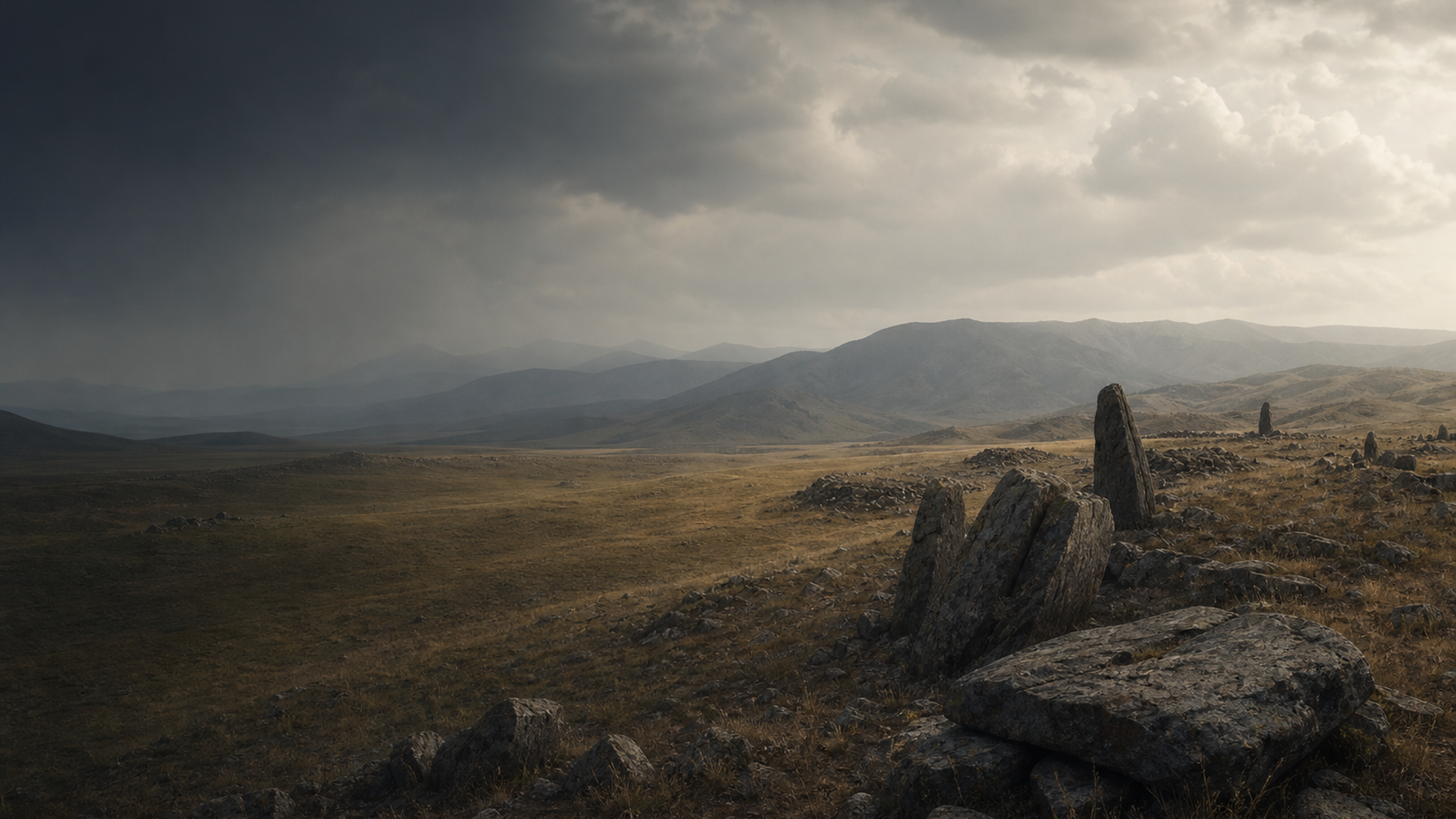
Dali sits on the eastern spur of the Kazakh steppe, where grasslands roll toward distant ranges. Archaeological data indicates human use of this landscape during the Mid–Late Bronze Age; the radiocarbon span associated with the sampled individuals is roughly 1900–1298 BCE. The site of Byan Zherek preserves burial contexts and material signatures that archaeological interpretation associates with mobile pastoral communities that dotted the steppe corridor.

Cinematic as the wind-swept horizon, this frontier was a crossroads: livestock, seasonal movement, and exchange knit distant valleys and riverine routes. Limited evidence suggests cultural practices at Dali share affinities with broader Central Steppe Bronze Age traditions, but local variation is clear in mortuary detail and artifact styles. Given only three ancient genomes from Byan Zherek, conclusions about origins remain preliminary. Genetic hints align with expected steppe-related ancestry, but the small sample count makes it essential to treat population-level inferences with caution—these individuals illuminate possibilities, not certainties. Further excavation and DNA sampling are needed to define lasting demographic shifts and the exact timing of cultural emergence at Dali.

  • Site: Byan Zherek, Dali (eastern spur of Kazakhstan)
  • Date range from samples: 1900–1298 BCE
  • Evidence suggests mobile pastoral lifeways and regional ties
Chapter IV

Daily Life & Society

Archaeological interpretation paints a picture of resilient, mobile lifeways tuned to the steppe’s rhythms. Herds of sheep, goats, and horses likely formed the economic heart of communities; seasonal movement between winter and summer pastures would have structured social calendars. Material remains in Mid–Late Bronze Age Dali contexts often include tools for animal husbandry, simple portable dwellings inferred from ephemeral post-holes, and personal ornaments—objects that traveled with people as much as they signaled identity.

Burial practice at Byan Zherek suggests social differentiation: grave goods and body positioning vary, implying roles or statuses within small kin groups. The landscape’s openness encouraged long-distance contacts—exchange of metal, crafted goods, and possibly marriage ties that stitched together families across hundreds of kilometers. That said, archaeological data from Dali remains limited; many reconstructions rely on regional analogies. The lived reality likely combined stoic endurance against the elements with ceremonies and social acts that reinforced group bonds, memory, and mobility.

  • Likely pastoral economy focused on herding and horse use
  • Burials show variation that may reflect social differentiation
Chapter V

Genetic Profile

Three ancient genomes from Byan Zherek provide a narrow but illuminating genetic window. The dataset includes one individual carrying Y-chromosome haplogroup R, a lineage frequently observed across Bronze Age steppe contexts, and three mitochondrial haplotypes—T, U, and J—each present in one sample. The presence of Y-haplogroup R is consistent with broader patterns of steppe male lineages during the Bronze Age, while the maternal diversity (T, U, J) mirrors the mixed maternal ancestries documented across Central Eurasia.

Because the sample count is low (<10), any population-level statements must be tentative. Limited evidence suggests these individuals likely carried a component of steppe-related ancestry common in contemporaneous Bronze Age populations, but the small N cannot resolve fine-scale admixture events or migration pathways. Archaeogenetic signals at Dali are compatible with models of mobility and inter-regional marriage: male-mediated spread of certain lineages combined with diverse maternal inputs through local and long-distance female movements. Future sampling—both in number and geographic breadth—will be critical to test whether the patterns seen at Byan Zherek reflect local community structure or broader demographic processes across the eastern steppe.

  • Y-DNA: R detected in one individual, aligning with steppe male lineages
  • mtDNA: T, U, J present (each in one individual), indicating maternal diversity
Chapter VI

Legacy & Modern Connections

The genetic and archaeological traces from Dali whisper into the present: steppe migrations of the Bronze Age helped shape the genetic landscape of Central Asia and beyond. While the three genomes from Byan Zherek are too few to map direct descent lines, they contribute to a growing mosaic showing continuity of certain steppe haplogroups and diverse maternal inputs through millennia.

Culturally, the pastoral strategies and social networks practiced here resonate with historical patterns that later shaped Iron Age and historical nomadic polities. For modern populations of Kazakhstan and neighboring regions, these ancient threads are part of a layered ancestry—shared signals of mobility, exchange, and adaptation to open landscapes. Because the dataset is preliminary, however, claims of direct ancestry should be made cautiously; the Dali samples are promising beacons for future research rather than definitive endpoints.

  • Contributes to evidence of Bronze Age steppe genetic continuity in Central Asia
  • Preliminary data underline mobility, exchange, and mixed maternal lineages
AI 电源

AI 助手

就 Dali Mid-Late Bronze: Steppe Echoes 文化提问

AI 助手 由DNAGENICS公司制作

解锁此特性
Ask questions about the Dali Mid-Late Bronze: Steppe Echoes culture. Our AI assistant can explain genetic findings, historical context, archaeological evidence, and modern connections.
AI 样本分析

Dali Mid-Late Bronze: Steppe Echoes 文化是人类历史中值得了解的一章……

遗传分析揭示了与早期种群的联系,同时显示了独特的适应和文化创新的证据。 古代DNA样本提供了对迁徙模式、社会结构以及古代种群之间的生物关系的深刻见解。

这是人工智能分析的预览。 解锁全AI 助手, 以探索关于:

  • 遗传组成和祖先
  • 移徙模式和起源
  • 日常生活和文化习俗
  • 现代遗传遗产

探索更古老的文化

揭开古代世界文明的故事

使用优惠码 可减免 35% • 11月12日 到期