Danube–Tisza Avars: Voices from the Mounds

下载的 PDF 是图像副本。如需可选中文本及更好的辅助技术支持,请使用打印功能。

Danube–Tisza Avars: Voices from the Mounds

揭开一个失落的文明

正在加载考古记录……

正在收集古代记录

跳转到主内容
Danube–Tisza Avars: Voices from the Mounds
文明焦点

Danube–Tisza Avars: Voices from the Mounds

12 Early Avar burials (600–670 CE) show a strong Y‑DNA N signal and East Eurasian maternal lineages in central Hungary.

600 CE - 670 CE
Danube–Tisza Interfluve, Hungary
滚动开始
Chapter I

剧情

了解 Danube–Tisza Avars: Voices from the Mounds 文化

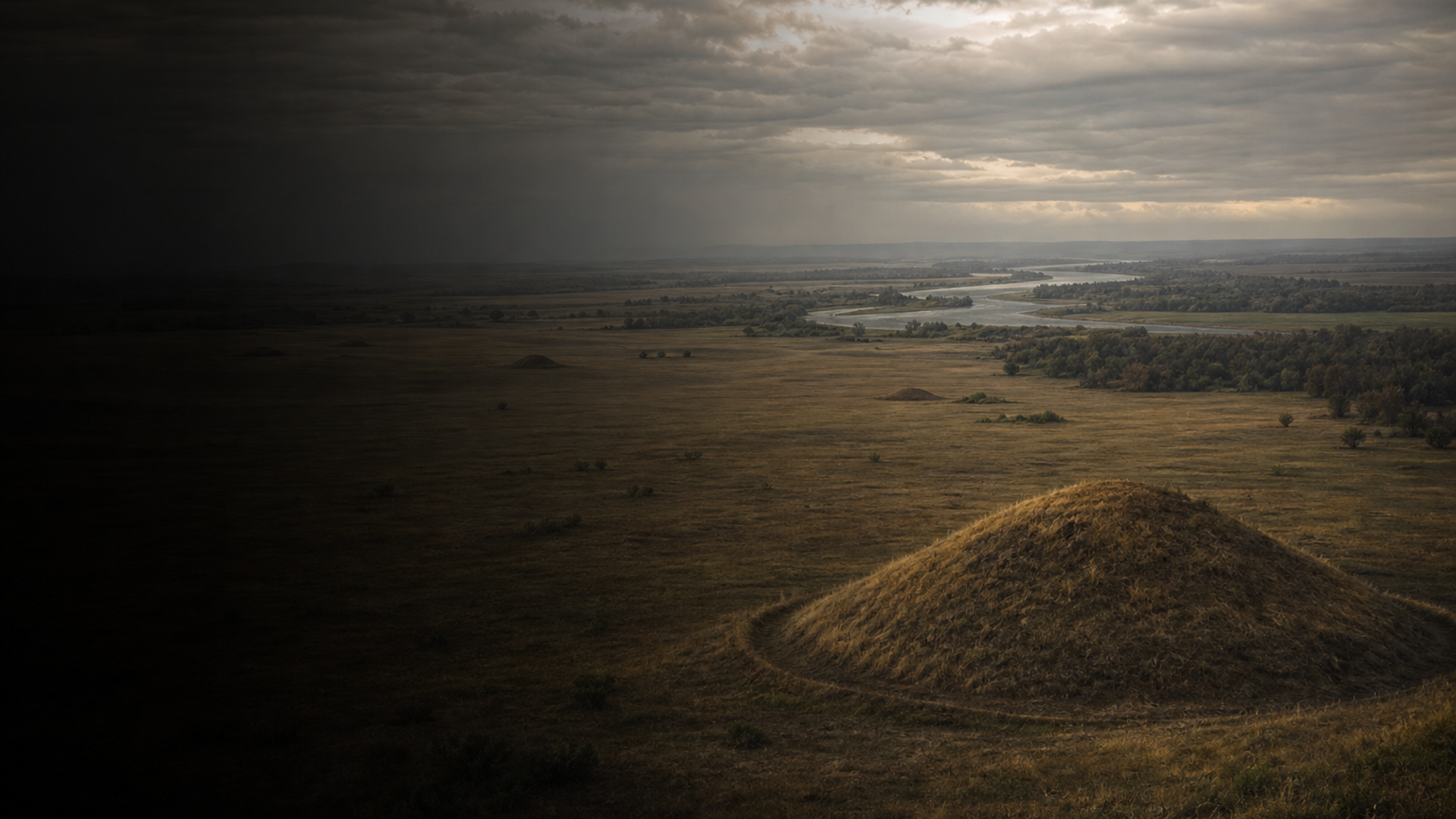
Archaeogenetic and archaeological study of 12 burials from the Danube–Tisza Interfluve (600–670 CE) — sites including Kunbábony and Albertirsa — reveals predominant Y‑haplogroup N and East Eurasian mtDNA (G, C, D), suggesting steppe-linked male ancestry with local admixture.

Time Period

600–670 CE

Region

Danube–Tisza Interfluve, Hungary

Common Y-DNA

N (9 of 12)

Common mtDNA

G, C, D, U, H (singletons each)

Chapter II

时间线

这种文化历史上的关键时刻

600 CE

Early Avar burials established in Danube–Tisza

Archaeological cemeteries in the Danube–Tisza Interfluve (e.g., Kunbábony, Albertirsa) date to 600–670 CE and record Early Avar funerary traditions and genetic inputs from the steppe.

Chapter III

Origins & Emergence

The decades after 560 CE were a time of movement and reconfiguration across the Pannonian Basin. Archaeological data indicates that by 600–670 CE a distinct Avar presence had become visible in the Danube–Tisza Interfluve through clustered cemeteries and grave goods. Sites in this dataset — Albertirsa site 22, Kunbábony, Kunpeszér, Petőfiszállás, Kecskemét-Sallai út, Szalkszentmárton–Táborállás and Budapest‑Csepel‑Kavicsbánya — preserve funerary landscapes that archaeologists interpret as belonging to an Early Avar society with steppe cultural affinities.

Material culture and burial architectures suggest links to steppe traditions that likely arrived with mobile groups from the Eurasian plains. Limited evidence suggests these newcomers did not constitute a monolithic people but rather a constellation of lineages and alliances. The predominance of Y‑haplogroup N in this small sample links the male lineages to broader north‑eastern Eurasian and Ural–Siberian genetic profiles often associated with steppe movements, while the archaeological record shows adaptation to local Carpathian Basin environments.

Because the sample set is modest (12 individuals) and restricted to a single subregion, conclusions about origin and population turnover remain tentative. Archaeological continuity in some features indicates rapid social integration and local reconfiguration rather than simple replacement.

  • Avar burials concentrated in Danube–Tisza Interfluve (600–670 CE)
  • Material culture indicates steppe-derived funerary practices adapted locally
  • Genetic and archaeological signals point to incoming male lineages with local admixture
Chapter IV

Daily Life & Society

Archaeological context from the excavated cemeteries paints a picture of a mobile, hierarchical society negotiating new landscapes. Burials in this region vary in richness — some contain weapons, harness fragments, and personal ornaments typical of steppe-associated elites elsewhere, while others are modest. Such variability suggests social differentiation: mounted warrior elites and broader household groups coexisting within the same cultural horizon.

Settlement data in the Danube–Tisza zone for this period are still incomplete, but regional surveys indicate seasonal mobility, exploitation of riverine and steppe resources, and a mix of pastoral and agrarian practices. Craft production and metalwork styles show both steppe affinities and adoption of local Carpathian and Byzantine forms. The cinematic image of horsemen crossing open plains is grounded in tangible traces — bridles, bits, and burial arrangements — but archaeological evidence also points to village life, farming, and long-term occupation across river floodplains.

Interactions with neighboring polities — Byzantine frontier communities, Slavic groups, and residual local populations — created a mosaic of daily experiences: trade, raiding, alliance-making, and cultural exchange shaped households as much as elite tombs.

Given the limited number of burials with full context in this dataset, reconstructions of everyday life remain provisional and best seen as complementary to broader regional studies.

  • Social hierarchy visible in variability of grave goods
  • Mixed pastoral–agronomic lifeways with mobility and local settlement
Chapter V

Genetic Profile

The genetic signal from these 12 Early Avar burials is striking in its male-line uniformity: nine of the tested individuals carry Y‑haplogroup N. This haplogroup has strong associations with northeastern Eurasian and Uralic-speaking populations in the broader literature, and in the context of the Early Avar period it is consistent with a steppe-derived male lineage entering the Carpathian Basin.

Mitochondrial diversity in the same sample set is more mixed: singletons of mtDNA G, C, and D — lineages typically found in East Eurasia — appear alongside European lineages such as U and H. This pattern (predominant Y‑N with a mixture of East and West Eurasian maternal haplogroups) is suggestive of a male-biased migration or elite dominance where incoming men mixed with diverse local or incoming women.

Archaeogenomic interpretations should be cautious. While the haplogroup pattern supports steppe connections, full-genome ancestry proportions are not provided here; archaeological integration and admixture with local Carpathian populations are likely. With only 12 individuals, statistical confidence is limited — sample size prevents precise estimation of population-level frequencies or the timing of admixture events. Nevertheless, the concordance between archaeological indicators of steppe cultural practices and the genetic evidence for northeastern Eurasian paternal ancestry provides a compelling, if preliminary, narrative of migration, social structure, and local blending during the Early Avar era.

  • High frequency of Y‑haplogroup N (9/12) suggests steppe-linked male ancestry
  • mtDNA includes East Eurasian (G, C, D) and European (U, H) lineages, indicating mixed maternal origins
Chapter VI

Legacy & Modern Connections

The Danube–Tisza Early Avar genetic snapshot contributes to a larger story of population dynamics in Early Medieval Europe: it documents a tangible east–west linkage that reshaped regional ancestry and social landscapes. The presence of Y‑N in central Hungary during the 7th century demonstrates that steppe-derived paternal lineages reached deep into the Carpathian Basin and participated in the formation of medieval communities.

For modern populations, the legacy is complex. Some haplogroups observed in these burials persist in pockets across Eurasia, but centuries of migration and admixture mean that direct lines are blurred. These data highlight how migration, elite structures, and local fusion created the genetic patchwork of later medieval and modern Central Europe. Ongoing and larger-scale ancient DNA studies are needed to map how these Early Avar signals dispersed or diluted through subsequent centuries.

This collection of burials — evocative, sparse, and scientifically informative — underscores the power of combining grave goods, landscape archaeology, and DNA to illuminate human stories that span continents and generations.
  • Demonstrates steppe-derived paternal input into the Carpathian Basin
  • Highlights need for larger genetic samples to trace long-term impacts
AI 电源

AI 助手

就 Danube–Tisza Avars: Voices from the Mounds 文化提问

AI 助手 由DNAGENICS公司制作

解锁此特性
Ask questions about the Danube–Tisza Avars: Voices from the Mounds culture. Our AI assistant can explain genetic findings, historical context, archaeological evidence, and modern connections.

AI 样本分析

Danube–Tisza Avars: Voices from the Mounds 文化是人类历史中值得了解的一章……

遗传分析揭示了与早期种群的联系,同时显示了独特的适应和文化创新的证据。 古代DNA样本提供了对迁徙模式、社会结构以及古代种群之间的生物关系的深刻见解。

这是人工智能分析的预览。 解锁全AI 助手, 以探索关于:

  • 遗传组成和祖先
  • 移徙模式和起源
  • 日常生活和文化习俗
  • 现代遗传遗产

探索更古老的文化

揭开古代世界文明的故事

使用优惠码 可减免 35% • 11月12日 到期




