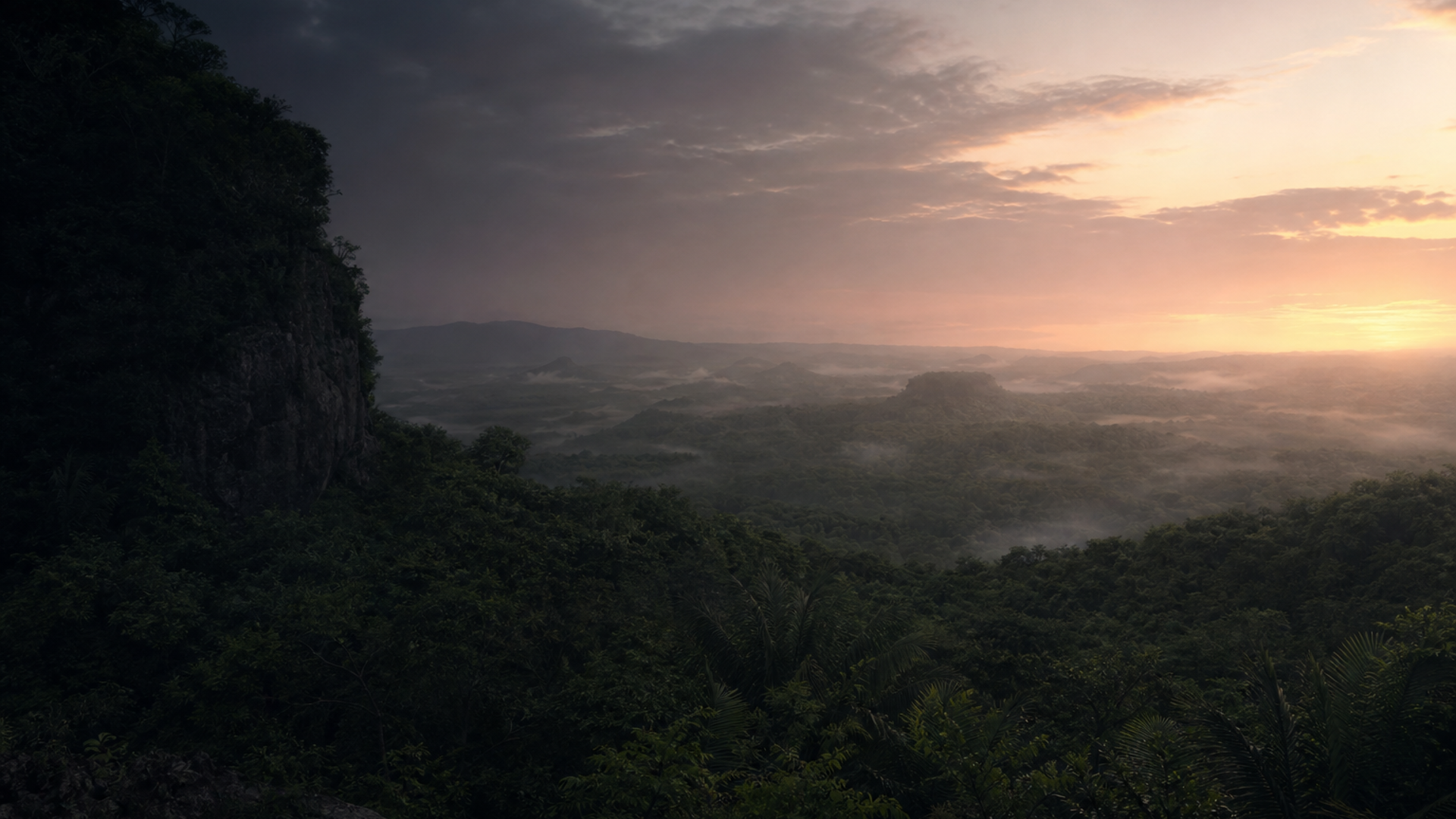
Dawn in the Belizean Lowlands

下载的 PDF 是图像副本。如需可选中文本及更好的辅助技术支持,请使用打印功能。

跳转到主内容
文明焦点

Dawn in the Belizean Lowlands

A preliminary portrait of life and genes ca. 3319–2701 BCE from two Belizean sites

3319 CE - 2701 BCE
Belize (Lowland Maya region)

剧情

Archaeological and ancient-DNA evidence from Mayahak Cab Pek and Saki Tzul (3319–2701 BCE) reveal a small, diverse maternal gene pool and a forager-to-incipient-sedentary lifeway in southern Belize. Conclusions remain tentative: only six samples analyzed.

Time Period

3319–2701 BCE

Region

Belize (Lowland Maya region)

Common Y-DNA

Not reported / insufficient data

Common mtDNA

R, C1c, A2q, C5b, A

时间线

2500 BCE

Seasonal riverine occupations documented

Archaeological and radiocarbon evidence suggests repeated seasonal use of riverine and wetland resources at Mayahak Cab Pek and Saki Tzul.

Origins & Emergence

The people represented by the Belize_4900BP assemblage lived during a dramatic interval in the southern Maya lowlands, between 3319 and 2701 BCE. Archaeological deposits at Mayahak Cab Pek and Saki Tzul preserve shell middens, chipped stone, and ephemeral hearths that suggest seasonal exploitation of rivers, wetlands and forest edges. Limited evidence indicates a mosaic economy: specialized foraging for riverine resources combined with early plant management rather than fully developed agriculture.

Radiocarbon dates from the two sites cluster within a few centuries, hinting at a regional pulse of habitation or repeated short-term occupations. The material culture is modest: formal bifaces and flake tools, shell-bead fragments, and isolated groundstone hints at emerging plant processing. Stratigraphic context and associated ecofacts tie these lifeways to fluctuating coastal and inland environments at the end of the early Holocene.

Archaeological data indicate continuity with earlier Archaic traditions in Belize and with wider lowland adaptation strategies, but the small sample size and uneven preservation require caution. This is a portrait of people adapting to a rich, water-dominated landscape—an ecological and cultural crucible whose full story still awaits more excavation and dating.

  • Occupations dated 3319–2701 BCE at Mayahak Cab Pek and Saki Tzul
  • Evidence for riverine/estuarine foraging and emerging plant use
  • Connections with broader Archaic lowland traditions, but limited samples

Daily Life & Society

Imagine dawn over braided rivers and seasonally flooded forests: canoe traffic, smoke from small hearths, and the steady rhythm of shell and fish processing. At Mayahak Cab Pek and Saki Tzul, discarded shells and fish bone form dense midden lenses, while small hearths and stone tools point to household-level processing rather than large communal architecture.

Social organization inferred from the sites is modest in scale. The archaeological footprint lacks clear monumental structures; instead, ephemeral hearths, tool scatters, and burials (where preserved) suggest small, mobile kin groups or seasonally aggregated communities. Use-wear on stone implements indicates woodworking, hide processing and plant cutting. Occasional groundstone suggests some plant grinding—possibly wild seeds or managed cultivars—foreshadowing later agricultural intensification in the region.

Mortuary evidence is limited but evocative: careful placement of individuals and associated shell ornaments hints at emerging social identities. Nonetheless, the fragmentary record and small sample counts mean reconstructions of social complexity remain provisional.

  • Small-scale hearths, shell middens, and lithic scatters indicate household activities
  • Limited groundstone suggests early plant processing; no large permanent settlements yet

Genetic Profile

Ancient DNA from six individuals (Mayahak Cab Pek and Saki Tzul) reveals a diverse maternal lineage landscape. Reported mitochondrial haplogroups include R (1), C1c (1), A2q (1), C5b (1), and A (1). These haplogroups are part of broad Native American mtDNA diversity: haplogroups A and C lineages are common across the Americas, while R and its sublineages are less frequent and suggest more complex maternal affinities. The absence of robust Y‑chromosome data prevents confident statements about paternal lineages for this small series.

Because the dataset comprises only six samples, any population-level inference must be cautious. The presence of multiple distinct mtDNA lineages in a small assemblage hints at genetic heterogeneity—possibly reflecting intergroup networks, mobility, or long-standing regional diversity rather than a single, homogeneous group. Archaeological indicators of mobility (seasonal camps, resource-specific sites) are consistent with a genetic picture shaped by gene flow across riverine corridors.

Genetic signals tentatively align with models of early Holocene population structure in Mesoamerica where matrilineal diversity coexisted with local cultural continuity. However, low sample count (<10) means these patterns are preliminary and should be tested with additional samples, nuclear genomes, and more comprehensive spatial sampling.

  • mtDNA haplogroups: R, C1c, A2q, C5b, A—suggesting maternal diversity
  • Only six samples; lack of Y-DNA prevents conclusions on paternal ancestry

Legacy & Modern Connections

The biological and cultural traces from these sites form an early chapter in the longue durée of Belizean prehistory. The maternal lineages observed—especially A and C subclades—are part of genetic threads that persist across millennia in Mesoamerica and beyond. While direct genealogical links between these individuals and specific modern groups cannot be drawn from such limited data, the results are consistent with deep continuity of maternal lineages in the region.

Culturally, practices of riverine foraging and small-scale plant management represented at Mayahak Cab Pek and Saki Tzul set ecological and social foundations later communities built upon. Modern coastal and riverine traditions in Belize echo these deep-time lifeways, though they have been reshaped by centuries of change. The Belize_4900BP dataset is a tantalizing glimpse: evocative, cinematic, and scientifically modest—inviting further excavation, more aDNA sampling, and collaborative research with descendant communities to illuminate long-term regional histories.

  • mtDNA lineages align with long-term maternal continuity in Mesoamerica
  • Preliminary dataset underscores need for more sampling and community collaboration

AI 助手

AI 助手 由DNAGENICS公司制作

解锁此特性
Ask questions about the Dawn in the Belizean Lowlands culture. Our AI assistant can explain genetic findings, historical context, archaeological evidence, and modern connections.
AI 样本分析

Dawn in the Belizean Lowlands 文化是人类历史中值得了解的一章……

遗传分析揭示了与早期种群的联系,同时显示了独特的适应和文化创新的证据。 古代DNA样本提供了对迁徙模式、社会结构以及古代种群之间的生物关系的深刻见解。

这是人工智能分析的预览。 解锁全AI 助手, 以探索关于:

  • 遗传组成和祖先
  • 移徙模式和起源
  • 日常生活和文化习俗
  • 现代遗传遗产
使用优惠码 可减免 25% • 11月13日 到期