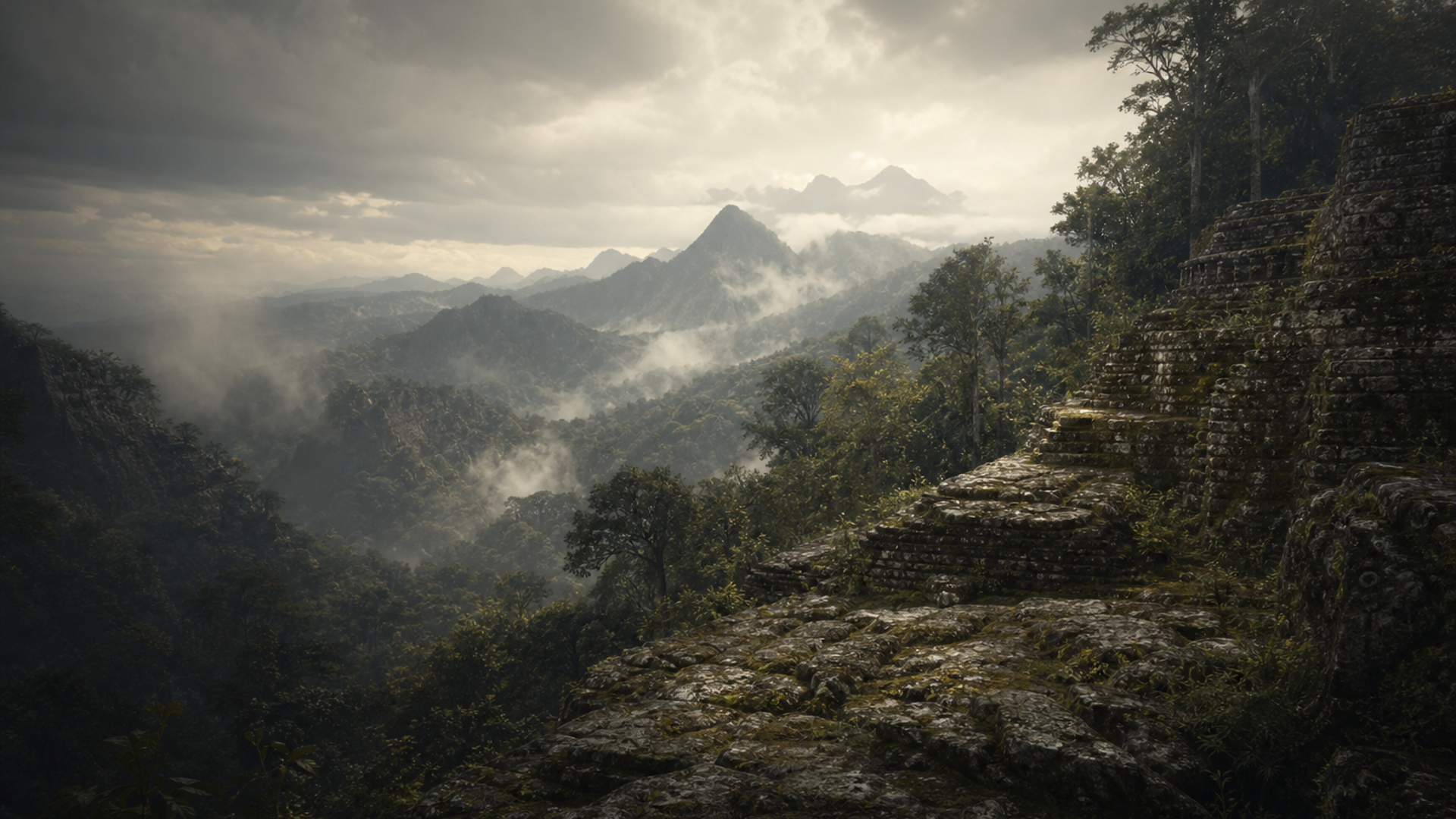
Echoes from the Maya Mountains

下载的 PDF 是图像副本。如需可选中文本及更好的辅助技术支持,请使用打印功能。

Echoes from the Maya Mountains

揭开一个失落的文明

正在加载考古记录……

正在收集古代记录

跳转到主内容
Echoes from the Maya Mountains
文明焦点

Echoes from the Maya Mountains

A lone ancient genome from Mayahak Cab Pek illuminates Archaic Belize

2561 CE - 23444400 BCE
Toledo District, Belize (Maya Mountains)
滚动开始
Chapter I

剧情

了解 Echoes from the Maya Mountains 文化

Single ancient DNA sample (2561–2344 BCE) from Mayahak Cab Pek, Toledo District, Belize. Archaeological context links this Archaic-period individual to deep Native American maternal lineages (mtDNA A). Findings are preliminary but point to long-term human presence in the Maya Mountains.

Time Period

2561–2344 BCE (c. 4400 BP)

Region

Toledo District, Belize (Maya Mountains)

Common Y-DNA

Unknown (no Y-DNA reported)

Common mtDNA

A (1 sample)

Chapter II

时间线

这种文化历史上的关键时刻

2500 BCE

Radiocarbon date of individual

Direct date places the individual at c. 2561–2344 BCE, within Belize's Archaic Period; interpretation is preliminary given one sample.

Chapter III

Origins & Emergence

The solitary individual from Mayahak Cab Pek (Bladen Nature Reserve, Toledo District) dates to 2561–2344 BCE, situating this genome within the later Archaic Period of Belize. Archaeological data indicates episodic human presence across the Maya Mountains during the mid-3rd millennium BCE—groups exploiting riverine corridors, seasonally abundant forest resources, and nascent plant management. Limited evidence suggests these populations were part of broad coastal-to-interior networks that moved people, stone tools, and botanical knowledge.

The landscape around Mayahak Cab Pek is dramatic: karst topography, sinkholes, and dense broadleaf forest create ecological niches that would have supported diverse wild root crops, tree fruits, and game. While material traces from this particular site are sparse, regional surveys and radiocarbon sequences show a mosaic of mobile camps and longer-use shelters in the Toledo uplands. The genetic result provides a rare human voice from this horizon, but caution is essential: with a single sample, inferences about origins and population structure remain provisional. Future samples will test whether this individual represents local continuity, a small regional cluster, or a wider lowland population connected to early Mesoamerican adaptations.

  • Sample dated 2561–2344 BCE from Mayahak Cab Pek, Maya Mountains.
  • Archaeological data indicates Archaic-period foraging with emerging plant use.
  • Single genome offers a preliminary window into population presence and movement.
Chapter IV

Daily Life & Society

Although direct cultural materials linked to the individual are limited, a cinematic reconstruction—grounded in regional archaeology—reveals a plausible daily world. People in the Maya Mountains during the Archaic Period likely combined seasonal foraging of riverine fish, small game, and wild tubers with early tending of useful plants such as squash, wild beans, and opportunistic tree fruits. Stone tools, ground stone fragments, and hearths from comparable Belizean Archaic sites indicate a toolkit suited to processing plant foods and woodworking for simple shelters.

Social life would have hinged on mobility and intimate knowledge of the landscape: riverine trails, caverns, and ridgelines structured seasonal rounds. Networks of exchange—for raw stone, shells, and ornamental items—connected upland communities to coastal and lowland neighbors. Kin groups may have been small and flexible, adapting settlement patterns to rainfall, resource pulses, and social ties. Importantly, these reconstructions depend on regional analogies; the specific lifeways of the Mayahak Cab Pek individual cannot be asserted confidently from a single genetic sample and limited excavation data.

  • Likely mix of foraging and early horticultural practices in forest-savanna ecotones.
  • Seasonal mobility and small kin-based groups connected by exchange networks.
Chapter V

Genetic Profile

Genetic analysis of the Mayahak Cab Pek individual recovered mtDNA haplogroup A. Haplogroup A is one of the founding maternal lineages widely observed across the Americas and is consistent with deep prehistory linked to populations that dispersed from Beringia into the New World. This single data point aligns with continent-wide patterns in which haplogroups A, B, C, and D mark early Native American maternal diversity.

Critical caveats shape interpretation: only one individual was sampled (n=1), so broader population frequencies and regional substructure cannot be determined. No Y-chromosome haplogroup data are reported, leaving paternal lineage questions open. DNA preservation in tropical Belize is often poor, so obtaining usable ancient DNA is notable but exceptional; contamination controls and authentication measures are essential. Archaeogenetic context suggests the mtDNA A lineage here could reflect long-term maternal continuity in Central America or admixture among migrating groups—both remain plausible. Additional genomes from multiple sites and time slices in the Maya Mountains and adjacent lowlands are needed to clarify migration routes, demographic changes, and potential genetic continuity with later Maya populations.

  • mtDNA haplogroup A detected, consistent with early Native American maternal lineages.
  • Single sample (n=1) — conclusions about population history are highly provisional.
Chapter VI

Legacy & Modern Connections

The Mayahak Cab Pek genome is a quiet but powerful strand in a long tapestry. It reminds us that the deep human history of the Maya Mountains predates classic monumentality and intensive agriculture—people were carving lives from a complex tropical landscape millennia earlier. For modern communities in Belize and beyond, such finds can illuminate deep-time connections to place, but they must be contextualized respectfully and collaboratively with Indigenous perspectives.

Scientifically, even a single ancient genome helps calibrate models of regional continuity and migration: it anchors a maternal lineage in time and place, flags the success of recovering DNA in challenging tropical settings, and highlights where further sampling could transform hypotheses into robust narratives. The legacy of the Belize_4400BP sample is therefore both empirical and ethical: it opens questions and underscores the need for more data produced in partnership with local descendants.

  • Anchors a maternal lineage in the Maya Mountains at c. 4400 BP.
  • Highlights need for more samples and collaborative, ethical research with Indigenous communities.
AI 电源

AI 助手

就 Echoes from the Maya Mountains 文化提问

AI 助手 由DNAGENICS公司制作

解锁此特性
Ask questions about the Echoes from the Maya Mountains culture. Our AI assistant can explain genetic findings, historical context, archaeological evidence, and modern connections.
AI 样本分析

Echoes from the Maya Mountains 文化是人类历史中值得了解的一章……

遗传分析揭示了与早期种群的联系,同时显示了独特的适应和文化创新的证据。 古代DNA样本提供了对迁徙模式、社会结构以及古代种群之间的生物关系的深刻见解。

这是人工智能分析的预览。 解锁全AI 助手, 以探索关于:

  • 遗传组成和祖先
  • 移徙模式和起源
  • 日常生活和文化习俗
  • 现代遗传遗产

探索更古老的文化

揭开古代世界文明的故事

使用优惠码 可减免 35% • 11月12日 到期