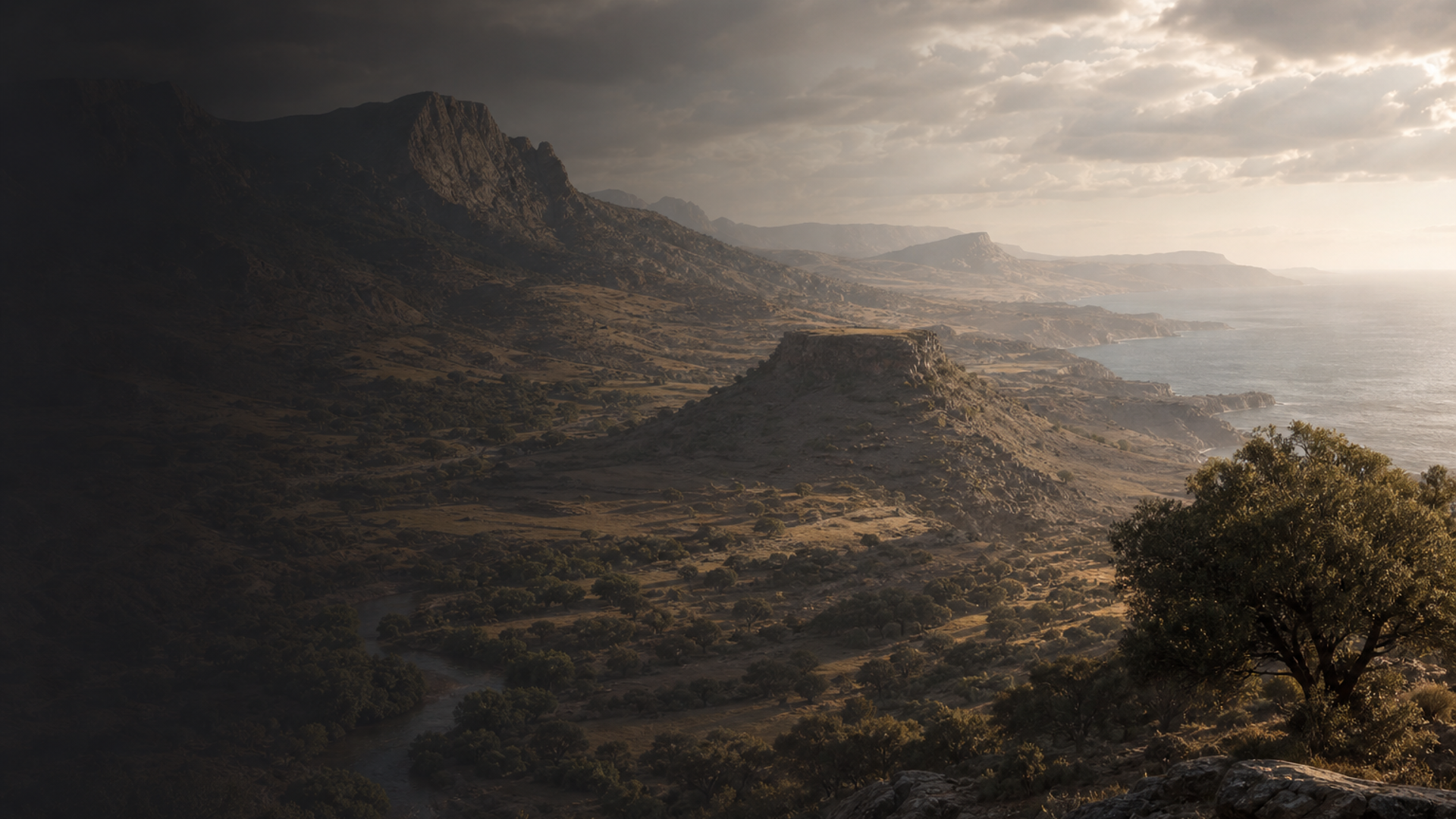
Echoes of Bronze: Spain, Early Bronze Age

下载的 PDF 是图像副本。如需可选中文本及更好的辅助技术支持,请使用打印功能。

Echoes of Bronze: Spain, Early Bronze Age

揭开一个失落的文明

正在加载考古记录……

正在收集古代记录

跳转到主内容
Echoes of Bronze: Spain, Early Bronze Age
文明焦点

Echoes of Bronze: Spain, Early Bronze Age

A cinematic look at people, metal, and genes across Iberia (2343–1150 BCE)

2343 CE - 1150 BCE
Spain (Iberian Peninsula)
滚动开始
Chapter I

剧情

了解 Echoes of Bronze: Spain, Early Bronze Age 文化

Archaeology and ancient DNA from 39 Early Bronze Age individuals across Spain reveal a mosaic of steppe-influenced Y-chromosomes and diverse maternal lineages. Material change, regional traditions, and genetic admixture shaped Iberia's early Bronze Age societies.

Time Period

2343–1150 BCE

Region

Spain (Iberian Peninsula)

Common Y-DNA

R (dominant, 21/39 samples)

Common mtDNA

J (8), U (7), K (7), H (4), HV (3)

Chapter II

时间线

这种文化历史上的关键时刻

2500 BCE

Emergence of Iberian Early Bronze Age

Across hilltops and caves, metallurgy and new burial practices appear; archaeological and genetic signs point to increased mobility and cultural interaction in Iberia.

Chapter III

Origins & Emergence

The Early Bronze Age in Spain unfolds like a changing skyline: copper and bronze glint on hilltops, fortified settlements appear, and burial practices diversify across a patchwork landscape. Archaeological data indicates this era (here sampled 2343–1150 BCE) reflects both local continuities from Neolithic and Chalcolithic traditions and the arrival of new influences — visible in metalwork styles, funerary architecture, and settlement patterns. Key sites sampled for DNA include Can Roquetes (Sabadell, Barcelona), El Sotillo (Laguardia, Álava), Castillejo del Bonete (Terrinches, Ciudad Real), Cabezo Redondo (Villena, Alicante), La Horra (Burgos), Fuente la Mora (Valladolid) and coastal caves such as Coveta del Frare and Cova del Gegant. These places record a variety of contexts: open-air settlements, fortified tells, and cave burials.

Genetically and materially, the period is best understood as a phase of dynamic interaction: metallurgy and long-distance exchange intensified, while local communities adapted these technologies to regional lifeways. Limited evidence suggests some demographic shifts were male-biased — a pattern echoed across parts of Bronze Age Europe — but regional variation is pronounced. Archaeological narratives therefore emphasize mosaic processes: innovation and continuity, mobility and rootedness, expressed differently from the Basque provinces to the Valencian coast.

Because the genetic dataset comprises 39 individuals spread across diverse sites and times, conclusions about population change are moderate in confidence and must be evaluated alongside ongoing excavations and future sampling.

  • Transition from Chalcolithic: increasing metallurgy and fortified settlements
  • Diverse burial contexts across cave and open-air sites
  • Regional mosaics of continuity and new influences
Chapter IV

Daily Life & Society

Daily life in Early Bronze Age Spain was shaped by fields, flocks, craft, and coastal trade. Archaeobotanical and zooarchaeological evidence from comparable Iberian EBA contexts indicates mixed farming — cereals, pulses, sheep, goats, and cattle — with seasonal movements in some regions. At sites like Cabezo Redondo and La Horra, stratigraphy and material culture point to craft specialization in metallurgy and ceramics, while caves and rock-shelters such as Cova del Gegant and Coveta del Frare preserve ritual deposits and funerary assemblages that illuminate social practice.

Fortified hilltops and enclosures suggest concerns with defense or status display; at the same time, smaller farmsteads persisted in fertile river valleys and coastal plains. Metal objects — tools, weapons, and ornaments — signal both local production and participation in wider exchange networks that linked Iberia to the western Mediterranean. Clothing and personal adornment, hinted at by metal and bead finds, would have displayed identity and affiliation in ceremonies and daily life.

Social organization likely combined household-based production with community-level rituals and inter-settlement ties. Archaeological evidence indicates inequality increased in some areas, but variability is great: some communities show modest accumulation, others present more conspicuous material wealth. Interpretations remain provisional where contextual data are sparse, and ongoing excavations will refine our view of social complexity during this transformative epoch.

  • Mixed farming, herding, and seasonal mobility
  • Local metallurgy and long-distance trade shaped material culture
Chapter V

Genetic Profile

The genetic portrait of Spain_EBA (39 individuals, dated 2343–1150 BCE) offers a nuanced story of admixture, continuity, and regional diversity. Y-chromosome haplogroup R dominates the male lineages (21/39 males), a pattern consistent with a widespread Bronze Age increase in steppe-related paternal ancestry across Europe. This male-skewed presence suggests at least some male-mediated gene flow into Iberia during or before the Early Bronze Age, aligning with archaeological signals of new metal technologies and mobility.

Mitochondrial lineages are diverse: haplogroups J (8), U (7), K (7), H (4), and HV (3) appear across the dataset. These maternal lineages include lineages associated with earlier Anatolian/Neolithic farming expansions (J, K, H) as well as haplogroup U, which has deep European hunter-gatherer roots. The mixture implies substantial continuity of local maternal ancestries alongside incoming paternal influences, producing the sex-biased admixture pattern documented elsewhere in Bronze Age Europe.

Interpretation caveats: the sample set of 39 is moderate and geographically dispersed; regional sampling unevenness and archaeological context variability limit fine-grained claims. Nevertheless, the combination of R-rich Y-DNA and a diverse mtDNA pool supports a model of admixture between incoming steppe-related groups and established Iberian farmer communities, producing the genetic foundation for later populations in the peninsula. Future dense sampling and genome-wide analyses will clarify timing, routes, and local demographic dynamics.

  • Male-biased signal: high frequency of Y haplogroup R suggests steppe-related input
  • Diverse maternal lineages (J, U, K, H, HV) indicate continuity of Neolithic and hunter-gatherer lineages
Chapter VI

Legacy & Modern Connections

The Early Bronze Age in Spain set demographic and cultural patterns that reverberate into the present. Genetic admixture between steppe-derived males and local maternal lines contributed to the ancestry profiles of later Iberian populations; many modern Spaniards retain a mixture of these deep components. Material traditions — metallurgical skills, regional ceramic styles, and fortified settlement forms — informed subsequent Iron Age societies.

Caution is needed: archaeological evidence does not by itself resolve questions of language, identity, or the pace of change. The genetic signals are informative but do not map one-to-one onto culture or language. Where sample coverage is moderate, as in this dataset, the safest interpretation emphasizes interaction and mosaicism: the Early Bronze Age was a time of mobility, exchange, and local adaptation whose combined archaeological and genetic traces shaped the long arc of Iberian prehistory.

For museums and the public, these interwoven strands produce a compelling narrative: people moving and mixing, goods crossing seas and mountains, and communities reinventing life with new metals and old practices — a human drama visible in both bones and artifacts.

  • Genetic admixture contributed to ancestral makeup of later Iberians
  • Material and technological innovations influenced subsequent cultural developments
AI 电源

AI 助手

就 Echoes of Bronze: Spain, Early Bronze Age 文化提问

AI 助手 由DNAGENICS公司制作

解锁此特性
Ask questions about the Echoes of Bronze: Spain, Early Bronze Age culture. Our AI assistant can explain genetic findings, historical context, archaeological evidence, and modern connections.
AI 样本分析

Echoes of Bronze: Spain, Early Bronze Age 文化是人类历史中值得了解的一章……

遗传分析揭示了与早期种群的联系,同时显示了独特的适应和文化创新的证据。 古代DNA样本提供了对迁徙模式、社会结构以及古代种群之间的生物关系的深刻见解。

这是人工智能分析的预览。 解锁全AI 助手, 以探索关于:

  • 遗传组成和祖先
  • 移徙模式和起源
  • 日常生活和文化习俗
  • 现代遗传遗产

探索更古老的文化

揭开古代世界文明的故事

使用优惠码 可减免 35% • 11月12日 到期