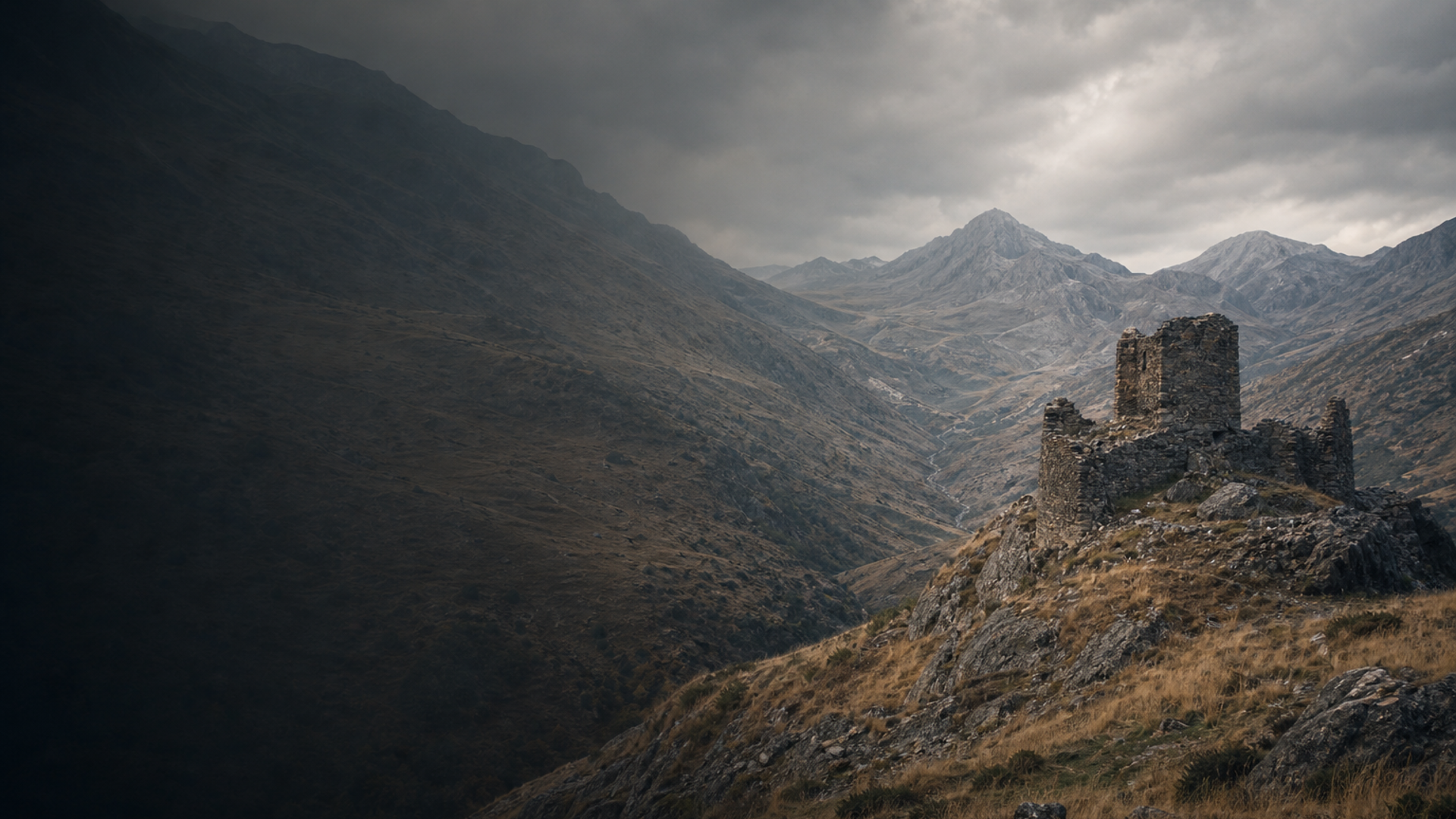
Echoes of Early Modern Albania

下载的 PDF 是图像副本。如需可选中文本及更好的辅助技术支持,请使用打印功能。

Echoes of Early Modern Albania

揭开一个失落的文明

正在加载考古记录……

正在收集古代记录

跳转到主内容
Echoes of Early Modern Albania
文明焦点

Echoes of Early Modern Albania

Five maternal lineages from 1400–1700 CE illuminate local continuity amid Ottoman-era change

1400 CE - 1700 CE
Albania (Kukes District; Central Albania)
滚动开始
Chapter I

剧情

了解 Echoes of Early Modern Albania 文化

Archaeogenetic and archaeological data from Bardhoc and Pazhok (Albania) between 1400–1700 CE reveal predominantly European maternal haplogroups (H, U, T, J). Limited sample size means conclusions are preliminary, but patterns hint at long-standing local maternal continuity during the Early Modern period.

Time Period

1400–1700 CE

Region

Albania (Kukes District; Central Albania)

Common Y-DNA

Not reported (insufficient data)

Common mtDNA

H (2), U (1), T (1), J (1)

Chapter II

时间线

这种文化历史上的关键时刻

1400 CE

Earliest sampled burials

Earliest dated remains in the sampled assemblage originate around 1400 CE, during early Ottoman-era transformations in the region.

Chapter III

Origins & Emergence

Across a landscape carved by steep ridges and river valleys, the human story of late medieval and early modern Albania unfolds with a composed continuity. The five sampled individuals dated between 1400 and 1700 CE come from village cemeteries and burial contexts recorded at Bardhoc (Northeastern, Kukes District) and Pazhok (Central Albania). Archaeological data indicates continued local occupation during the Ottoman period, when material culture shows a mixture of longstanding Balkan traditions and external influences carried along trade and administrative routes.

Limited evidence suggests these communities were rooted in regional networks of upland and lowland households rather than newly established settler colonies. The skeletal and funerary contexts show no dramatic demographic rupture in the available assemblage; instead, the sites present a palimpsest of local burial practice across centuries. Because the sample size is small (n=5), we interpret emergence and continuity cautiously: these remains provide snapshots of maternal ancestry and local lifeways rather than a complete demographic portrait. Still, the archaeological backdrop—settlement continuity, cemetery use, and artifact seriation—frames these genomes as part of a longer, complex Balkan human tapestry rather than a transient population event.

  • Samples from Bardhoc (Kukes District) and Pazhok date to 1400–1700 CE
  • Archaeological contexts suggest continuity through the Ottoman-era transition
  • Small sample size limits broad population-level conclusions
Chapter IV

Daily Life & Society

Archaeological traces from the broader region—settlement patterns, burial orientations, and portable material culture documented in regional surveys—evoke a quotidian world of mixed agrarian and pastoral lifeways. In the mountainous north near Kukes, seasonal transhumance and small-scale farming are historically attested practices; archaeological indicators from cemeteries and nearby habitations point to households tied to both valley fields and upland pastures. Domestic ceramics, metalwork fragments, and faunal remains (where recovered in regional contexts) suggest diets blending cereals, legumes, and pastoral products.

Social organization likely reflected kin-linked village units and local patronage networks under shifting Ottoman administrative structures. Grave goods and burial treatment in comparable regional sites indicate variations in status and gendered practices, though the five sampled burials here are insufficient to map social stratification definitively. Archaeological evidence therefore offers a cinematic but cautious reconstruction: villagers lived in a landscape of stone terraces, shepherded flocks across ridgelines, and navigated the economic and social currents of early modern Albania, all while maintaining long-standing local traditions.

  • Material culture implies mixed farming and pastoralism in upland and valley settings
  • Burial variation hints at social differentiation, but sample size is too small for firm conclusions
Chapter V

Genetic Profile

The genetic signal from these five individuals is dominated by maternal lineages commonly found across Europe and the Mediterranean: haplogroup H appears twice, while U, T, and J are each present once. Haplogroup H is widespread in Europe and often signals long-term regional continuity; U includes older European branches associated with Mesolithic and later populations; J and T are more commonly linked with Neolithic farmer expansions from the Near East and Mediterranean contacts. Together, this maternal composition paints a picture of mixed deep-time ancestries filtered through centuries of local demographic processes.

Importantly, no consistent Y-chromosome summary is available for these samples, limiting insight into paternal lineages and potential sex-biased migration. With only five genomes, statistical power is very low: population-level inferences such as continuity, admixture timing, or directional migrations must be treated as preliminary. Archaeogenetic interpretation therefore combines these mtDNA results with archaeological context—site locations at Bardhoc and Pazhok and Ottoman-period chronology—to suggest continuity of maternal lines through the early modern era, while acknowledging that larger sample sets are required to resolve finer-scale demographic events and potential contributions from Ottoman-era mobility or other regional movements.

  • mtDNA: H (2), U (1), T (1), J (1) — reflects European and Mediterranean maternal ancestry
  • No robust Y-DNA data reported; low sample count (n=5) makes conclusions tentative
Chapter VI

Legacy & Modern Connections

These genomes function as intimate echoes of Early Modern Albanian communities. The maternal haplogroups identified are common in contemporary Albania and surrounding Balkans, which supports archaeological impressions of long-term local continuity in maternal lines. At the same time, haplogroups such as J and T remind us of deeper Neolithic and Mediterranean threads woven into Balkan ancestry.

Because only five samples were analyzed, asserting direct ancestral lines to present-day populations would be premature. However, when combined with broader regional genetic surveys, these data contribute to a mosaic that connects Ottoman-period village life to modern Albanian genetic diversity. Future targeted sampling from additional cemeteries—paired with improved archaeological documentation at Bardhoc and Pazhok—will help clarify how these Early Modern individuals fit into the longer narrative of population continuity, mobility, and cultural change in Albania.

  • Maternal haplogroups align with broader Balkan and Mediterranean patterns
  • Preliminary data invite further sampling to test continuity with modern Albanian populations
AI 电源

AI 助手

就 Echoes of Early Modern Albania 文化提问

AI 助手 由DNAGENICS公司制作

解锁此特性
Ask questions about the Echoes of Early Modern Albania culture. Our AI assistant can explain genetic findings, historical context, archaeological evidence, and modern connections.
AI 样本分析

Echoes of Early Modern Albania 文化是人类历史中值得了解的一章……

遗传分析揭示了与早期种群的联系,同时显示了独特的适应和文化创新的证据。 古代DNA样本提供了对迁徙模式、社会结构以及古代种群之间的生物关系的深刻见解。

这是人工智能分析的预览。 解锁全AI 助手, 以探索关于:

  • 遗传组成和祖先
  • 移徙模式和起源
  • 日常生活和文化习俗
  • 现代遗传遗产

探索更古老的文化

揭开古代世界文明的故事

使用优惠码 可减免 35% • 11月12日 到期