Echoes of Late Iron Age Bulgaria

下载的 PDF 是图像副本。如需可选中文本及更好的辅助技术支持,请使用打印功能。

Echoes of Late Iron Age Bulgaria

揭开一个失落的文明

正在加载考古记录……

正在收集古代记录

跳转到主内容
Echoes of Late Iron Age Bulgaria
文明焦点

Echoes of Late Iron Age Bulgaria

Thracian landscapes and early Roman contacts revealed through three ancient genomes

450 BCE - 150 CE
Bulgaria (Stara Zagora, Kazanlak, Rozovo)
滚动开始
Chapter I

剧情

了解 Echoes of Late Iron Age Bulgaria 文化

Late Iron Age individuals (450 BCE–150 CE) from Kazanlak, Yasenovo, Stara Zagora and Rozovo, Bulgaria. Three aDNA samples (one mtDNA HV9). Limited dataset hints at regional Thracian connections; conclusions are preliminary pending larger samples.

Time Period

450 BCE – 150 CE

Region

Bulgaria (Stara Zagora, Kazanlak, Rozovo)

Common Y-DNA

Not reported / insufficient data

Common mtDNA

HV9 (1 sample)

Chapter II

时间线

这种文化历史上的关键时刻

450 BCE

Late Iron Age samples begin

Earliest dates for the Bulgaria_LIA samples around 450 BCE mark the beginning of the dataset's temporal range; archaeological contexts reflect Thracian cultural horizons.

Chapter III

Origins & Emergence

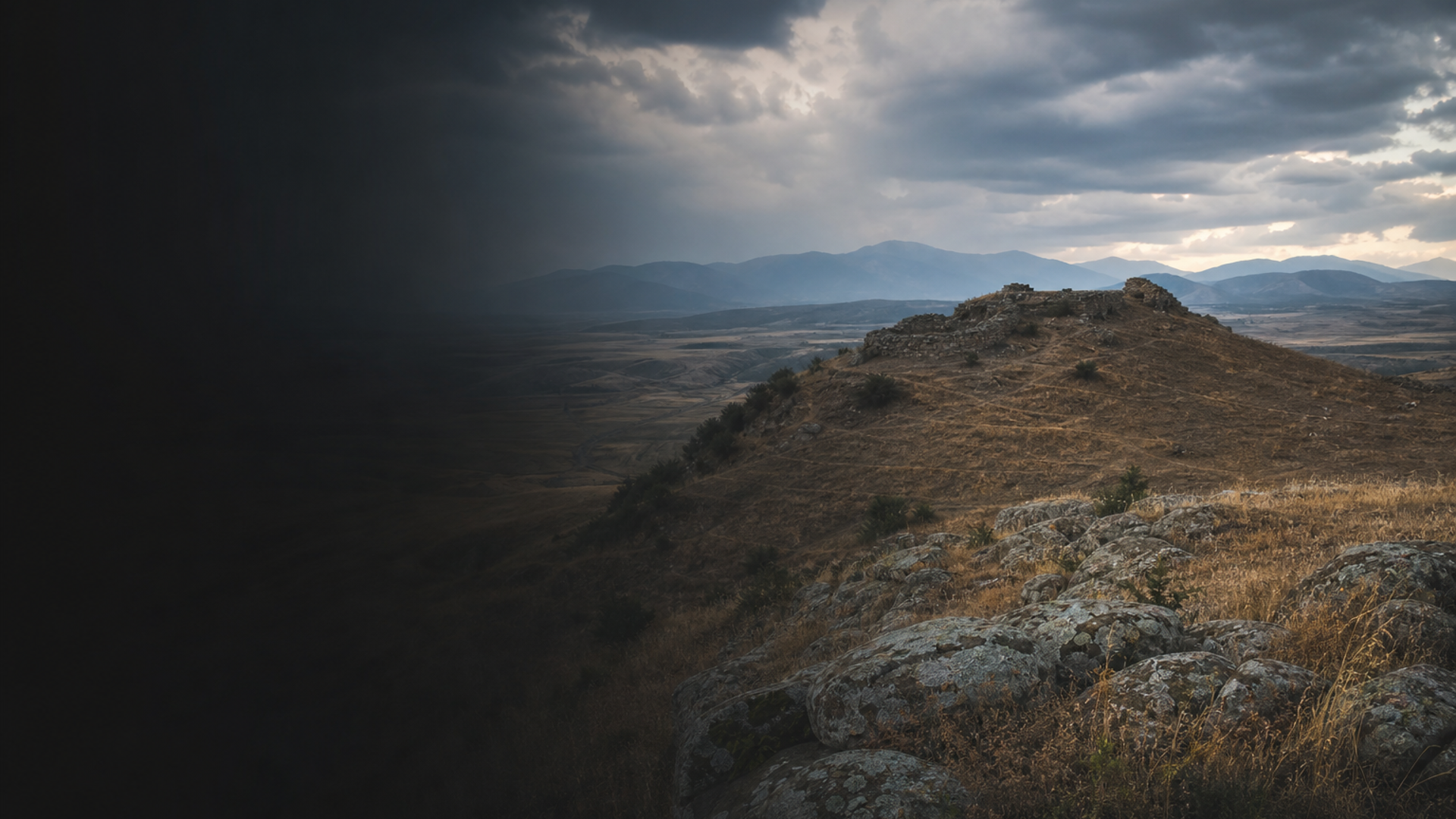
The people represented by the Bulgaria_LIA designation lived in the rolling plains and river valleys of central Bulgaria during the Late Iron Age (c. 450 BCE–150 CE). Archaeological data indicates a landscape long shaped by Thracian cultural traditions—kings' tombs, fortified settlements, and extensive burial landscapes are well attested across the wider Stara Zagora and Kazanlak districts. Kazanlak in particular is known for monumental Thracian tombs that speak to regional elites and ritual landscapes.

Genetically and culturally, this horizon sits at the crossroads of local Balkan traditions and increasing contacts with the Greek world and, later, the expanding Roman sphere. Material culture changes and imported goods in some tombs point to trade and diplomacy; archaeological evidence indicates shifting alliances rather than abrupt population replacement. Limited ancient DNA from three individuals offers a narrow but tangible glimpse into who these people were, while underscoring the need for broader sampling: small sample counts cannot yet resolve population origins or large-scale migrations with confidence.

Taken together, the archaeological and initial genetic signals suggest continuity with earlier Iron Age Thracian populations, layered with external influences that intensified during the late first millennium BCE and into the early Roman period.

  • Samples date to 450 BCE–150 CE from central Bulgaria (Kazanlak, Yasenovo, Stara Zagora, Rozovo)
  • Archaeology indicates a Thracian cultural horizon with elite tombs and trade links
  • Limited aDNA sample size means origins remain provisional
Chapter IV

Daily Life & Society

Daily life in Late Iron Age central Bulgaria would have been shaped by mixed farming, seasonal mobility, and artisan production. Archaeological evidence indicates communities engaged in cereal cultivation, animal husbandry, and metallurgical craft—bronze and iron tools, weapons, and ornaments appear across regional site assemblages. Settlement patterns range from small villages to fortified hilltops, while burial practices vary from simple inhumations to richly furnished tumuli that indicate social differentiation.

Trade and mobility were important. Finds of imported pottery and metalwork suggest exchange networks reaching the Aegean coast and inland trade routes. The presence of elite tombs in the Kazanlak area points to local rulers who controlled resources and ritual display. Warfare and mounted raiding are inferred from weapon deposits and strategic hillforts, but everyday life also included domestic craft, textile production, and communal religious practice. Seasonal cycles—sowing, harvest, animal migrations—structured labor and festival rhythms.

Archaeological traces provide a vivid, tactile picture, but connecting objects to individual lives benefits from genetic data: DNA can reveal kinship in cemeteries, mobility patterns through isotope studies, and maternal or paternal lineages that complement material culture evidence.

  • Mixed farming, herding, and metalwork underpin local economies
  • Burial variation (from simple graves to elite tumuli) indicates social stratification
Chapter V

Genetic Profile

The Bulgaria_LIA dataset currently comprises three ancient individuals dated between 450 BCE and 150 CE, recovered from Kazanlak, Yasenovo, Stara Zagora, and Rozovo. Mitochondrial DNA data record HV9 in one individual; Y-chromosome haplogroups were not reported or are insufficient for population-level inference. With only three genomes, statistical power is very limited and any population-level claims must be treated as preliminary.

Broader ancient-DNA studies in the Balkans show that Iron Age populations often derive from a deep substrate of Neolithic Anatolian farmers and local hunter-gatherers, with added admixture from Bronze Age steppe-related groups. Archaeogenetic work elsewhere in the region has also documented increasing heterogeneity during the first millennium BCE, reflecting long-distance contacts and mobility. Whether the Bulgaria_LIA individuals reflect this wider pattern cannot be firmly established with three samples alone.
Key unanswered questions include: the degree of genetic continuity with earlier Bronze and Iron Age populations in the Kazanlak region; the presence or absence of detectable gene flow from Mediterranean (Greek) or Anatolian sources during the Hellenistic and early Roman periods; and kinship relations within burial contexts. Future analyses combining nuclear genomes, isotope data, and larger sample sizes will be essential to move from evocative possibility to robust conclusions.

  • Dataset: three individuals (450 BCE–150 CE); mtDNA HV9 observed in one sample
  • Low sample count (<10) makes population-level conclusions preliminary
Chapter VI

Legacy & Modern Connections

The genetic and archaeological echoes of Late Iron Age central Bulgaria contribute to a long, layered history of the Balkans. Some maternal lineages such as haplogroup HV and its subclades persist at low frequencies in modern European and Near Eastern populations; the presence of HV9 in one ancient individual hints at continuity of deep maternal lineages, though this single data point cannot demonstrate direct ancestry to present-day Bulgarians.

Cultural legacies are clearer: regional traditions of burial, craft, and landscape use helped shape later identities in Thrace and the early medieval Balkans. Genetically, the region remained a crossroads—successive waves of migration, Hellenistic colonization, Roman integration, and later movements all reshaped the genetic landscape. Therefore, while these three genomes are cinematic windows into a past world, they are fragments. Expanding ancient DNA sampling and integrating archaeological context will refine how these Late Iron Age people connect to later populations and modern descendants.

  • HV9 hints at persistence of deep maternal lineages but is based on a single sample
  • Long-term cultural continuity in burial and craft traditions; genetic continuity requires larger datasets
AI 电源

AI 助手

就 Echoes of Late Iron Age Bulgaria 文化提问

AI 助手 由DNAGENICS公司制作

解锁此特性
Ask questions about the Echoes of Late Iron Age Bulgaria culture. Our AI assistant can explain genetic findings, historical context, archaeological evidence, and modern connections.
AI 样本分析

Echoes of Late Iron Age Bulgaria 文化是人类历史中值得了解的一章……

遗传分析揭示了与早期种群的联系,同时显示了独特的适应和文化创新的证据。 古代DNA样本提供了对迁徙模式、社会结构以及古代种群之间的生物关系的深刻见解。

这是人工智能分析的预览。 解锁全AI 助手, 以探索关于:

  • 遗传组成和祖先
  • 移徙模式和起源
  • 日常生活和文化习俗
  • 现代遗传遗产

探索更古老的文化

揭开古代世界文明的故事

使用优惠码 可减免 35% • 11月12日 到期




