Echoes of Thailand's Iron Age

下载的 PDF 是图像副本。如需可选中文本及更好的辅助技术支持,请使用打印功能。

Echoes of Thailand's Iron Age

揭开一个失落的文明

正在加载考古记录……

正在收集古代记录

跳转到主内容
Echoes of Thailand's Iron Age
文明焦点

Echoes of Thailand's Iron Age

Ban Chiang to Mae Hong Son — bones, bronzes and shifting ancestries

600 BCE - 419 CE
Thailand
滚动开始
Chapter I

剧情

了解 Echoes of Thailand's Iron Age 文化

Archaeological remains from Ban Chiang, Long Long Rak and northern Mae Hong Son (600 BCE–419 CE) reveal an Iron Age Thailand community with mixed maternal lineages and northern-influenced Y-DNA. Limited samples (n=6) make conclusions tentative but suggest complex regional interaction.

Time Period

600 BCE – 419 CE

Region

Thailand

Common Y-DNA

N (3), NO (1), O (1)

Common mtDNA

B (2), G (2), M (1), F1f (1)

Chapter II

时间线

这种文化历史上的关键时刻

600 BCE

Iron Age emergence in Thailand

Archaeological evidence marks the spread of ironworking and evolving burial practices across sites like Ban Chiang and Long Long Rak, initiating the period associated with Thailand_IA.

Chapter III

Origins & Emergence

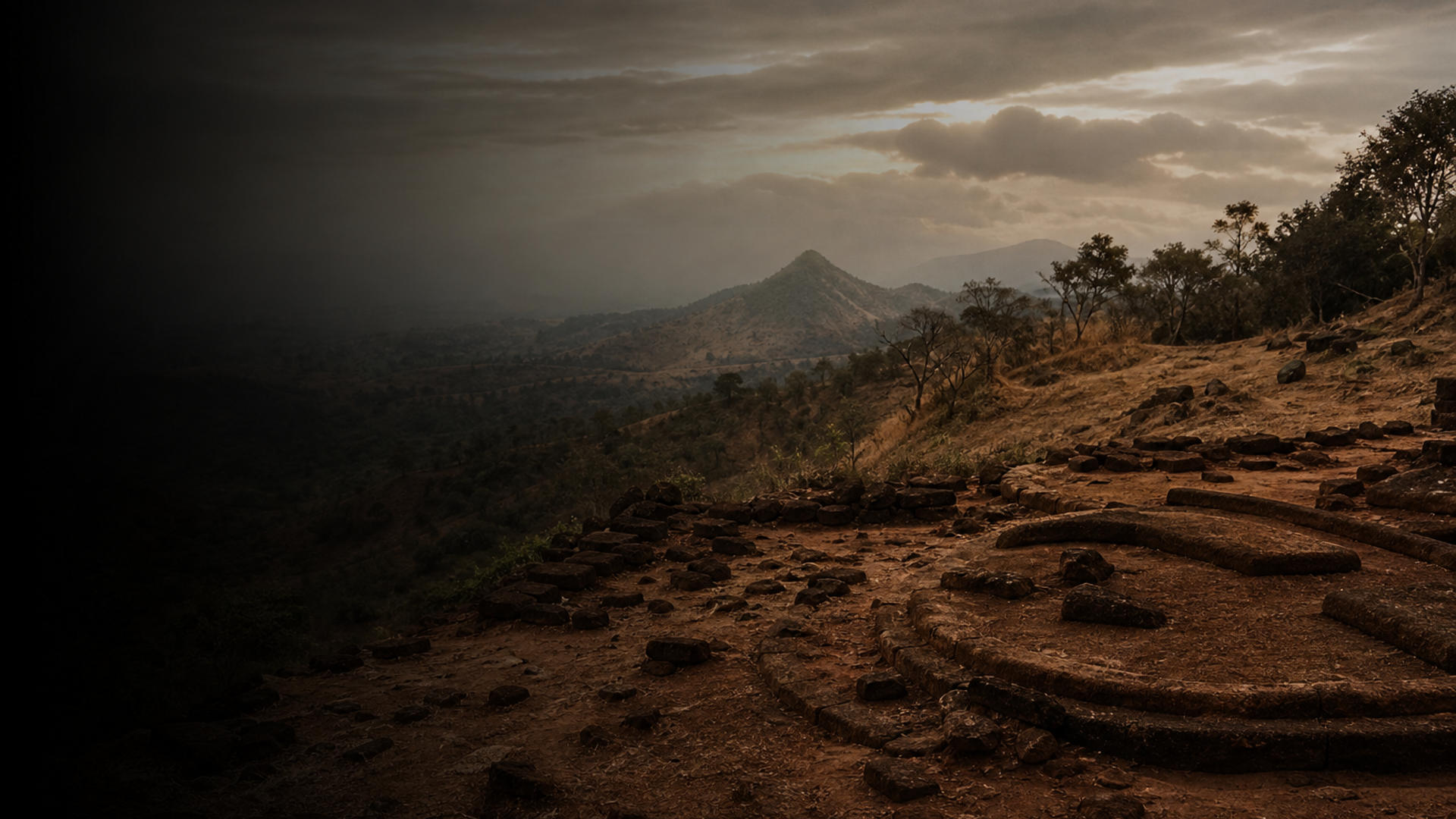
The Thailand_IA signal emerges from archaeological landscapes long occupied by Bronze Age communities — most famously Ban Chiang (Northeastern Thailand) — where painted pottery, burial mounds and early metallurgy set the stage for later Iron Age developments. Between 600 BCE and the early centuries CE, sites such as Ban Chiang, Long Long Rak and settlements in northern Mae Hong Son show continuity in craft traditions alongside new forms of ironworking and regional exchange.

Archaeological data indicates a mosaic of local continuity and incoming influences: material culture suggests sustained interaction across mainland Southeast Asia, while funerary variability points to changing social roles and networks. The physical evidence is complemented by small-scale ancient DNA recovery: six samples dated to this broad interval provide a first glimpse of biological ancestry but remain limited. These genetic glimpses should be read as provisional; with fewer than ten genome-level samples, patterns may shift as more data are added.

Cinematic in their implications, the sites evoke a landscape of river valleys and upland corridors where ideas, metals and people moved. The emerging picture is one of regional complexity rather than simple replacement, where local communities reconfigured identity in an era of new technologies and widened contacts.

  • Ban Chiang continuity with Bronze Age pottery and metallurgy
  • Iron Age changes appear alongside long-term local traditions
  • Genetic sample size is small — interpretations are preliminary
Chapter IV

Daily Life & Society

Life in Thailand_IA can be glimpsed through graves, ceramics and metalwork. At Ban Chiang, red-painted pottery and varied burial goods imply differentiated status and skilled craft production. Iron tools likely reshaped agriculture and forest clearance, enabling more intensive upland and valley economies across northern provinces including Mae Hong Son. Shell, plant and animal remains recovered from regional sites show a mixed subsistence base of wet- and dry-rice cultivation, fishing and foraging, though preservation biases mean some practices are better documented than others.

Social life would have revolved around kin groups, workshop clusters and seasonal exchange networks. Burial variability—some with rich grave goods, others with minimal offerings—suggests social stratification or age/sex-differentiated practices emerging in the Iron Age. Long Long Rak and peripheral settlements hint at coastal and inland trade links, connecting communities in Thailand to broader Southeast Asian maritime routes. Ceramics, metal ornaments and the distribution of raw materials all point to active exchange rather than isolation.

Archaeological interpretation remains interpretive: taphonomy, excavation limits and sample size constrain certainty, but the picture is of dynamic communities adapting craft, diet and social organization to new technologies and expanded networks.

  • Red-painted Ban Chiang pottery and varied grave goods indicate craft specialization
  • Iron implements likely expanded agricultural possibilities and trade
Chapter V

Genetic Profile

Ancient DNA from six individuals dated between 600 BCE and 419 CE provides a starting point for connecting bones to migrations and networks. Mitochondrial diversity is dominated by East and Southeast Asian lineages: B (2), G (2), M (1) and F1f (1). These maternal haplogroups are widely distributed in modern and ancient populations across mainland and island Southeast Asia, consistent with long-standing regional ancestry and female-line continuity.

On the paternal side, reported Y-chromosome markers include N (3), NO (1) and O (1). Haplogroup N and NO have higher frequencies north of mainland Southeast Asia and into East Asia, and their presence here suggests northern affinities or male-mediated gene flow from groups with links toward southern China or upland corridors. Haplogroup O is widespread in East and Southeast Asia and is commonly associated with many modern Tai-Kadai and Austroasiatic-speaking groups. However, these patterns must be interpreted cautiously: the Y-DNA totals account for five assigned haplogroups and one individual may have been unassigned or had low coverage.

Because the sample count is small (<10), population-level inferences are provisional. Limited evidence suggests a mixed ancestry picture for Thailand_IA: maternal lineages show deep regional roots while paternal markers hint at additional northern input or mobility. Further sampling across sites and time will be necessary to test whether these signals reflect localized events, migration pulses, or long-term gene flow across mainland Southeast Asia.

  • mtDNA: East/Southeast Asian lineages (B, G, M, F1f) indicating regional continuity
  • Y-DNA: presence of N/NO suggests northern affinities; O is regionally common — conclusions are tentative due to small sample size
Chapter VI

Legacy & Modern Connections

The material and genetic echoes of Thailand_IA resonate in modern Southeast Asia. Archaeological continuities at Ban Chiang feed into narratives of long-term craft traditions in Thailand, while genetic links suggest that maternal ancestries common today trace back to these ancient communities. The appearance of northern-influenced Y-haplogroups in this small dataset highlights past mobility along upland corridors, a theme echoed in historical linguistics and later demographic shifts.

These connections are not deterministic: culture and genes move on different tempos. The limited ancient DNA available means we should avoid direct one-to-one mappings from ancient individuals to modern ethnic groups. Instead, Thailand_IA samples invite a nuanced view: a region shaped by local persistence, technological change and intermittent influxes of people. As more ancient genomes are recovered, the story will clarify how these Iron Age communities contributed to the genetic and cultural tapestry of mainland Southeast Asia.

  • Maternal lineages connect ancient communities to modern Southeast Asian diversity
  • Northern-influenced Y-DNA hints at past mobility but requires more data
AI 电源

AI 助手

就 Echoes of Thailand's Iron Age 文化提问

AI 助手 由DNAGENICS公司制作

解锁此特性
Ask questions about the Echoes of Thailand's Iron Age culture. Our AI assistant can explain genetic findings, historical context, archaeological evidence, and modern connections.
AI 样本分析

Echoes of Thailand's Iron Age 文化是人类历史中值得了解的一章……

遗传分析揭示了与早期种群的联系,同时显示了独特的适应和文化创新的证据。 古代DNA样本提供了对迁徙模式、社会结构以及古代种群之间的生物关系的深刻见解。

这是人工智能分析的预览。 解锁全AI 助手, 以探索关于:

  • 遗传组成和祖先
  • 移徙模式和起源
  • 日常生活和文化习俗
  • 现代遗传遗产

探索更古老的文化

揭开古代世界文明的故事

使用优惠码 可减免 35% • 11月12日 到期




