Echoes of the England Vikings

下载的 PDF 是图像副本。如需可选中文本及更好的辅助技术支持,请使用打印功能。

Echoes of the England Vikings

揭开一个失落的文明

正在加载考古记录……

正在收集古代记录

跳转到主内容
Echoes of the England Vikings
文明焦点

Echoes of the England Vikings

Archaeology and ancient DNA tracing Norse lives in England, 880–1037 CE

880 CE - 1037 CE
England (United Kingdom)
滚动开始
Chapter I

剧情

了解 Echoes of the England Vikings 文化

Archaeological contexts from Oxford, Dorset and Anglesey, paired with 33 ancient genomes (880–1037 CE), reveal a mixed Norse-English presence. Genetic markers (I1, R; mtDNA H) align with Scandinavian and insular ancestries, while rare lineages highlight complexity and local integration.

Time Period

880–1037 CE

Region

England (United Kingdom)

Common Y-DNA

R (17), I1 (7), I (6), Q (1), BT (1)

Common mtDNA

H (15), U (4), K (3), J (2), I (2)

Chapter II

时间线

这种文化历史上的关键时刻

793 CE

Raid on Lindisfarne

A landmark 793 CE raid often cited as the opening of the Viking Age in Britain, signaling increased Norse maritime activity.

878 CE

Treaty and Settlement

Circa 878 CE, conflicts and agreements (e.g., between Alfred and Guthrum) led to clearer zones of Viking settlement and assimilation in England.

1016 CE

Cnut's Ascendancy

By 1016 CE, Danish ruler Cnut became king of England, reflecting political integration of Scandinavian elites.

Chapter III

Origins & Emergence

The England_Viking assemblage sits at the turbulent end of the Viking Age in Britain. Archaeological deposits dated between 880 and 1037 CE — including burials and massacre contexts at Ridgeway Hill (Dorset), domestic and cemetery contexts at St John's College (Oxford), and coastal/insular contexts at Glyn Llanbedrgoch (Anglesey) — paint a picture of people who moved between sea and settlement.

Archaeological data indicates repeated Norse maritime activity, episodic raiding and prolonged settlement in parts of England; material culture such as Norse-style metalwork, weaponry, and grave organization often mark these sites. Genetic data from 33 individuals provides a complementary lens: the prominence of I1 (7/33) is concordant with Scandinavian paternal ancestry, while the substantial representation of broad R-types (17/33) reflects more widespread northwestern European lineages common in both Scandinavia and the British Isles.

Limited evidence suggests these individuals include both recent arrivals and locally integrated families. The geographic spread of samples — urban Oxford, rural Dorset, and coastal Anglesey — suggests varied pathways of contact: conquest, trade, and intermarriage. However, sample coverage remains geographically uneven, and interpretations should treat demographic inferences as provisional rather than definitive.

  • Sites: Ridgeway Hill, St John's College (Oxford), Glyn Llanbedrgoch
  • Dates: 880–1037 CE, late Viking Age in England
  • Evidence for both incoming Scandinavian ancestry and local integration
Chapter IV

Daily Life & Society

The cinematic bones and objects recovered from these contexts hint at lives shaped by sea, sword and settlement. Ridgeway Hill's mass grave offers grim evidence of violent encounters: multiple individuals with perimortem trauma, likely victims of a raid or reprisal. In urban Oxford contexts, isotope and artifact patterns (limited but suggestive) are consistent with mixed communities where Norse, Anglo-Saxon and other local traditions met in marketplaces, craft workshops and churches.

Archaeological data indicates varied diets and mobility. Coastal and island burials often preserve seafaring gear and imported goods; inland burials show agricultural ties and craft specializations. The juxtaposition of warrior-associated grave goods and items common to household contexts implies social complexity: not all people associated with Norse cultural markers were warriors, and many adopted blended lifeways over generations.

Caution: while burial assemblages are evocative, they represent a biased slice of society — often males, unusual deaths, or elite individuals — and should not be read as a census of daily life.
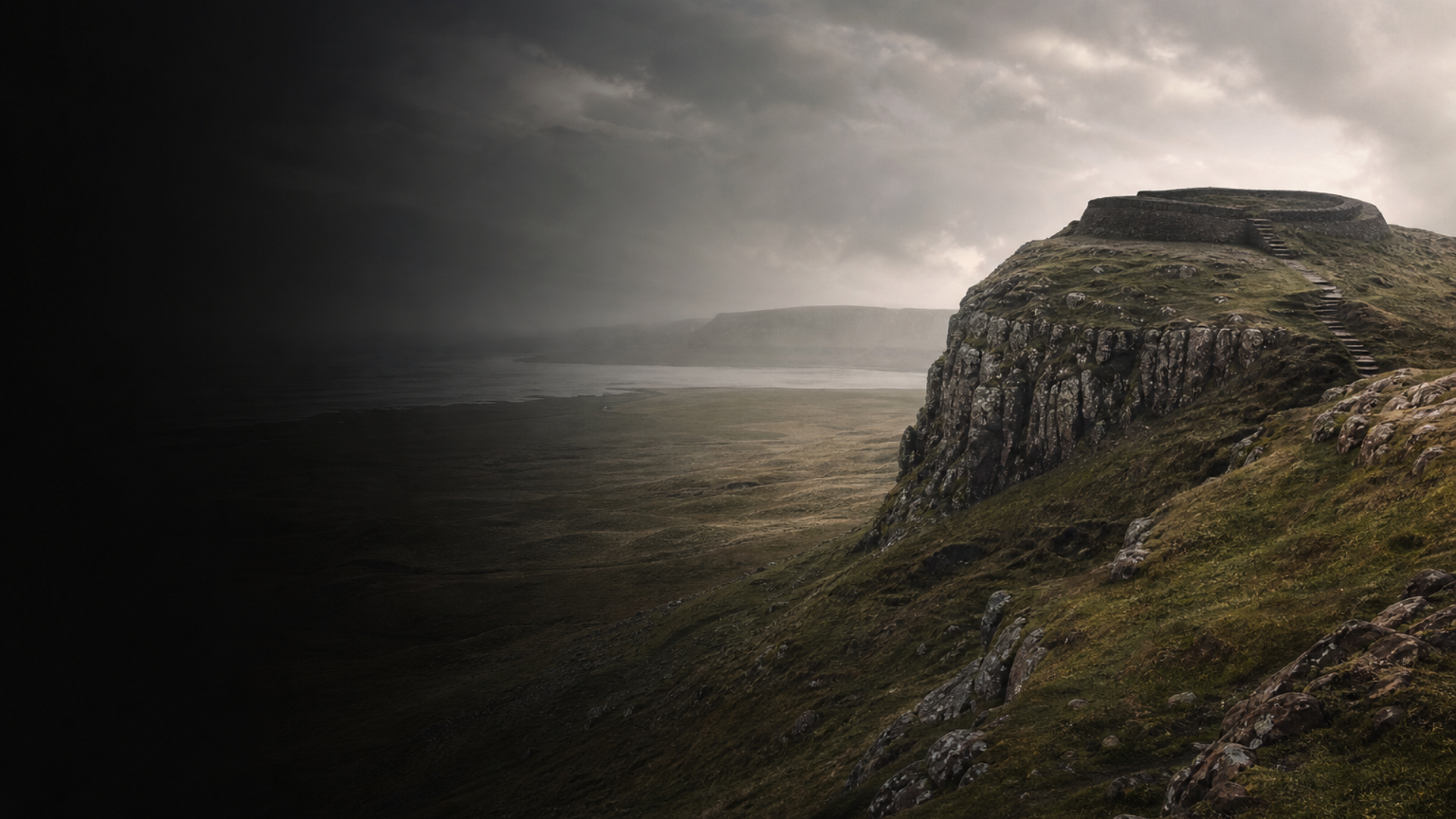
  • Mass grave evidence of violent conflict (Ridgeway Hill)
  • Material culture indicates mixed coastal and inland lifeways
Chapter V

Genetic Profile

The genetic dataset (33 ancient genomes) offers direct evidence of ancestry and sex-biased mobility. Y-chromosome lineages are dominated by R-type variants (17/33) and show a notable presence of I1 (7/33), a haplogroup with strong associations to Scandinavian populations in both ancient and modern datasets. The presence of I (6/33) suggests additional northern European paternal lineages. Single occurrences of Q and BT are rare and warrant caution: they may represent migrants, admixture, or technical/artifactual signals and require further sampling to interpret.

Mitochondrial DNA is led by haplogroup H (15/33), a common European maternal lineage, alongside U, K, J and I — a mix typical of northwestern Europe. The contrast between more frequent Scandinavian-associated Y-DNA (I1) and broadly European mtDNA (H, U, K) hints at sex-biased movement: male-mediated migration or warrior mobility into local female lineages, a pattern seen elsewhere in Viking Age contexts.

Limitations: with 33 samples we have moderate power, but geographic and contextual sampling biases remain. Several haplogroups have low counts (<10), so conclusions about frequency and population structure are preliminary. Future denser sampling and genome-wide analyses will refine admixture dates and source proportions.

  • I1 enrichment supports Scandinavian paternal input
  • mtDNA dominated by H, indicating local and regional female lineages
Chapter VI

Legacy & Modern Connections

The genetic echoes of these individuals persist in the modern British genetic landscape as subtle threads rather than wholesale replacements. Archaeogenetic signal — an elevated share of Scandinavian-associated Y-lineages in some regions, paired with common European mtDNA — mirrors historical accounts of Norse settlement blending into local communities.

Archaeological legacies are visible in place-names, material culture and landscape reorganization. Genetically, modern populations in parts of northern and eastern England and the Isle of Man retain elevated proportions of Scandinavian ancestry; however, the England_Viking dataset emphasizes that admixture was uneven and context-dependent. The singletons (Q, BT) remind us that mobility in the medieval North Atlantic included diverse actors beyond stereotypical Vikings.

Taken together, archaeology and DNA provide a cinematic but cautious portrait: waves of movement, personal stories of migration and integration, and the messy human processes that shape modern ancestry.

  • Modern regional genetic signals echo Viking-age admixture
  • Archaeology + DNA reveal complex, uneven integration
AI 电源

AI 助手

就 Echoes of the England Vikings 文化提问

AI 助手 由DNAGENICS公司制作

解锁此特性
Ask questions about the Echoes of the England Vikings culture. Our AI assistant can explain genetic findings, historical context, archaeological evidence, and modern connections.
AI 样本分析

Echoes of the England Vikings 文化是人类历史中值得了解的一章……

遗传分析揭示了与早期种群的联系,同时显示了独特的适应和文化创新的证据。 古代DNA样本提供了对迁徙模式、社会结构以及古代种群之间的生物关系的深刻见解。

这是人工智能分析的预览。 解锁全AI 助手, 以探索关于:

  • 遗传组成和祖先
  • 移徙模式和起源
  • 日常生活和文化习俗
  • 现代遗传遗产

探索更古老的文化

揭开古代世界文明的故事

使用优惠码 可减免 35% • 11月12日 到期




