Echoes of the Eurasian Nomads

下载的 PDF 是图像副本。如需可选中文本及更好的辅助技术支持,请使用打印功能。

Echoes of the Eurasian Nomads

揭开一个失落的文明

正在加载考古记录……

正在收集古代记录

跳转到主内容
Echoes of the Eurasian Nomads
文明焦点

Echoes of the Eurasian Nomads

Steppe riders (1000 BCE–1300 CE) whose graves and genomes trace migrations across Hungary and the steppe

1000 BCE - 1300 CE
Hungary, Russia, Kazakhstan, Romania
2 Ancient Samples
滚动开始
Chapter I

剧情

了解 Echoes of the Eurasian Nomads 文化

Archaeological and genetic evidence from 561 samples links nomadic groups across Hungary, Russia, Kazakhstan and Romania from 1000 BCE–1300 CE. Graves from the Danube–Tisza interfluve and steppe sites reveal cultural continuity, mobility, and mixed ancestry between steppe and local European populations.

Time Period

1000 BCE – 1300 CE

Region

Hungary, Russia, Kazakhstan, Romania

Common Y-DNA

J, R, N, Q, I (counts: J98, R38, N30, Q16, I12)

Common mtDNA

H, U, T, D, J (counts: H84, U55, T46, D31, J30)

Chapter II

时间线

这种文化历史上的关键时刻

1000 BCE

Early Iron Age steppe horizons expand

Mobile pastoralism and horse culture become widespread across the Eurasian steppe, setting foundations for later Sarmatian and Pazyryk developments.

300 CE

Sarmatian influence across the Carpathian forelands

Sarmatian material culture and mounted warrior practices appear in eastern Hungary and the steppe, seen in burial gear and horse equipment.

568 CE

Avar arrival in the Carpathian Basin

Groups associated with the Avar polity enter the basin; archaeological cemeteries such as Kunbábony reflect elite steppe traditions.

900 CE

Transition to medieval polities

Shifts in settlement and population composition as medieval groups, including Magyars, reshape the region’s demographic landscape.

Chapter III

Origins & Emergence

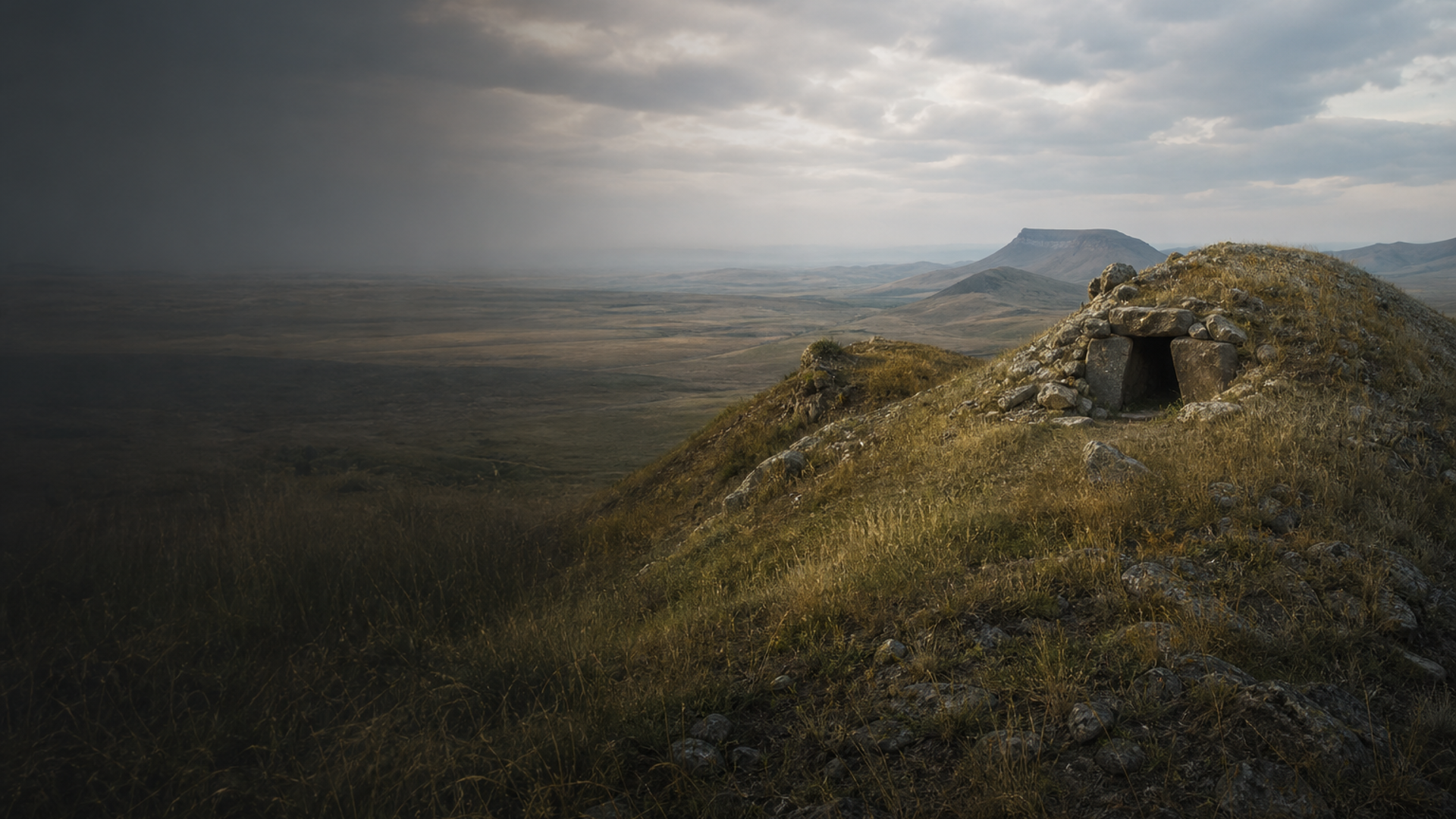
Across the wide horizon of the Eurasian steppe, a tapestry of mobile societies emerged and reconfigured over more than two millennia. Archaeological strata and burial grounds dated between 1000 BCE and the early medieval centuries show a succession of material cultures—Sarmatian-mounted warriors, Pazyryk-style grave rites in the Altai and Kazakhstan, and later Saltovo-Mayaki and Avar assemblages—each reflecting shifting alliances and long-distance connections. In the Carpathian Basin, the Danube–Tisza interfluve yields rich burial contexts (for example Kunbábony and Kunpeszér) whose grave goods and horse burials echo steppe traditions adapted to local landscapes.

Caution is essential: material culture can travel independently of genes, and the archaeological record preserves selective snapshots—elite burials are overrepresented in many datasets. Still, continuity in burial practices, metallurgical styles, and horse gear across sites in Hungary and into Russia and Kazakhstan suggests repeated influxes or cultural transmission from eastern steppe zones into the Carpathian Basin. Limited evidence also points to reciprocal influence: local Carpathian groups adopted steppe elements, producing hybrid material cultures by the Early to Middle Avar periods.

By matching calibrated dates from cemeteries (6th–9th centuries CE for classic Avar contexts) with broader steppe chronologies, we can place the Eurasian_Nomadic sequence within a long trajectory of mobility that culminates, in different regions, in medieval nomadic polities and eventually in settlements influenced by incoming Magyar populations.

  • Material continuity links Sarmatian–Pazyryk–Avar traditions across the steppe
  • Key Carpathian sites: Kunbábony, Kunpeszér, Kecskemét-Mindszenti-dűlő
  • Elite graves may overrepresent mobile, high-status individuals
Chapter IV

Daily Life & Society

The living world behind the graves was mobile, opportunistic, and adaptable. Archaeological indicators—horse gear, bit wear, chariot and mounted burials, seasonal hearths, and portable metalwork—paint a picture of pastoral economies punctuated by raiding, long-distance trade, and local farming. In the Danube–Tisza interfluve, cemeteries often contain horse harness fittings and weaponry alongside domestic pottery, suggesting households that combined herding and village-based practices.

Social differentiation is visible in burial elaboration. High-status graves such as the richly furnished male burial at Kunbábony display goldwork and horse equipment, implying warrior-elite status and wide connections. Simpler inhumations at sites like Petőfiszállás and Szalkszentmárton indicate a broader population with less material wealth but the same funerary repertoire. Women’s graves frequently include jewelry and imported goods, signaling their role in exchange networks and interregional marriage ties.

Archaeobotanical and faunal remains—where preserved—show reliance on sheep, cattle and horses, together with cultivated cereals where settlements were semi-permanent. Seasonal mobility remained a hallmark; people moved herds to exploit steppe and floodplain pastures, while trade and conflict kept communities entangled across hundreds of kilometers.

  • Mixed pastoral and local agricultural lifeways in Carpathian Basin sites
  • Burial wealth ranges from modest graves to lavish elite horse burials
Chapter V

Genetic Profile

The genetic dataset for Eurasian_Nomadic is unusually large (n = 561), allowing robust inferences about population structure, admixture, and continuity. Male lineages show a diverse Y-DNA spectrum: haplogroup J (98 samples) is the most frequent, alongside R (38), N (30), Q (16) and I (12). Maternal lineages are dominated by West Eurasian haplogroups H (84), U (55), and T (46), but East Eurasian-affiliated haplogroups such as D (31) and J (30) are also present, signaling admixture.

These patterns support a model of repeated east–west gene flow: steppe-derived males (N, Q and other steppe-associated lineages) contributed ancestry that mixed with local European maternal lineages (H, U, T), while J and R lineages indicate connections that may reflect both steppe and more southerly or Balkan affinities. Genetic clustering shows geographic substructure: samples from Kazakhstan and Russia carry higher proportions of East Eurasian ancestry, whereas samples from the Danube–Tisza interfluve show substantial West Eurasian input with detectable eastern components.

With 561 samples, population-wide trends are reliable, but caution remains for site-level interpretations—some individual cemeteries have small sample sizes and may reflect family or elite pedigrees rather than whole communities. Overall, the genomes corroborate archaeological evidence for a mobile, mixed-ancestry population shaped by steppe migrations, local admixture, and centuries of cultural blending.

  • Large sample size (n=561) supports robust population-level conclusions
  • Y-DNA: J dominant; notable presence of R, N, Q, I — reflects mixed steppe and regional origins
Chapter VI

Legacy & Modern Connections

The echoes of Eurasian nomads persist in both material culture and genetic legacies across Eurasia. Modern populations in the Carpathian Basin and across the steppe retain traceable proportions of steppe-derived ancestry, reflecting centuries of admixture and mobility. Archaeologically, horse-harness motifs and metalwork techniques diffused into later medieval craft traditions; culturally, place names and oral memories may preserve faint traces of nomadic presence.

Genetically, the mixture of West and East Eurasian lineages seen in these samples parallels signals in present-day populations of Hungary and neighboring regions, though centuries of subsequent migrations (including Magyar settlement and later medieval movements) complicate direct lineal claims. Because some cemeteries preferentially sample elites, the genetic imprint left by these nomadic groups on later societies likely reflects a combination of elite-driven gene flow and wider demographic integration.

Limited evidence remains for direct cultural continuity in everyday household forms, but the combined archaeological and genetic record underscores a dynamic frontier where steppe and European worlds met, producing hybrid communities that shaped medieval Central Europe.

  • Genetic admixture influenced modern Carpathian Basin ancestries
  • Material culture and horsemanship techniques persisted in regional craft traditions
Chapter VII

样本目录

2 份与 Echoes of the Eurasian Nomads 文化相关的古 DNA 样本,为研究该时期的人群提供遗传线索。

2 / 2 samples
纵向 样本 国家 大纪元 日期 文化 性别 Y-DNA mtDNA
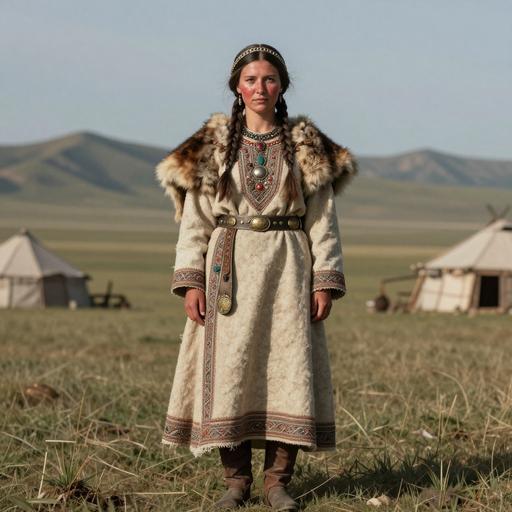
重建的肖像画 Orenburg Early Sarmatian individual, Russia
Orenburg Early Sarmatian individual, Russia
Russia Russia_IA_EarlySarmatian 400-200 BCE Eurasian Nomadic M R1b1a1a2a2 M
重建的肖像画 Orenburg Early Sarmatian individual, Russia
Orenburg Early Sarmatian individual, Russia
Russia Russia_IA_EarlySarmatian 400-200 BCE Eurasian Nomadic F - U2e2
AI 电源

AI 助手

就 Echoes of the Eurasian Nomads 文化提问

AI 助手 由DNAGENICS公司制作

解锁此特性
Ask questions about the Echoes of the Eurasian Nomads culture. Our AI assistant can explain genetic findings, historical context, archaeological evidence, and modern connections.
AI 样本分析

Echoes of the Eurasian Nomads 文化是人类历史中值得了解的一章……

遗传分析揭示了与早期种群的联系,同时显示了独特的适应和文化创新的证据。 古代DNA样本提供了对迁徙模式、社会结构以及古代种群之间的生物关系的深刻见解。

这是人工智能分析的预览。 解锁全AI 助手, 以探索关于:

  • 遗传组成和祖先
  • 移徙模式和起源
  • 日常生活和文化习俗
  • 现代遗传遗产

探索更古老的文化

揭开古代世界文明的故事

使用优惠码 可减免 35% • 11月12日 到期