England — Central Early Bronze Age

下载的 PDF 是图像副本。如需可选中文本及更好的辅助技术支持,请使用打印功能。

England — Central Early Bronze Age

揭开一个失落的文明

正在加载考古记录……

正在收集古代记录

跳转到主内容
England — Central Early Bronze Age
文明焦点

England — Central Early Bronze Age

A portrait of Bronze Age life and ancestry in England, 2462–1453 BCE

2462 CE - 1453 BCE
England (United Kingdom)
滚动开始
Chapter I

剧情

了解 England — Central Early Bronze Age 文化

Archaeology and ancient DNA from 42 individuals across English sites reveal a mosaic of Steppe-derived paternal lineages and diverse maternal ancestries. Material culture and burial practice changes between 2462–1453 BCE reflect mobility, local continuity and social reorganization.

Time Period

2462–1453 BCE (Early Bronze Age)

Region

England (United Kingdom)

Common Y-DNA

R (predominant), I, R1b — counts: R:21, I:1, R1b:1

Common mtDNA

U (14), K (6), H (4), J (3), T (2)

Chapter II

时间线

这种文化历史上的关键时刻

2500 BCE

Widespread Early Bronze Age practices emerge

Burial mounds, bronze metallurgy, and new funerary rites become prominent across southern and central England.

2300 BCE

Genetic influx of Steppe-derived lineages

Genomic signatures associated with Steppe ancestry increase in Britain, reflected in rising frequencies of Y-haplogroup R.

1453 BCE

Latest sampled individuals

The youngest dates in the England_C_EBA series mark continued regional variation in burial and genetic profiles.

Chapter III

Origins & Emergence

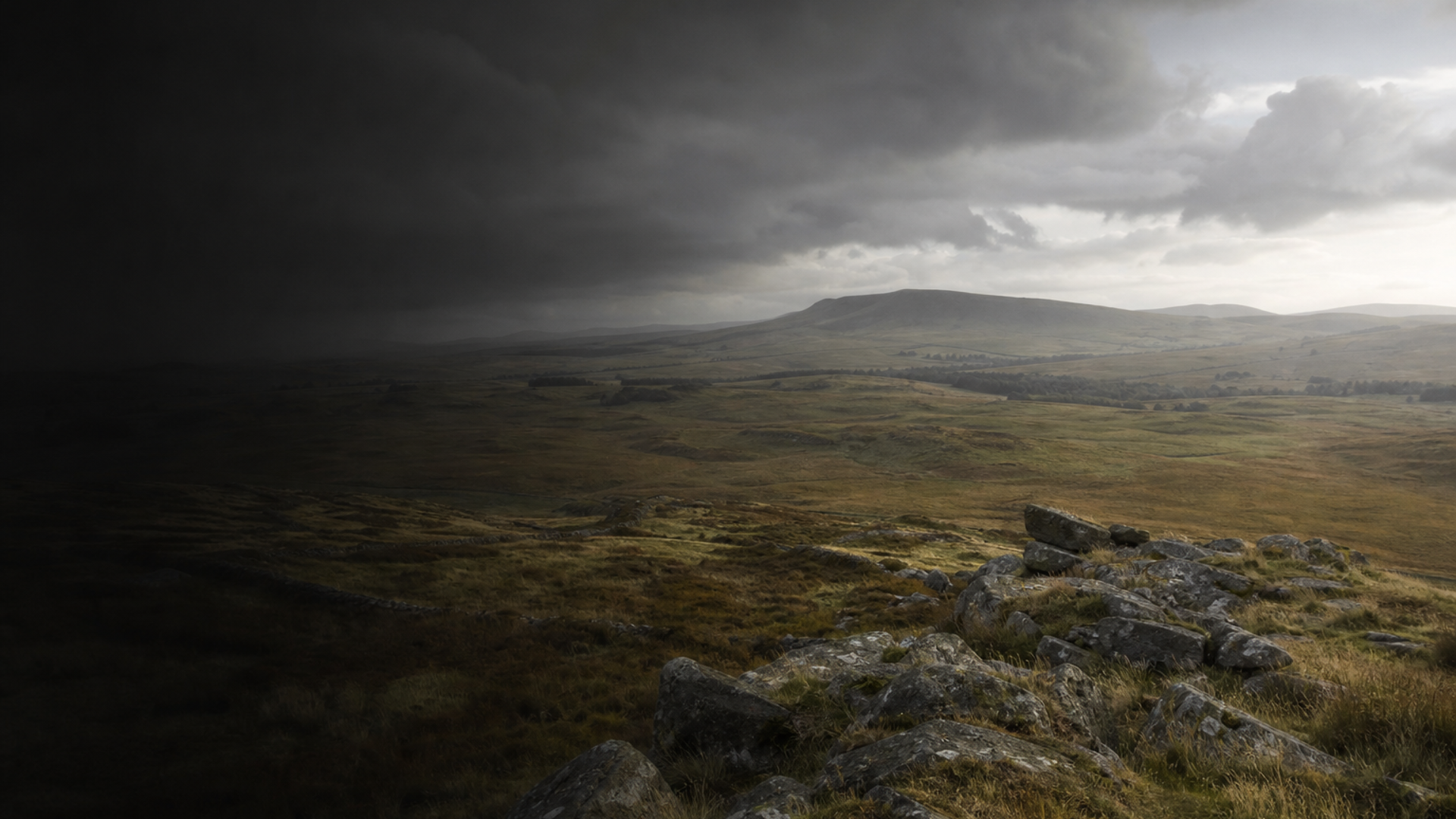
Across the English chalklands and river valleys, the transition into the Early Bronze Age unfolds like a slow, luminous dawn. Archaeological data indicates continuity from late Chalcolithic traditions—barrow burial, metalworking, and regional exchange—combined with new iconography and burial rites. Key cemetery landscapes sampled here include Barrow Hills (Radley, Oxfordshire), Amesbury Down and Boscombe Airfield (Wiltshire), Melton Quarry near North Ferriby (East Riding, Yorkshire), and coastal sites such as Thanet (Kent).

Material culture—bronze objects, Beaker-influenced pottery types in some contexts, and reorganized barrow cemeteries—suggests social transformations rather than simple population replacement. Genetic evidence from Britain more broadly points to a substantial influx of Steppe-derived ancestry during the 3rd millennium BCE that contributed male-biased lineages; in England_C_EBA this signal is visible but varies by site. Limited evidence suggests local Neolithic-descended maternal lineages persist alongside incoming paternal lineages, implying complex admixture and inheritable social networks.

Archaeological layers and radiocarbon dates across the sampled range (2462–1453 BCE) show that emergence was regionally staggered: some communities adopted Early Bronze Age funerary styles earlier, while others maintained earlier local customs for generations.

  • Emergence from late Chalcolithic contexts, 3rd–2nd millennium BCE
  • Sampled cemeteries across Oxfordshire, Wiltshire, Yorkshire, Lincolnshire, Durham, Cambridgeshire, Kent
  • Archaeology indicates cultural change with substantial local continuity
Chapter IV

Daily Life & Society

Everyday life in central Early Bronze Age England would have been shaped by seasonal rhythms, small-scale agriculture, and expanding networks of exchange. Archaeobotanical and environmental studies from contemporary contexts show mixed cereal cultivation, pastoral grazing on chalk and upland margins, and woodland management for fuel and construction. Settlements associated with barrow landscapes are often ephemeral in the record; long-term residence may have been punctuated by ritual focus on burial mounds and communal feasting.

Mortuary practice is a key window into social life. Barrows and cairns—visible on the skyline—served as territorial markers and stages for memory. Grave goods vary: some burials include metalwork and personal ornaments, others are modest, suggesting social differentiation. Sites like Hasting Hill (Sunderland) and Windmill Fields (Stockton-on-Tees) illustrate regional variation in deposition and monumentality. Craft specializations such as bronze casting appear in the archaeological record and would have required specialized skills and long-distance exchange for raw materials like tin.

Cinematically, communities were neither isolated nor uniform: coastal and riverine corridors connected families across hundreds of kilometres, while local identities remained anchored to ancestral lands and burial mounds.

  • Agriculture and pastoralism dominated subsistence
  • Barrows as social landmarks; variation in grave wealth indicates social differentiation
Chapter V

Genetic Profile

Genetic data from 42 individuals dated between 2462–1453 BCE provides a moderate-resolution portrait of ancestry in central Early Bronze Age England. The Y-chromosome evidence is dominated by haplogroup R (21 individuals), with single occurrences of I and R1b noted; this pattern aligns with broader northern European trends where Steppe-derived paternal lineages became common during and after the 3rd millennium BCE. Meanwhile mitochondrial DNA diversity is higher and more regionally mixed: U (14), K (6), H (4), J (3), and T (2), suggesting persistence of maternal lineages with roots in Neolithic farming populations and earlier Mesolithic threads.

Archaeogenetic modeling of comparable British EBA datasets indicates substantial Steppe-related autosomal ancestry introduced earlier (associated with the Beaker complex and subsequent movements). In England_C_EBA the mixture proportions vary across sites, pointing to local admixture events rather than uniform replacement. Male-biased influx—evidenced by R-lineage predominance—paired with diverse maternal haplogroups suggests patterns of patrilocality or incoming male groups marrying into local female networks, though social interpretations remain tentative.

Limitations: while 42 samples give useful statistical power, geographic sampling is uneven and chronological clustering may bias inference; further sampling will refine regional patterns and kinship reconstructions.

  • Predominant Y haplogroup R (21/42) indicates strong Steppe-derived paternal contribution
  • mtDNA diversity (U, K, H, J, T) implies continuity of local maternal lineages
Chapter VI

Legacy & Modern Connections

The genetic and archaeological imprint of the Early Bronze Age endures subtly in modern British genomes and cultural landscapes. Steppe-related ancestry introduced in the late 3rd millennium BCE contributes substantially to the paternal heritage detectable in later populations, while mitochondrial lineages trace a longer continuity of female ancestry rooted in Britain’s Neolithic past. Modern regional genetic structure in England carries echoes of these deep admixture events, layered over millennia of subsequent mobility.

Archaeologically, barrows, relict field systems and the placement of Bronze Age cemeteries continue to shape rural topography and heritage narratives. Caution is essential: connecting ancient individuals directly to modern identities oversimplifies many centuries of population movement and cultural change. Nonetheless, the mingling of incoming and local ancestries documented in these samples provides a clear example of how migration, marriage networks, and local traditions together sculpt population history.

  • Early Bronze Age admixture contributed to the paternal substrate of later British populations
  • Barrow landscapes remain visible markers of prehistoric social life and memory
AI 电源

AI 助手

就 England — Central Early Bronze Age 文化提问

AI 助手 由DNAGENICS公司制作

解锁此特性
Ask questions about the England — Central Early Bronze Age culture. Our AI assistant can explain genetic findings, historical context, archaeological evidence, and modern connections.
AI 样本分析

England — Central Early Bronze Age 文化是人类历史中值得了解的一章……

遗传分析揭示了与早期种群的联系,同时显示了独特的适应和文化创新的证据。 古代DNA样本提供了对迁徙模式、社会结构以及古代种群之间的生物关系的深刻见解。

这是人工智能分析的预览。 解锁全AI 助手, 以探索关于:

  • 遗传组成和祖先
  • 移徙模式和起源
  • 日常生活和文化习俗
  • 现代遗传遗产

探索更古老的文化

揭开古代世界文明的故事

使用优惠码 可减免 35% • 11月12日 到期