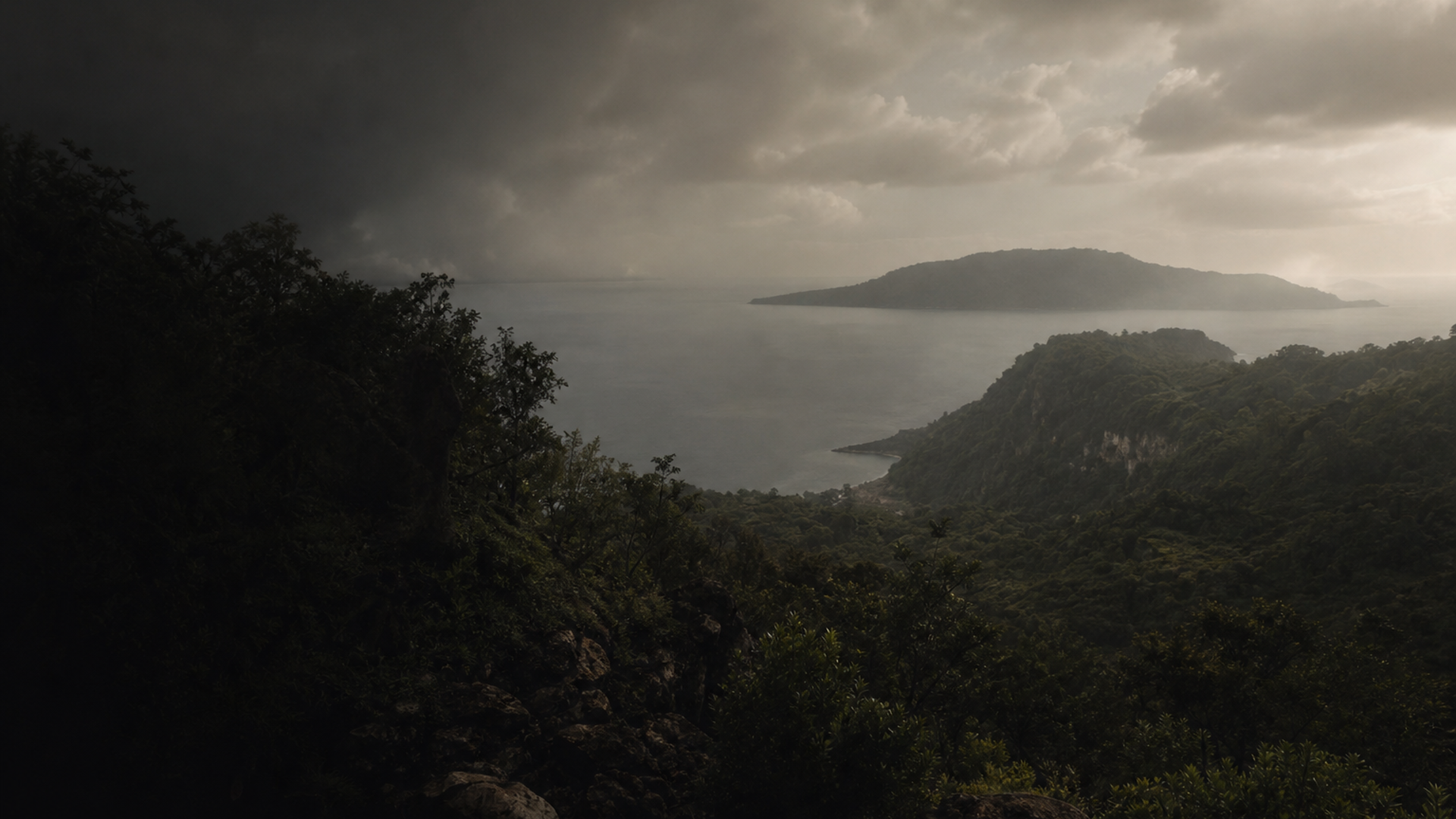
Epi–Efate Islanders (c.1520–1950 CE)

下载的 PDF 是图像副本。如需可选中文本及更好的辅助技术支持,请使用打印功能。

Epi–Efate Islanders (c.1520–1950 CE)

揭开一个失落的文明

正在加载考古记录……

正在收集古代记录

跳转到主内容
Epi–Efate Islanders (c.1520–1950 CE)
文明焦点

Epi–Efate Islanders (c.1520–1950 CE)

A portrait of late pre‑colonial and colonial‑era Vanuatu through archaeology and ancient DNA

1520 CE - 1950 CE
Vanuatu (Epi & Efate islands)
滚动开始
Chapter I

剧情

了解 Epi–Efate Islanders (c.1520–1950 CE) 文化

Archaeological and genetic evidence from six individuals (Epi and Efate islands) dated 1520–1950 CE reveal a tapestry of Austronesian maternal lineages and mixed paternal signals, suggesting deep Melanesian–Austronesian interaction in Vanuatu with important but provisional insights due to small sample size.

Time Period

1520–1950 CE

Region

Vanuatu (Epi & Efate islands)

Common Y-DNA

O (2), S (1), M (1)

Common mtDNA

B (3), M (1), P2 (1), P (1)

Chapter II

时间线

这种文化历史上的关键时刻

1606 CE

First recorded European sightings

Early European voyages began to record islands of Vanuatu, initiating long‑term contact and trade that later altered material culture and demographics.

1774 CE

Charting and increased exploration

Expanded European navigation and mapping increased external links, bringing new goods and diseases that affected island societies.

1906 CE

Colonial administration formalized

The imposition of external colonial governance in the New Hebrides reshaped political and economic life across Vanuatu.

Chapter III

Origins & Emergence

The human presence on Epi and Efate is the visible endpoint of millennia of oceanic voyaging and island settlement. For these samples—recovered from Wam Bay (Epi Island) and multiple sites on Efate (Banana Bay, Pango Village, Ifira, Pangpang) and dated between 1520 and 1950 CE—archaeological context links living villages, horticultural plots, and coastal middens rather than large monumental architecture. Archaeological data indicates continuity of local material traditions long after the initial Lapita arrival to Vanuatu (earlier millennia), with changes in artifact styles, gardening practices, and contact goods visible in late pre‑colonial and colonial deposits.

Limited evidence from these sites shows that communities maintained dense cultural knowledge of canoe navigation, yam and taro cultivation, and reef fisheries. Ethnographic and historical sources describe multilayered exchange networks among islands of central Vanuatu; the skeletal and burial contexts associated with the sampled individuals are consistent with small village cemeteries or isolated interments. Because the radiocarbon span covers both pre‑contact and colonial periods, some archaeological signatures—iron trade goods, glass beads—may reflect changing lifeways after first European sightings. Overall, the archaeological record frames these individuals as participants in enduring island lifeways shaped by repeated contact, environmental management, and resilient social structures. Given the small number of genetic samples, conclusions about populationwide origins remain tentative.

  • Samples from Epi (Wam Bay) and Efate (Banana Bay, Pango, Ifira, Pangpang)
  • Material culture shows continuity with earlier Vanuatu traditions and later colonial influences
  • Context suggests village burials tied to horticultural, maritime lifeways
Chapter IV

Daily Life & Society

Imagine a shoreline at dusk: canoes hauled into sand, smoke rising from cooking pits, and woven houses clustered amid taro terraces. Archaeological indicators from the Efate and Epi sites—domestic middens, shellfish remains, stone adzes, and fragments of introduced metal—evoke daily routines of fishing, gardening, barkcloth production, and canoe repair. Ethnohistoric accounts and excavated assemblages suggest households organized around kin groups, with reciprocal exchange of horticultural surplus and marine products among neighboring villages.

Archaeological data indicates horticulture (taro, yam, breadfruit) dominated plant production, supplemented by breadfruit and coconut for storage and long voyages. Shellfish, reef fish, and occasionally pelagic catches furnished protein; shell artefacts and fishhooks point to sophisticated marine technologies. Social life appears tied to lineage and ritual obligations—burial treatments, grave goods, and elevated platforms in the landscape—though the small excavated sample limits broad inference. The arrival of European goods (metal, glass) in some stratigraphic layers signals changing craft practices: iron tools often replaced stone, yet traditional boatbuilding and weaving persisted.

These traces portray resilient communities adapting material culture while sustaining ancestral practices, a pattern consistent across late pre‑colonial and colonial Vanuatu. However, the archaeological record at these specific sites is fragmentary; continued fieldwork is needed to refine social reconstructions.

  • Economy centered on taro, yam, breadfruit, and reef fisheries
  • Material culture blends traditional crafts with introduced metal and glass
Chapter V

Genetic Profile

Six ancient individuals from Epi and Efate provide a narrow but revealing genetic window into late pre‑colonial and colonial Vanuatu. Mitochondrial DNA is dominated by haplogroup B (3 of 6), with single occurrences of M, P2, and P. Haplogroup B (especially B4a lineages) is widely associated with the Austronesian expansion across the Pacific and often marks maternal ancestry tied to island‑hopping voyagers. The presence of P and P2 (haplogroups rooted in Near Oceania) and M (a diverse Eurasian/Melanesian lineage) signals persistence of local maternal lineages in the archipelago.

On the paternal side, Y‑DNA shows two individuals assigned to haplogroup O, typically associated with Austronesian‑language populations; one S and one M, both more common in Melanesia or Papuan contexts. This mixed paternal signal suggests heterogeneous male ancestry—some lineages reflecting Austronesian male input and others representing Papuan/Melanesian continuity. Archaeological patterns of exchange and interisland marriage can produce exactly this mosaic of maternal and paternal signatures.

Crucially, the sample count is low (n = 6). With fewer than ten individuals, population‑level inferences are preliminary and subject to sampling bias. Archaeogenetic interpretations should therefore be framed as provisional: the data aligns with broader models of Austronesian maternal influence combined with substantial Papuan/Melanesian ancestry in Vanuatu, but more samples across time and islands are required to resolve fine‑scale demographic transitions.

  • mtDNA dominated by Austronesian‑associated B haplogroups (3/6)
  • Y‑DNA shows mixed paternal ancestry: O (Austronesian) alongside S and M (Melanesian)
Chapter VI

Legacy & Modern Connections

The genetic and archaeological traces from Epi and Efate resonate in living Vanuatu communities today. Contemporary populations in central Vanuatu exhibit a similar dual heritage: Austronesian cultural forms (language families, navigation techniques) layered upon deep Melanesian genetic substrata. The mtDNA dominance of haplogroup B in these ancient individuals echoes maternal lineages that persist across many Pacific islands, while paternal diversity reflects longstanding regional interaction.

Archaeological continuity—gardening practices, canoe building, and social exchange—links past lifeways with present identities. At the same time, colonial contact and subsequent demographic upheavals introduced new social and biological dynamics after the periods represented by these samples. Given the small sample set, these six genomes should be read as individual stories that contribute to a larger narrative: Vanuatu’s peoples are the living consequence of oceanic migration, local adaptation, and centuries of interconnection. Ongoing collaboration with Ni‑Vanuatu communities and expanded genetic sampling will strengthen the bridge between ancient remains and modern ancestry.

  • Ancient maternal lineages parallel modern Austronesian‑linked mtDNA patterns
  • Findings underscore cultural resilience and long‑term Melanesian–Austronesian admixture
AI 电源

AI 助手

就 Epi–Efate Islanders (c.1520–1950 CE) 文化提问

AI 助手 由DNAGENICS公司制作

解锁此特性
Ask questions about the Epi–Efate Islanders (c.1520–1950 CE) culture. Our AI assistant can explain genetic findings, historical context, archaeological evidence, and modern connections.
AI 样本分析

Epi–Efate Islanders (c.1520–1950 CE) 文化是人类历史中值得了解的一章……

遗传分析揭示了与早期种群的联系,同时显示了独特的适应和文化创新的证据。 古代DNA样本提供了对迁徙模式、社会结构以及古代种群之间的生物关系的深刻见解。

这是人工智能分析的预览。 解锁全AI 助手, 以探索关于:

  • 遗传组成和祖先
  • 移徙模式和起源
  • 日常生活和文化习俗
  • 现代遗传遗产

探索更古老的文化

揭开古代世界文明的故事

使用优惠码 可减免 35% • 11月12日 到期