Fingira LSA — Ancient Voices of Malawi

下载的 PDF 是图像副本。如需可选中文本及更好的辅助技术支持,请使用打印功能。

Fingira LSA — Ancient Voices of Malawi

揭开一个失落的文明

正在加载考古记录……

正在收集古代记录

跳转到主内容
Fingira LSA — Ancient Voices of Malawi
文明焦点

Fingira LSA — Ancient Voices of Malawi

Rock-shelter occupations (4300 BCE–400 BCE) where stone, pigment and DNA meet

4300 BCE - 400 BCE
Fingira, northern Lake Malawi, Malawi
滚动开始
Chapter I

剧情

了解 Fingira LSA — Ancient Voices of Malawi 文化

Archaeological remains from Fingira, Malawi (c. 4300–400 BCE) reveal Late Stone Age lifeways. Three ancient genomes offer preliminary clues: Y haplogroup B and mtDNA L lineages appear, hinting at deep sub-Saharan ancestry and local continuity amid later population shifts.

Time Period

c. 4300 BCE – 400 BCE

Region

Fingira, northern Lake Malawi, Malawi

Common Y-DNA

B (observed in 2/3 samples)

Common mtDNA

L (observed in 2/3 samples)

Chapter II

时间线

这种文化历史上的关键时刻

4300 BCE

Earliest documented Fingira occupation

Radiocarbon and stratigraphic data indicate human activity at Fingira rock shelters beginning around 4300 BCE, marking early Late Stone Age presence on the Lake Malawi shore.

400 BCE

Latest sampled occupation

The most recent dated material and genomes from the Malawi_Fingira_LSA_6000BP series fall near 400 BCE, documenting continued LSA activity into the late first millennium BCE.

Chapter III

Origins & Emergence

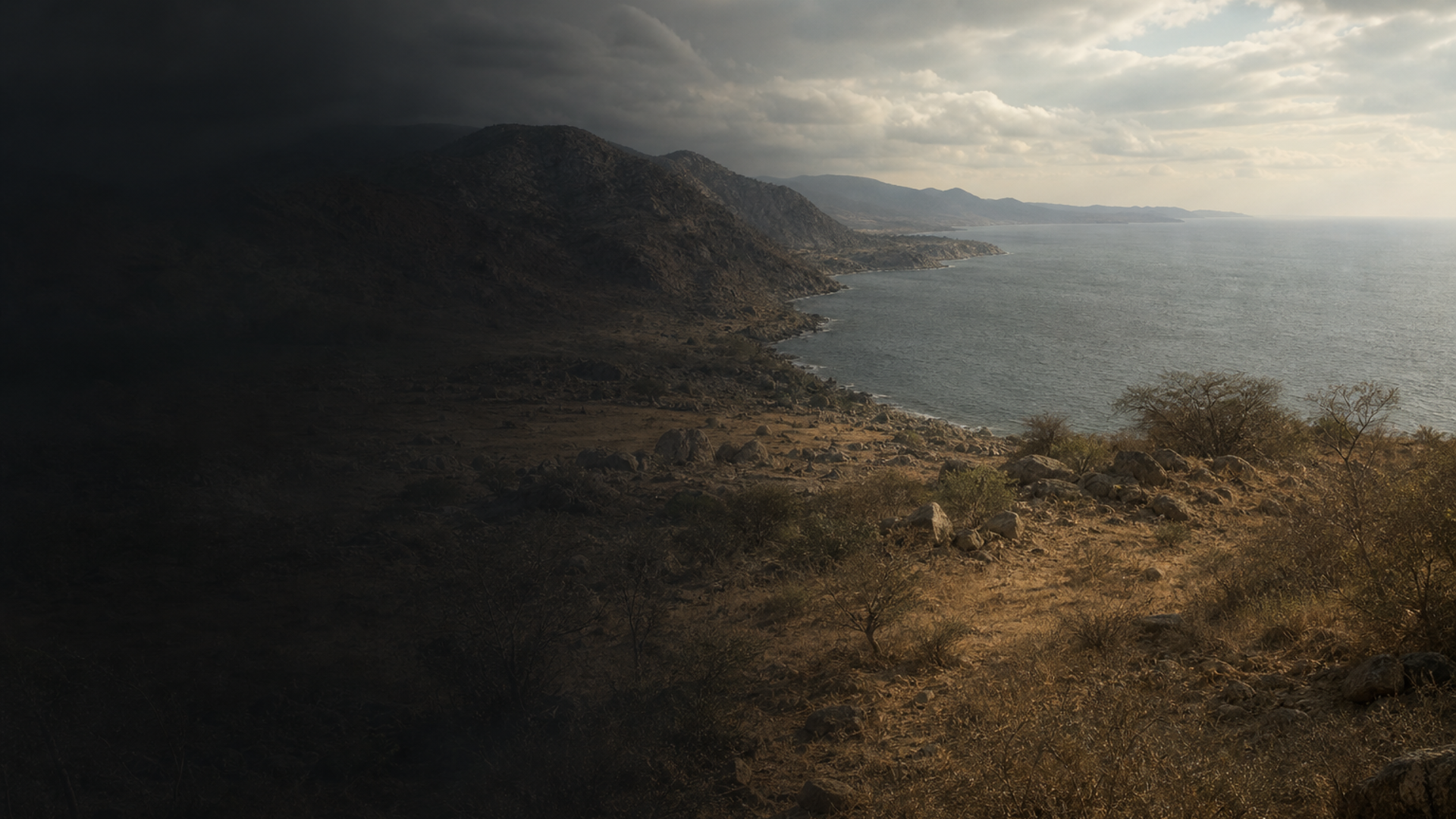
The Fingira sequence in northern Malawi preserves episodic Late Stone Age occupations along the western shores of Lake Malawi. Archaeological data from rock shelters and open-air scatters at Fingira indicate human presence from roughly 4300 BCE through the late first millennium BCE, a span captured by the Malawi_Fingira_LSA_6000BP label. The material record — dominated by microlithic stone tools, hearth features and fragmented faunal remains — evokes mobile forager-fisher groups exploiting rivers, wetlands and lakeshore resources.

Cinematic images of smoke and lamps in shallow shelters come from evidence of repeated short-term camps rather than permanent villages. Rock art panels at nearby localities in the Malawi Rift suggest symbolic landscapes; direct associations with the excavated deposits at Fingira are plausible but remain uncertain.

Genetically, the limited ancient DNA recovered from three individuals provides a first window into the people who occupied this landscape. However, with only three genomes, conclusions about population origins and continuity must remain tentative. Archaeological indications point to long-term LSA adaptations that may have persisted alongside or been transformed by later movements into the region, such as early food-producing populations whose arrival chronology in parts of East Africa is still debated.

  • Occupations dated c. 4300 BCE–400 BCE at Fingira rock shelters
  • Microlithic stone tools and hearths indicate mobile forager-fisher lifeways
  • Limited DNA samples give tentative insight into deep regional ancestry
Chapter IV

Daily Life & Society

Life along the Lake Malawi shore at Fingira would have been shaped by water, seasonal abundance and mobility. Archaeological assemblages show concentrations of small stone tools that are effective for hunting small game, processing plants and preparing fish. Shell and fish bone recovery from analogous LSA sites in the region suggests that lacustrine resources were central to diets, while hearth features speak to repeated use of sheltered spots for cooking, tool-making and social exchange.

Social units were likely small, flexible bands with high mobility tuned to resource schedules: fishing during seasons of abundance, inland foraging at other times. The presence of pigments and possible ornaments in Late Stone Age contexts elsewhere in Malawi provokes images of social signaling and ritual, though direct evidence from Fingira for ornaments or explicit ritual practice is limited. Material culture emphasizes adaptability: lightweight toolkit components, hafted implements, and sites chosen for access to fresh water and sheltered rock surfaces.

Archaeological interpretations rely on preserved sediments and refuse; preservation biases mean much daily activity leaves no trace. Consequently, reconstructions of household structures, kin relations and long-distance exchange networks for Fingira remain hypothesized rather than firmly documented.

  • Fishing, hunting and plant gathering likely formed the subsistence base
  • Small, mobile bands using rock shelters seasonally; symbolic behavior possible but not well preserved
Chapter V

Genetic Profile

Three ancient genomes from Fingira provide a cautious, early genetic glimpse of Late Stone Age people in Malawi. Two male individuals carried Y-chromosome haplogroup B, a lineage observed across parts of sub-Saharan Africa and often associated with deep regional male ancestries. Two individuals carried mitochondrial haplogroup L maternal lineages, the broad African mtDNA family that dominates modern sub-Saharan populations.

These findings are consistent with expectations for ancient southern African and East African forager groups, but with critical caveats: the sample count is three — well below ten — so patterns of genetic diversity, population structure and admixture remain highly provisional. Genetic continuity with later populations (for example, incoming Bantu-speaking groups from the west and north) cannot be assessed robustly from this dataset alone.

Where the ancient Fingira genomes do speak louder is in anchoring a temporal point: genetic lineages present here by 4300–400 BCE contribute to a mosaic of ancestries that later populations inherited, mixed with, or replaced. Future sampling across time and space — more individuals, higher coverage genomes, and comparative data from neighboring regions — will be necessary to test hypotheses about continuity, gene flow, and demographic change in the Malawi Rift.

  • Y haplogroup B found in two individuals; mtDNA L observed in two individuals
  • Small sample (n=3) means genetic conclusions are preliminary and require more data
Chapter VI

Legacy & Modern Connections

The fragile threads from Fingira tie into broader stories across southern and eastern Africa. Maternal L lineages are widespread today, and Y-haplogroup B persists in parts of sub-Saharan Africa, suggesting some degree of deep ancestral continuity in the region. Archaeological continuity of LSA technologies alongside later changes highlights a long-term human presence adapting to the Rift landscape.

Importantly, the connections between these ancient genomes and living communities are not one-to-one: migrations, population turnovers and cultural change over millennia reshaped ancestry landscapes. The Fingira samples therefore serve as important temporal anchors — evocative snapshots that can be compared against modern genetic variation to illuminate trajectories of movement, interaction and survival. Ongoing ethical engagement with local communities, expanded sampling, and integrated archaeological-genetic studies will refine how these ancient voices are heard in today's genetic mosaic.

  • Lineages observed may contribute to the deep ancestry of modern regional populations
  • Further sampling and community engagement are crucial to clarify long-term connections
AI 电源

AI 助手

就 Fingira LSA — Ancient Voices of Malawi 文化提问

AI 助手 由DNAGENICS公司制作

解锁此特性
Ask questions about the Fingira LSA — Ancient Voices of Malawi culture. Our AI assistant can explain genetic findings, historical context, archaeological evidence, and modern connections.
AI 样本分析

Fingira LSA — Ancient Voices of Malawi 文化是人类历史中值得了解的一章……

遗传分析揭示了与早期种群的联系,同时显示了独特的适应和文化创新的证据。 古代DNA样本提供了对迁徙模式、社会结构以及古代种群之间的生物关系的深刻见解。

这是人工智能分析的预览。 解锁全AI 助手, 以探索关于:

  • 遗传组成和祖先
  • 移徙模式和起源
  • 日常生活和文化习俗
  • 现代遗传遗产

探索更古老的文化

揭开古代世界文明的故事

使用优惠码 可减免 35% • 11月12日 到期