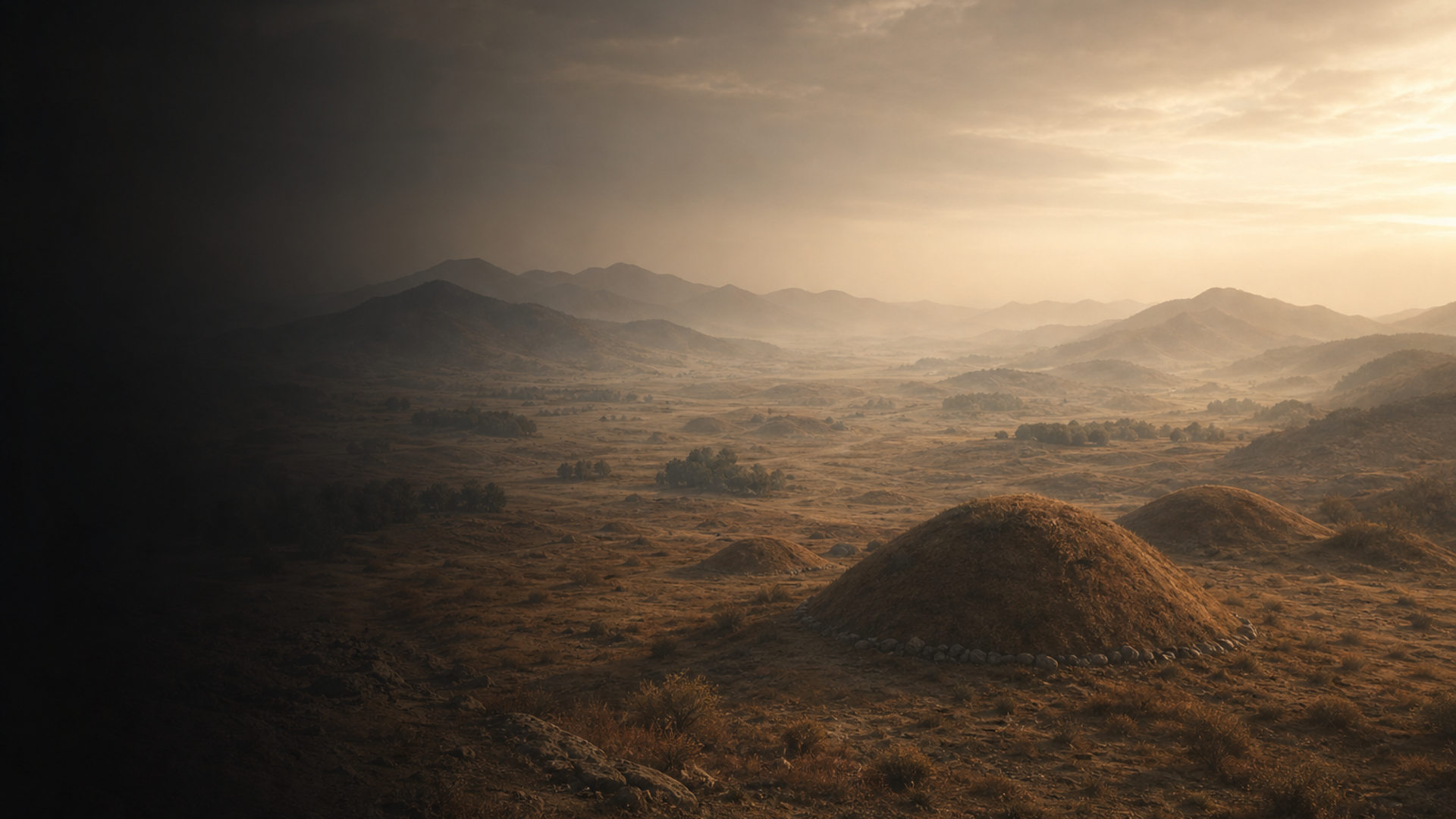
Gimhae — Daeseong-dong (300–500 CE)

下载的 PDF 是图像副本。如需可选中文本及更好的辅助技术支持,请使用打印功能。

Gimhae — Daeseong-dong (300–500 CE)

揭开一个失落的文明

正在加载考古记录……

正在收集古代记录

跳转到主内容
Gimhae — Daeseong-dong (300–500 CE)
文明焦点

Gimhae — Daeseong-dong (300–500 CE)

Maternal lineages from a Gimhae cemetery illuminate local lives in the Three Kingdoms era.

300 CE - 500 CE
Gyeongsangnam-do, South Korea
滚动开始
Chapter I

剧情

了解 Gimhae — Daeseong-dong (300–500 CE) 文化

Archaeogenetic and archaeological data from seven individuals at Daeseong-dong (Gyeongsangnam-do) dated to 300–500 CE reveal predominantly maternal haplogroup D. Limited samples suggest maternal continuity with Northeast Asia and hint at the complex human tapestry of the Gaya/Three Kingdoms world.

Time Period

300–500 CE

Region

Gyeongsangnam-do, South Korea

Common Y-DNA

Undetermined (not reported in 7 samples)

Common mtDNA

D (4), B (1), M (1), F (1)

Chapter II

时间线

这种文化历史上的关键时刻

300 CE

Local cemetery use begins

Archaeological dating places initial use of Daeseong-dong cemetery around 300 CE, during early Three Kingdoms developments.

500 CE

Terminal burials at Daeseong-dong

Evidence indicates cemetery use continues until around 500 CE, spanning key centuries of Gaya and Silla interaction.

562 CE

Gaya absorbed by Silla

Historical processes culminate with the incorporation of Gaya territories into Silla around 562 CE, altering regional power dynamics.

Chapter III

Origins & Emergence

Daeseong-dong lies in the fertile plains of Gyeongsangnam-do along routes that connected inland agrarian communities with coastal trade. Archaeological fieldwork at Daeseong-dong and nearby Gimhae sites dates cemetery use and associated material culture to roughly 300–500 CE, a moment when the Gaya polities and neighboring Silla were intensifying metallurgy, rice agriculture, and maritime exchange. The graves and settlement traces speak of communities participating in long-distance exchange — iron tools, distinct pottery forms, and mortuary patterns that resonate with broader Three Kingdoms-era practices.

Genetic sampling from the cemetery is small but telling: seven individuals were analyzed for mitochondrial DNA. The predominance of mtDNA haplogroup D among these seven suggests maternal ties with broader Northeast Asian maternal lineages common in ancient and many modern populations of the Korean peninsula. Archaeological data indicate local continuity in settlement and craft traditions, but the genetic signal must be read cautiously — seven genomes cannot capture full demographic complexity. Limited evidence suggests a community rooted in local landscapes while connected to regional networks of exchange and cultural influence.

  • Daeseong-dong cemetery dated ca. 300–500 CE in Gyeongsangnam-do
  • Material culture aligns with Gaya/Three Kingdoms-era trade and metallurgy
  • Sample set: 7 individuals — preliminary but informative
Chapter IV

Daily Life & Society

Archaeology at Gimhae and Daeseong-dong paints a cinematic portrait of daily life: wooden houses clustered near rice paddies, smoke from kilns and ironworking sites, and boats slipping along estuaries that ferried people and goods. Mortuary practices preserve social signals — variations in grave goods and burial construction hint at status differences within small polities. The presence of iron tools and evidence for specialized craft activities suggest communities supported skilled smiths and artisans alongside farmers.

Plants, animal remains, and landscape archaeology indicate wet-rice agriculture as a staple economy, complemented by foraging, fishing, and trade. Exchange networks linked inland settlements to the southern coast, enabling inflows of raw materials and stylistic influences. While the skeletal sample from Daeseong-dong is limited, osteological data when available can reveal diet, workload, and mobility; combining these with DNA creates a fuller picture of lived experience in a dynamic Three Kingdoms era.

  • Economy centered on wet-rice agriculture, ironworking, and coastal trade
  • Mortuary variability suggests social differentiation within the community
Chapter V

Genetic Profile

Seven individuals from Daeseong-dong were analyzed for mitochondrial DNA: four carried haplogroup D, one B, one M, and one F. Haplogroup D is widespread across Northeast Asia and occurs in many ancient and modern Korean, Japanese, and northern East Asian assemblages; its predominance here points to maternal continuity with regional populations. The presence of B, M, and F—each with broader pan-East Asian distributions—illustrates maternal diversity at the cemetery.

Importantly, Y-chromosome information is not reported for these seven samples, so paternal lineages and patterns of male-mediated mobility remain unknown. With fewer than 10 genomes, any population-level inference is provisional: the sample may underrepresent subgroups or overemphasize lineages by chance. Archaeogenetics paired with archaeological context — burial position, associated goods, and isotopic mobility studies — offers the best path forward for testing hypotheses about kinship, migration, and marriage practices in late Iron Age Korea. Future larger-sample studies and genome-wide data will be needed to confirm whether the Daeseong-dong signal reflects local maternal continuity, incoming groups, or a mixture of both.

  • mtDNA dominated by haplogroup D (4/7) — suggests Northeast Asian maternal links
  • Y-DNA not reported; small sample size (<10) makes conclusions preliminary
Chapter VI

Legacy & Modern Connections

The Daeseong-dong individuals occupy a connective tissue between ancient lifeways and modern populations. Maternal haplogroups found at the site — particularly D — persist in contemporary Korean and regional gene pools, suggesting threads of biological continuity across 1,500+ years. Archaeologically, the material world of Gimhae feeds into how historians reconstruct the Gaya role within the Three Kingdoms mosaic: a node of craft specialization and maritime exchange whose human stories remain legible through combined genetic and material evidence.

Because the genetic sample is small and geographically focused, we should treat links to modern populations as suggestive rather than definitive. Still, the evocative convergence of burial archaeology and mitochondrial DNA at Daeseong-dong opens a window: it allows us to imagine mothers, artisans, and travelers whose lives contributed to the biological and cultural fabric of early Korean states. Continued sampling, genome-wide sequencing, and multidisciplinary study will clarify how local continuity and regional mobility shaped the peninsula's genetic landscape.

  • Maternal lineages correspond with continued Northeast Asian genetic presence
  • Combined archaeology and DNA offer a cautious but vivid bridge to the present
AI 电源

AI 助手

就 Gimhae — Daeseong-dong (300–500 CE) 文化提问

AI 助手 由DNAGENICS公司制作

解锁此特性
Ask questions about the Gimhae — Daeseong-dong (300–500 CE) culture. Our AI assistant can explain genetic findings, historical context, archaeological evidence, and modern connections.
AI 样本分析

Gimhae — Daeseong-dong (300–500 CE) 文化是人类历史中值得了解的一章……

遗传分析揭示了与早期种群的联系,同时显示了独特的适应和文化创新的证据。 古代DNA样本提供了对迁徙模式、社会结构以及古代种群之间的生物关系的深刻见解。

这是人工智能分析的预览。 解锁全AI 助手, 以探索关于:

  • 遗传组成和祖先
  • 移徙模式和起源
  • 日常生活和文化习俗
  • 现代遗传遗产

探索更古老的文化

揭开古代世界文明的故事

使用优惠码 可减免 35% • 11月12日 到期