Goyet Q53-1: A Paleolithic Portrait

下载的 PDF 是图像副本。如需可选中文本及更好的辅助技术支持,请使用打印功能。

Goyet Q53-1: A Paleolithic Portrait

揭开一个失落的文明

正在加载考古记录……

正在收集古代记录

跳转到主内容
Goyet Q53-1: A Paleolithic Portrait
文明焦点

Goyet Q53-1: A Paleolithic Portrait

A single 26,000‑year‑old individual from Goyet cave linking stone, bone and DNA.

26440 CE - 25823 BCE
Goyet cave, Namur province, Belgium (Western Europe)
滚动开始
Chapter I

剧情

了解 Goyet Q53-1: A Paleolithic Portrait 文化

An Upper Paleolithic individual (26440–25823 BCE) from the Troisième caverne of Goyet cave, Belgium. Archaeological context and ancient mtDNA (U2) offer a rare glimpse into Late Pleistocene life in northwest Europe; conclusions remain preliminary given a single sample.

Time Period

26440–25823 BCE (Upper Paleolithic)

Region

Goyet cave, Namur province, Belgium (Western Europe)

Common Y-DNA

Unknown (no Y-DNA data from this single sample)

Common mtDNA

U2 (1 sample)

Chapter II

时间线

这种文化历史上的关键时刻

26132 BCE

Occupation of Goyet cave (Q53-1 individual)

Radiocarbon-dated individual inhabits Troisième caverne; traces of tool use and hearths indicate episodic occupation by hunter‑gatherers.

Chapter III

Origins & Emergence

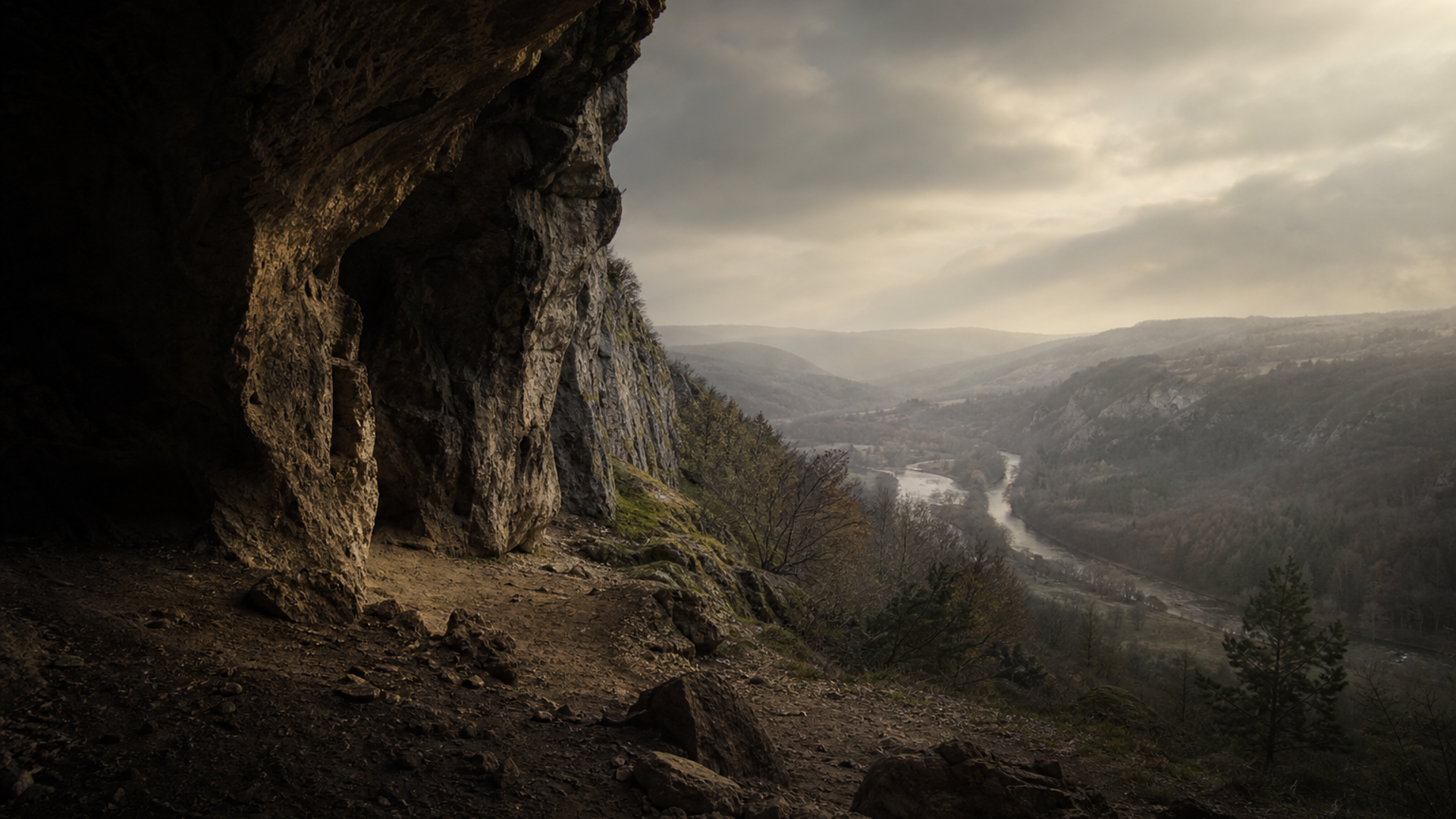
The specimen labeled Belgium_UP_GoyetQ53_1 comes from the Troisième caverne of Goyet cave, a deep karst system in the Namur region whose stratigraphy preserves repeated occupations through the Upper Paleolithic. Radiocarbon bounds for this individual fall between 26,440 and 25,823 BCE, situating it in a cold phase of the Late Pleistocene several thousand years before the Last Glacial Maximum. Archaeological data indicates that Goyet was a long-lived place of shelter, with layers containing lithic technology often associated in this region with Gravettian and later Upper Paleolithic industries. The human presence here likely reflects mobile hunter‑gatherer groups exploiting rich, patchy environments of steppe and tundra-edge habitats.

Cinematic in its silence, the cave preserves hearth stains, chipped flints, and worked bone — signatures of episodic occupation rather than permanent settlement. Limited evidence suggests that people returned to the same caves across generations, perhaps following animal herds and seasonal resources. While the single genomic sample is a powerful window into individual life, population-level inferences are necessarily tentative; one genome cannot capture the full demographic diversity of Upper Paleolithic Belgium.

  • Single individual dated 26,440–25,823 BCE from Goyet cave (Troisième caverne)
  • Site contains repeated Upper Paleolithic layers (local Gravettian associations)
  • Evidence of episodic cave use by mobile hunter‑gatherer groups
Chapter IV

Daily Life & Society

Daily life for the people who used Goyet cave would have been framed by a harsh, variable Pleistocene landscape: open plains punctuated by patches of woodland, with cold-adapted fauna such as reindeer, horse and large ungulates. Archaeological assemblages from Goyet more broadly include blade and bladelet industries, retouched tools, pierced bone, and personal ornaments in other layers — indicators of sophisticated toolkits and symbolic behavior. Hearth features and refitting studies show here and elsewhere that camps were organized around small, task-divided activities: raw material preparation, tool production, hide processing and food preparation.

Social groups were likely small and highly mobile, moving across river valleys and limestone shelves that funnelled animals and people. Articulate social networks are implied by long-distance exchange of raw materials documented in the region; such networks would help buffer environmental risk through information and mate exchange. However, at Goyet Q53-1 specifically, direct evidence of social structure is limited. The material record preserves the traces of skillful adaptation and cultural expression, but interpreting social roles or group sizes from a single burial-associated individual remains speculative.

  • Toolkits reflect blade technology and bone working
  • Small, mobile groups exploited seasonal resources and exchange networks
Chapter V

Genetic Profile

Genetic data from Belgium_UP_GoyetQ53_1 are sparse but informative: mitochondrial DNA belongs to haplogroup U2. mtDNA U lineages (including U2, U4, U5) are known across Upper Paleolithic Europe and are often interpreted as part of the deep maternal substrate of Pleistocene hunter‑gatherers. The presence of U2 in this individual aligns with broader patterns of maternal diversity in Late Pleistocene western Eurasia, suggesting connections—either through ancestry or gene flow—with other Upper Paleolithic groups in Europe.

No Y-chromosome haplogroup is reported for this sample, and autosomal data are limited or not available in public summaries; therefore, population-level affinities (e.g., relationships to contemporaneous groups or to later Mesolithic and Neolithic populations) cannot be robustly assessed from this single individual. Importantly, with n=1, any genetic signal must be treated as preliminary. Ancient DNA from nearby sites and additional Goyet samples would help clarify whether U2 at Goyet represents local continuity, a transient lineage brought by a migrating band, or part of a wider, regionally distributed maternal pool.

  • mtDNA haplogroup U2 identified in the single sample
  • No Y-DNA reported; autosomal affinities remain tentative
Chapter VI

Legacy & Modern Connections

The individual from Goyet cave resonates across deep time as a point of contact between archaeology and genomics. mtDNA U2 ties this person to a maternal tapestry that stretches across Ice Age Europe, but the story is fragmentary: one genome illuminates a thread, not the whole weave. Archaeological deposits at Goyet continue to inform on technological continuity and cultural expression in northwest Europe, while ancient DNA adds biological dimensions—ancestry, migrations, and kinship—that artifacts alone cannot resolve.
For modern audiences, the primary legacy is methodological: combining stratigraphic, radiocarbon, and genetic evidence refines narratives of human survival in extreme climates. Yet caution is essential—small sample counts mean that broader claims about population structure, migration, or lineage persistence require corroboration from additional individuals and sites. As more data accumulate, Goyet Q53-1 will play a role in reconstructing how Late Pleistocene peoples shaped the genetic landscape of post‑glacial Europe.

  • Links archaeological patterns at Goyet with Ice Age maternal lineages
  • Conclusions are provisional; more samples needed for population-level claims
AI 电源

AI 助手

就 Goyet Q53-1: A Paleolithic Portrait 文化提问

AI 助手 由DNAGENICS公司制作

解锁此特性
Ask questions about the Goyet Q53-1: A Paleolithic Portrait culture. Our AI assistant can explain genetic findings, historical context, archaeological evidence, and modern connections.
AI 样本分析

Goyet Q53-1: A Paleolithic Portrait 文化是人类历史中值得了解的一章……

遗传分析揭示了与早期种群的联系,同时显示了独特的适应和文化创新的证据。 古代DNA样本提供了对迁徙模式、社会结构以及古代种群之间的生物关系的深刻见解。

这是人工智能分析的预览。 解锁全AI 助手, 以探索关于:

  • 遗传组成和祖先
  • 移徙模式和起源
  • 日常生活和文化习俗
  • 现代遗传遗产

探索更古老的文化

揭开古代世界文明的故事

使用优惠码 可减免 35% • 11月12日 到期




