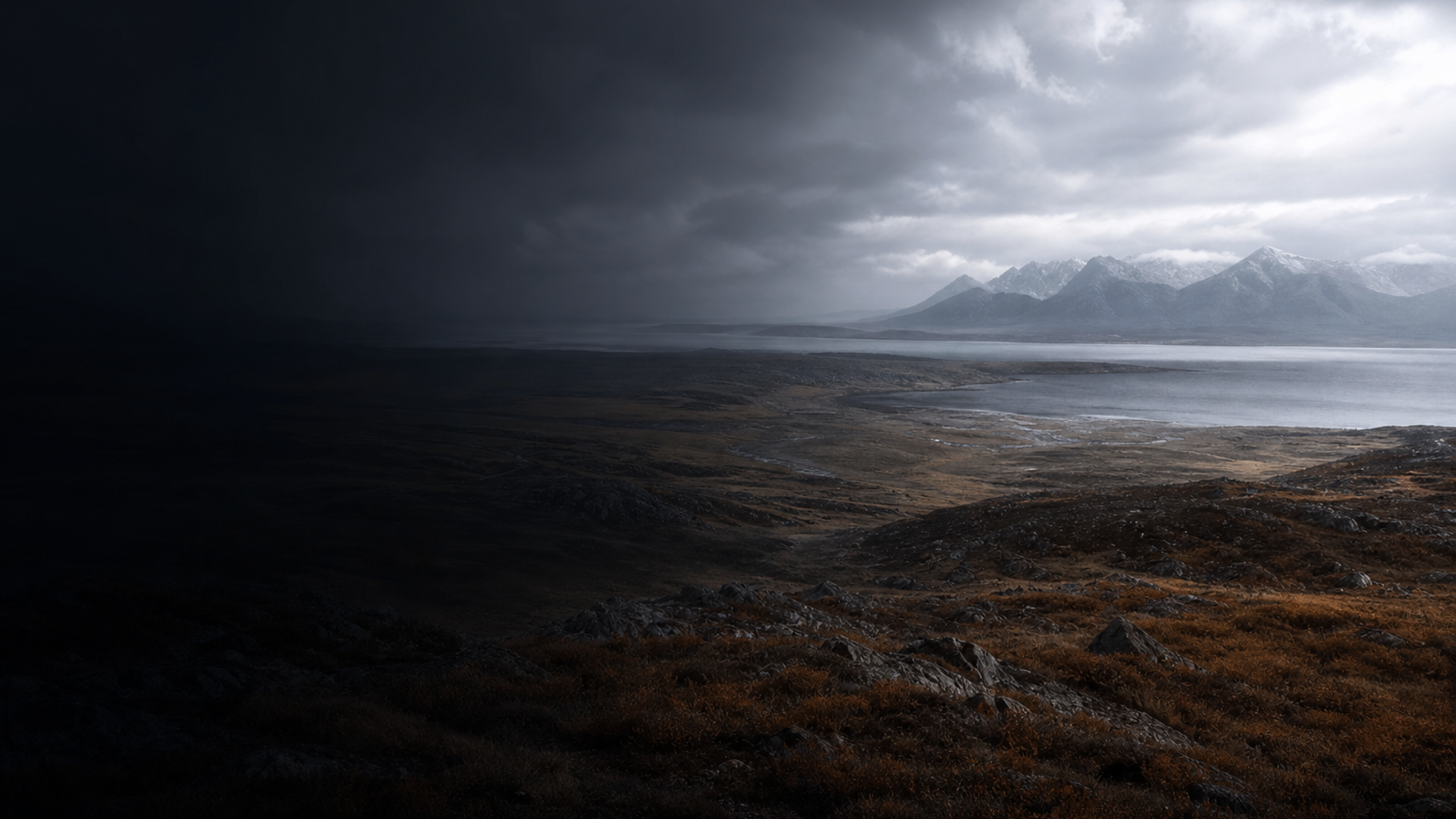
Haush of Mitre Peninsula

下载的 PDF 是图像副本。如需可选中文本及更好的辅助技术支持,请使用打印功能。

Haush of Mitre Peninsula

揭开一个失落的文明

正在加载考古记录……

正在收集古代记录

跳转到主内容
Haush of Mitre Peninsula
文明焦点

Haush of Mitre Peninsula

Wind-swept mariners of Tierra del Fuego, glimpsed through shells, bones, and DNA

1280 CE - 1820 CE
Tierra del Fuego (Mitre Peninsula), Argentina
滚动开始
Chapter I

剧情

了解 Haush of Mitre Peninsula 文化

Archaeological and genetic evidence from Mitre Peninsula (1280–1820 CE) reveals small Haush bands adapted to a harsh maritime world. Six ancient genomes (Caleta Falsa, Río Policarpo) show mainly Y-haplogroup Q and mtDNA lineages D and C, suggesting local continuity with wider Native American ancestry.

Time Period

1280–1820 CE

Region

Tierra del Fuego (Mitre Peninsula), Argentina

Common Y-DNA

Q (5 of 6 tested)

Common mtDNA

D (3), C1b (1), D1 (1), C (1)

Chapter II

时间线

这种文化历史上的关键时刻

1280 CE

Emergence of Mitre Peninsula Haush horizon

Radiocarbon dates from Caleta Falsa and Río Policarpo indicate a cohesive coastal occupation beginning around 1280 CE.

1580 CE

Beginning of sustained European presence in southern Patagonia

European sealing and exploration in the 16th–17th centuries began indirect impacts on Fuegian populations, altering trade and disease dynamics.

1820 CE

Disruption and demographic decline

By the early 19th century, introduced diseases and colonial pressures contributed to major disruptions of Haush lifeways.

Chapter III

Origins & Emergence

At the eastern edge of Isla Grande de Tierra del Fuego, the Haush (Manek'enk) of the Mitre Peninsula carved a life from wind, surf and rocky coves. Archaeological deposits at Caleta Falsa and Río Policarpo contain shell middens, hearths and worked bone that date into a regional horizon centered around 1280 CE and continuing into the early 19th century. These deposits show repeated seasonal use of sheltered bays, intensive exploitation of seals and seabirds, and manufacture of bone harpoons and scraping tools.

Limited evidence suggests the Haush were a late-Holocene coastal adaptation of Fuegian hunter-gatherers rather than a recent immigrant population. Archaeological data indicates strong continuity in tool types and site placement across centuries, but the archaeological record is patchy: many sites are eroded or submerged, and careful stratigraphic control is not always possible. Radiocarbon dates from shell and charcoal anchor the Mitre Peninsula Haush Culture to the interval 1280–1820 CE, but connections to earlier inland groups on Tierra del Fuego remain uncertain.

In evocative terms, the Haush emergence is a story of people shaping lives around tide and ice—small social groups reading seasons by currents and bird migrations. Scientifically, however, this narrative rests on a modest set of sites and thus requires cautious interpretation and further fieldwork.

  • Primary sites: Caleta Falsa and Río Policarpo (Mitre Peninsula)
  • Radiocarbon-dated horizon: ~1280–1820 CE
  • Evidence: shell middens, bone harpoons, hearths; record is limited and fragmentary
Chapter IV

Daily Life & Society

The Haush lived where wind and sea dictated rhythm. Archaeological middens brim with shells, fish bone and seal remains, indicating a diet dominated by marine resources. Bone harpoon heads, polished whale-bone points and worked bird bone point to specialized hunting technologies for pinnipeds and sea birds. Small hearth features and ephemeral camps suggest highly mobile household groups that moved seasonally between coves to follow prey and shelter from storms.

Material culture appears economical and optimized for repair and reuse: lightweight tools suited to canoes or skin boats, probable textile fragments inferred from net weights and weaving tools in comparable Fuegian contexts, and portable art—simple engravings and decorated bone. Social structure can only be inferred: small band sizes, likely kin-based, with fluid membership and networks of exchange linking Haush to neighboring groups such as the Selk'nam and Yaghan. Oral histories recorded historically describe trade and occasional conflict across the archipelago, but archaeological traces of formalized hierarchy are absent.

Archaeological data indicates resilience in harsh climates, reliance on maritime knowledge, and deep ecological knowledge of seal cycles and bird migrations. Still, many aspects—ritual life, social roles, and precise seasonal calendars—remain obscure because of limited excavation coverage and the fragmentary nature of hearth and midden deposits.

  • Diet centered on seals, seabirds, and fish; shell middens preserve seasonality
  • Small, mobile household bands with specialized maritime technologies
Chapter V

Genetic Profile

Six ancient individuals from Mitre Peninsula contexts (Caleta Falsa and Río Policarpo) provide a first genomic window into the Haush biological heritage. Five of the six male-line samples carry Y-chromosome haplogroup Q, a lineage widespread among Indigenous peoples across the Americas and commonly associated with early pan-American founder populations. The mitochondrial DNA pool in these six individuals shows predominance of haplogroup D (three individuals), with additional representatives of C1b, D1 and C—mtDNA clades that are also common in southern South America.

These patterns align the Haush within the broader tapestry of Native American ancestry: a dominant paternal signal of Q alongside maternal diversity drawn from D and C clades. However, the sample count is small (n = 6), and when sample size is low (<10) conclusions are necessarily preliminary. Archaeogenetic signals may reflect local continuity, male-biased demographic processes, or sampling bias from a few sites; distinguishing among these requires larger, spatially and temporally expanded datasets.

Methodologically, ancient DNA from coastal contexts faces preservation challenges due to marine contamination and variable collagen survival; laboratories applied standard authentication procedures, but remaining uncertainties affect fine-scale inferences. In sum, genetic data tentatively suggest the Haush were part of the long-standing indigenous genetic landscape of southern South America, but more samples and expanded comparisons with neighboring groups (Selk'nam, Yaghan, mainland Patagonian groups) are needed to map migrations, sex-biased gene flow, and continuity.

  • Dominant Y-haplogroup Q in 5 of 6 samples, consistent with pan-American paternal lineages
  • Maternal diversity includes D and C clades; small sample size makes conclusions preliminary
Chapter VI

Legacy & Modern Connections

The Haush voice endures in the landscape—place names, oral memories recorded in early ethnographies, and the archaeological imprint of camps and middens. Genetic links to broader Native American lineages do not translate directly into modern identity without community consultation; descendant claims and cultural continuity are complex and mediated by centuries of contact, displacement and cultural loss. Archaeogenetic results can illuminate population history, but responsible interpretation requires collaboration with present-day Indigenous communities and sensitivity to repatriation and data sovereignty.

For contemporary science and heritage, these six genomes are a starting chorus rather than a final verdict. They invite targeted fieldwork, community partnerships, and comparative analyses with genomes from other Fuegian and Patagonian contexts to better understand migration, resilience and cultural exchange across southern South America. The Haush legacy is both material—bones, tools and middens—and living, carried in the stories, landscapes and genetic threads that connect past and present.

  • Archaeological and genetic traces suggest continuity with wider Indigenous lineages, but interpretation must be cautious
  • Future work should prioritize collaboration, repatriation, and expanded sampling to clarify connections
AI 电源

AI 助手

就 Haush of Mitre Peninsula 文化提问

AI 助手 由DNAGENICS公司制作

解锁此特性
Ask questions about the Haush of Mitre Peninsula culture. Our AI assistant can explain genetic findings, historical context, archaeological evidence, and modern connections.
AI 样本分析

Haush of Mitre Peninsula 文化是人类历史中值得了解的一章……

遗传分析揭示了与早期种群的联系,同时显示了独特的适应和文化创新的证据。 古代DNA样本提供了对迁徙模式、社会结构以及古代种群之间的生物关系的深刻见解。

这是人工智能分析的预览。 解锁全AI 助手, 以探索关于:

  • 遗传组成和祖先
  • 移徙模式和起源
  • 日常生活和文化习俗
  • 现代遗传遗产

探索更古老的文化

揭开古代世界文明的故事

使用优惠码 可减免 35% • 11月12日 到期