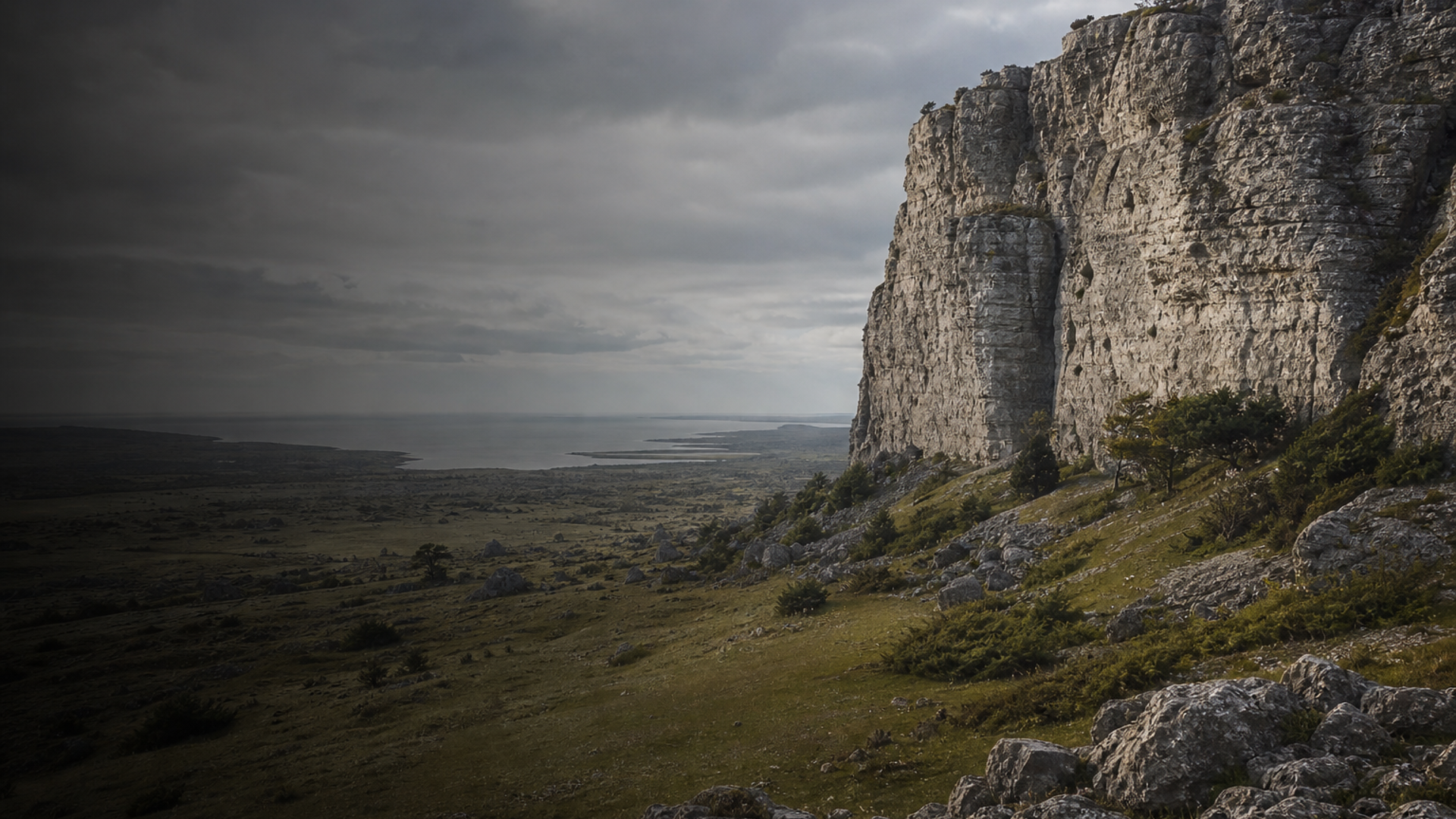
Hemmor, Gotland: Pitted Ware meets Battle Axe

下载的 PDF 是图像副本。如需可选中文本及更好的辅助技术支持,请使用打印功能。

Hemmor, Gotland: Pitted Ware meets Battle Axe

揭开一个失落的文明

正在加载考古记录……

正在收集古代记录

跳转到主内容
Hemmor, Gotland: Pitted Ware meets Battle Axe
文明焦点

Hemmor, Gotland: Pitted Ware meets Battle Axe

Coastal communities on Gotland (c.3367–2901 BCE) where maritime lifeways and new cultural currents intersect

3367 CE - 2901 BCE
Gotland, Sweden
滚动开始
Chapter I

剧情

了解 Hemmor, Gotland: Pitted Ware meets Battle Axe 文化

Archaeological remains from Hemmor on Gotland (c.3367–2901 BCE) capture a contact zone between Pitted Ware seafaring traditions and Battle Axe influences. Limited ancient DNA (n=3) hints at hunter‑gatherer maternal lineages (mtDNA U) alongside farmer‑derived K and a Y‑lineage I; conclusions remain preliminary.

Time Period

c. 3367–2901 BCE

Region

Gotland, Sweden

Common Y-DNA

I (observed in 1/3 samples)

Common mtDNA

U (2/3), K (1/3)

Chapter II

时间线

这种文化历史上的关键时刻

2500 BCE

Hemmor contact horizon

Period when Pitted Ware maritime traditions and Battle Axe influences overlap at Hemmor, reflecting cultural and genetic encounters on Gotland.

Chapter III

Origins & Emergence

Hemmor on Gotland sits like a cinematic shoreline in the archaeology of northern Europe: a place where pitted, comb‑impressed pottery and coastal subsistence traditions associated with the Pitted Ware complex meet material signals linked to the incoming Battle Axe (Corded Ware) world. Radiocarbon dates from the assemblage span roughly 3367–2901 BCE, placing these remains in the Late Neolithic horizon when seafaring hunter‑gatherer communities exploited rich Baltic resources while new technologies and social practices arrived from the continent.

Archaeological data indicates a mosaic of practices at Hemmor: pitted and comb‑decorated ceramics, marine vertebrate remains dominated by seal and fish, and occasional battle‑axe‑style tools or associated grave goods that echo broader Corded Ware influences. Landscape studies of Gotland show seasonal encampments and long‑term use of coastal terraces; Hemmor appears to be one node in that maritime network.

Limited evidence suggests that contact was not simply replacement but a negotiated blending of lifeways. The material record at Hemmor, with its coastal economy and intermittent adoption of continental forms, reflects a dynamic frontier rather than a sharp cultural break.

  • Hemmor dates to c.3367–2901 BCE on Gotland, Sweden
  • Material culture mixes Pitted Ware pottery and Battle Axe elements
  • Archaeological context suggests seasonal coastal exploitation and cultural contact
Chapter IV

Daily Life & Society

Imagine a briny wind along limestone shores, people working bone, stone and wood in open‑air workshops: this is the probable rhythm of life at Hemmor. Archaeological remains indicate a diet heavily focused on marine resources—seals, cod and other fish—supplemented by terrestrial hunting and limited cultivation or domesticates introduced earlier in the Neolithic. Pitted Ware pottery, often thick and decorated with impressed pits, was well suited to boiling and processing oily marine foods.

Settlement signatures on Gotland show dispersed seasonal camps and middens; Hemmor likely functioned as a seasonal aggregation site where families and small groups harvested the sea and shared craft traditions. The appearance of Battle Axe‑type implements alongside local toolkits suggests new social connections: exchange, intermarriage, or the adoption of prestige items. Burial practices in related Pitted Ware contexts emphasize individual graves with few goods, while Corded Ware/Battle Axe burials elsewhere often display different gendered associations—these contrasts hint at shifting social identities during daily life and ritual.

Archaeological data indicates resilient maritime knowledge combined with selective incorporation of external forms, producing a distinctive Gotlandic lifeway.

  • Economy centered on seal and fish; pitted pottery used for processing marine foods
  • Seasonal camps and exchange networks link Hemmor to wider Baltic maritime routes
Chapter V

Genetic Profile

Ancient DNA from Hemmor is tantalizing but limited: only three sampled individuals (n=3) from the site fall between 3367 and 2901 BCE, so any genetic interpretation must be cautious and preliminary. In this small set, Y‑chromosome lineage I appears once, while mitochondrial haplogroups U appear twice and K once. MtDNA U is commonly associated with Mesolithic and later hunter‑gatherer maternal lines across northern Europe; its prevalence here echoes the strong marine‑foraging signal evident archaeologically. The presence of mtDNA K—often linked to Neolithic farmer dispersals into Europe—suggests female‑line gene flow from farming populations or ancestrally agricultural groups.

Broad regional ancient‑DNA studies provide useful context: Pitted Ware–linked individuals often carry high proportions of local hunter‑gatherer ancestry, whereas Corded Ware/Battle Axe individuals in Scandinavia and central Europe frequently show steppe‑related ancestry and different Y‑lineage patterns. Hemmor’s mix of hunter‑gatherer maternal markers and a Y‑lineage associated with local continuity could reflect asymmetric admixture (for example, farmer or steppe females entering a predominantly hunter‑gatherer male gene pool, or vice versa), but with n=3 we cannot resolve sex‑biased processes or autosomal ancestry proportions confidently.

Archaeological and genetic evidence together point to a contact zone where maritime hunter‑gatherer communities and incoming cultural elements exchanged people, goods and genes—yet the genetic signal at Hemmor remains provisional until larger sample sizes are analyzed.

  • Small sample (n=3): Y I (1), mtDNA U (2) and K (1); interpretations remain preliminary
  • Pattern aligns with regional contrasts: hunter‑gatherer maternal lines and incoming farmer/steppe influences
Chapter VI

Legacy & Modern Connections

The Hemmor assemblage captures a pivotal moment in Baltic prehistory when maritime traditions and continental currents intersected. Genetic markers found there—haplogroup I on the Y‑line and mtDNA U and K—are still components of the modern Scandinavian genetic landscape, reminding us that present‑day ancestry is the accumulation of many such encounters.

However, caution is essential. With only three ancient genomes from Hemmor, it is not possible to draw strong lines from these individuals to specific modern populations. What the site does provide is a vivid archaeological and genetic snapshot: coastal lifeways persisted even as new ideas and people moved through the region. For modern ancestry research, Hemmor exemplifies how small, local sequences of contact contribute to larger patterns recorded in contemporary genomes.

  • Haplogroups observed (I, U, K) continue to occur in modern Scandinavia but direct links are tentative
  • Hemmor illustrates how coastal contact zones contributed to the complex ancestry of northern Europe
AI 电源

AI 助手

就 Hemmor, Gotland: Pitted Ware meets Battle Axe 文化提问

AI 助手 由DNAGENICS公司制作

解锁此特性
Ask questions about the Hemmor, Gotland: Pitted Ware meets Battle Axe culture. Our AI assistant can explain genetic findings, historical context, archaeological evidence, and modern connections.
AI 样本分析

Hemmor, Gotland: Pitted Ware meets Battle Axe 文化是人类历史中值得了解的一章……

遗传分析揭示了与早期种群的联系,同时显示了独特的适应和文化创新的证据。 古代DNA样本提供了对迁徙模式、社会结构以及古代种群之间的生物关系的深刻见解。

这是人工智能分析的预览。 解锁全AI 助手, 以探索关于:

  • 遗传组成和祖先
  • 移徙模式和起源
  • 日常生活和文化习俗
  • 现代遗传遗产

探索更古老的文化

揭开古代世界文明的故事

使用优惠码 可减免 35% • 11月12日 到期