Himera: Sicily’s Classical Crossroads

下载的 PDF 是图像副本。如需可选中文本及更好的辅助技术支持,请使用打印功能。

Himera: Sicily’s Classical Crossroads

揭开一个失落的文明

正在加载考古记录……

正在收集古代记录

跳转到主内容
Himera: Sicily’s Classical Crossroads
文明焦点

Himera: Sicily’s Classical Crossroads

A coastal city where Greek colonists, indigenous Sicels and wider Mediterranean currents met

700 CE - 400 BCE
Himera, Sicily (Termini Imerese area)
滚动开始
Chapter I

剧情

了解 Himera: Sicily’s Classical Crossroads 文化

Archaeological and ancient-DNA evidence from five individuals (700–400 BCE) at Himera, Sicily, reveals a predominantly European maternal line (mtDNA H, J, T) and mixed paternal signals (Y-R and Y-L). Limited samples make conclusions preliminary but suggest layered Mediterranean interactions.

Time Period

circa 700–400 BCE

Region

Himera, Sicily (Termini Imerese area)

Common Y-DNA

R (2), L (1)

Common mtDNA

H (3), J (1), T (1)

Chapter II

时间线

这种文化历史上的关键时刻

650 BCE

Greek colonization and urban emergence

Circa mid-1st millennium BCE Himera grows as a coastal polis, blending Greek architecture and local Sicel traditions.

480 BCE

Battle of Himera (historical horizon)

A major conflict recorded in historical sources and reflected archaeologically by destruction layers and shifts in burial patterns.

1920 CE

Modern archaeological investigation

20th‑century excavations begin systematic study of Himera’s necropoleis, exposing burials and urban remains.

Chapter III

Origins & Emergence

Perched on Sicily’s northern coast near modern Termini Imerese, Himera emerges in the archaeological record during the early first millennium BCE as a focal point of Classical Sicilian life. Excavations around the Himera acropolis and necropoleis reveal urban planning, Greek-style sanctuaries and locally produced wares alongside imported Attic and Corinthian pottery, a material signature of long-distance maritime networks. Historical tradition places Greek foundation activity in the 8th–7th centuries BCE; archaeologically, the city’s monumental phases are best attested between ca. 700 and 400 BCE.

The cultural landscape that produced Himera was composite: indigenous Sicel communities were long established on inland Sicily, while seafaring Greeks and North African Phoenicians/Punic traders contested coastal access. Archaeological evidence indicates acculturation rather than simple replacement—local ceramic traditions persist even as Greek architectural and ritual forms appear. Limited evidence from funerary contexts suggests variation in burial practice and social status, hinting at a city of mixed identities.

Genetic data, though small in sample size, fit this picture of mixture: maternal lineages align with broad European and Mediterranean patterns, while paternal markers include both common European and less-expected elements. Because only five individuals are available, these genetic signals should be read as suggestive snapshots rather than definitive population histories.

  • Himera active ca. 700–400 BCE on Sicily’s northern coast
  • Material culture shows Greek imports alongside local Sicel traditions
  • Evidence points to cultural mixture; genetic samples remain few and preliminary
Chapter IV

Daily Life & Society

Life in Classical Himera would have felt both intimate and epic: fishermen, shipwrights and traders operating from a natural harbor; farmers on terraced hills producing grain, olives and grapes; artisans shaping local clay into cookware and fine pottery. Archaeological layers exposed in cemeteries and household compounds document domestic assemblages—lamps, tools, imported tableware—that speak to interconnected tastes and consumption.

Religious life centered on sanctuaries where votive objects and ritual deposits reflect pan-Mediterranean practices and local cult variants. In the city’s necropoleis, variation in grave goods and tomb architecture suggests social differentiation: wealthier burials contain imported fine wares, while simpler graves show local production. The dramatic historical moment of 480 BCE, when Himera was the scene of a major battle, is embedded in both textual tradition and the stratigraphic record: destruction layers, re-use of building materials and abrupt shifts in burial patterns hint at episodes of violence and recovery.

Archaeobotanical and zooarchaeological remains indicate a mixed economy combining agriculture, pastoralism and fishing, while trade ceramics testify to long-range exchange. Yet much remains uncertain: settlement boundaries, population size and social institutions are reconstructed from fragmentary trenches and scattered finds. The small genetic sample from the necropoleis suggests household- or family-level stories rather than an exhaustive demographic portrait.

  • Economy combined agriculture, fishing and maritime trade
  • Burial diversity indicates social differentiation and external contacts
Chapter V

Genetic Profile

Five ancient individuals from Himera provide an initial genetic window into Classical Sicilian life. Maternal lineages are dominated by mtDNA H (3/5), with single occurrences of mtDNA J and T. MtDNA H is widespread in Europe and the Mediterranean and its presence here aligns with broad maternal continuity across southern Italy. Haplogroups J and T are also common in the Near East and Mediterranean, compatible with historical models of east–west connectivity.

On the paternal side, two individuals carry Y-haplogroup R (a cluster common across much of Europe), while one carries haplogroup L. Y-L (L-M20 and related branches) has higher frequencies in South Asia and parts of western Asia and is uncommon as an autochthonous marker in central Mediterranean contexts; in this small dataset it could reflect an individual-level connection—trade, migration, or later admixture—or sampling noise. No claim is made about broad population replacement or major migrations from this evidence alone.

Because the dataset totals five samples, statistical power is low. Archaeogenetic interpretation must therefore remain cautious: the patterns are consistent with a predominantly European maternal heritage and a paternal pool reflecting both local European and less typical lineages. These data hint at sex-biased gene flow possibilities (for example, incoming male lineages in a multilingual port city), but further sampling across tombs, households and temporal horizons is needed to test such hypotheses.

Methodological caveats: preservation bias, burial selection, and low sample counts can distort apparent frequencies; contamination and differential sequencing coverage can affect Y-chromosome calls. Consequently, the Himera genetic portrait should be viewed as a promising preliminary snapshot that invites expanded sampling and comparative analysis with neighboring Sicilian, Greek and Punic datasets.

  • Small sample (n=5) limits confidence—results are preliminary
  • mtDNA dominated by H; Y-DNA shows both common European R and atypical L
Chapter VI

Legacy & Modern Connections

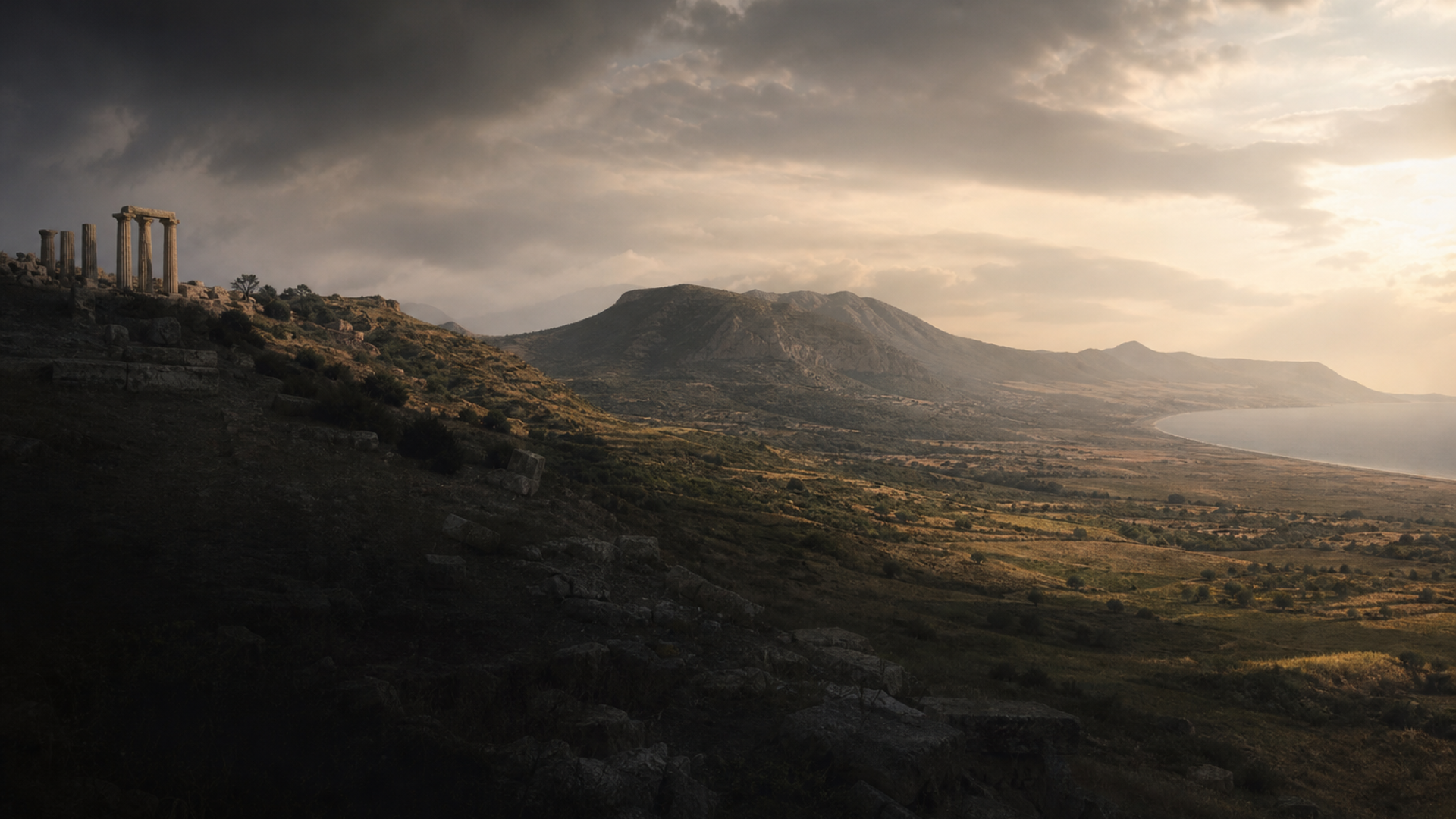
Himera’s story is a cinematic weave of shores mingling under wind and sail, and its genetic echoes contribute to Sicily’s famously layered heritage. Modern Sicilian populations carry a tapestry of Mediterranean ancestries shaped by prehistoric farmers, Greek colonists, Phoenician traders, Roman rule and later migrations. The ancient mtDNA profile from Himera—centering on H, with J and T—resonates with broader maternal continuities seen across southern Italy and the central Mediterranean.

However, linking five ancient individuals directly to modern population structure is fraught: genetic drift, later migrations, and centuries of demographic change reshape signals over millennia. What these Himera samples do offer is a humanizing glimpse: individuals who lived amid cross-cultural exchange, whose mothers and fathers carried lineages that persist, transformed, into the gene pool of the modern Mediterranean. Expanded sampling and integration with archaeological context will illuminate whether Himera’s genetic snapshot reflects a city-wide pattern or a set of unique life-histories preserved in the ground.

  • Genetic signals align with Sicily’s layered Mediterranean heritage
  • Direct connections to modern populations remain tentative given sample size
AI 电源

AI 助手

就 Himera: Sicily’s Classical Crossroads 文化提问

AI 助手 由DNAGENICS公司制作

解锁此特性
Ask questions about the Himera: Sicily’s Classical Crossroads culture. Our AI assistant can explain genetic findings, historical context, archaeological evidence, and modern connections.
AI 样本分析

Himera: Sicily’s Classical Crossroads 文化是人类历史中值得了解的一章……

遗传分析揭示了与早期种群的联系,同时显示了独特的适应和文化创新的证据。 古代DNA样本提供了对迁徙模式、社会结构以及古代种群之间的生物关系的深刻见解。

这是人工智能分析的预览。 解锁全AI 助手, 以探索关于:

  • 遗传组成和祖先
  • 移徙模式和起源
  • 日常生活和文化习俗
  • 现代遗传遗产

探索更古老的文化

揭开古代世界文明的故事

使用优惠码 可减免 35% • 11月12日 到期




