Huaca Pucllana: Coastal Echoes

下载的 PDF 是图像副本。如需可选中文本及更好的辅助技术支持,请使用打印功能。

Huaca Pucllana: Coastal Echoes

揭开一个失落的文明

正在加载考古记录……

正在收集古代记录

跳转到主内容
Huaca Pucllana: Coastal Echoes
文明焦点

Huaca Pucllana: Coastal Echoes

Late Intermediate Period Lima community (1065–1470 CE) through archaeology and DNA

1065 CE - 1470 CE
Lima, Peru — Huaca Pucllana (Miraflores)
滚动开始
Chapter I

剧情

了解 Huaca Pucllana: Coastal Echoes 文化

Archaeological and genetic glimpses from Huaca Pucllana, Lima (1065–1470 CE). Four ancient genomes show Indigenous Y-DNA Q and mtDNA C1b, B2b, D1, suggesting coastal Andean continuity—preliminary due to small sample size.

Time Period

1065–1470 CE (Late Intermediate Period)

Region

Lima, Peru — Huaca Pucllana (Miraflores)

Common Y-DNA

Q (observed in sample set)

Common mtDNA

C1b (2), B2b (1), D1 (1)

Chapter II

时间线

这种文化历史上的关键时刻

1065 CE

Earliest sampled burials at Huaca Pucllana

Initial radiocarbon dates place sampled interments at Huaca Pucllana around 1065 CE, marking the start of the site's Late Intermediate Period sequence.

Chapter III

Origins & Emergence

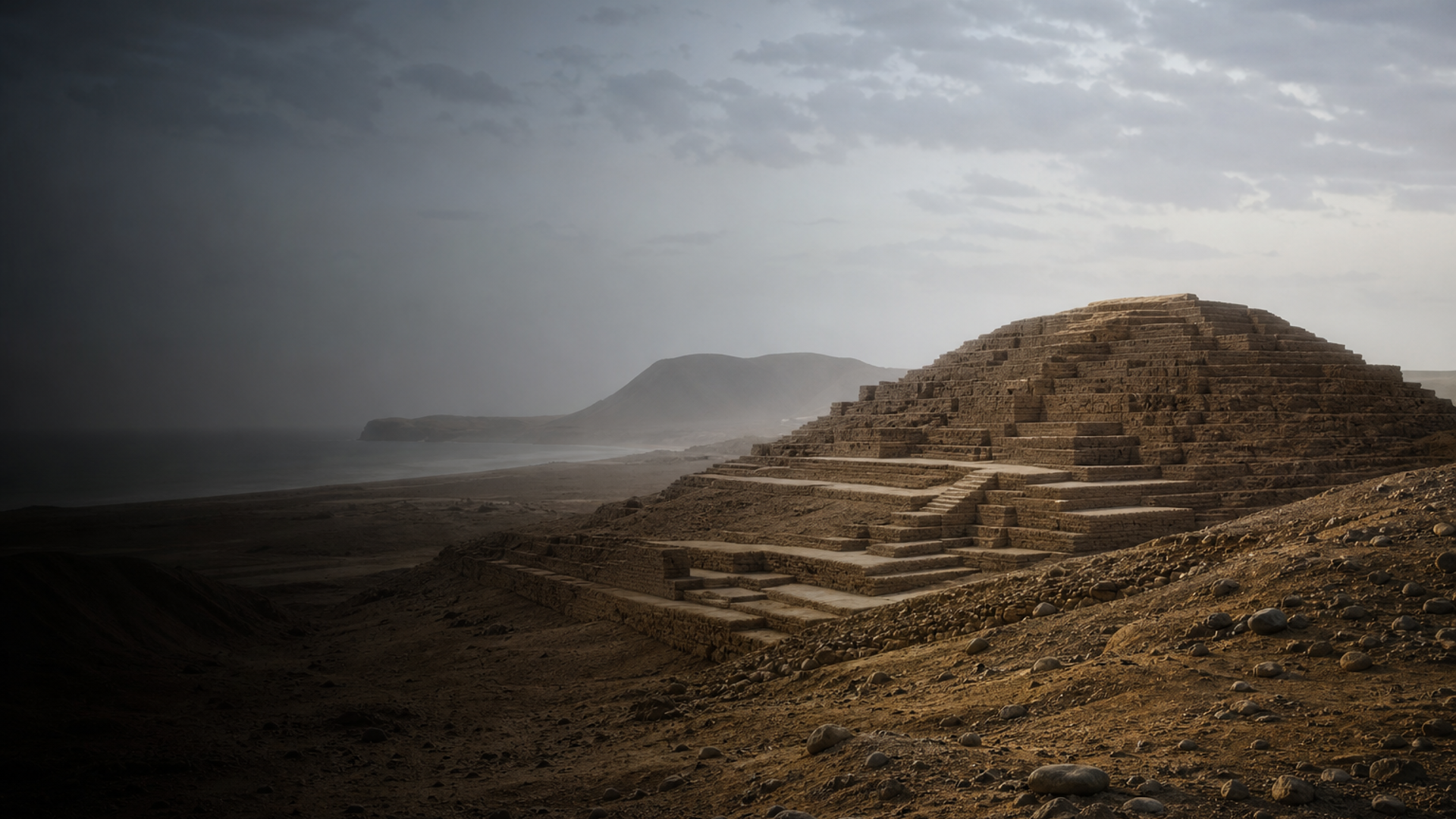
Perched above the fog of the Pacific, Huaca Pucllana in present-day Miraflores, Lima, stands as an adobe sentinel of the Late Intermediate Period (circa 1065–1470 CE). Archaeological data indicates this complex of pyramids, plazas and offering pits functioned as a focal point for ritual, administration and economic exchange along the central Peruvian coast. The Lima culture of this era navigated a landscape of estuaries and desert, intensifying marine resource capture while maintaining irrigation agriculture on coastal terraces.

Material culture — distinctive plain and black-on-red ceramics, textile fragments, and stratified domestic deposits — suggests local craft specialization and a rhythm of seasonal mobility linked to fisheries and coastal trade. Limited evidence suggests interactions with highland polities and later coastal states; however, the Late Intermediate Period is characteristically regionally diverse and politically fragmented. At Huaca Pucllana, monumental construction and curated burials point to community leaders who mobilized labor and ritual authority.

Archaeology alone gives us form and context; genetic data, even when sparse, can hint at lineage continuity, migration, and contact. The four ancient genomes sampled from Huaca Pucllana provide a first molecular brushstroke on the human story of this shorebound culture—but conclusions must remain cautious until larger datasets are available.

  • Huaca Pucllana: major adobe ceremonial complex in Miraflores, Lima
  • Era: Late Intermediate Period, ca. 1065–1470 CE
  • Economy: coastal fishing, irrigation agriculture, craft specialization
Chapter IV

Daily Life & Society

Life along the central Peruvian coast blended austerity and ritual spectacle. Families lived in compact compounds of adobe and wattle, storing marine resources and agricultural surpluses. Archaeological deposits at Huaca Pucllana reveal middens rich with fish bones, shellfish, and small vertebrates, alongside agricultural remains that speak to maize, beans and squash cultivation supported by simple irrigation canals.

Ceremonial plazas and platforms—the grand stages of the site—hosted public rituals, offerings and feasting. Burials found within and around the huaca vary from simple interments to more elaborate contexts with ceramic offerings, suggesting social differentiation. Craft specialists worked in pottery, shell ornamentation and textiles, visible in tool assemblages and production debris. Seasonality shaped mobility: maritime resources peaked at different times of year, drawing coastal communities into synchronized economies.

Archaeological patterns hint at neighborhood-based authority: local leaders coordinated construction and ritual, but the Late Intermediate Period’s fragmented political landscape likely limited the scale of centralized control compared with later coastal empires. As genetic evidence accumulates, it may illuminate whether kinship networks underpinned these social roles or if broader regional exchange was primarily economic.

  • Subsistence: fishing, shellfish collection, irrigated crops
  • Social life: ceremonial plazas, craft production, varied burial practices
Chapter V

Genetic Profile

Four ancient genomes from Huaca Pucllana provide a tentative genetic snapshot of the Lima coast during the Late Intermediate Period. Among these samples, one Y-chromosome lineage was assigned to haplogroup Q — a founding paternal lineage widely observed among Indigenous populations of the Americas. The mitochondrial (maternal) diversity includes two individuals with C1b, one with B2b, and one with D1. These mtDNA haplogroups are well-established components of Native American maternal diversity and are frequent across South America.

Taken together, the genetic signal aligns with expectations for long-standing Indigenous populations of the central Andean coast: indigenous paternal and maternal lineages dominate, with no clear genomic evidence in this small set for large-scale non-local admixture. However, with only four samples (sample count <10), conclusions are preliminary and subject to sampling bias. Limited evidence suggests relative maternal diversity within the small cohort, which could reflect local kinship practices, exogamy, or simply chance in the sampled burials.

Future comparative datasets from contemporaneous coastal and highland sites will be required to test hypotheses about mobility, patrilocality/matrilocality, and interaction networks. For now, the genomic data from Huaca Pucllana offer a cautious but evocative glimpse of continuity between Late Intermediate Period coastal peoples and broader Indigenous American lineages.

  • Y-DNA: Q (founding Native American paternal lineage)
  • mtDNA: C1b (2), B2b (1), D1 (1) — typical South American maternal lineages
Chapter VI

Legacy & Modern Connections

The adobe terraces of Huaca Pucllana still shape Lima’s urban skyline, a tangible link between modern city life and pre-Columbian coastal societies. Genetically, the haplogroups observed in the limited Huaca Pucllana sample mirror deep Indigenous lineages that persist across the Andes and coastal regions, underscoring threads of biological continuity even amid centuries of demographic change.

Culturally, traditions of seafood-based cuisine, coastal resource management, and craft techniques echo to the present. Yet modern Lima is a mosaic shaped by later migration and admixture, so genetic continuity at the site level should not be overstated. The small number of ancient genomes makes any direct lineage claims tentative; expanding ancient DNA sampling will refine links between ancient communities and living populations. Huaca Pucllana’s stones and the genomes they now yield together invite us to imagine lived lives on a restless coast—recognizing both the persistence and transformation that define human history.

  • Huaca Pucllana remains a cultural landmark and source of local identity
  • Genetic continuity is suggested but preliminary; modern Lima reflects later admixture
AI 电源

AI 助手

就 Huaca Pucllana: Coastal Echoes 文化提问

AI 助手 由DNAGENICS公司制作

解锁此特性
Ask questions about the Huaca Pucllana: Coastal Echoes culture. Our AI assistant can explain genetic findings, historical context, archaeological evidence, and modern connections.
AI 样本分析

Huaca Pucllana: Coastal Echoes 文化是人类历史中值得了解的一章……

遗传分析揭示了与早期种群的联系,同时显示了独特的适应和文化创新的证据。 古代DNA样本提供了对迁徙模式、社会结构以及古代种群之间的生物关系的深刻见解。

这是人工智能分析的预览。 解锁全AI 助手, 以探索关于:

  • 遗传组成和祖先
  • 移徙模式和起源
  • 日常生活和文化习俗
  • 现代遗传遗产

探索更古老的文化

揭开古代世界文明的故事

使用优惠码 可减免 35% • 11月12日 到期




