Hulunbuir Neolithic Echoes

下载的 PDF 是图像副本。如需可选中文本及更好的辅助技术支持,请使用打印功能。

Hulunbuir Neolithic Echoes

揭开一个失落的文明

正在加载考古记录……

正在收集古代记录

跳转到主内容
Hulunbuir Neolithic Echoes
文明焦点

Hulunbuir Neolithic Echoes

Two Early Neolithic individuals from Zhalainuoer linking Amur-region lifeways and genes

5527 CE - 5331 BCE
Hulunbuir, Inner Mongolia, China (Zhalainuoer)
滚动开始
Chapter I

剧情

了解 Hulunbuir Neolithic Echoes 文化

Two Early Neolithic individuals (5527–5331 BCE) from Zhalainuoer, Hulunbuir, Inner Mongolia, connect archaeological traces of the Amur River region with mitochondrial lineages C and C5. Limited sample size makes conclusions preliminary, but evidence hints at deep northeastern Asian ancestry in this landscape.

Time Period

c. 5527–5331 BCE

Region

Hulunbuir, Inner Mongolia, China (Zhalainuoer)

Common Y-DNA

Not reported / no data

Common mtDNA

C5 (1), C (1)

Chapter II

时间线

这种文化历史上的关键时刻

5527 BCE

Early Neolithic occupation at Zhalainuoer

Radiocarbon dates place the two sequenced individuals at Zhalainuoer between 5527 and 5331 BCE, within the Early Neolithic Amur cultural horizon.

Chapter III

Origins & Emergence

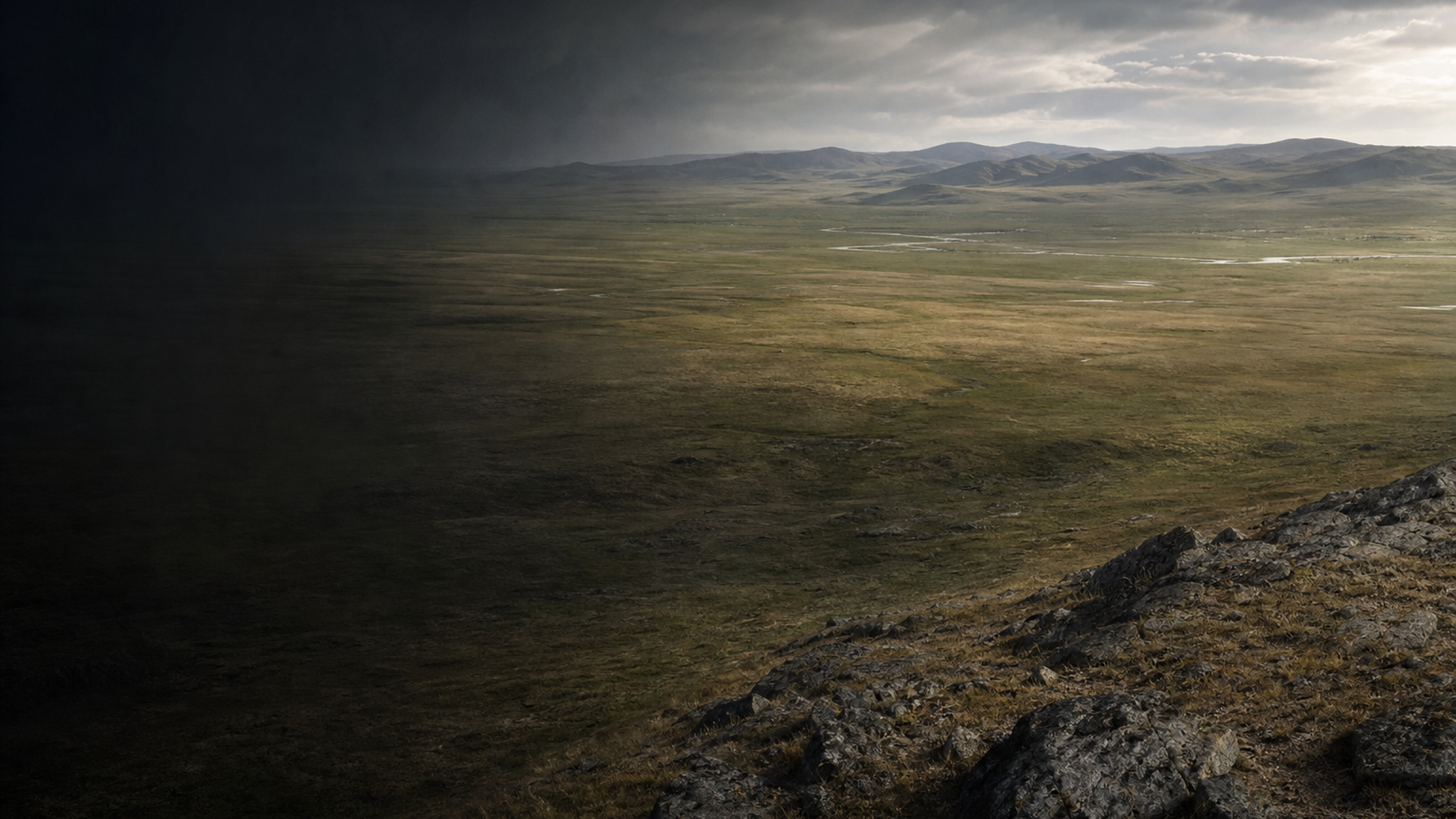
Against the windswept grasslands and birch woodlands of northeastern Inner Mongolia, the Zhalainuoer individuals lived during the Early Neolithic phase associated with the Amur River cultural horizon. Radiocarbon dates place these human remains between 5527 and 5331 BCE, situating them within a period when hunter‑fisher‑forager communities along the Amur were developing distinctive pottery and seasonal settlement patterns.

Archaeological data indicates repeated occupation of riverine and lake margins in the Hulunbuir landscape. While systematic excavation at the Zhalainuoer mining and Wuqi farm sites remains limited, recovered contexts align with broader Amur-region traditions: mobile subsistence based on fishing, hunting of deer and roe, and the use of coarse, often cord-marked ceramics. Environmental reconstructions suggest a mosaic of wetlands, meadows, and forest patches—habitats that supported rich fish and bird resources and shaped seasonal mobility.

Limited evidence suggests cultural connections northward into the Russian Far East and westward along river corridors, but with only two sequenced individuals the picture remains provisional. These people likely participated in interlinked networks of resource exchange and shared technological practices that would define northeastern Asian Neolithic lifeways.

  • Radiocarbon-dated to c. 5527–5331 BCE, Early Neolithic (Amur region)
  • Sites: Zhalainuoer mining site and Wuqi farm, Hulunbuir, Inner Mongolia
  • Archaeological evidence indicates riverine-focused subsistence and pottery traditions
Chapter IV

Daily Life & Society

Daily existence in the Early Neolithic Amur world was shaped by water and seasonality. Communities occupied camps near rivers and marshes where nets, traps, and hooks would have taken salmon, carp, and migratory fish; mammals and waterfowl supplemented diets. Hearths, stone tools, and coarse pottery served food processing and storage needs during periods of mobility and short-term aggregation.

Material culture in the region—visible in surface collections and limited excavations—suggests flexible settlement strategies rather than large sedentary villages. Social life likely revolved around kin groups and seasonal camps: sharing of fishing sites, joint processing of catches, and exchange of pottery styles and raw materials would have knitted communities together. Mortuary practices at small local cemeteries or isolated burials indicate attention to place and person, though preservation biases and sparse excavation at Zhalainuoer mean many details remain unknown.

Archaeological data indicates technology adapted to a cold-temperate environment: woodworking, bone tools, and heat-treated ceramics. Limited direct evidence from the two genetic samples constrains reconstructions of social structure, but combined archaeological and genetic approaches can reveal mobility patterns and social networks when more samples become available.

  • River- and wetland-focused subsistence: fishing, waterfowl, and hunted game
  • Flexible, seasonally occupied camps with communal processing and exchange
Chapter V

Genetic Profile

Ancient DNA from the Zhalainuoer individuals provides a glimpse of maternal lineages in the Early Neolithic Amur sphere. The two sequenced samples carry mitochondrial haplogroups C and C5—lineages commonly found across northern East Asia and inner Siberia today. These mtDNA types are consistent with a deep northeastern Asian maternal heritage and appear in multiple modern populations inhabiting the Amur basin and adjacent regions.

No Y‑chromosome information is reported for these samples, and with only two genomes available, broader population-level inferences are highly preliminary. Small sample counts (<10) frequently misrepresent genetic diversity and population structure, so caution is essential. Nevertheless, the mitochondrial results align with other ancient and modern datasets that suggest continuity of certain maternal lineages in Northeast Asia since the Early Holocene.

Archaeogenetic comparisons—when more data become available—can test hypotheses about persistence versus population turnover, interaction with northern Siberian groups, and east–west gene flow along river corridors. For now, the Zhalainuoer mtDNA signal offers an evocative but tentative thread tying these ancient people to long-term northeastern Asian genetic landscapes.

  • mtDNA: C (1) and C5 (1), indicative of northeastern Asian maternal lineages
  • Sample count low (2); conclusions about population structure are preliminary
Chapter VI

Legacy & Modern Connections

The genetic echoes from Zhalainuoer hint at threads that may connect Early Neolithic Amur inhabitants with later populations across Northeast Asia. Mitochondrial haplogroups C and C5 are widespread today among peoples of the Amur basin, Siberia, and parts of northeastern China, suggesting some elements of maternal continuity. Archaeological parallels in pottery and subsistence strategies also tie these early communities into long-term regional traditions.

However, the archaeological record and ancient DNA from this locality are still sparse. Limited sampling means we must avoid definitive claims of direct ancestry between these two individuals and any specific modern group. Future excavations and additional genomic sampling across the Hulunbuir landscape and adjacent river valleys will be crucial to clarify migration, interaction, and continuity across millennia.

  • mtDNA lineages resonate with modern northeastern Asian diversity
  • Additional samples needed to confirm long-term continuity and migration patterns
AI 电源

AI 助手

就 Hulunbuir Neolithic Echoes 文化提问

AI 助手 由DNAGENICS公司制作

解锁此特性
Ask questions about the Hulunbuir Neolithic Echoes culture. Our AI assistant can explain genetic findings, historical context, archaeological evidence, and modern connections.
AI 样本分析

Hulunbuir Neolithic Echoes 文化是人类历史中值得了解的一章……

遗传分析揭示了与早期种群的联系,同时显示了独特的适应和文化创新的证据。 古代DNA样本提供了对迁徙模式、社会结构以及古代种群之间的生物关系的深刻见解。

这是人工智能分析的预览。 解锁全AI 助手, 以探索关于:

  • 遗传组成和祖先
  • 移徙模式和起源
  • 日常生活和文化习俗
  • 现代遗传遗产

探索更古老的文化

揭开古代世界文明的故事

使用优惠码 可减免 35% • 11月12日 到期




