Iron Echoes: Bulgaria_EIA

下载的 PDF 是图像副本。如需可选中文本及更好的辅助技术支持,请使用打印功能。

跳转到主内容
文明焦点

Iron Echoes: Bulgaria_EIA

Early Iron Age communities in southern Bulgaria — burials, artifacts, and maternal lineages converge.

1100 CE - 500 BCE
Southern Bulgaria (Haskovo, Kardzhali, Rhodopes)

剧情

Archaeological and genetic data from 16 samples (1100–500 BCE) from southern Bulgaria reveal a maternal profile dominated by mtDNA H, with U, K and J1c also present. Findings suggest local continuity with Bronze Age populations alongside signals of regional interaction.

Time Period

1100–500 BCE (Early Iron Age)

Region

Southern Bulgaria (Haskovo, Kardzhali, Rhodopes)

Common Y-DNA

Not well-resolved in this dataset (limited male coverage)

Common mtDNA

H (6), U (3), K (2), H+ (1), J1c (1); 3 samples undetermined

时间线

1100 BCE

Emergence of Early Iron Age contexts

Regional archaeological horizons in southern Bulgaria mark the shift from Late Bronze to Early Iron Age practices around 1100 BCE.

800 BCE

Cemetery use and regional ties

Cemeteries at Stambolovo and nearby sites show varied grave goods indicating local tradition and wider Balkan connections.

500 BCE

End of the Bulgaria_EIA interval

By 500 BCE, material culture and political landscapes continued to evolve, setting the stage for later Iron Age developments.

Origins & Emergence

The Bulgaria_EIA designation covers human remains dated roughly between 1100 and 500 BCE from sites in southern Bulgaria — Kapitan Andreevo (South), Stambolovo (Eastern Rhodopes), Diamandovo (Kardzhali) and Svilengrad (Haskovo). Archaeological data indicate communities transitioning from Late Bronze Age social structures into the Early Iron Age: settlements and cemetery stratigraphy show continuity in some traditions alongside new burial gestures and material styles.

Excavations at these locations recover ceramics, metalwork and burial contexts characteristic of the broader Balkans in the first millennium BCE, suggesting both local cultural persistence and increasing regional connectivity. Limited evidence suggests population continuity with Bronze Age inhabitants of the central Balkans, but also hints of incoming influences visible in artifact types and settlement patterns. Genetic sampling offers a complementary window: maternal lineages cluster around haplogroup H, a broadly distributed European lineage, which can reflect long-term local residency of female lines. Because the dataset comprises 16 individuals, conclusions about population dynamics are strengthened compared with very small series but still require cautious interpretation as spatial and temporal coverage is not exhaustive.

  • Sites: Kapitan Andreevo, Stambolovo, Diamandovo, Svilengrad
  • Period: 1100–500 BCE, Early Iron Age Bulgaria
  • Evidence points to local continuity with signs of regional contact

Daily Life & Society

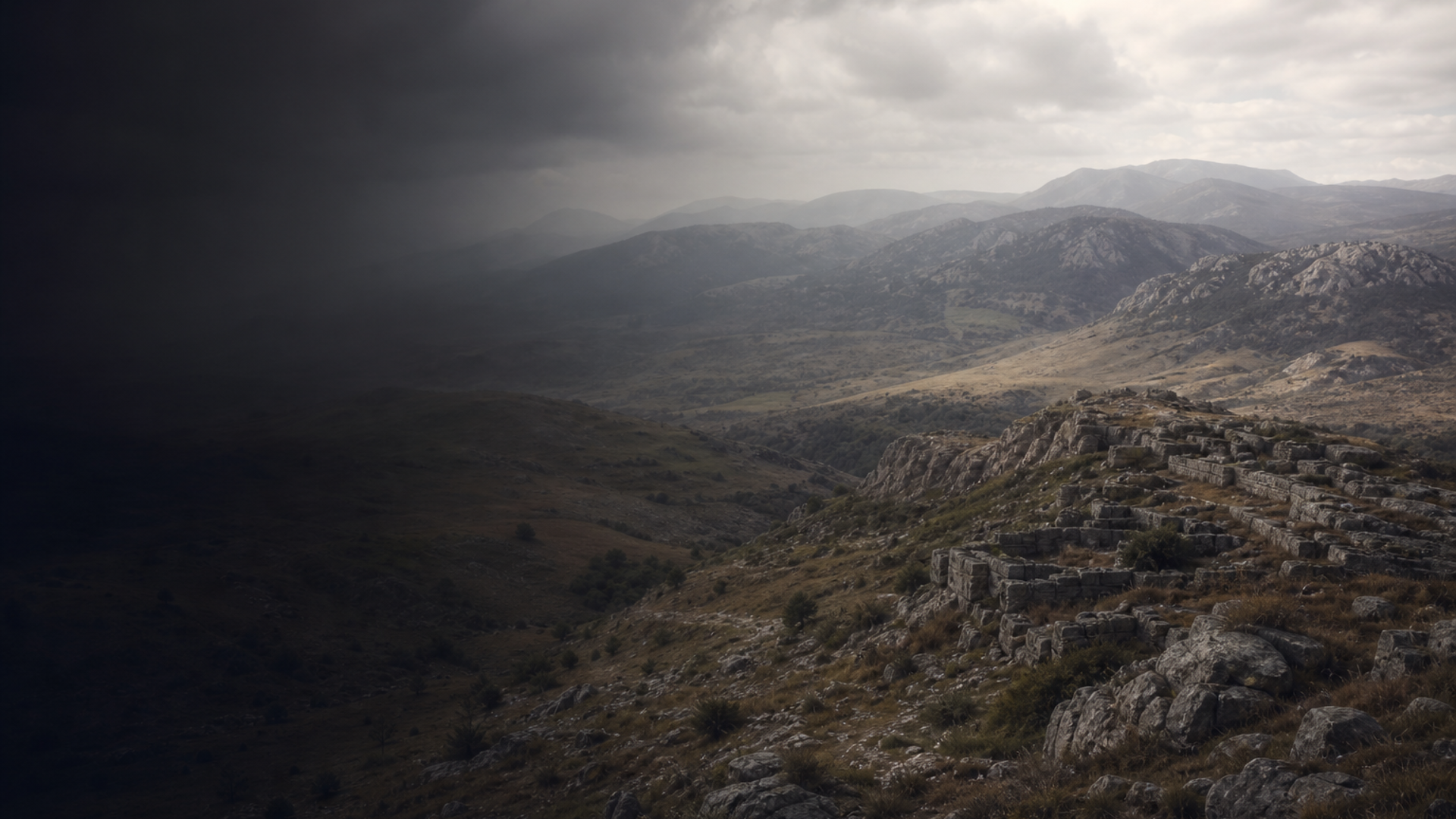
Archaeology from the sampled burial grounds paints a cinematic yet fragmentary portrait of daily life: agrarian villages nested in the rolling foothills of the Rhodopes and river valleys, craft production of iron and ceramics, and funerary display that marks identity and memory. Grave assemblages from the region typically include pottery, occasional metal objects and personal ornaments; such material culture suggests households with specialized skills and connections to wider trade networks.

Social life likely revolved around kin groups and local chieftains, with cemeteries functioning as places of remembrance and social signaling. Burial variability hints at social differentiation — some individuals interred with richer goods while others have simpler graves — but preservation and excavation bias complicate a clear social map. Pollen records and settlement surveys from nearby regions indicate mixed farming, pasturing and woodland management, consistent with a landscape of small-scale, resilient communities adapting to changing political and economic currents in the first millennium BCE.

  • Economy: mixed farming, herding, local craft and ironworking
  • Burials: variable grave goods suggesting social differentiation

Genetic Profile

The genetic dataset for Bulgaria_EIA comprises 16 sampled individuals spanning 1100–500 BCE from multiple sites in southern Bulgaria. Maternal lineages are dominated by mitochondrial haplogroup H (6 individuals), with additional occurrences of U (3), K (2), H+ (1) and J1c (1); three samples yielded undetermined mtDNA results. The predominance of H aligns with a long-standing presence of this lineage across Europe and is consistent with continuity of maternal ancestry from earlier Bronze Age populations in the region.

Y-chromosome data are not well-resolved in this specific collection—either absent, low coverage, or too heterogeneous to report dominant haplogroups with confidence. This limitation restricts firm conclusions about male-mediated migrations or patrilineal structure in these communities. Autosomal signals (where available) in comparable Balkan Iron Age contexts often show mixtures of local Neolithic/Bronze Age ancestry with varying degrees of steppe-derived components; archaeological patterns here (continuity in material culture alongside new influences) are compatible with a model of mostly local ancestry supplemented by regional gene flow. Because the sample count is modest, especially for sex-specific markers, interpretations remain provisional: expanding the dataset and integrating higher-coverage Y-DNA and autosomal genomes will clarify the balance of continuity and admixture.

  • mtDNA dominated by H; U, K, J1c also present
  • Y-DNA coverage limited — male lineages unresolved in this dataset

Legacy & Modern Connections

The genetic imprint of Bulgaria_EIA resonates in subtle ways with later populations of the Balkans. The prevalence of mtDNA H among these Early Iron Age individuals mirrors a persistent maternal thread in southeastern Europe through the Bronze and Iron Ages into historic times. Archaeological continuity at several sites supports the idea that many local lineages endured while ideas, objects and some people moved across the region.

In modern genetic studies, signals attributable to long-term local ancestry in Bulgaria often overlap with patterns seen in these ancient samples, but precise links require larger ancient reference panels and high-resolution autosomal data. The Bulgaria_EIA series is an important step: it grounds archaeological narratives in biological data and highlights how maternal lineages can illuminate continuity even when material culture shows change. Continued sampling and interdisciplinary work will further reveal how these Iron Age communities contributed to the genetic tapestry of southeastern Europe.

  • mtDNA continuity suggests long-term local maternal lines
  • Modern connections plausible but require more ancient genomes for firm links

AI 助手

AI 助手 由DNAGENICS公司制作

解锁此特性
Ask questions about the Iron Echoes: Bulgaria_EIA culture. Our AI assistant can explain genetic findings, historical context, archaeological evidence, and modern connections.
AI 样本分析

Iron Echoes: Bulgaria_EIA 文化是人类历史中值得了解的一章……

遗传分析揭示了与早期种群的联系,同时显示了独特的适应和文化创新的证据。 古代DNA样本提供了对迁徙模式、社会结构以及古代种群之间的生物关系的深刻见解。

这是人工智能分析的预览。 解锁全AI 助手, 以探索关于:

  • 遗传组成和祖先
  • 移徙模式和起源
  • 日常生活和文化习俗
  • 现代遗传遗产
使用优惠码 可减免 30% • 11月15日 到期




