Iron Gates Mesolithic (Serbia)

下载的 PDF 是图像副本。如需可选中文本及更好的辅助技术支持,请使用打印功能。

Iron Gates Mesolithic (Serbia)

揭开一个失落的文明

正在加载考古记录……

正在收集古代记录

跳转到主内容
Iron Gates Mesolithic (Serbia)
文明焦点

Iron Gates Mesolithic (Serbia)

Riverside hunter‑gatherers of the Danube whose bones and DNA illuminate deep European roots.

9755 CE - 5710 BCE
Danube Iron Gates, Serbia
滚动开始
Chapter I

剧情

了解 Iron Gates Mesolithic (Serbia) 文化

Archaeological and genetic evidence from 42 Mesolithic individuals (9755–5710 BCE) at Iron Gates sites (Lepenski Vir, Vlasac, Padina, Hajduka Vodenica) reveals a riverine hunter‑gatherer population dominated by mtDNA U and Y haplogroups I and R, showing deep local continuity with nuanced external influences.

Time Period

9755–5710 BCE

Region

Danube Iron Gates, Serbia

Common Y-DNA

I (12), R (7)

Common mtDNA

U (30), K (4), H (1)

Chapter II

时间线

这种文化历史上的关键时刻

9755 BCE

Earliest sampled individuals

Earliest aDNA dates in the Iron Gates sequence, marking Mesolithic occupation of river terraces.

6200 BCE

Lepenski Vir architectural phase

Construction of trapezoidal foundations and carved stones at Lepenski Vir, indicating communal buildings and ritual.

5710 BCE

Latest sampled individuals

Most recent dates in the sampled series, closing the current Mesolithic genetic window at the Iron Gates.

Chapter III

Origins & Emergence

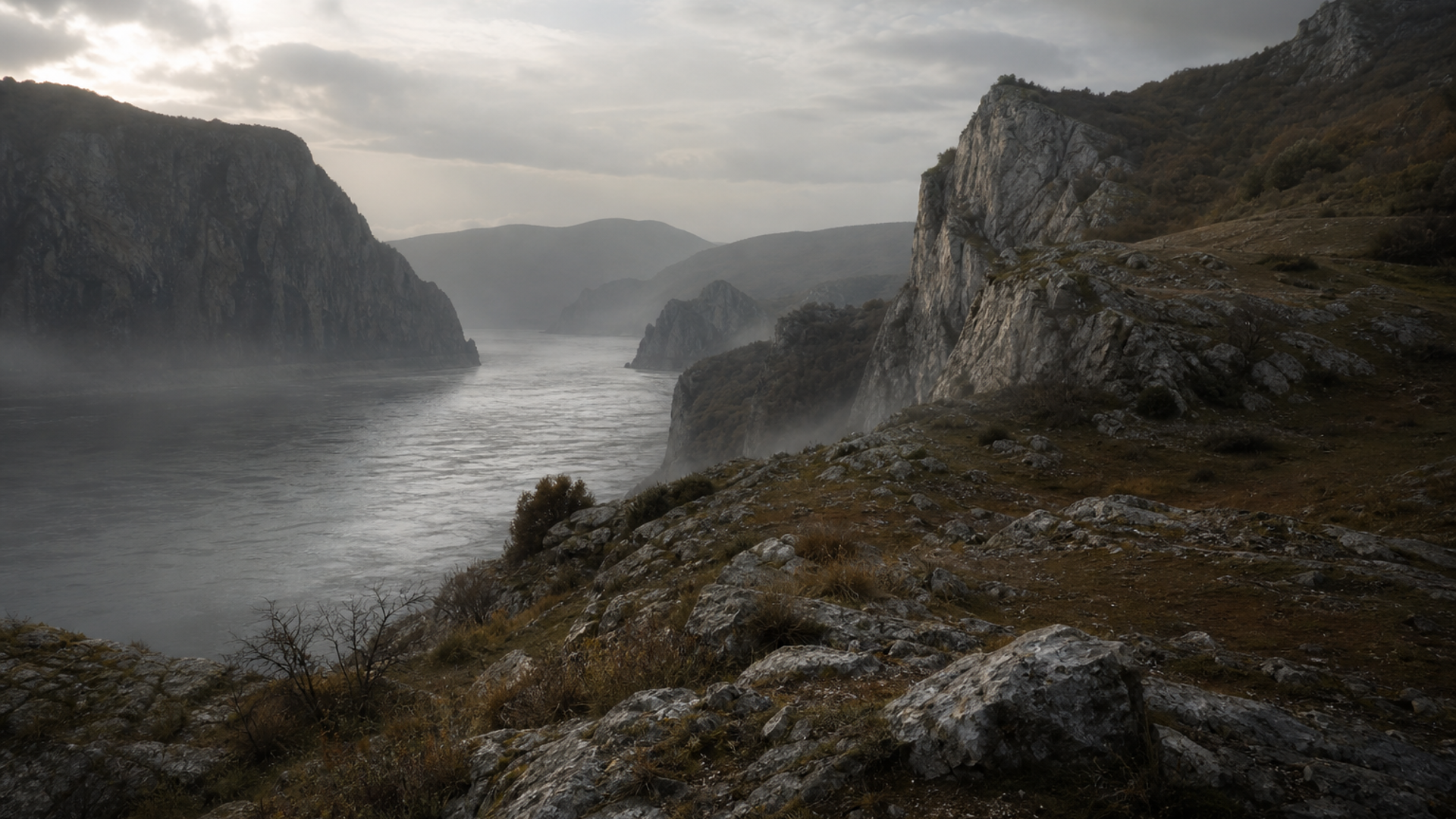
Along the turbulent gorge of the Danube known as the Iron Gates, small, mobile communities settled riverbanks and terraces from the early Mesolithic onward. Archaeological data from sites such as Lepenski Vir, Vlasac, Padina and Hajduka Vodenica record long stratified sequences of hearths, burials and fish‑processing floors dating between 9755 and 5710 BCE. The material record—stone tools, carved stone idols, and structured houses at Lepenski Vir—paints a picture of adaptive lifeways centered on the river.

Genetically, 42 sampled individuals from these sites provide a rare and comparatively dense Mesolithic dataset. The predominance of mitochondrial haplogroup U aligns with broader European hunter‑gatherer signatures, suggesting deep maternal continuity in the region. Y‑chromosome haplogroups I and R appear among males, consistent with local European hunter‑gatherer lineages and occasional links to neighboring groups. Limited evidence suggests episodes of contact or gene flow across the Danube corridor, but the primary signal is one of long‑term, place‑rooted subsistence populations. As always, archaeological and genetic interpretations must remain cautious: preservation bias, temporal gaps, and uneven sampling can affect apparent patterns.

  • Settlements clustered on river terraces at Lepenski Vir, Vlasac, Padina.
  • Material culture indicates specialized riverine subsistence and ritual.
  • 42 aDNA samples show strong maternal continuity (mtDNA U).
Chapter IV

Daily Life & Society

Life in the Iron Gates Mesolithic unfolded to the rhythms of the Danube: seasonal fish migrations, flood pulses, and stands of riparian woodland. Archaeological deposits reveal repeated tasks—fish smoking and butchery, lithic retouching, and hearth maintenance—often concentrated in small house plans or open‑air work areas. At Lepenski Vir, remarkable trapezoidal sandstone foundations and sculpted stone heads imply communal construction and ritualized spaces; at Vlasac and Padina, dense midden deposits record intense exploitation of sturgeon, carp and roe.

Social organization likely combined flexible mobility with site reuse: families or kin groups returned to favored terraces each year. Burials—some with red ochre or offerings—suggest emerging inequality or differential roles, but interpreting status from bones and grave goods remains tentative. Craft specializations (stone carving, fishing gear production) are visible, and small‑scale exchange of raw materials indicates ties along the river corridor. Environmental shifts and fluctuating river resources would have structured social calendars, marriage networks, and seasonal aggregation events.

  • Riverine economy centered on intensive fishing and woodland foraging.
  • Architectural traces and carved stones indicate communal and ritual life.
Chapter V

Genetic Profile

The Iron Gates Mesolithic dataset comprises 42 individuals sampled across Lepenski Vir, Vlasac, Padina and Hajduka Vodenica, spanning ca. 9755–5710 BCE. This sample size allows a reasonably robust view of population genetics for a Mesolithic context, though representativeness beyond the Danube corridor remains limited.

Mitochondrial DNA is dominated by haplogroup U (30 of 42), a hallmark of European hunter‑gatherer maternal lineages, implying deep matrilineal continuity in the region. Minor mtDNA lineages include K (4, including K1c and K1* variants) and a single H—suggesting some maternal diversity or later admixture events. On the paternal side, Y‑chromosome haplogroups cluster mainly in I (12) and R (7). Haplogroup I is commonly associated with Mesolithic Europeans and supports an interpretation of local male continuity; the presence of R may reflect regional heterogeneity and contact with neighboring forager groups.

Genetic data combined with archaeology suggest the Iron Gates communities were primarily local hunter‑gatherers with episodic gene flow along river routes. While the sample is substantial for Mesolithic Europe, caution is warranted: temporal depth, site selection, and post‑depositional processes can bias observed frequencies. Further sampling across time and place is necessary to track finer‑scale demographic shifts.

  • 42 individuals provide a comparatively dense Mesolithic aDNA sample.
  • mtDNA dominated by U; Y‑DNA mainly I with notable R presence.
Chapter VI

Legacy & Modern Connections

The Iron Gates Mesolithic leaves both dramatic monuments in stone and quieter legacies in genomes. Sculpted heads and house plans at Lepenski Vir testify to a developed riverine cosmology that continued to inspire local communities into the Neolithic transition. Genetically, the strong U‑lineage signal and presence of haplogroups I and R point to long‑lasting contributions of Mesolithic foragers to the later European gene pool, particularly in the Balkans and along the Danube.

It would be an overreach to equate these ancient individuals directly with any modern population; millennia of migrations, admixture and cultural change have reshaped genomes. However, the Iron Gates data provide a crucial baseline: they show a durable local substratum that Neolithic farmers and later groups encountered and partially absorbed. Ongoing aDNA sampling and careful archaeological contextualization will refine how these Mesolithic communities fit into the broader story of European prehistory.

  • Material culture at Lepenski Vir influenced later ritual expressions in the region.
  • Genomes show a local Mesolithic substratum later integrated into Balkan ancestry.
AI 电源

AI 助手

就 Iron Gates Mesolithic (Serbia) 文化提问

AI 助手 由DNAGENICS公司制作

解锁此特性
Ask questions about the Iron Gates Mesolithic (Serbia) culture. Our AI assistant can explain genetic findings, historical context, archaeological evidence, and modern connections.
AI 样本分析

Iron Gates Mesolithic (Serbia) 文化是人类历史中值得了解的一章……

遗传分析揭示了与早期种群的联系,同时显示了独特的适应和文化创新的证据。 古代DNA样本提供了对迁徙模式、社会结构以及古代种群之间的生物关系的深刻见解。

这是人工智能分析的预览。 解锁全AI 助手, 以探索关于:

  • 遗传组成和祖先
  • 移徙模式和起源
  • 日常生活和文化习俗
  • 现代遗传遗产

探索更古老的文化

揭开古代世界文明的故事

使用优惠码 可减免 35% • 11月12日 到期




