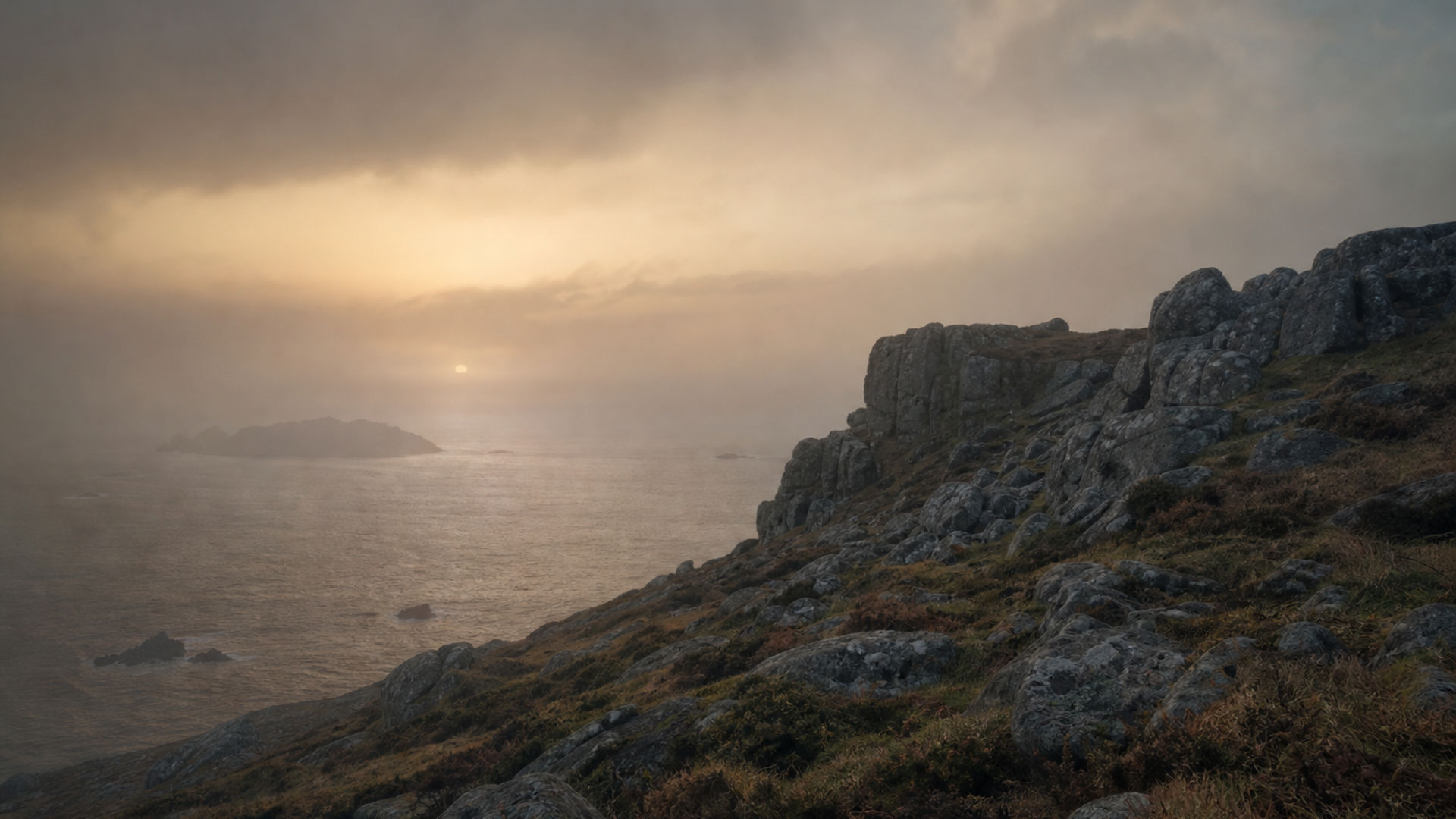
Island Dawn: Chalcolithic Herm

下载的 PDF 是图像副本。如需可选中文本及更好的辅助技术支持,请使用打印功能。

Island Dawn: Chalcolithic Herm

揭开一个失落的文明

正在加载考古记录……

正在收集古代记录

跳转到主内容
Island Dawn: Chalcolithic Herm
文明焦点

Island Dawn: Chalcolithic Herm

Two ancient genomes from Herm illuminate coastal life on the Channel Islands, with caution.

3954 CE - 3527 BCE
Channel Islands, United Kingdom
滚动开始
Chapter I

剧情

了解 Island Dawn: Chalcolithic Herm 文化

Archaeological and genetic evidence from Herm (The Common), Channel Islands, c. 3954–3527 BCE, offers a rare glimpse into small island communities. With only two genomes, conclusions remain provisional but suggest continuity with Neolithic coastal lifeways and strong effects of island isolation.

Time Period

c. 3954–3527 BCE

Region

Channel Islands, United Kingdom

Common Y-DNA

Not determined (2 samples)

Common mtDNA

Not determined (2 samples)

Chapter II

时间线

这种文化历史上的关键时刻

3750 BCE

Occupation at Herm (The Common)

Archaeological occupation on Herm dated to this horizon; two genomes (3954–3527 BCE) recovered, offering preliminary genetic insight into island populations.

Chapter III

Origins & Emergence

The bones and sediments of Herm record a quiet transition between long-established coastal foragers and emerging Chalcolithic lifeways. Archaeological data indicates repeated occupation at The Common during the late 5th–4th millennium BCE, a period when small Atlantic communities adapted to changing sea routes and climatic shifts. Limited evidence suggests people on Herm exploited rich littoral resources, maintained small-scale cultivation, and participated in regional exchange networks that connected the Channel Islands with southwestern Britain and Brittany.

Genetically, the two available genomes date between 3954 and 3527 BCE, placing them in a horizon when continental Neolithic ancestry was widespread in northwestern Europe but before major Bronze Age population turnovers. Because the sample count is only two, any narrative about population origin must remain tentative: these individuals may reflect local continuity from earlier Neolithic settlers, inputs from nearby British mainland groups, or a mix of both. Archaeology and genetics together paint Herm as a place of constrained mobility and strong island-specific trajectories—an emergent insular community shaped by sea, isolation, and contact. Further excavation and more genomes will be required to clarify whether Herm was a waypoint, a long-term homeland, or both.

  • Occupation at Herm during c. 3954–3527 BCE
  • Evidence for coastal resource use and small-scale cultivation
  • Two genomes suggest continuity but remain provisional
Chapter IV

Daily Life & Society

Archaeological traces on Herm conjure an intimate, maritime world: ephemeral huts or post-built structures, hearths that warmed fisher-farmers, and middens where shells and fish bones accumulated. Material culture in the Channel Islands during the Chalcolithic generally includes coarse pottery, polished stone tools, and personal items hinting at craft and exchange. The island’s carrying capacity likely constrained population size, favoring extended family groups or small communities with tight social bonds.

Seasonal rhythms governed life—spring and summer fishing and shellfish gathering, autumn harvests and storage, winter reliance on preserved foods and repaired nets. Objects found regionally point to exchange: stone tools and decorative items occurring across the Channel suggest links across short sea passages. On islands like Herm, cultural practices may have been conservative, preserving older lifeways longer than on the mainland, while also selectively adopting innovations arriving by boat. Social organization was probably flexible and adaptive, with leadership based on kinship, knowledge of marine resources, and control of exchange routes rather than large hierarchical institutions.

  • Small, kin-based communities adapted to maritime resources
  • Material culture indicates local craft and short-range exchange
Chapter V

Genetic Profile

The genetic signal from Herm is tantalizing but very limited: two ancient genomes dated to c. 3954–3527 BCE provide the only direct DNA window into ChannelIslands_C so far. Both genomes allow preliminary inferences about ancestry composition and island population dynamics, but sample size (<10) makes any strong claims speculative.

Archaeogenetic expectations for this period in northwest Europe commonly include a mix of Anatolian Neolithic farmer-derived ancestry and indigenous Western Hunter-Gatherer ancestry. On islands, we often see amplified effects of genetic drift, founder events, and reduced diversity; the Herm genomes may therefore show distinct allele frequencies relative to contemporary mainland groups. The available data do not robustly identify common Y- or mtDNA haplogroups for this culture, so statements about paternal or maternal lineages remain open.

Crucially, the genomes help link archaeological patterns—coastal subsistence, limited mobility—to population processes: reduced diversity and signs of isolation would match an island-adapted community, whereas affinities to mainland Neolithic groups would indicate ongoing contact. All interpretations must be couched in uncertainty until more samples from Herm and neighboring islands are analyzed. Future aDNA from burial contexts and isotopic studies will be key to resolving mobility, kinship, and dietary questions.

  • Two genomes provide provisional ancestry insights with low sample power
  • Patterns may reflect Neolithic farmer + hunter-gatherer ancestry with island drift effects
Chapter VI

Legacy & Modern Connections

The legacy of ChannelIslands_C is best understood as an imprint of island adaptation: small communities negotiating the sea’s bounty and constraints. Modern populations in the Channel Islands may carry echoes of these Chalcolithic inhabitants in subtle genetic continuity, but direct links require denser sampling and careful population modelling. Archaeologically, the period on Herm contributes to a broader story of Atlantic connectivity—small islands acting as nodes of cultural retention and selective exchange.

For modern ancestry users, the Herm genomes highlight two lessons: first, islands can preserve distinct threads of human history that differ from mainland narratives; second, very small ancient sample sizes demand cautious interpretation. As more ancient DNA emerges from the Channel Islands and nearby coasts, we will be able to trace which elements of Chalcolithic island life persisted, which were transformed, and how maritime networks shaped genetic landscapes over millennia.

  • Islands preserve distinct, sometimes divergent ancestry signals
  • Current genetic links to modern populations are provisional and require more data
AI 电源

AI 助手

就 Island Dawn: Chalcolithic Herm 文化提问

AI 助手 由DNAGENICS公司制作

解锁此特性
Ask questions about the Island Dawn: Chalcolithic Herm culture. Our AI assistant can explain genetic findings, historical context, archaeological evidence, and modern connections.
AI 样本分析

Island Dawn: Chalcolithic Herm 文化是人类历史中值得了解的一章……

遗传分析揭示了与早期种群的联系,同时显示了独特的适应和文化创新的证据。 古代DNA样本提供了对迁徙模式、社会结构以及古代种群之间的生物关系的深刻见解。

这是人工智能分析的预览。 解锁全AI 助手, 以探索关于:

  • 遗传组成和祖先
  • 移徙模式和起源
  • 日常生活和文化习俗
  • 现代遗传遗产

探索更古老的文化

揭开古代世界文明的故事

使用优惠码 可减免 35% • 11月12日 到期