Jabuticabeira II: Shell-Mound People

下载的 PDF 是图像副本。如需可选中文本及更好的辅助技术支持,请使用打印功能。

Jabuticabeira II: Shell-Mound People

揭开一个失落的文明

正在加载考古记录……

正在收集古代记录

跳转到主内容
Jabuticabeira II: Shell-Mound People
文明焦点

Jabuticabeira II: Shell-Mound People

Coastal sambaqui builders of southern Brazil, 410 BCE–880 CE — lives preserved in shells and DNA.

410 BCE - 880 CE
Brazil (Jabuticabeira Shell Midden II, Santa Catarina)
滚动开始
Chapter I

剧情

了解 Jabuticabeira II: Shell-Mound People 文化

Archaeological and genetic evidence from Jabuticabeira Shell Midden II (southern Brazil) reveals coastal sambaqui lifeways between 410 BCE and 880 CE. Five ancient genomes show Native American maternal lineages (C1c, B2) and a single paternal Q lineage; conclusions are preliminary given small sample size.

Time Period

410 BCE–880 CE

Region

Brazil (Jabuticabeira Shell Midden II, Santa Catarina)

Common Y-DNA

Q (1)

Common mtDNA

C1c (4), B2 (1)

Chapter II

时间线

这种文化历史上的关键时刻

200 BCE

Active midden growth and burials

Radiocarbon-calibrated dates place intensive shell-mound accumulation and interments at Jabuticabeira II during the late first millennium BCE–early first millennium CE, indicating sustained coastal occupation.

Chapter III

Origins & Emergence

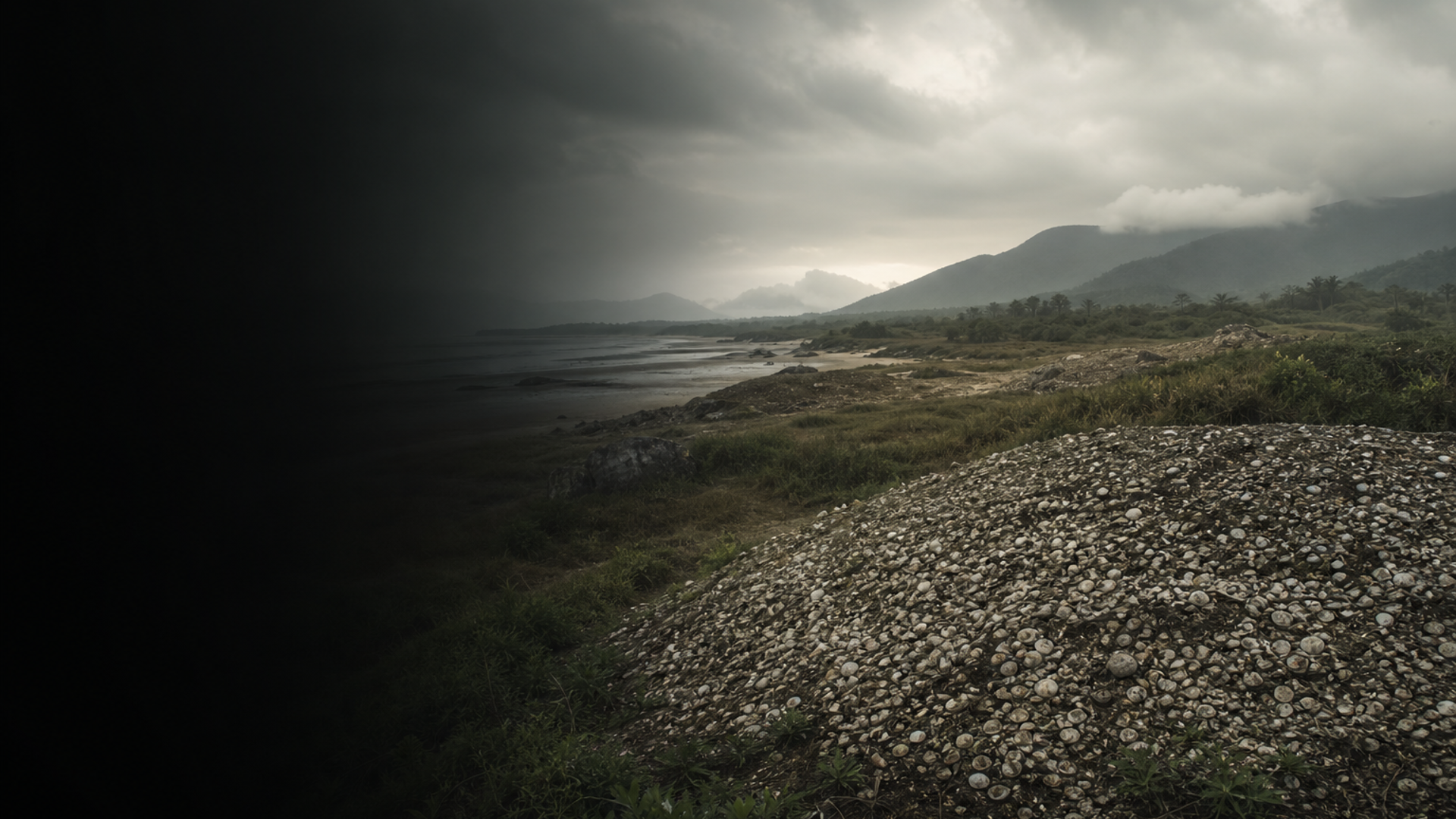
Rising from the rhythm of tides and the slow accretion of discarded shells, the people of Jabuticabeira II left an enduring landscape of mounded refuse — the sambaqui. Located on the southern Brazilian coast in present-day Santa Catarina (Jabuticabeira Shell Midden II), these deposits accumulated across centuries between about 410 BCE and 880 CE. Archaeological data indicates repeated seasonal or year-round use of rich littoral resources: vast quantities of marine shell, fish bone, and remains of coastal birds and shellfish.

Mortuary deposits interleaved with midden layers suggest that Jabuticabeira II was not only a food-production locus but also a place of place-making and memory. Skeletal remains and grave goods recovered from the site show a community embedded in the sea’s economy and social world. Material culture includes worked bone and shell tools and, in later contexts, traces of simple ceramics — although ceramic evidence is sparse and its chronology remains debated. Radiocarbon dates from charcoal and shell place primary mound growth in the first millennium CE and earlier, pointing to long-term occupation and repeated landscape engineering.

Limited evidence suggests these coastal groups participated in regional interaction networks along the Brazilian littoral, exchanging materials and ideas with neighbouring sambaqui and inland groups. The archaeological picture is robust for subsistence and site formation, but many questions remain about social organization and the scale of mobility: current interpretations must be cautious and open to new finds.

  • Sambaqui (shell-mound) site in Santa Catarina, Brazil
  • Primary occupation dated c. 410 BCE–880 CE based on radiocarbon samples
  • Evidence of marine-focused subsistence and mortuary use of middens
Chapter IV

Daily Life & Society

Life at Jabuticabeira II would have been dominated by the sea’s seasonal pulse: harvesting shellfish, fishing in sheltered lagoons and nearshore waters, hunting coastal birds, and processing marine resources on the shore. Archaeological strata show concentrated hearths and workspace areas within the mound, where food was cooked and tool manufacture occurred. Bone and shell artifacts testify to specialized craft; adzes, fishhooks, and perforated shells suggest both practical economy and ornamentation.

The physical structure of the midden — layered deposits with occasional burial pits — implies a community that repeatedly returned to the same place, investing labor in piling shell and earth. Mortuary practices observed at the site, with human remains interred within shell lenses or beneath mound layers, indicate that the dead remained part of the living landscape. Demographic inferences from skeletal material are tentative: preservation biases and sample size limit precise reconstructions of age structure or health, though signs of dietary reliance on marine protein are consistent with stable isotope expectations for coastal diets.

Social life likely combined kin networks with broader coastal ties: trade or exchange of stone, shell ornaments, and possibly pottery shards appear sporadically. The site’s long duration suggests cultural continuity punctuated by adaptation to shifting sea levels, resource availability, and external contacts.

  • Marine-focused diet with specialized shell and bone tools
  • Middens used as both refuse and burial contexts, indicating place-memory
Chapter V

Genetic Profile

Ancient DNA analysis from five individuals recovered at Jabuticabeira Shell Midden II provides a tantalizing but provisional glimpse into the genetic landscape of southern coastal Brazil between 410 BCE and 880 CE. All mitochondrial genomes fall within well-known Native American maternal lineages: four individuals carry C1c and one carries B2. A single Y-chromosome assigned to haplogroup Q — a lineage widespread among Indigenous populations of the Americas — was identified among the male sample.

These results are consistent with broader patterns of Pan-American founding lineages, where maternal branches like C and B and paternal Q are common. The predominance of C1c among these five samples could suggest maternal continuity or a local matrilineal signal, but with only five individuals (and only one Y sample) any inference about population structure, sex-biased mobility, or continuity with modern groups remains preliminary. Low sample counts increase the risk that observed frequencies reflect stochastic sampling rather than population-level patterns.
Comparative genetic studies of other sambaqui and inland late Holocene individuals suggest regional heterogeneity in ancestry, and Jabuticabeira II seems to align with the southern coastal assemblage. Future genome-wide data and larger sample sizes will be crucial to test hypotheses about maritime adaptations, kinship structure, and genetic continuity with present-day Indigenous communities. For now, the DNA evidence complements the archaeological story: the people of Jabuticabeira II carried lineages tracing back to the deep peopling of the Americas, lived by the sea, and left both shells and genomes as traces.

  • Five ancient genomes: mtDNA C1c (4), B2 (1); Y-DNA Q (1)
  • Small sample size (<10) — conclusions about population structure are preliminary
Chapter VI

Legacy & Modern Connections

The shell mounds of Jabuticabeira II are a tangible legacy: monumentalized heaps of daily life that shaped the coastline and anchored memory. For modern Indigenous and local communities, sambaqui sites are part of a deep-time coastal heritage, and genetic links — where ethically obtained and community-engaged — can illuminate continuities and disjunctions between ancient and present-day peoples.

Archaeological and genetic data together encourage respectful dialogue: material remains show long-term maritime adaptations, while DNA points to shared maternal and paternal lineages common across the Americas. Given the small number of ancient genomes from Jabuticabeira II, any direct claims of ancestry to living groups must be made cautiously and in partnership with descendant communities. Continued interdisciplinary research, combining excavation, bioarchaeology, and community collaboration, offers the best path to honoring the past while refining our scientific understanding.

  • Sambaqui remain powerful cultural landmarks and research sites
  • Genetic links suggest deep Native American lineages; community-engaged research is essential
AI 电源

AI 助手

就 Jabuticabeira II: Shell-Mound People 文化提问

AI 助手 由DNAGENICS公司制作

解锁此特性
Ask questions about the Jabuticabeira II: Shell-Mound People culture. Our AI assistant can explain genetic findings, historical context, archaeological evidence, and modern connections.
AI 样本分析

Jabuticabeira II: Shell-Mound People 文化是人类历史中值得了解的一章……

遗传分析揭示了与早期种群的联系,同时显示了独特的适应和文化创新的证据。 古代DNA样本提供了对迁徙模式、社会结构以及古代种群之间的生物关系的深刻见解。

这是人工智能分析的预览。 解锁全AI 助手, 以探索关于:

  • 遗传组成和祖先
  • 移徙模式和起源
  • 日常生活和文化习俗
  • 现代遗传遗产

探索更古老的文化

揭开古代世界文明的故事

使用优惠码 可减免 35% • 11月12日 到期




