İkiztepe: Late Chalcolithic Shores

下载的 PDF 是图像副本。如需可选中文本及更好的辅助技术支持,请使用打印功能。

İkiztepe: Late Chalcolithic Shores

揭开一个失落的文明

正在加载考古记录……

正在收集古代记录

跳转到主内容
İkiztepe: Late Chalcolithic Shores
文明焦点

İkiztepe: Late Chalcolithic Shores

A coastal Anatolian community in Samsun Province seen through archaeology and ancient DNA

3959 CE - 3094 BCE
İkiztepe, Samsun Province, Turkey (Black Sea coast)
滚动开始
Chapter I

剧情

了解 İkiztepe: Late Chalcolithic Shores 文化

Archaeological and genetic evidence from 12 Late Chalcolithic burials at İkiztepe (3959–3094 BCE) suggests a coastal Anatolian community with Near Eastern maternal lineages and mixed Y-chromosome signals. Limited sample size makes conclusions preliminary but evocative of regional continuity and contact.

Time Period

3959–3094 BCE (Late Chalcolithic)

Region

İkiztepe, Samsun Province, Turkey (Black Sea coast)

Common Y-DNA

J (1), G (1), GHIJK (1) — modest sample (n=12)

Common mtDNA

J (3), I5 (1), U (1), K (1), X (1)

Chapter II

时间线

这种文化历史上的关键时刻

3500 BCE

Occupation & burial activity at İkiztepe

Intensive Late Chalcolithic occupation and cemetery use along the Black Sea coast, dated within the site's 3959–3094 BCE range.

Chapter III

Origins & Emergence

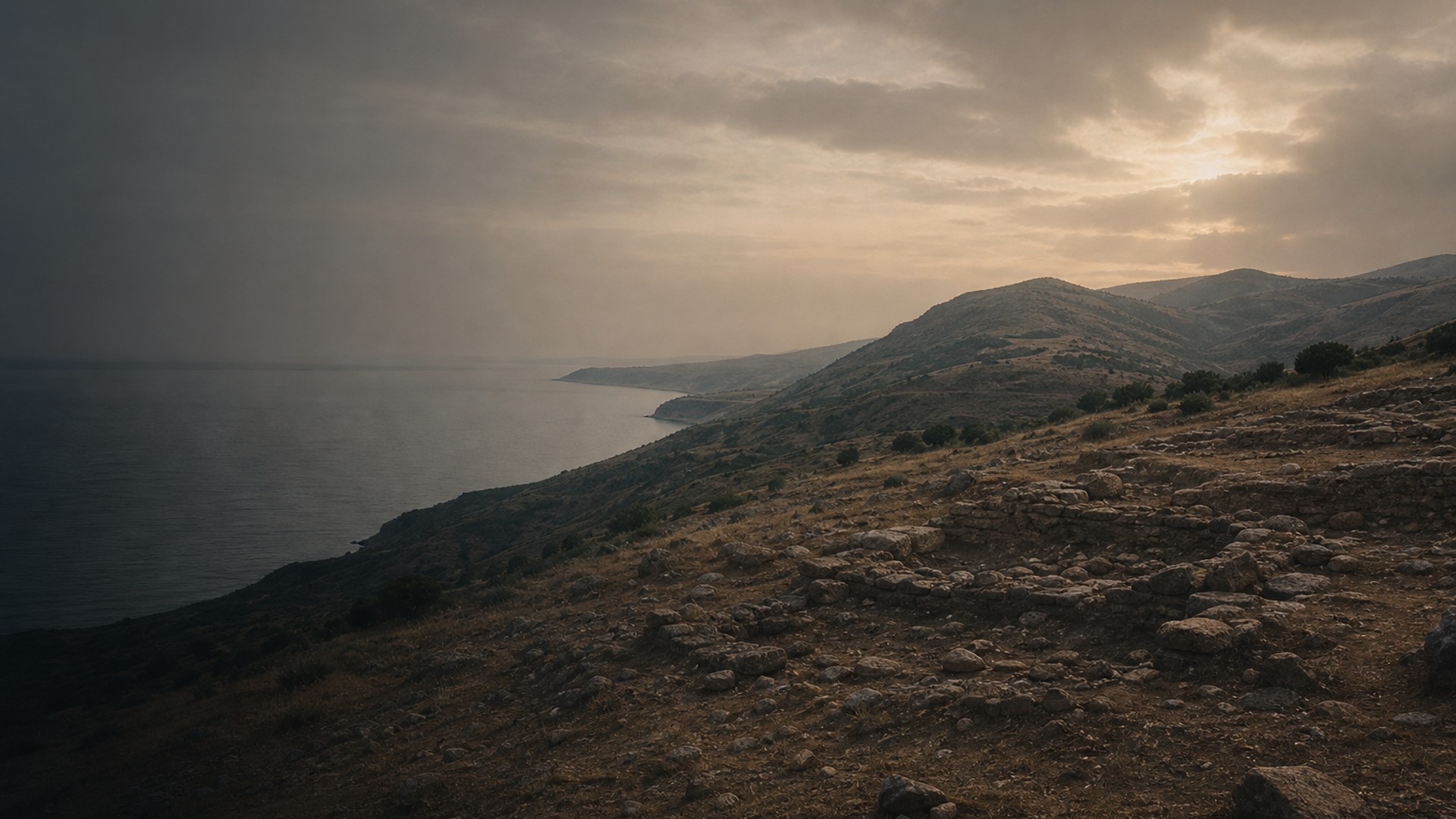
İkiztepe sits on the southern rim of the Black Sea in what is today Samsun Province. Archaeological layers dated between c. 3959 and 3094 BCE reflect a Late Chalcolithic occupation phase characterized by coastal settlement, mortuary activity, and material connections across northern Anatolia. Excavations at İkiztepe have revealed cemeteries, domestic architecture, and craft debris that speak to a community oriented toward the sea and inland exchange networks.

The material culture—ceramics with regional motifs, shell and bone tools, and burial rites—suggests continuity with earlier Chalcolithic traditions in Anatolia while also revealing new local practices. Archaeological data indicates interaction with interior river valleys and coastal trading routes; limited evidence points to the circulation of raw materials and ideas rather than wholesale population replacement.

From a broader perspective, İkiztepe falls within a tapestry of Late Chalcolithic sites where social complexity increased without the full urbanization seen later. Radiocarbon dates anchor the site in the mid-to-late 4th millennium BCE, a period of subtle demographic shifts. While the archaeological record records local lifeways, ancient DNA from twelve individuals provides a complementary line of evidence to trace biological connections and mobility across Anatolia and the Near East.

Bullets:

  • Coastal Late Chalcolithic occupation in İkiztepe, Samsun Province (3959–3094 BCE)
  • Material links to wider northern Anatolian and Near Eastern networks
  • Archaeology suggests local continuity with regional exchange
  • Coastal Late Chalcolithic occupation (3959–3094 BCE)
  • Material links to northern Anatolia and the Near East
  • Local continuity amid regional exchange
Chapter IV

Daily Life & Society

Life at İkiztepe can be imagined in tactile terms: reed-lined wells, fired-clay hearths, and small craft workshops set against the sound of the nearby sea. Archaeological remains—domestic floors, storage pits, and refuse lenses—suggest households engaged in mixed farming, fishing, and specialized craft production such as bone and shell working.

Burial practices at the site provide social clues. Graves show variations in orientation and goods, implying differentiated roles or statuses within the community. Funerary assemblages are generally modest: personal ornaments, small ceramic vessels, and occasionally exotic objects indicating access to exchange networks. These mortuary patterns are consistent with village-scale social organization that negotiated local identities while participating in broader regional ties.

Environmental proxies indicate that the Black Sea coastline and adjacent river systems played a critical role in subsistence and movement. Archaeobotanical and zooarchaeological remains (where preserved) point to mixed crop cultivation, pastoralism, and seasonally intensive fishing—an economy adapted to a littoral landscape.

Taken together, the material record paints a picture of resilient households embedded in inter-regional circuits: rooted in local resources yet open to exchange, innovation, and mobility.

Bullets:

  • Mixed farming, fishing, and specialized crafts
  • Varied burial practices suggesting social differentiation
  • Mixed farming, fishing, and specialized crafts
  • Varied burial practices indicating social differentiation
Chapter V

Genetic Profile

Twelve individuals from İkiztepe LateC were analyzed for uniparental markers and genome-wide ancestry. While this sample is modest, genetic results illuminate maternal and paternal lineages present in a Late Chalcolithic Anatolian community and provide cautious clues about regional affinities.

Y-chromosome diversity among the analyzed men includes haplogroups J (1), G (1), and a GHIJK-class assignment (1). Haplogroup J and G are both known from Neolithic and Chalcolithic Anatolia and the Near East, where they are often associated with early farmer and local male lineages. The GHIJK designation is broad and reflects limited resolution in a small number of samples; it should not be over-interpreted.

Mitochondrial DNA shows a stronger signal: J (3), I5 (1), U (1), K (1), and X (1). Maternal haplogroups such as J and K are commonly found across Anatolia and the Near East in Neolithic and later periods, consistent with archaeological expectations for regional continuity in maternal lines. The presence of U and X hints at deeper Paleolithic and Eurasian connections, but numbers are small.

Genome-wide ancestry (limited by sample size) appears consistent with predominantly Anatolian farmer-related ancestry with possible minor inputs from neighboring regions. Archaeogenetic comparisons suggest continuity with earlier Anatolian Neolithic populations, though localized admixture and mobility along the Black Sea coast are plausible. Overall, the genetic evidence is informative but preliminary: with n=12, patterns merit further sampling to confirm regional trends.

Bullets:

  • Y: J, G, and a broad GHIJK signal—ties to Anatolian/Near Eastern male lineages
  • mtDNA: predominance of J and presence of K, I5, U, X—consistent with regional maternal continuity
  • Y lineages include J and G; GHIJK label reflects limited resolution
  • mtDNA dominated by J; diversity suggests Anatolian and wider Eurasian ties
Chapter VI

Legacy & Modern Connections

İkiztepe's legacy is both local and expansive. Archaeological continuity in material culture and the predominance of Anatolian-associated maternal haplogroups point to enduring threads between Late Chalcolithic communities and later populations in Anatolia. Ancient DNA allows us to trace these biological continuities and disruptions, revealing how coastal communities participated in long-term demographic processes.

However, linking ancient groups directly to modern populations requires caution: millennia of migration, admixture, and cultural change have reshaped genetic landscapes. The modest sample from İkiztepe suggests affinities with Neolithic and Chalcolithic Anatolian ancestries rather than clear ties to any single modern group. Where signals are weak or sample sizes are small, conclusions should remain provisional.

In museums and public history, İkiztepe offers a cinematic portrait of everyday lives on the Black Sea coast—a place where local traditions and long-distance connections met. Ongoing archaeological work and larger ancient DNA datasets will sharpen our view of how these Late Chalcolithic people contributed to Anatolia's deep human story.

  • Suggests regional continuity but not direct one-to-one links to modern groups
  • Highlights importance of larger ancient DNA samples to refine connections
AI 电源

AI 助手

就 İkiztepe: Late Chalcolithic Shores 文化提问

AI 助手 由DNAGENICS公司制作

解锁此特性
Ask questions about the İkiztepe: Late Chalcolithic Shores culture. Our AI assistant can explain genetic findings, historical context, archaeological evidence, and modern connections.
AI 样本分析

İkiztepe: Late Chalcolithic Shores 文化是人类历史中值得了解的一章……

遗传分析揭示了与早期种群的联系,同时显示了独特的适应和文化创新的证据。 古代DNA样本提供了对迁徙模式、社会结构以及古代种群之间的生物关系的深刻见解。

这是人工智能分析的预览。 解锁全AI 助手, 以探索关于:

  • 遗传组成和祖先
  • 移徙模式和起源
  • 日常生活和文化习俗
  • 现代遗传遗产

探索更古老的文化

揭开古代世界文明的故事

使用优惠码 可减免 35% • 11月12日 到期