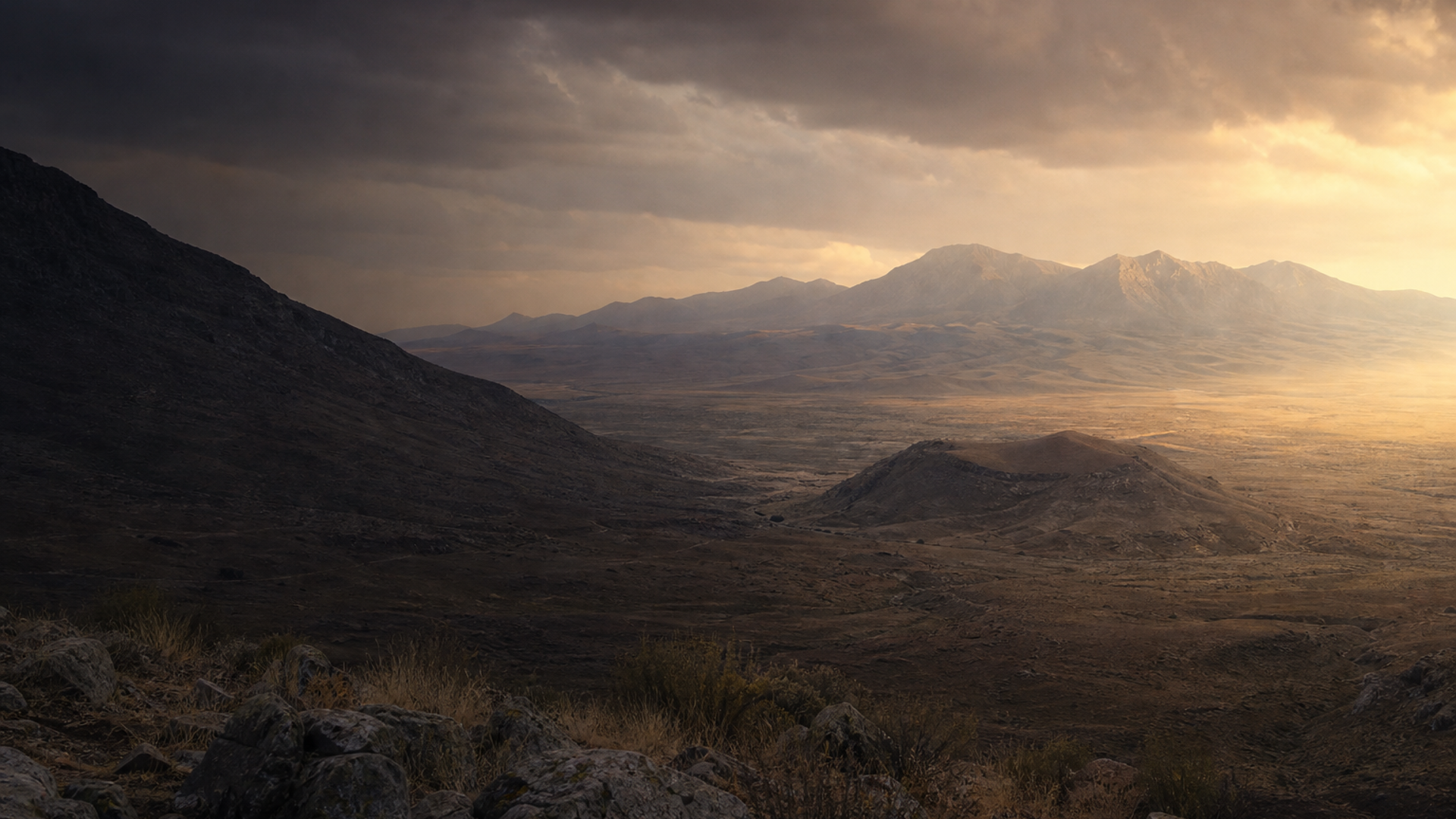
Kura‑Araxes Armenia: Mountain Horizons

下载的 PDF 是图像副本。如需可选中文本及更好的辅助技术支持,请使用打印功能。

Kura‑Araxes Armenia: Mountain Horizons

揭开一个失落的文明

正在加载考古记录……

正在收集古代记录

跳转到主内容
Kura‑Araxes Armenia: Mountain Horizons
文明焦点

Kura‑Araxes Armenia: Mountain Horizons

Early Bronze Age communities in the South Caucasus seen through settlements, burials, and ancient genomes.

3625 CE - 2250 BCE
South Caucasus (Armenia)
滚动开始
Chapter I

剧情

了解 Kura‑Araxes Armenia: Mountain Horizons 文化

Archaeological and genetic glimpses into the Kura‑Araxes horizon in Armenia (3625–2250 BCE), from Shengavit to Karnut, revealing local maternal continuity, rare paternal markers, and a dynamic mountain lifeway.

Time Period

3625–2250 BCE (Early Bronze Age)

Region

South Caucasus (Armenia)

Common Y-DNA

G2b (observed)

Common mtDNA

U, H, T2h, R, K3

Chapter II

时间线

这种文化历史上的关键时刻

2500 BCE

Kura‑Araxes horizon consolidates

By c. 2500 BCE the Kura‑Araxes cultural package is widespread across the South Caucasus, visible in settlements, specialized craft, and cemeteries.

Chapter III

Origins & Emergence

The Kura‑Araxes horizon rises from the folds of the South Caucasus mountains in the late fourth to early third millennium BCE. Archaeological data indicates a rapid florescence of a characteristic material culture—black and red burnished pottery, simple rectangular architecture, and intensive metalworking—visible at sites such as Shengavit, Kaps, Karnut Archaeological Complex, Berkaber, and Dzhoghaz Cemetery Meydanner. Radiocarbon‑anchored contexts from this dataset span 3625–2250 BCE, situating these communities firmly within the Early Bronze Age of Armenia.

Limited evidence suggests that the Kura‑Araxes phenomenon is neither a single migrating people nor a wholly local invention, but rather a horizon that combines local highland traditions with contacts across the Caucasus and into Anatolia. The archaeological record shows shared craft traditions and exchange of raw materials across valleys and mountain passes. Genetic data from 12 individuals sampled across these Armenian sites point to a largely local mitochondrial assemblage (U, H, T2h, R, K3) and a single observed Y‑chromosome type (G2b), a pattern consistent with substantial maternal continuity in the region and episodes of interaction or mobility. While this suggests deep roots in the Caucasus, uncertainties remain: 12 genomes provide a valuable but partial window, and further sampling is required to resolve the balance of continuity versus incoming admixture.

  • Material culture flourished across highland settlements (Shengavit, Karnut, Kaps).
  • Radiocarbon contexts place activity between 3625 and 2250 BCE.
  • Genetic data suggest maternal continuity with regional lineages, with limited paternal sampling.
Chapter IV

Daily Life & Society

In the cinematic light of mountain valleys, Kura‑Araxes villages clustered near streams and arable terraces. Archaeological remains show a mixed subsistence economy: rainfed cultivation of cereals and pulses, managed herds of sheep and goats, and specialized craft production—coppersmithing, stone tool manufacture, and the striking burnished ceramics that give the horizon its signature look. Houses tended toward simple rectangular plans with hearths and storage pits; workshops and communal spaces suggest organized craft networks rather than isolated workshops.

Burial evidence from cemeteries such as Dzhoghaz and Shengavit reveals a variety of funerary practices—single interments and small grave groups, sometimes with pottery, copper items, or beads—pointing to household-based social organization with emerging status differences but no clear evidence for large, centralized polities. Exchange networks are visible in exotic raw materials and shared stylistic motifs, implying regular movement of people and ideas along mountain corridors. The archaeological record allows evocative reconstructions of everyday life—flame‑polished pottery cooling by a hearth, shepherds guiding flocks along steep slopes—but cautions remain: preservation bias and uneven excavation mean many aspects of social structure and ceremony remain shadowed and open to interpretation.

  • Mixed farming and pastoralism with specialized metallurgy and pottery.
  • Household‑centred burials and craft production indicate community networks rather than large states.
Chapter V

Genetic Profile

The genetic portrait from 12 individuals sampled at Kaps, Karnut, Berkaber, Dzhoghaz Cemetery Meydanner, and Shengavit offers a cautious but telling glimpse into population history. Mitochondrial DNA is dominated by haplogroup U (4 individuals), with additional representation of H (2), T2h (2), R (1), and K3 (1). These maternal lineages are common in West Eurasia and the Caucasus across the Neolithic and Bronze Age; the prevalence of U and presence of H suggest continuity with regional maternal pools that stretch back into earlier Holocene populations.

On the paternal side, Y‑DNA is sparsely sampled here and yields G2b in one individual. Haplogroup G and its sublineages are known in the Caucasus and neighboring regions, and the single G2b observation hints at at least some continuity of local paternal lines—but a single hit cannot define population structure. Taken together, the data point toward a community rooted in local Caucasus ancestry with signals of connectivity: maternal lineages reflect long‑standing regional continuity, while the limited paternal evidence and archaeological signs of exchange imply episodes of male and female mobility.

Caveats: 12 genomes provide meaningful initial resolution but remain a moderate sample size. Broader geographic and temporal sampling, coupled with genomic autosomal analysis, is required to model incoming gene flow, sex‑biased migration, and links to later populations in Armenia and beyond.

  • Maternally dominated by U, with H, T2h, R, and K3 also present.

  • Single observed Y‑chromosome: G2b—suggests possible local paternal continuity but requires more samples.
Chapter VI

Legacy & Modern Connections

The Kura‑Araxes horizon left an imprint on the landscape of the South Caucasus that echoes through material motifs, settlement patterns, and the genetic substratum of later populations. Archaeologically, the distinctive pottery, metallurgical techniques, and settlement strategies influenced subsequent Bronze Age traditions across the highlands and neighboring lowlands.

Genetically, the maternal lineages found in these Early Bronze Age Armenian samples are part of a larger mosaic that contributes to the deep ancestry of modern populations in the Caucasus and Anatolia. However, direct lines of descent are complex: millennia of migrations, cultural shifts, and demographic events have layered new ancestries onto the Kura‑Araxes substrate. Thus, while ancient genomes from Shengavit, Karnut, and other sites reveal threads of continuity, they form one strand within a rich, multi‑woven human tapestry. Continued collaboration between archaeology and ancient DNA promises to sharpen how we link the cinematic ruins of the past to the living genetic landscapes of today.

  • Material and genetic traces contributed to later Bronze Age cultural developments.
  • Ancient genomes suggest threads of continuity in the regional genetic makeup, but modern ancestry is complex.
AI 电源

AI 助手

就 Kura‑Araxes Armenia: Mountain Horizons 文化提问

AI 助手 由DNAGENICS公司制作

解锁此特性
Ask questions about the Kura‑Araxes Armenia: Mountain Horizons culture. Our AI assistant can explain genetic findings, historical context, archaeological evidence, and modern connections.
AI 样本分析

Kura‑Araxes Armenia: Mountain Horizons 文化是人类历史中值得了解的一章……

遗传分析揭示了与早期种群的联系,同时显示了独特的适应和文化创新的证据。 古代DNA样本提供了对迁徙模式、社会结构以及古代种群之间的生物关系的深刻见解。

这是人工智能分析的预览。 解锁全AI 助手, 以探索关于:

  • 遗传组成和祖先
  • 移徙模式和起源
  • 日常生活和文化习俗
  • 现代遗传遗产

探索更古老的文化

揭开古代世界文明的故事

使用优惠码 可减免 35% • 11月12日 到期