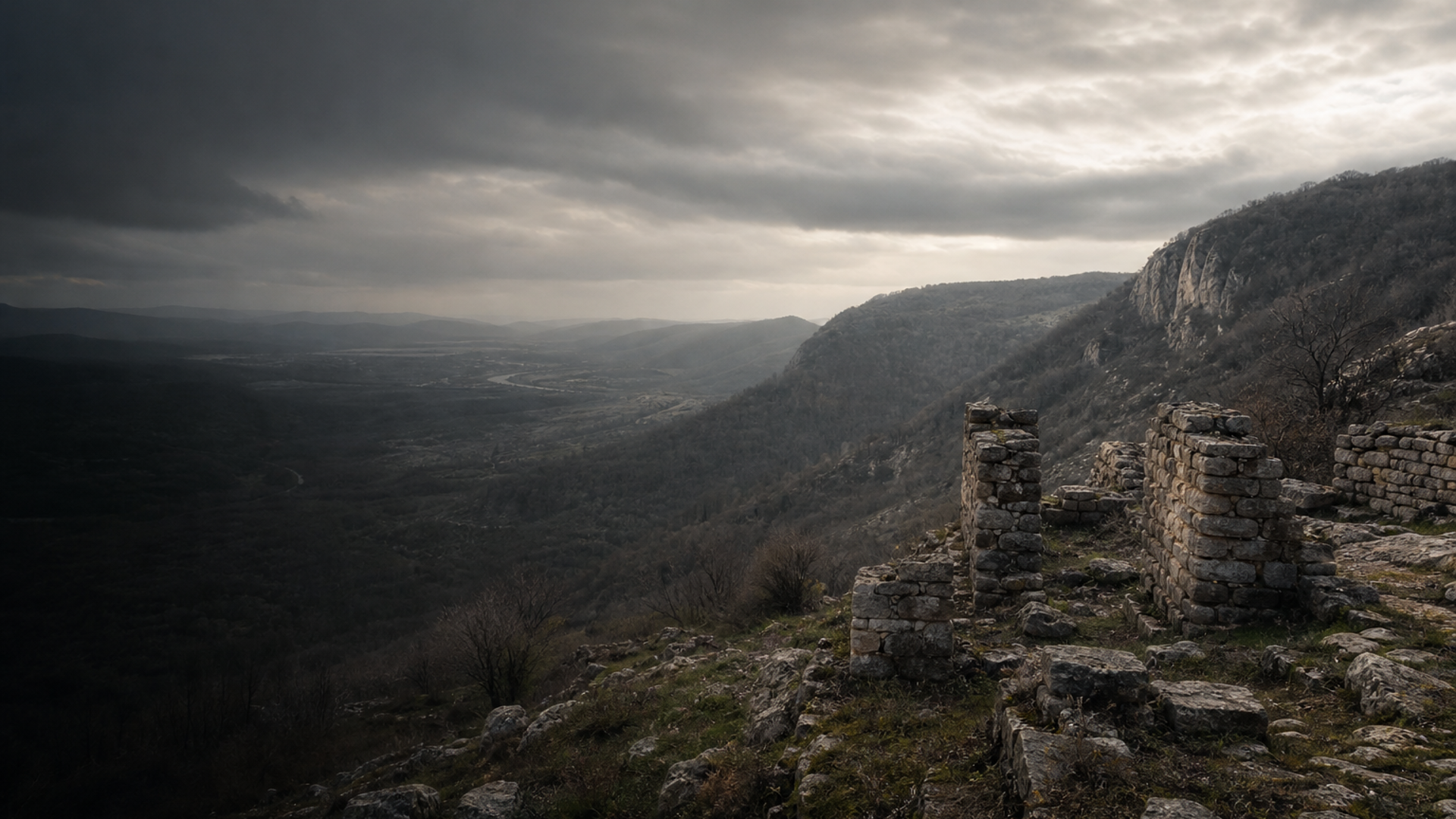
Late Imperial Dalmatia

下载的 PDF 是图像副本。如需可选中文本及更好的辅助技术支持,请使用打印功能。

Late Imperial Dalmatia

揭开一个失落的文明

正在加载考古记录……

正在收集古代记录

跳转到主内容
Late Imperial Dalmatia
文明焦点

Late Imperial Dalmatia

Roman-era communities on the Adriatic coast revealed by archaeology and ancient DNA

100 CE - 600 CE
Croatia (Dalmatia, Sisak area)
滚动开始
Chapter I

剧情

了解 Late Imperial Dalmatia 文化

Archaeological remains from Trogir-Dobrić and Sisak-Pogorelec (100–600 CE) show Late Imperial Roman-era lifeways in Croatia. Seven ancient genomes reveal predominantly European maternal lineages and some Y-DNA R lineages; small sample size means findings are preliminary.

Time Period

100–600 CE

Region

Croatia (Dalmatia, Sisak area)

Common Y-DNA

R (observed in 2/7)

Common mtDNA

H (3), V16 (1), T (1), N (1), K (1)

Chapter II

时间线

这种文化历史上的关键时刻

100 CE

Earliest sampled individuals

Beginning of the sampled range; individuals date to the Roman Imperial era in Dalmatia and the Sisak region.

395 CE

Division of the Roman Empire

Administrative division increased regional interactions and military redeployments affecting Dalmatia and inland provinces.

600 CE

End of sampled range

Late Antique transformations culminate as early medieval dynamics grow across the region.

Chapter III

Origins & Emergence

The Late Imperial period in coastal Dalmatia and the inland Sava valley is a frame of slow cultural transformation and intense mobility. Archaeological excavations at Trogir-Dobrić (Split-Dalmatia County, Općina Marina) and Sisak-Pogorelec (Sisak-Moslavina County, Grad Sisak) uncover cemeteries and settlement traces that sit within the Roman provincial world between roughly 100 and 600 CE. Material culture—pottery styles, building foundations and funerary goods—shows continuity with earlier Roman practices alongside new forms that reflect changing administrative, military and economic realities of Late Antiquity.

Genetically, the seven sampled individuals provide a limited window into this dynamic landscape. Their mitochondrial lineages (H, V16, T, N, K) are broadly typical of European Mediterranean populations and suggest maternal continuity with earlier and contemporary populations across the Adriatic and central Europe. Two male individuals carry Y-DNA R—an umbrella lineage widespread in Europe—which may reflect long-standing regional ancestry or male-mediated mobility within Roman networks. Because the sample count is small (n=7), these patterns should be read as preliminary: archaeological signals of continuity and change must be integrated with larger genetic datasets and more extensive site sampling to resolve population-level processes.

  • Sites: Trogir-Dobrić and Sisak-Pogorelec, Croatia
  • Date range: c. 100–600 CE, Late Imperial Roman period
  • Small sample size (7): conclusions are provisional
Chapter IV

Daily Life & Society

Life in Late Imperial Croatia unfolded between sea and river, where Adriatic ports and inland crossroads connected local farmers, craftsmen and imperial institutions. Archaeological layers in coastal Trogir and the Sisak region show the interplay of rural settlement, urban administration and military logistics. On the coast, maritime trade continued to shape diets, craft production and wealth display; inland, road networks and river routes tied communities to provisioning circuits for garrisons and towns.

Burial practices from the sampled sites indicate a mixture of traditional Roman funerary forms and localized variants that developed in Late Antiquity. These graves sometimes contain goods that signal craft identities or long-distance exchange. Skeletal and isotopic studies (where available) can point to dietary patterns and mobility but are not yet comprehensive for these sites. Combined with DNA, the archaeological record suggests a mosaic society: residents who may have been locally rooted alongside individuals who moved regionally as merchants, soldiers or administrators. The picture is cinematic—a coastline of white stone and shipping sails, an inland river corridor threaded with carts and legionary detachments—yet the human stories behind the bones require more data to fully resolve.

  • Mix of coastal maritime life and inland riverine economies
  • Funerary evidence shows Roman traditions and local variation
Chapter V

Genetic Profile

The genetic snapshot from seven individuals dated between 100 and 600 CE presents a maternal pool dominated by haplogroup H (3/7), with single occurrences of V16, T, N and K. Haplogroup H is common across Europe and particularly abundant in Mediterranean and Atlantic populations; its prevalence here is consistent with broad maternal continuity in the region through Roman and Late Antique times. The presence of V16, a sub-lineage detected in Europe, adds nuance but cannot on its own indicate specific migration events.

On the paternal side, two sampled males carried haplogroup R. R is a widespread European Y lineage (including branches such as R1a and R1b), and its detection here is compatible with long-term European genetic backgrounds or with movement of European males into the province via military service and trade. Importantly, only two Y-chromosome results were recovered, limiting inferences about male structure and mobility. Genome-wide ancestry patterns (autosomal data) would better resolve admixture between local Illyrian-descended populations, Roman settlers from Italy, and other Mediterranean or continental groups—however such analyses require larger sample sizes.

Because the dataset is small (n=7), statements about population continuity, replacement, or specific migration pulses remain tentative. Archaeogenetic interpretation benefits most when integrated with archaeological context: burial type, artifact associations and isotopic mobility studies all sharpen hypotheses about who moved, who stayed and how communities transformed during the Late Imperial period.

  • mtDNA dominated by European lineages (H most common)
  • Limited Y-DNA data: R observed in 2 males; conclusions preliminary
Chapter VI

Legacy & Modern Connections

The genetic and archaeological imprint of Late Imperial Roman communities in what is now Croatia feeds into a long story of regional continuity and change. Modern populations along the Adriatic coast inherit a complex mosaic of ancestries shaped by prehistoric, Roman and later medieval movements. The maternal haplogroups seen in these Late Imperial samples—particularly H—remain common in present-day Croatia and surrounding regions, suggesting elements of deep continuity in maternal lines. However, later migrations in the early medieval period and beyond layered additional genetic and cultural influences onto the landscape.

For contemporary genetic studies, these Late Imperial genomes are valuable reference points: they anchor a time transect in Dalmatia and the Sava corridor during a critical era of imperial transformation. Yet their small number means they are starting notes rather than definitive conclusions. Future sampling across more sites and denser genome coverage will allow stronger connections between ancient inhabitants and modern genetic patterns.

  • Maternal haplogroups align with patterns seen in modern Adriatic populations
  • Small ancient sample size: more data needed to link ancient and modern genomes
AI 电源

AI 助手

就 Late Imperial Dalmatia 文化提问

AI 助手 由DNAGENICS公司制作

解锁此特性
Ask questions about the Late Imperial Dalmatia culture. Our AI assistant can explain genetic findings, historical context, archaeological evidence, and modern connections.
AI 样本分析

Late Imperial Dalmatia 文化是人类历史中值得了解的一章……

遗传分析揭示了与早期种群的联系,同时显示了独特的适应和文化创新的证据。 古代DNA样本提供了对迁徙模式、社会结构以及古代种群之间的生物关系的深刻见解。

这是人工智能分析的预览。 解锁全AI 助手, 以探索关于:

  • 遗传组成和祖先
  • 移徙模式和起源
  • 日常生活和文化习俗
  • 现代遗传遗产

探索更古老的文化

揭开古代世界文明的故事

使用优惠码 可减免 35% • 11月12日 到期