Late Sarmatians of the Southern Urals

下载的 PDF 是图像副本。如需可选中文本及更好的辅助技术支持,请使用打印功能。

Late Sarmatians of the Southern Urals

揭开一个失落的文明

正在加载考古记录……

正在收集古代记录

跳转到主内容
Late Sarmatians of the Southern Urals
文明焦点

Late Sarmatians of the Southern Urals

Temyaysovo‑1 & Cherniy Yar burials (27–336 CE) showing steppe lifeways and mixed ancestry

27 CE - 336 CE
Southern Urals — Bashkortostan & Orenburg, Russia
滚动开始
Chapter I

剧情

了解 Late Sarmatians of the Southern Urals 文化

Five Late Sarmatian burials from Bashkortostan and the Southern Urals (27–336 CE) link steppe material culture to a genetic profile dominated by Y‑haplogroup R and mixed maternal lineages (U, T, D4q, H). Small sample size makes conclusions preliminary.

Time Period

27–336 CE (Late Sarmatian)

Region

Southern Urals — Bashkortostan & Orenburg, Russia

Common Y-DNA

R (predominant in this series: 3/5)

Common mtDNA

U (2), T (1), D4q (1), H (1)

Chapter II

时间线

这种文化历史上的关键时刻

400 BCE

Rise of the Sarmatian confederations

Sarmatian groups emerge across the Pontic‑Caspian steppe, developing mounted pastoralist lifeways that will continue into the Roman era.

27 CE

Earliest dated burial in this series

A burial from Temyaysovo‑1 dated to 27 CE anchors the local Late Sarmatian sequence in the early first century.

336 CE

Latest dated burial in this series

The most recent sample (336 CE) falls into Late Antiquity as steppe dynamics continue to shift.

Chapter III

Origins & Emergence

From the great sweep of the Pontic–Caspian steppe came the Sarmatians: an Iranian‑language confederation of mounted pastoralists that rose to prominence in the later first millennium BCE and endured into Late Antiquity. Archaeological data indicates that by the Roman era a distinct ‘‘Late Sarmatian’’ repertoire of burial rites, weapon forms and horse gear was widespread across the southern Urals. The two burial grounds in this dataset — Temyaysovo‑1 in Baymak District, Republic of Bashkortostan, and Cherniy Yar in the Orenburg region of the Southern Urals — fall squarely within that cultural horizon and date between 27 and 336 CE.

Material culture from neighboring sites suggests a long history of interaction: influences from earlier Scythian traditions, local steppe populations, and contacts with sedentary agricultural communities to the south. Limited evidence suggests mobility, equestrian lifeways and shifting alliances rather than a simple, static polity. Linguistic and historical reconstructions place Sarmatian speech within an Eastern Iranian branch, but direct linguistic evidence at these sites is absent; thus cultural and genetic data together are essential for reconstructing population history.

Important caveat: the present genetic sample counts only five individuals. While evocative, this small sample offers a preliminary window rather than a definitive portrait of Late Sarmatian origins in the Southern Urals.

  • Late Sarmatian cultural horizon in the Southern Urals (27–336 CE)
  • Sites: Temyaysovo‑1 (Baymak District) and Cherniy Yar (Orenburg)
  • Evidence of steppe mobility, horse culture, and interactions with Scythian and local groups
Chapter IV

Daily Life & Society

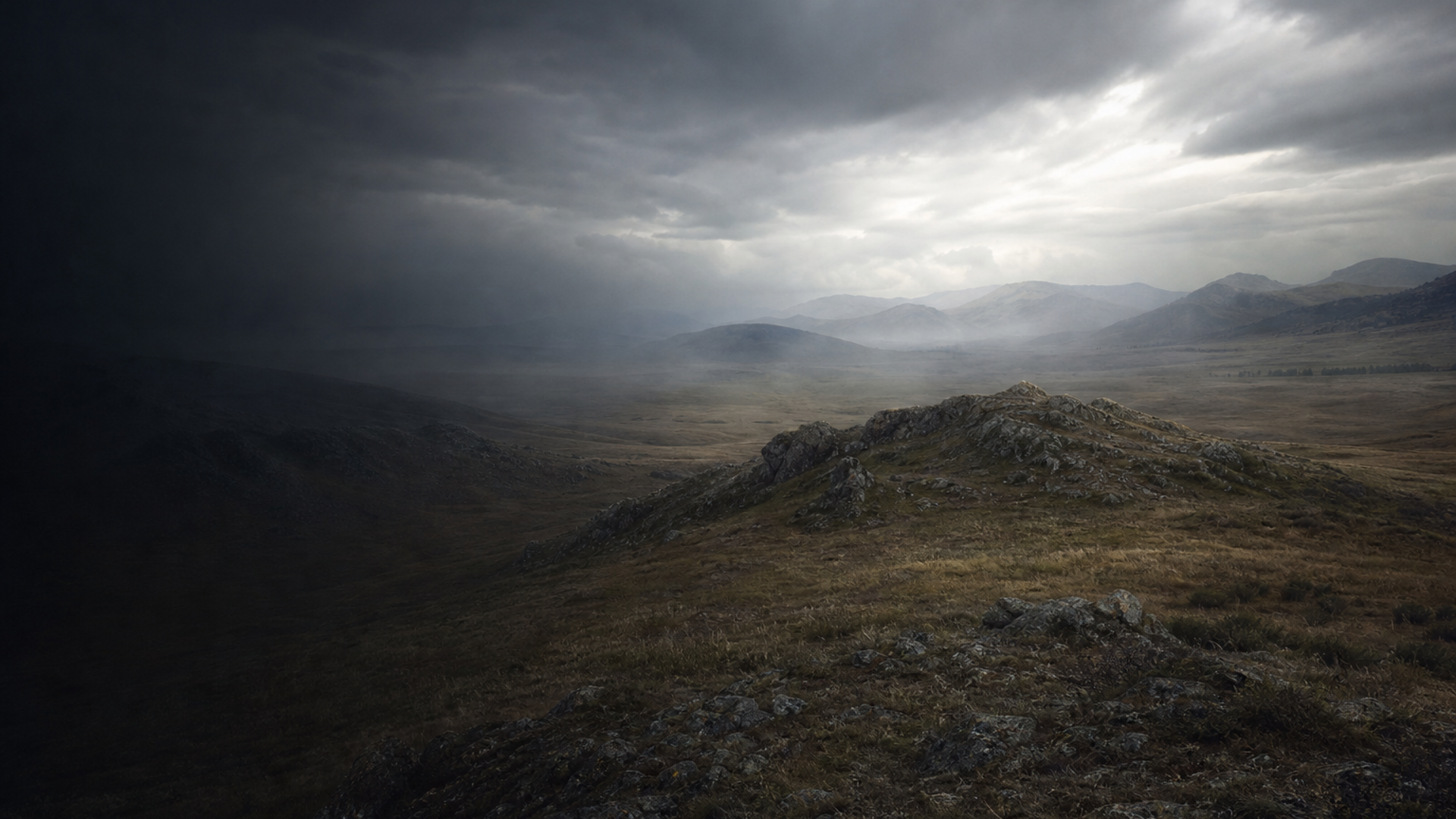
Imagine windswept steppe, low ridges, and tethered herds: the Late Sarmatian world was organized around mobility and horses. Archaeological finds in the broader Late Sarmatian horizon commonly show horse trappings, bits and harness components, weaponry such as sagaris‑like axes and composite bows, and personal adornment that signalled identity and status. At cemeteries like Temyaysovo‑1 and Cherniy Yar, burial arrangement and associated goods are consistent with mounted pastoralists who balanced seasonal herding, raiding, and long‑distance exchange.

Social life likely blended kinship‑based clans with fluid alliances; some Sarmatian burials elsewhere are notable for richly furnished female graves and imagery interpreted as female participation in martial roles, suggesting complex gender expressions in status and warfare. Trade and contact with Roman and steppe neighbours introduced Mediterranean and Near Eastern goods into steppe networks, creating cosmopolitan assemblages despite a predominantly mobile economy.

Archaeobotanical and zooarchaeological data from the region remain sparse, so reconstructions of diet and habitation are cautious. The physical placement of graves and horse equipment underscores the centrality of equids, while regional variation in grave goods hints at local identities within a shared Sarmatian cultural world.

  • Horse and pastoral economy central to daily life
  • Burial goods and arrangements indicate status, mobility, and long‑distance contacts
Chapter V

Genetic Profile

Genetic results from the five Late Sarmatian individuals provide a tantalizing, if limited, view of ancestry in the Southern Urals between 27 and 336 CE. Three of the five male individuals carry Y‑chromosome haplogroup R — a lineage widely associated with steppe pastoralists across Eurasia. This predominance of R in the uniparental paternal record aligns with broader patterns that link Bronze‑to‑Iron Age steppe expansions with R‑lineages.

Mitochondrial DNA among the five individuals is diverse: two U lineages, one T, one H, and one D4q. U and H are common maternal lineages across European hunter‑gatherer and later European populations; T is widespread in West Eurasia; D4q is an East Eurasian lineage and its presence indicates gene flow or admixture from eastern steppe or Siberian sources. Together, the uniparental picture suggests a mix of West Eurasian provenance with detectable eastern inputs, consistent with archaeological models of mobile steppe communities absorbing and exchanging people over vast distances.

Important limitations: the sample count is very low (n=5). Genome‑wide data would better resolve admixture proportions, sex‑biased migration, and regional affinities. Thus these uniparental markers are informative but preliminary; they should be treated as hypotheses to be tested with larger datasets.

  • Predominant Y‑DNA haplogroup R (3 of 5), typical for steppe pastoralists
  • mtDNA shows mixed maternal ancestry, including West Eurasian (U, H, T) and East Eurasian (D4q) signals
Chapter VI

Legacy & Modern Connections

The Late Sarmatians left an imprint on the genetic and cultural landscape of the Eurasian steppe. Archaeological continuity and historical records link Sarmatian groups to later Alanic populations and, ultimately, to some modern Caucasian and steppe communities. Where genetic continuity exists, it is layered atop centuries of migration, admixture and population turnover.

In the Southern Urals, modern inhabitants of Bashkortostan and Orenburg live in a landscape shaped by Sarmatian mobility and exchange. The mixed uniparental signals in these five burials echo a long‑term pattern: steppe societies were rarely genetically uniform but were dynamic mosaics. Given the small sample size, however, any direct claim of continuity to specific modern groups is tentative. Expanding the dataset will better reveal how Late Sarmatian ancestry contributed to later medieval and modern genetic landscapes.

  • Sarmatian cultural and genetic influence persisted into later Alanic and steppe populations
  • Modern continuity is possible but remains tentative given the small sample size
AI 电源

AI 助手

就 Late Sarmatians of the Southern Urals 文化提问

AI 助手 由DNAGENICS公司制作

解锁此特性
Ask questions about the Late Sarmatians of the Southern Urals culture. Our AI assistant can explain genetic findings, historical context, archaeological evidence, and modern connections.
AI 样本分析

Late Sarmatians of the Southern Urals 文化是人类历史中值得了解的一章……

遗传分析揭示了与早期种群的联系,同时显示了独特的适应和文化创新的证据。 古代DNA样本提供了对迁徙模式、社会结构以及古代种群之间的生物关系的深刻见解。

这是人工智能分析的预览。 解锁全AI 助手, 以探索关于:

  • 遗传组成和祖先
  • 移徙模式和起源
  • 日常生活和文化习俗
  • 现代遗传遗产

探索更古老的文化

揭开古代世界文明的故事

使用优惠码 可减免 35% • 11月12日 到期