Lovelock Cave Peoples — 1,850 Years Ago

下载的 PDF 是图像副本。如需可选中文本及更好的辅助技术支持,请使用打印功能。

Lovelock Cave Peoples — 1,850 Years Ago

揭开一个失落的文明

正在加载考古记录……

正在收集古代记录

跳转到主内容
Lovelock Cave Peoples — 1,850 Years Ago
文明焦点

Lovelock Cave Peoples — 1,850 Years Ago

A marshland enclave in Nevada where archaeology and ancient DNA meet

49 BCE - 313 CE
Lovelock Cave, Humboldt County, Nevada, USA
滚动开始
Chapter I

剧情

了解 Lovelock Cave Peoples — 1,850 Years Ago 文化

Archaeological remains from Lovelock Cave (Nevada) dated 49 BCE–313 CE reveal a marsh-adapted Great Basin lifeway. Three ancient genomes (mtDNA D1; Y DNA Q in one individual) offer preliminary genetic insight into maternal continuity and Native American paternal lineages.

Time Period

49 BCE – 313 CE

Region

Lovelock Cave, Humboldt County, Nevada, USA

Common Y-DNA

Q (observed in 1 of 3)

Common mtDNA

D1 (observed in 3 of 3)

Chapter II

时间线

这种文化历史上的关键时刻

49 BCE

Earliest dated individual in this assemblage

An individual from Lovelock Cave radiocarbon-dated to approximately 49 BCE anchors the early end of this sample set.

313 CE

Latest dated individual in this assemblage

A later individual dated to about 313 CE marks the recent end of this 1,850-year-old horizon.

Chapter III

Origins & Emergence

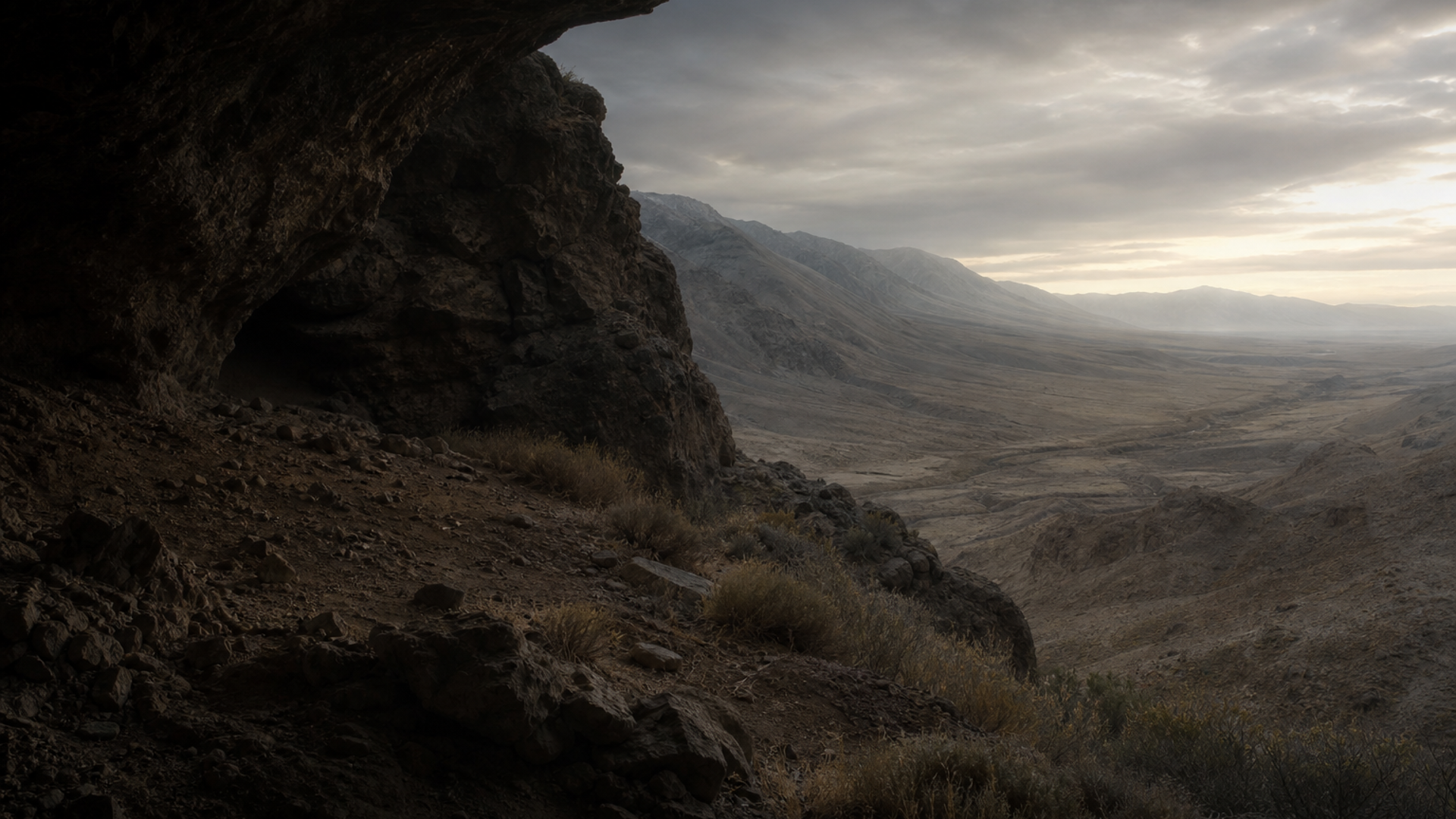
Lovelock Cave sits on the edge of the ancient Humboldt Sink, a reed-choked marsh that sustained human communities for millennia. The assemblage dated between 49 BCE and 313 CE falls in the late Holocene, a time when local groups refined technologies for exploiting wetland and upland resources.

Archaeological data indicates repeated human occupation of the cave and surrounding marshes. Material culture from Lovelock Cave—preserved organic artifacts and dietary remains—speaks to intensive use of waterfowl, plants, and riparian resources. These lifeways developed in the context of broader Great Basin adaptations to variable climates and seasonal resource availability.

Genetically, the individuals sampled from this horizon carry maternal lineages (mtDNA D1) that are part of the deep Native American mitochondrial pool. Limited evidence suggests continuity of maternal ancestry in this place, but the sample size is small. The single detected Y-haplogroup Q is consistent with paternal lineages common among many Indigenous peoples of North America, but drawing population-level conclusions from three genomes would be premature.

Key point: these remains capture a local expression of Great Basin lifeways at a moment in the first centuries CE. Archaeology frames the ecological and cultural setting; ancient DNA gives a fragile but illuminating thread to population history.

  • Occupation focused on marsh and riparian resources at Humboldt Sink
  • Late Holocene context: 49 BCE–313 CE
  • Genetic signal is preliminary due to only three samples
Chapter IV

Daily Life & Society

Imagine dawn mist rising off a shallow marsh, nets and woven bags laid ready, the call of waterfowl breaking the stillness. Archaeological evidence from Lovelock Cave portrays a community tightly attuned to wetland ecology: fish, waterfowl, tubers, and reed plants formed predictable resources exploited with specialized tools and woven implements.

Preserved organic artifacts recovered from the cave in past excavations—textiles, cordage, and worked wood—signal sophisticated craft traditions tailored to local materials. Midden deposits and faunal remains indicate seasonal scheduling, where people likely shifted between marsh-edge camps and upland foraging territories. Social life would have revolved around family groups with knowledge transmitted through hands-on craft and environmental knowledge.

Archaeological data indicates variability in diet and toolkits, reflecting mobility and responsiveness to shifting water levels and climate. Symbolic items and burial practices seen in the wider Lovelock sequence point to complex social identities tied to place and resource stewardship.

Key point: the material traces reveal an intimate, resource-wise community whose everyday practices were shaped by the marsh’s rhythms.

  • Marsh-centered subsistence: waterfowl, fish, plants
  • Specialized organic crafts and seasonal mobility
Chapter V

Genetic Profile

Three ancient individuals from Lovelock Cave dating to 49 BCE–313 CE provide a narrowly focused window into ancestry at this site. All three carried mitochondrial haplogroup D1, a lineage recognized among Native American maternal lineages and one of the founding mtDNA clusters of the Americas. The unanimous presence of D1 in this tiny sample hints at maternal continuity in the local population, but with only three mitogenomes the pattern must be regarded as provisional.

On the paternal side, one individual yielded Y-chromosome haplogroup Q, a lineage widespread among Indigenous populations across North and South America. Haplogroup Q’s presence aligns with expectations from other ancient and modern datasets in the Americas, but again the single detection prevents strong inferences about population structure or male-mediated gene flow at Lovelock Cave.

Combining archaeology and DNA: the genetic signals support the archaeological picture of a locally rooted Great Basin community whose ancestry traces back to broader Native American founder populations. However, low sample count (<10) makes it essential to treat any interpretation as preliminary. Future sampling and careful engagement with descendant communities are necessary to refine these insights and to map genetic continuity, admixture, and demographic change through time.

Key point: mtDNA D1 dominance and a single Y-Q detection fit broader American patterns but require larger datasets for confirmation.

  • Three samples: mtDNA D1 in all; Y-haplogroup Q in one
  • Small sample size means population conclusions are preliminary
Chapter VI

Legacy & Modern Connections

The human echoes from Lovelock Cave resonate today. Genetic affinities to deep Native American lineages highlight long-term connections between people and place in the Great Basin. Archaeological stewardship and collaboration with Indigenous communities are essential: material culture and ancient DNA are not just data, they intersect with living heritage and identity.

Ethical practice demands transparent collaboration, respectful curation, and acknowledgement of uncertainty. While the mtDNA and Y-DNA signals provide promising leads, they do not define modern tribal identities. Instead, they offer scientific strands that—when combined with oral histories, archaeology, and linguistics—can enrich understanding of ancestral stories.

Key point: these findings invite careful, community-centered research that balances scientific curiosity with respect for descendant communities and the provisional nature of conclusions based on small samples.

  • Genetic traces connect to broader Native American lineages but do not equate to modern identities
  • Ongoing stewardship and community collaboration are critical
AI 电源

AI 助手

就 Lovelock Cave Peoples — 1,850 Years Ago 文化提问

AI 助手 由DNAGENICS公司制作

解锁此特性
Ask questions about the Lovelock Cave Peoples — 1,850 Years Ago culture. Our AI assistant can explain genetic findings, historical context, archaeological evidence, and modern connections.
AI 样本分析

Lovelock Cave Peoples — 1,850 Years Ago 文化是人类历史中值得了解的一章……

遗传分析揭示了与早期种群的联系,同时显示了独特的适应和文化创新的证据。 古代DNA样本提供了对迁徙模式、社会结构以及古代种群之间的生物关系的深刻见解。

这是人工智能分析的预览。 解锁全AI 助手, 以探索关于:

  • 遗传组成和祖先
  • 移徙模式和起源
  • 日常生活和文化习俗
  • 现代遗传遗产

探索更古老的文化

揭开古代世界文明的故事

使用优惠码 可减免 35% • 11月12日 到期




