Mondújar Nazari Community (1500s)

下载的 PDF 是图像副本。如需可选中文本及更好的辅助技术支持,请使用打印功能。

Mondújar Nazari Community (1500s)

揭开一个失落的文明

正在加载考古记录……

正在收集古代记录

跳转到主内容
Mondújar Nazari Community (1500s)
文明焦点

Mondújar Nazari Community (1500s)

Post‑Nasrid Muslim burials in Granada revealed by archaeology and ancient DNA

1500 CE - 1600 CE
Andalusia, Spain (Granada: Mondújar, Torna Alta)
滚动开始
Chapter I

剧情

了解 Mondújar Nazari Community (1500s) 文化

Archaeological and genetic evidence from Mondújar (Lecrín) and Torna Alta (Granada) paints a picture of a small, mixed Muslim community in 1500–1600 CE. Limited samples suggest Iberian, North African, and occasional sub‑Saharan maternal ancestry.

Time Period

1500–1600 CE (post‑Nasrid/Muslim Spain)

Region

Andalusia, Spain (Granada: Mondújar, Torna Alta)

Common Y-DNA

R (2), E (1), CT (1) — 4 males sampled

Common mtDNA

U (3), H (2), H1 (1), L (1), W6a (1) — 8 individuals

Chapter II

时间线

这种文化历史上的关键时刻

1492 CE

Fall of Granada

The Nasrid kingdom surrenders to Castile; political rule changes but Muslim communities continue locally.

1568 CE

Alpujarras (Morisco) Revolt

Revolt by Morisco communities in Granada and the Alpujarras reflects resistance to assimilation and forced policies.

1609 CE

Expulsion of the Moriscos (beginning)

Crown policy to remove Moriscos begins, profoundly reshaping demographic patterns in Andalusia.

Chapter III

Origins & Emergence

The graves at Mondújar (Lecrín) and the Nécropolis de Torna Alta in Granada belong to communities living in the turbulent aftermath of the Nasrid kingdom's fall (1492 CE). Archaeological data indicates continued use of Islamic funerary spaces and material culture into the 16th century, reflecting cultural persistence under new political realities.

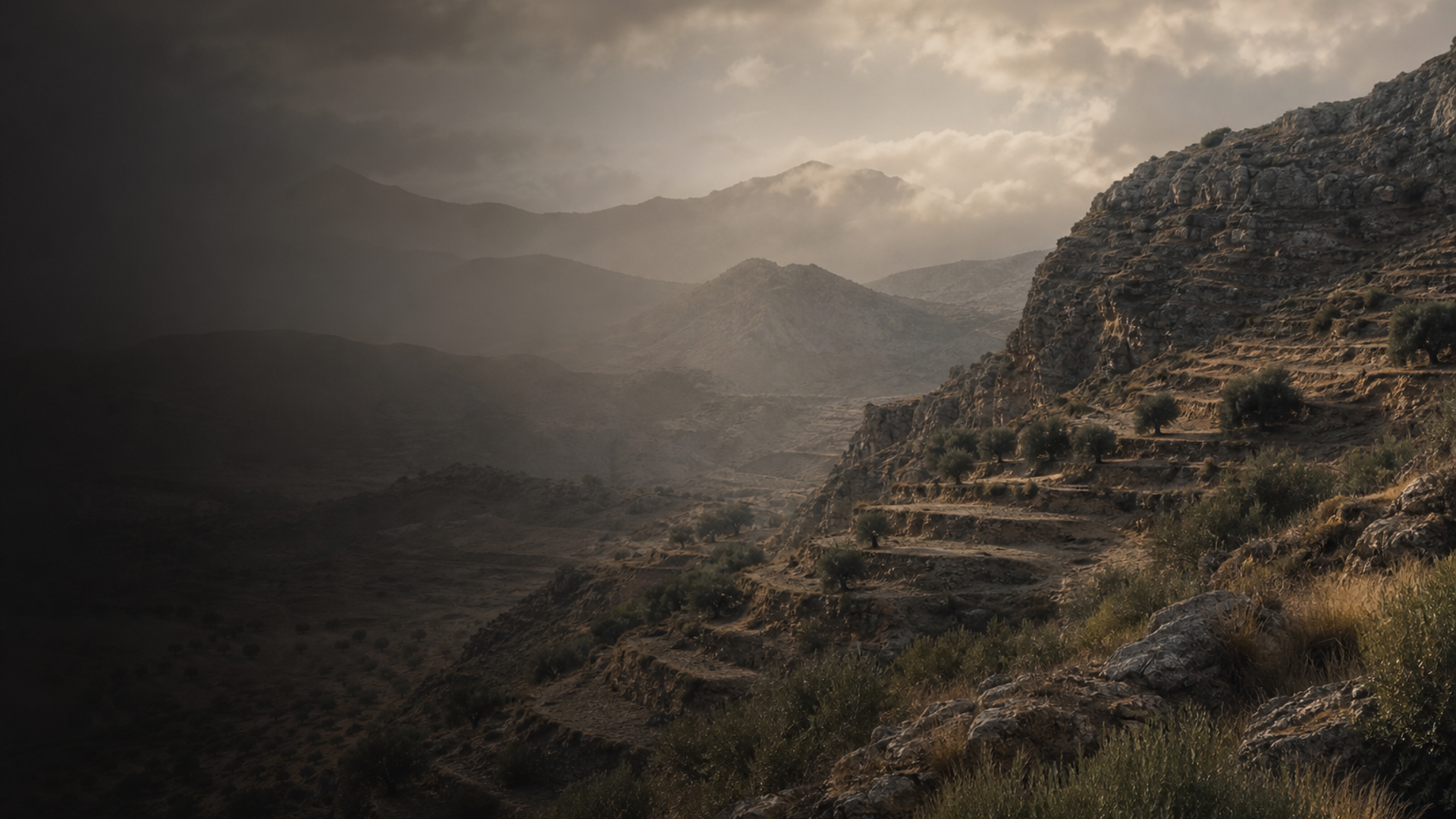
Limited evidence suggests these burials preserve a community that navigated shifting identities: outwardly Christianized in law yet maintaining local traditions. The landscape — terraced fields, olive groves, and watchful hills — framed a way of life shaped by centuries of Mediterranean exchange. Ceramic assemblages and burial orientation hint at continuity with earlier Nasrid practices, but the archaeological record remains fragmentary. Given only eight genetic samples, any reconstruction of population origins is provisional, and archaeological signals must be read alongside documentary silence and later upheavals.

  • Post‑Nasrid Muslim communities in Granada persisted into the 16th century
  • Grave contexts show continuity with earlier Islamic funerary practices
  • Interpretations are tentative due to limited archaeological and genetic samples
Chapter IV

Daily Life & Society

Archaeology evokes a tactile world: villagers tending irrigated terraces, potters shaping red‑slip wares, and small domestic ensembles clustered near communal graves. Material traces from Mondújar and Torna Alta indicate mixed subsistence strategies — cereals, olives, and horticulture — and craft activity tied to local and regional markets.

Social life was compressed by political pressure: forced conversions, tribute demands, and periodic unrest altered household and community structures. Yet mundane objects — spindle whorls, cooking ceramics, personal adornment — speak to continuity. The cemeteries suggest tightly knit family groups or neighborhoods; their spatial organization and artifact associations provide clues to lineage and neighborhood identity. Archaeological data remains incomplete, and household patterns inferred from graves must be treated cautiously.

  • Agrarian and craft economy anchored in Lecrín valley terraces
  • Material culture hints at continuity amid social and political pressures
Chapter V

Genetic Profile

Genetic data from eight individuals offers a preliminary window into the biological heritage of these Nazari‑period Muslim communities. Y‑DNA results (R: 2, E: 1, CT: 1) suggest mixed paternal ancestries: R lineages are common across Iberia and Europe, whereas haplogroup E is often associated with North African and Mediterranean populations. CT here denotes a broad upstream lineage where downstream resolution is limited in these samples.

Mitochondrial diversity (U:3, H:2, H1:1, L:1, W6a:1) reveals predominantly Western Eurasian maternal lineages (U, H, W6a) alongside one L lineage indicative of sub‑Saharan maternal input. This pattern is consistent with historical records of Mediterranean mobility, the trans‑Saharan and Atlantic slave trades, and centuries of Iberian–Maghrebi contact. Archaeological DNA indicates admixture at the household level, but with only eight samples conclusions are tentative. Sampling bias, preservation, and laboratory resolution affect haplogroup calls; broader datasets are needed to clarify kinship, population structure, and the timing of admixture events.

  • Male lineages show both European (R) and North African‑linked (E) signals
  • Maternal lineages include common Iberian types and one sub‑Saharan (L); sample size limits certainty
Chapter VI

Legacy & Modern Connections

These burials and their genomes form a cinematic fragment of Andalusia's layered past: a small, mixed community living in the shadows of a collapsed kingdom, negotiating identity through burial, kinship, and daily work. Modern Andalusian populations retain genetic echoes of this complex history: North African and occasional sub‑Saharan components are detectable in regional genomes, but patterns vary widely across individuals and locales.

Because only eight individuals were analyzed, linking these samples directly to broad modern populations would overreach the data. Instead, they illuminate how Mediterranean mobility, slavery, and conversion left biological as well as cultural traces. Future sampling across multiple cemeteries and periods will be necessary to trace ancestry threads from Nazari communities into present‑day Iberia.

  • Genetic echoes align with known Iberian–Maghrebi interactions
  • Small sample set cautions against direct extrapolation to modern populations
AI 电源

AI 助手

就 Mondújar Nazari Community (1500s) 文化提问

AI 助手 由DNAGENICS公司制作

解锁此特性
Ask questions about the Mondújar Nazari Community (1500s) culture. Our AI assistant can explain genetic findings, historical context, archaeological evidence, and modern connections.
AI 样本分析

Mondújar Nazari Community (1500s) 文化是人类历史中值得了解的一章……

遗传分析揭示了与早期种群的联系,同时显示了独特的适应和文化创新的证据。 古代DNA样本提供了对迁徙模式、社会结构以及古代种群之间的生物关系的深刻见解。

这是人工智能分析的预览。 解锁全AI 助手, 以探索关于:

  • 遗传组成和祖先
  • 移徙模式和起源
  • 日常生活和文化习俗
  • 现代遗传遗产

探索更古老的文化

揭开古代世界文明的故事

使用优惠码 可减免 35% • 11月12日 到期




