Mosaic of Modern Nepal

下载的 PDF 是图像副本。如需可选中文本及更好的辅助技术支持,请使用打印功能。

Mosaic of Modern Nepal

揭开一个失落的文明

正在加载考古记录……

正在收集古代记录

跳转到主内容
Mosaic of Modern Nepal
文明焦点

Mosaic of Modern Nepal

Genetic and archaeological glimpses into Nepal’s living cultural mosaic (2000 CE)

2000 CE
Nepal (Kathmandu, Dang, Tanahun, Hill regions)
滚动开始
Chapter I

剧情

了解 Mosaic of Modern Nepal 文化

A concise, archaeological and genetic portrait of Modern Nepal (2000 CE). Synthesizes 57 modern samples from Kathmandu, Dang (Khadre), Tanahun and ethnic groups (Tamangic, Kiranti, Indo-Aryan) to illuminate recent admixture among South Asian, East Asian, and West Eurasian lineages.

Time Period

2000 CE (Modern)

Region

Nepal (Kathmandu, Dang, Tanahun, Hill regions)

Common Y-DNA

O (esp. O3a2c1a), R, F*, N, J

Common mtDNA

Not specified in input (diverse maternal lineages likely)

Chapter II

时间线

这种文化历史上的关键时刻

2000 CE

Contemporary sampling and synthesis

Fifty-seven modern samples were analyzed from Kathmandu, Dang (Khadre), Tanahun and identified ethnic groups; results form a modern snapshot of Nepali genetic diversity.

Chapter III

Origins & Emergence

Modern Nepal is a living palimpsest: millennia of human movement across the Himalaya and Gangetic forelands have left layers visible in language, ritual and genetics. Archaeological data indicates continuous occupation of the Kathmandu Valley for thousands of years, while hill and Terai sites preserve evidence for long-distance trade and agricultural terraces. The samples represented here (n=57) were collected from contemporary populations in Kathmandu, Khadre (Dang), Tanahun and among groups labeled Tamangic and Kiranti — places that are themselves crossroads between highland Tibeto-Burman traditions and the Indo-Aryan cultural zone.

Limited evidence suggests that many of the sociocultural features seen in 2000 CE (multiethnic towns, caste and clan structures, and layered religious practice) grew from interactions across these zones rather than a single founding population. Archaeology can trace material continuities — temple architecture, terraced fields, and regional pottery traditions — but connecting these directly to modern genomes requires careful temporal sampling. The present dataset illuminates a modern moment that sits on older demographic processes: inward flows from the Tibetan plateau, sustained contact with the Indian plains, and episodic influence from west Eurasian corridors. Where specific archaeological linkages are sparse, interpretations must remain cautious and framed as hypotheses for further ancient DNA and excavation work.

  • Samples come from Kathmandu, Khadre (Dang), Tanahun, Tamangic and Kiranti communities
  • Modern Nepal reflects layered interactions between Himalayan and South Asian zones
  • Archaeological continuity exists but direct links to modern genomes require ancient DNA
Chapter IV

Daily Life & Society

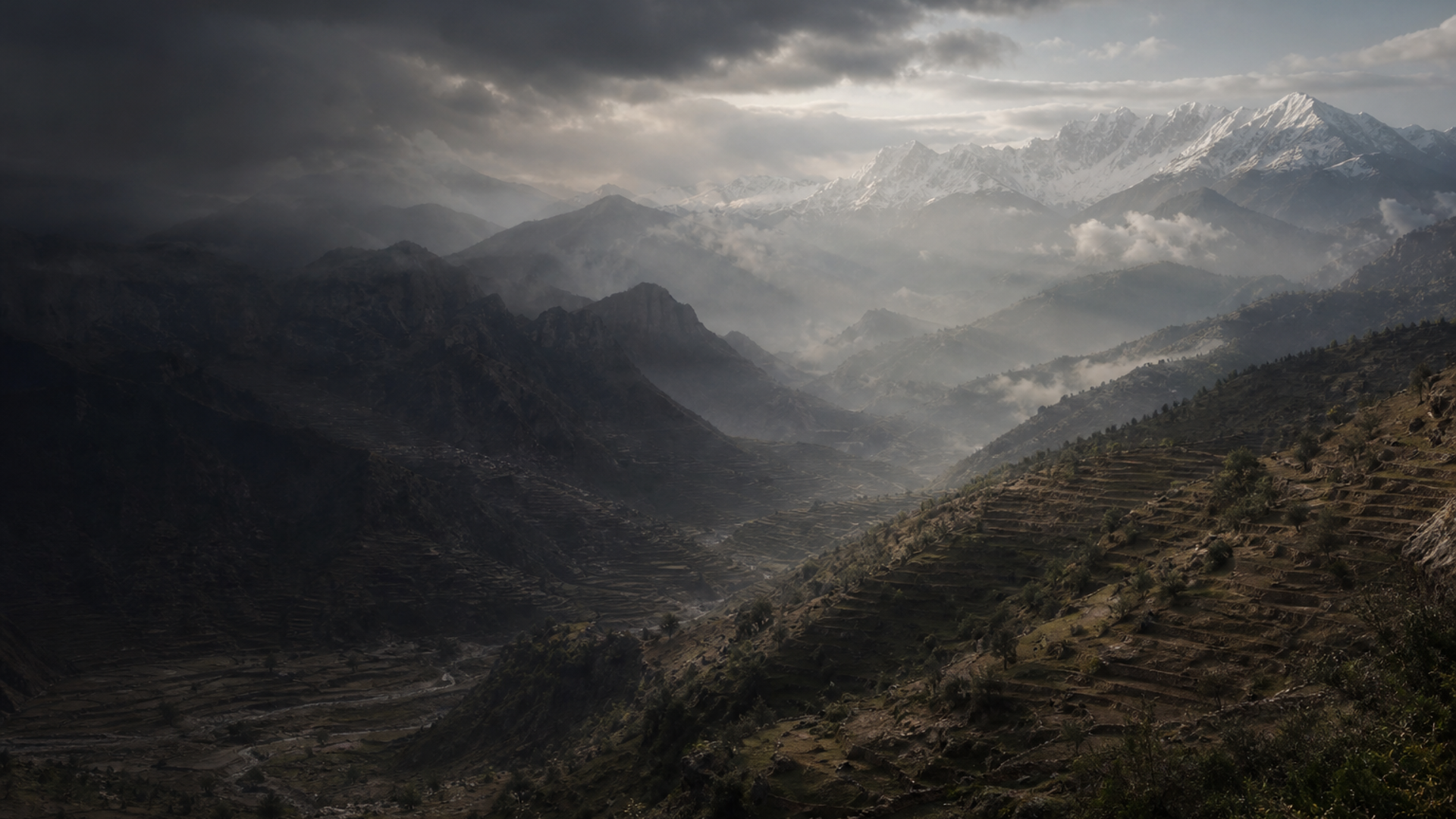
The daily world of people sampled in 2000 CE is cinematic: terraced hillsides stitched with footpaths, sunrise prayers drifting from stone shrines, and marketplaces where Nepali, Tamang, and other languages intermingle. Ethnographically and archaeologically, this landscape supports mixed livelihoods — smallholder agriculture, seasonal labor migration, and urban trades concentrated in Kathmandu. Material culture ranges from household shrines and ritual implements to agricultural tools and vernacular architecture that record centuries of adaptation to steep topography.

Archaeological indicators that illuminate everyday life include settlement patterns in valley floors, medieval and early modern temple complexes in Kathmandu, and rural built forms in Tanahun and Dang districts. These features signal long-term use of cultivation terraces and continuity in ritual landscapes, though the archaeological record for some hill communities is thin. Cultural identities (Indo-Aryan, Tamangic, Kiranti) often map onto language families and social organization, yet they are porous: intermarriage, seasonal migration and urbanization in the late 20th century altered kinship and residence patterns. In short, the social fabric of Modern Nepal visible in 2000 CE is one of resilience and mixture — an everyday life shaped by environment, ritual, and networks that span the Himalaya and plains.

  • Mixed agrarian and urban livelihoods (terraced farming, Kathmandu commerce)
  • Cultural identities are layered and often reflect language-family boundaries
Chapter V

Genetic Profile

The genetic snapshot from 57 modern Nepali samples displays a mosaic consistent with Nepal’s position between South Asia and the Tibetan plateau. Y-chromosome lineages include a plurality of haplogroup O (8 samples, notably O3a2c1a), which is commonly associated with East Asian and Tibeto-Burman–linked male ancestry. Haplogroup R appears in 2 samples and is frequently observed across South Asia and parts of West Eurasia, suggesting contributions associated with Indo-Aryan or broader South Asian male lineages. Single occurrences of F* (1), N (1) and J (1) point to rarer paternal inputs; F* is a basal Asian lineage, N is often linked to northern Eurasian expansions, and J is frequently associated with West Eurasian ancestry.

Because the mtDNA composition was not specified in the input, maternal-line inferences must remain tentative; maternally inherited diversity in Nepal is known from other studies to include both South Asian and East Asian–derived haplogroups, and broad admixture is plausible here. The sample size (n=57) offers moderate resolution for modern population structure: common patterns (e.g., prevalence of O) are informative, while singletons should be treated as preliminary. Archaeogenetic interpretation cautions that modern distributions reflect recent demographic events (migration, caste mobility, and recent admixture) and do not by themselves reveal the timing of admixture. Integration with ancient DNA from dated contexts and more extensive mtDNA data would refine models of continuity, replacement and admixture across the Nepali landscape.

  • Y-DNA: O predominant (esp. O3a2c1a), R present, rare F*, N, J singletons
  • mtDNA not provided here—maternal diversity likely includes both South and East Asian lineages
Chapter VI

Legacy & Modern Connections

Modern Nepal in 2000 CE carries a living legacy of mobility and mixture. Genetic signatures in contemporary populations echo centuries of contact: Himalayan highlanders, Indo-Aryan plains migrants, and traders from west and north have all left traces. For users of a DNA ancestry platform, these results suggest an ancestry mosaic rather than a single origin story — a portrait where paternal and maternal threads reflect different migration histories and social processes.

Archaeology grounds these genetic impressions in place: temples, terraced agriculture and settlement patterns provide the landscapes in which gene flow occurred. Yet caution is essential: modern DNA is the result of recent demographic reshaping, and single-sample Y-haplogroups (e.g., F*, N, J) are too few to draw firm conclusions about historical migrations. Future integration of ancient DNA from stratified archaeological contexts in Kathmandu Valley, Tanahun and Dang would convert modern patterns into a dynamic narrative of movement through time. For now, the message is evocative and precise: Nepal’s people are the living intersections of Himalayan and South Asian histories.
  • Modern Nepali genomes reflect long-term mixture across Himalayan and South Asian zones
  • Ancient DNA from archaeological contexts is needed to time and test migration hypotheses
AI 电源

AI 助手

就 Mosaic of Modern Nepal 文化提问

AI 助手 由DNAGENICS公司制作

解锁此特性
Ask questions about the Mosaic of Modern Nepal culture. Our AI assistant can explain genetic findings, historical context, archaeological evidence, and modern connections.

AI 样本分析

Mosaic of Modern Nepal 文化是人类历史中值得了解的一章……

遗传分析揭示了与早期种群的联系,同时显示了独特的适应和文化创新的证据。 古代DNA样本提供了对迁徙模式、社会结构以及古代种群之间的生物关系的深刻见解。

这是人工智能分析的预览。 解锁全AI 助手, 以探索关于:

  • 遗传组成和祖先
  • 移徙模式和起源
  • 日常生活和文化习俗
  • 现代遗传遗产

探索更古老的文化

揭开古代世界文明的故事

使用优惠码 可减免 35% • 11月12日 到期




