Murzikha Eneolithic: Volga Echoes

下载的 PDF 是图像副本。如需可选中文本及更好的辅助技术支持,请使用打印功能。

Murzikha Eneolithic: Volga Echoes

揭开一个失落的文明

正在加载考古记录……

正在收集古代记录

跳转到主内容
Murzikha Eneolithic: Volga Echoes
文明焦点

Murzikha Eneolithic: Volga Echoes

Three ancient genomes from Murzikha-2 illuminate Eneolithic lifeways on the Volga-Kama fringe

4543 CE - 4405 BCE
Tatarstan, Russia (Murzikha-2)
滚动开始
Chapter I

剧情

了解 Murzikha Eneolithic: Volga Echoes 文化

Ancient DNA from three individuals (4543–4405 BCE) at Murzikha-2, Tatarstan links Murzikha Eneolithic burials with mtDNA U and Y haplogroups F and Q. Archaeology and genetics together suggest deep hunter‑gatherer roots with eastern connections — conclusions remain preliminary.

Time Period

4543–4405 BCE

Region

Tatarstan, Russia (Murzikha-2)

Common Y-DNA

F (2), Q (1)

Common mtDNA

U (3)

Chapter II

时间线

这种文化历史上的关键时刻

4500 BCE

Murzikha-2 burials dated

Radiocarbon dates place three burials at Murzikha-2 between 4543 and 4405 BCE, anchoring the site in the early Eneolithic of the Volga-Kama region.

Chapter III

Origins & Emergence

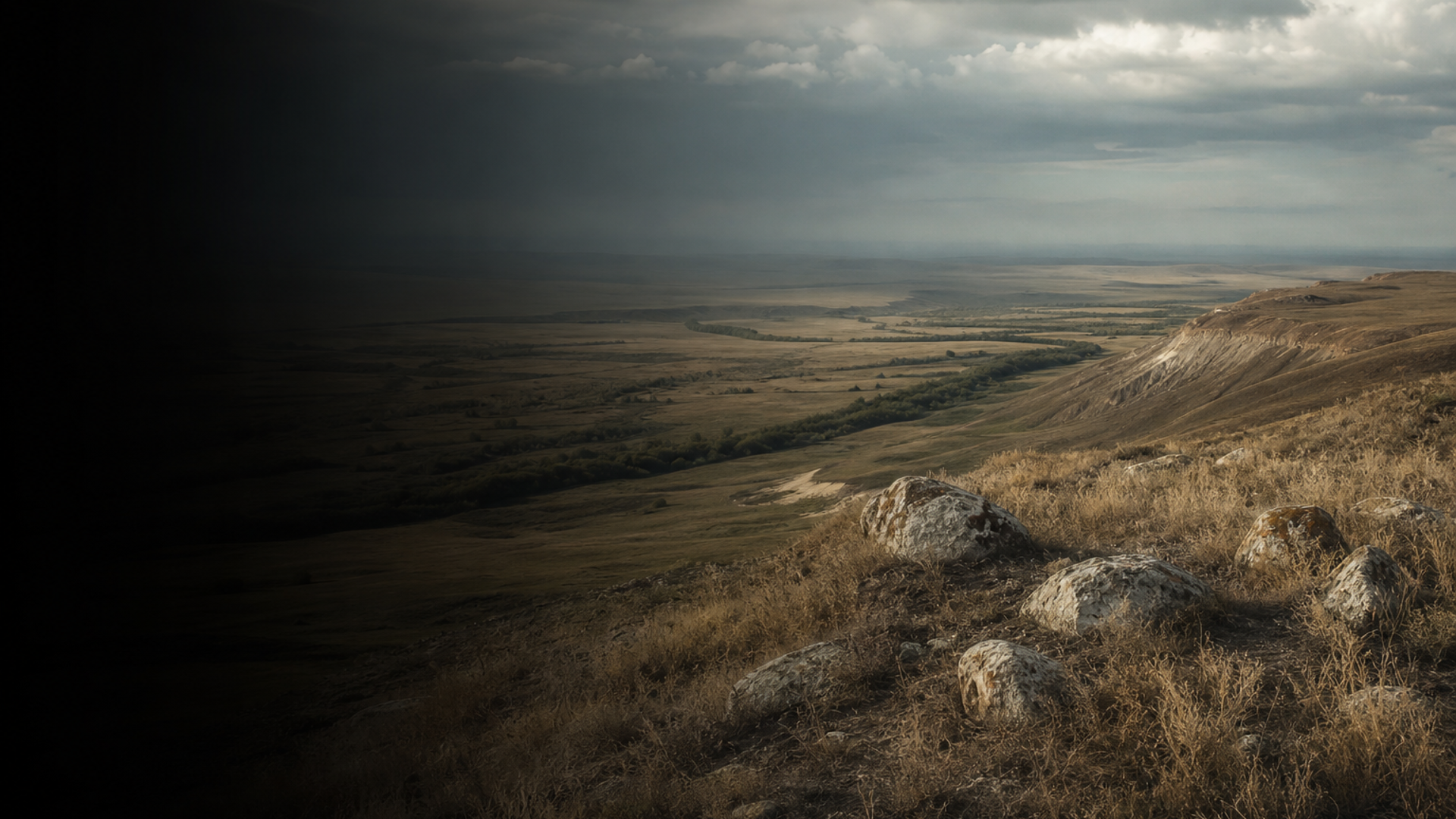
Beneath the wind-carved meadows of the Volga-Kama fringe, the Murzikha Eneolithic emerges in the early 5th millennium BCE as a whisper of change rather than a violent rupture. Archaeological layers at Murzikha-2 (Mokrye Kurnali Village, Alexeyevsky District, Tatarstan) contain burials dated by radiocarbon to between 4543 and 4405 BCE; these belong to what is conventionally grouped as the Murzikha Eneolithic Culture.

Archaeological data indicate small, mobile communities exploiting riverine resources, with burial practices that emphasize individual interment and local material traditions. The material record preserves pottery fragments and worked bone consistent with broader forest‑steppe adaptations, suggesting continuity with preceding Mesolithic and early Neolithic lifeways. Limited evidence suggests increasing contacts along river corridors that link the Volga and Kama basins.

Taken together, the archaeological signature portrays a culture emerging from a mosaic of local foragers and incoming influences along major waterways. However, because the number of well-dated contexts and recovered individuals is small, interpretations of population movements and cultural genesis remain provisional.

  • Murzikha-2 burials dated 4543–4405 BCE
  • Located in Mokrye Kurnali Village, Alexeyevsky District, Tatarstan
  • Material culture shows forest-steppe lifeways and riverine adaptation
Chapter IV

Daily Life & Society

Imagine morning mist rising from the river, fishermen setting nets and toolmakers shaping bone and pottery by firelight. The archaeological footprint at Murzikha-2 suggests communities oriented toward river resources: fish bones, hunted game remains, and small worked tools dominate surface assemblages. Pottery sherds—simple, utilitarian forms—indicate storage and cooking practices rather than elaborate ritual ceramic production.

Grave goods are modest where present; individual burials point to small kin-based groups rather than large hierarchical cemeteries. The landscape—mosaic wetlands and forest edges—would have supported seasonal mobility and diverse subsistence strategies: fishing in spring, hunting and foraging in summer and autumn, and local plant processing for fuel and food preservation in winter.

Archaeological interpretation must remain cautious: the site sample is limited, so reconstructions of social complexity, craft specialization, and exchange networks are preliminary. Yet material traces evoke a resilient society adapted to the waterways that shaped its rhythms.

  • Riverine economy with fishing, hunting, and foraging
  • Individual burials and modest grave offerings suggest kin-based groups
Chapter V

Genetic Profile

Ancient DNA from three individuals interred at Murzikha-2 provides a fragile but illuminating genetic window into the Murzikha Eneolithic. All three carry mitochondrial haplogroup U, a lineage commonly associated with European hunter‑gatherer ancestries and persistence of maternal continuity in northern Eurasia. On the Y‑chromosome side, two individuals fall into haplogroup F and one into haplogroup Q. These Y‑lineages are notable because they are not the dominant steppe R1 lineages seen in later Bronze Age expansions; instead they hint at diverse paternal contributions in the forest‑steppe contact zone.

Haplogroup Q has broad distributions in northern and eastern Eurasia and, in later timeframes, in Siberia and the Americas; its presence here could reflect eastern connections or local retention of Paleolithic‑Neolithic lineages. Haplogroup F in this context is less commonly reported in European Eneolithic datasets and should be interpreted cautiously.

Crucially, the genetic sample is only three individuals. With n < 10, any population‑level inference is preliminary: the observed haplogroups demonstrate that maternal continuity (mtDNA U) was strong at this site and that paternal lineages were varied, but whether this pattern represents the wider Murzikha population or localized family groups cannot be firmly established without more data. Future sampling across the Volga‑Kama region will test whether these signals reflect broader demographic patterns or site-specific inheritance.

  • All three samples carry mtDNA U, suggesting hunter‑gatherer maternal continuity
  • Y‑DNA shows F (2) and Q (1), indicating diverse paternal lineages and possible eastern connections
Chapter VI

Legacy & Modern Connections

The echoes of Murzikha-2 ripple into the present as genetic and archaeological threads that help map human resilience along river corridors. mtDNA U, persistent in these burials, is a recurring motif across northern Eurasia and links Murzikha people to a long history of hunter‑gatherer maternal lines. The presence of Y haplogroups F and Q underscores the complexity of paternal ancestries in Eneolithic Russia and cautions against simple models of population replacement.

Archaeogenetic study of Murzikha contributes to a larger tapestry showing that the Volga-Kama frontier was a crossroads: not a single highway of migration but a braided network of local continuity and intermittent contact. Because the sample size is small, these connections remain tentative; nevertheless, Murzikha-2 stands as a cinematic snapshot of people living at the margins of expansive landscapes, whose DNA preserves faint signatures of ancient journeys and local endurance.

  • mtDNA U ties Murzikha individuals to broader northern Eurasian maternal lineages
  • Y-DNA diversity suggests complex paternal histories and possible eastern interactions
AI 电源

AI 助手

就 Murzikha Eneolithic: Volga Echoes 文化提问

AI 助手 由DNAGENICS公司制作

解锁此特性
Ask questions about the Murzikha Eneolithic: Volga Echoes culture. Our AI assistant can explain genetic findings, historical context, archaeological evidence, and modern connections.
AI 样本分析

Murzikha Eneolithic: Volga Echoes 文化是人类历史中值得了解的一章……

遗传分析揭示了与早期种群的联系,同时显示了独特的适应和文化创新的证据。 古代DNA样本提供了对迁徙模式、社会结构以及古代种群之间的生物关系的深刻见解。

这是人工智能分析的预览。 解锁全AI 助手, 以探索关于:

  • 遗传组成和祖先
  • 移徙模式和起源
  • 日常生活和文化习俗
  • 现代遗传遗产

探索更古老的文化

揭开古代世界文明的故事

使用优惠码 可减免 35% • 11月12日 到期