Mustang Mebrak: Late Iron Age Highlanders

下载的 PDF 是图像副本。如需可选中文本及更好的辅助技术支持,请使用打印功能。

Mustang Mebrak: Late Iron Age Highlanders

揭开一个失落的文明

正在加载考古记录……

正在收集古代记录

跳转到主内容
Mustang Mebrak: Late Iron Age Highlanders
文明焦点

Mustang Mebrak: Late Iron Age Highlanders

High-altitude lives from Mustang (800 BCE–150 CE) told through bones and ancient DNA

800 BCE - 150 CE
Mustang, Mebrak, Nepal
滚动开始
Chapter I

剧情

了解 Mustang Mebrak: Late Iron Age Highlanders 文化

Archaeological and genetic traces from Mebrak, Mustang (Nepal) reveal a small Late Iron Age–Early Middle Kingdoms community (800 BCE–150 CE). Nine ancient genomes show predominantly maternal M lineages and paternal haplogroup O, suggesting Himalayan and East Asian connections—preliminary but evocative.

Time Period

800 BCE–150 CE

Region

Mustang, Mebrak, Nepal

Common Y-DNA

O (observed in 2/9 samples)

Common mtDNA

M (6/9), F (3/9)

Chapter II

时间线

这种文化历史上的关键时刻

300 BCE

Occupation at Mebrak

Archaeological deposits and human remains dated to the Late Iron Age indicate community occupation and use of high-altitude terraces in Mustang.

Chapter III

Origins & Emergence

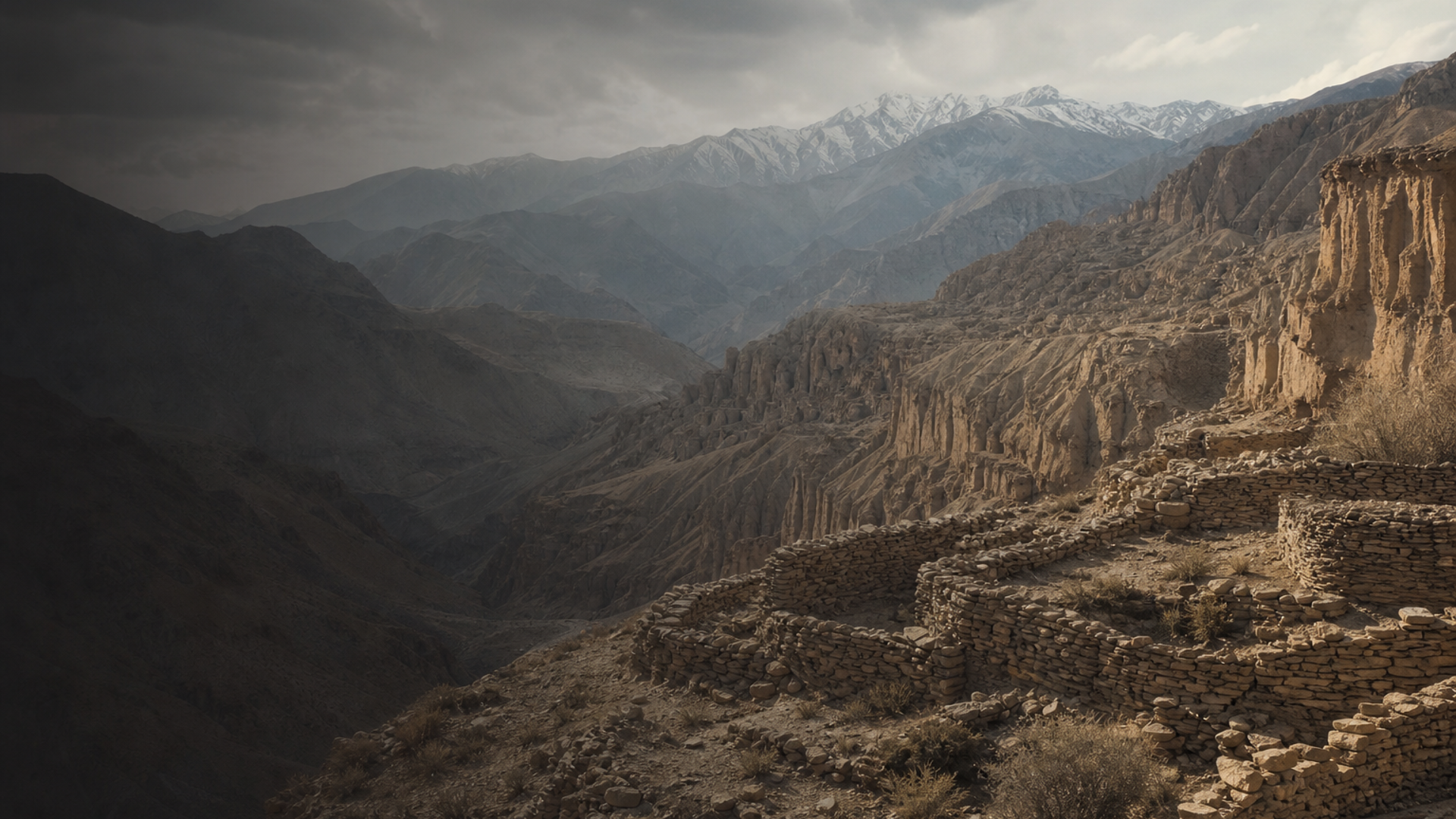
Perched on the rain-shadowed leeward flank of the Himalaya, Mebrak in Mustang yielded a fragmentary but resonant record of human presence between roughly 800 BCE and 150 CE. Archaeological data indicates small, dispersed settlements and funerary deposits rather than large urban centers. Limited evidence suggests lifeways adapted to thin air and steep terrain: stone habitations, terraced plots, and pathways that tied villages into trans‑Himalayan circuits.

Cinematically, imagine households clustered against windswept ridges, smoke filaments rising from hearths, and caravans threading high passes. Material culture from the Mustang region in this era tends to be modest—tools, simple ceramics, and occasional metal objects—pointing to a mixed economy of pastoralism, horticulture, and trade. Archaeological parallels on the Tibetan Plateau and in adjacent Nepalese valleys suggest that these highland communities were part of wider networks of exchange and mobility across the high mountains.

While the archaeological record at Mebrak is limited, the contextual picture is of resilient, adaptable populations negotiating ecological limits and cultural flows. The remains excavated in Mustang form the physical stage upon which genetic data can be read: DNA preserves lineages of people who inhabited these high landscapes, and when combined with artifacts and burial contexts, it helps reconstruct migration, contact, and local continuity across the Late Iron Age to the Early Middle Kingdoms.

  • Settlement traces at Mebrak between 800 BCE and 150 CE
  • Highland adaptation: pastoralism, small-scale agriculture, mountain trade
  • Cultural ties across Mustang and the Tibetan Plateau suggested by artifacts
Chapter IV

Daily Life & Society

Daily life in Late Iron Age Mebrak can be glimpsed through an interplay of landscape, artifact, and human remains. Archaeological data indicates households arranged to shelter from wind and cold, with stone-built structures and terraces carved into slopes. Limited botanical and faunal remains from comparable Mustang contexts point to barley and cold-tolerant crops, alongside herding of sheep, goats, and yaks or their predecessors—strategies tuned to seasonality and altitude.

Social life likely revolved around kin groups and flexible cooperation. Small cemeteries and isolated burials in the region suggest localized ritual practices; however, funerary evidence at Mebrak is sparse, so reconstructions remain cautious. Exchange routes running along Mustang linked villages to lower valleys and to the Tibetan Plateau, bringing salt, wool, metalwork, and ideas. Such channels could create a cultural mosaic: local traditions layered with imported goods and practices.

The cinematic image is of a community negotiating harsh beauty—households mending textiles by firelight, herders watching flocks against a crimson sunset, and traders pausing in the pass. Archaeology provides the material anchors for these scenes, but much remains to be discovered. Small sample sizes and patchy preservation mean that many aspects of daily life at Mebrak remain provisional.

  • Stone-built hillside dwellings and terraced plots inferred from regional data
  • Mixed economy: high-altitude pastoralism with horticultural supplements
Chapter V

Genetic Profile

Nine ancient individuals from Mustang, Mebrak (dated to ca. 800 BCE–150 CE) provide a preliminary genetic window into these highland populations. With only nine genomes, conclusions must be cautious: sample count is low (<10), so patterns should be treated as provisional.

Observed uniparental markers show a dominant maternal signal: mitochondrial haplogroup M appears in six individuals, with haplogroup F in three. Haplogroup M is widespread across South and East Asia and is commonly associated with deep maternal lineages in Himalayan and subcontinental populations; its prominence here suggests strong maternal continuity with regional populations. Haplogroup F, present in three samples, points toward East Asian affinities that are also known across South-Central Himalayan groups.

On the paternal side, Y‑DNA haplogroup O is observed in two individuals. Haplogroup O is frequent across East and Southeast Asia and on the Tibetan Plateau in certain lineages, and its presence in Mustang may indicate male-mediated connections or gene flow from eastern regions. Because paternal lineages are represented in only two of nine samples, it is not possible to infer robust patterns of sex-biased migration.

Taken together, the uniparental data are consistent with a population that has both Himalayan/South Asian maternal continuity and detectable East Asian paternal inputs. However, with a limited dataset, larger genomic panels and more contextual sampling are required to resolve timing, directionality, and the demographic processes that shaped the genetic landscape of ancient Mustang.

  • mtDNA dominated by haplogroup M (6/9) with F in three samples
  • Y-DNA O detected in 2/9 — suggests East Asian/Tibetan Plateau connections but is preliminary
Chapter VI

Legacy & Modern Connections

The genetic and archaeological traces from Mebrak offer a fragile but powerful bridge to the present. Modern populations in Mustang and adjacent Himalayan valleys show a mosaic of South and East Asian ancestry; the mtDNA and Y‑DNA signals from these ancient samples are broadly compatible with that pattern, hinting at long-term regional continuity punctuated by episodes of contact.

These ancient genomes help anchor local histories: they suggest that maternal lineages common across South and East Asia were already prominent in Mustang by the first millennium BCE, while paternal inputs from eastern sources may have arrived or intensified through later contacts. Such insights enrich cultural narratives and can illuminate pathways of trade, marriage, and mobility across the high mountains. Importantly, conclusions remain tentative because of the small sample size; ongoing sampling and integration with archaeology will refine these connections and better trace the threads that link ancient Mebrak to living communities.

  • Genetic signals suggest continuity between ancient Mustang and modern Himalayan populations
  • Findings are preliminary; more samples needed to clarify population history
AI 电源

AI 助手

就 Mustang Mebrak: Late Iron Age Highlanders 文化提问

AI 助手 由DNAGENICS公司制作

解锁此特性
Ask questions about the Mustang Mebrak: Late Iron Age Highlanders culture. Our AI assistant can explain genetic findings, historical context, archaeological evidence, and modern connections.
AI 样本分析

Mustang Mebrak: Late Iron Age Highlanders 文化是人类历史中值得了解的一章……

遗传分析揭示了与早期种群的联系,同时显示了独特的适应和文化创新的证据。 古代DNA样本提供了对迁徙模式、社会结构以及古代种群之间的生物关系的深刻见解。

这是人工智能分析的预览。 解锁全AI 助手, 以探索关于:

  • 遗传组成和祖先
  • 移徙模式和起源
  • 日常生活和文化习俗
  • 现代遗传遗产

探索更古老的文化

揭开古代世界文明的故事

使用优惠码 可减免 35% • 11月12日 到期