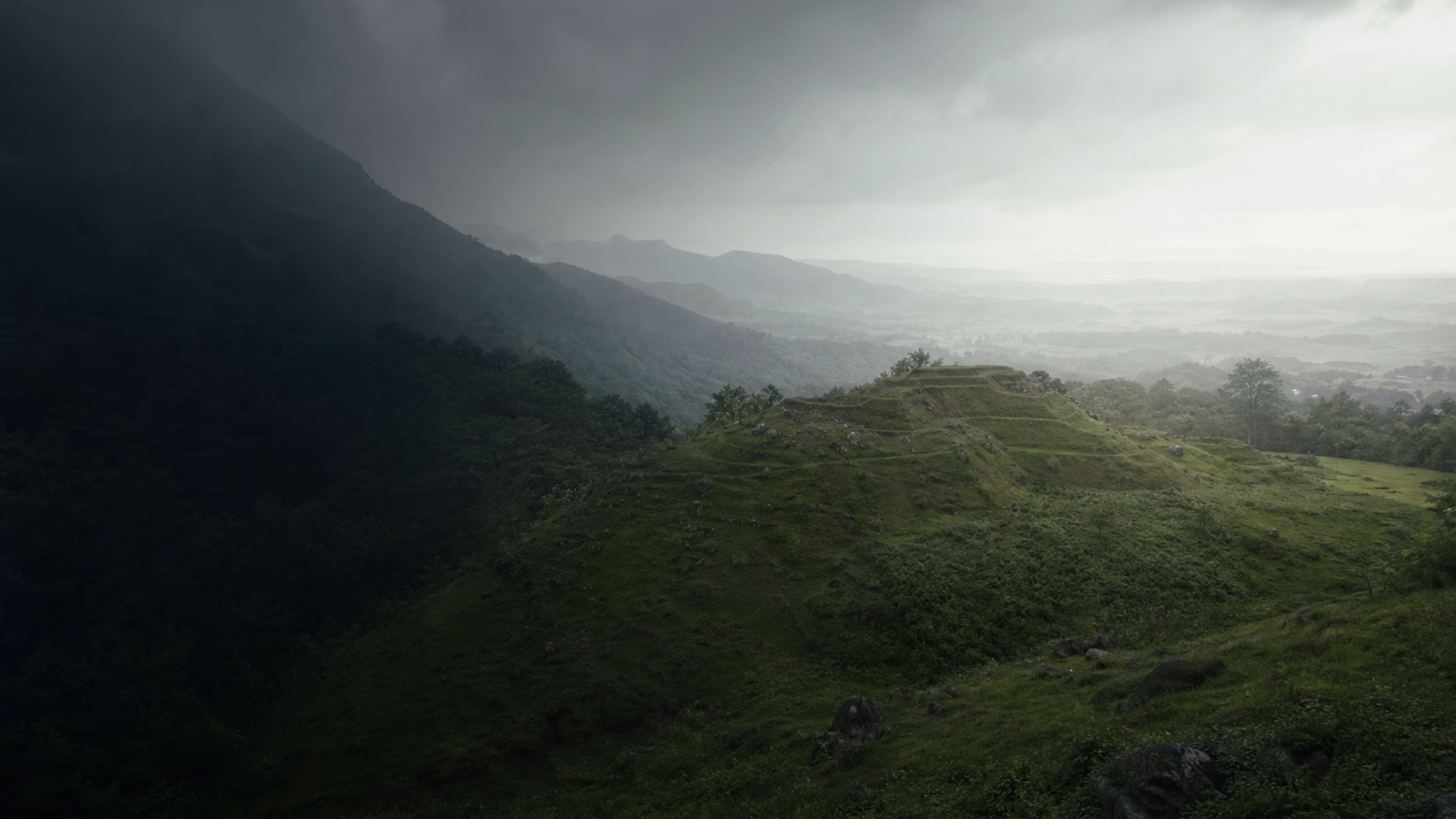
Nagabaka at 2800 BP

下载的 PDF 是图像副本。如需可选中文本及更好的辅助技术支持,请使用打印功能。

Nagabaka at 2800 BP

揭开一个失落的文明

正在加载考古记录……

正在收集古代记录

跳转到主内容
Nagabaka at 2800 BP
文明焦点

Nagabaka at 2800 BP

A slender genetic window into Japan around 900–1 BCE

900 CE - 1 BCE
Japan (Nagabaka)
滚动开始
Chapter I

剧情

了解 Nagabaka at 2800 BP 文化

Archaeological and preliminary ancient-DNA evidence from Nagabaka, Japan (900–1 BCE) offers a cautious glimpse into coastal Late Jomon–early Yayoi lifeways and ancestry. Small sample sizes mean conclusions remain tentative; genome-wide context is essential.

Time Period

900–1 BCE

Region

Japan (Nagabaka)

Common Y-DNA

Not reported (no data)

Common mtDNA

Not reported (no data)

Chapter II

时间线

这种文化历史上的关键时刻

900 BCE

Occupation at Nagabaka

Archaeological layers at Nagabaka date to ca. 900 BCE, marking coastal occupation during the Late Jomon–early Yayoi transition.

Chapter III

Origins & Emergence

Along the coasts of late first millennium BCE Japan, Nagabaka occupies a narrow but evocative slice of history. Archaeological data indicates human occupation at Nagabaka between roughly 900 BCE and 1 BCE, placing it at the twilight of Late Jomon cultural traditions and overlapping with early continental contacts that ushered in Yayoi lifeways in other parts of the archipelago. Excavations at the Nagabaka locality have produced occupation layers, pottery fragments and shell midden deposits that are consistent with coastal settlements adapted to rich marine resources.

The cultural landscape is complex: islands of continuity in ceramic styles and subsistence contrast with emerging signals of new technologies and crops elsewhere in Japan. Limited evidence suggests local communities at Nagabaka maintained long-standing coastal foraging traditions while intermittently interacting with groups carrying continental agricultural practices. Chronology is built from stratigraphy and a modest set of radiocarbon dates; precise cultural attribution remains cautious because the assemblage sits at a transitional moment.

In cinematic terms, Nagabaka is a shoreline crossroads where the ancestral pulse of Jomon coastal communities met the first distant echoes of rice-farming societies. Archaeology opens this scene, but the genetic dialogue — still faint here — is required to read the deeper threads of migration, interaction and persistence.

  • Site dated to ca. 900 BCE–1 BCE (Late Jomon to early Yayoi transition)
  • Coastal occupation with shell middens and ceramic fragments
  • Transitional context between indigenous and incoming influences
Chapter IV

Daily Life & Society

Life at Nagabaka likely unfolded to the rhythm of the tide. Archaeological data indicates communities exploiting rich marine and estuarine resources — fish, shellfish and seaweed — supplemented by hunting, gathering and possibly small-scale horticulture where soils allowed. Pottery fragments suggest cooking and storage technologies well adapted to a seafood-rich diet, while shell middens record both subsistence waste and seasonal cycles of occupation.

Socially, Late Jomon coastal groups often show signs of relatively stable, multi-generational settlements with complex ritual behaviors reflected in burial variability and curated objects. At Nagabaka the material assemblage suggests households organized around kin groups with craft specializations in pottery and bone or shell working. Evidence for long-distance exchange may be present but is limited; exotic materials appear sporadically, hinting at connections with broader island networks.

Because only a handful of burials and contexts have been recovered and sampled, reconstructions of social hierarchy, mobility and daily routines remain provisional. The archaeological record evokes a lived world of intimate coastal knowledge, seasonal round activities, and resilient cultural traditions at the threshold of broader regional change.

  • Marine-focused subsistence with complementary terrestrial resources
  • Household-based settlements with craft production and seasonal occupation
Chapter V

Genetic Profile

The genetic evidence from Nagabaka is tantalizing but extremely limited: only four individuals have been reported from this context. Because the sample count is below 10, any population-level inference must be treated as preliminary. Uniparental markers (Y-DNA, mtDNA) are not reported for these samples in the current dataset, which constrains lineage-specific narratives.

Genome-wide comparisons, where available, are generally more informative than single haplogroups. In the broader archipelago, ancient genomes reveal two major ancestral components relevant to this period: a deep Jomon hunter-gatherer profile that persisted in many regions, and an incoming continental East Asian component associated with Yayoi agricultural dispersals. Archaeological chronology places Nagabaka squarely in a time when communities across Japan were experiencing variable mixtures of these ancestries.

Given the paucity of samples, the safest interpretation is cautious: Nagabaka individuals likely reflect local coastal population dynamics shaped predominantly by Jomon continuity, with the possibility of admixture from incoming groups depending on regional exchange. Future sampling and genome-wide analyses — ideally with radiocarbon-dated individuals and explicit uniparental marker reporting — are required before robust statements about sex-biased migration, lineage continuity, or admixture timing can be made. Limited evidence suggests promising directions, but the genetic picture remains a sketch needing more data.

  • Only 4 individuals sampled — conclusions are highly preliminary
  • No reported Y-DNA or mtDNA in the current dataset; genome-wide data necessary
Chapter VI

Legacy & Modern Connections

Nagabaka's true legacy is its reminder that the story of ancient Japan is braided, not singular. Modern Japanese genomes reflect layers of ancestry formed by long-term Jomon continuity and later continental inputs; Nagabaka sits in the ambiguous, transitional interval that generated much of that complexity. Archaeological continuity at coastal sites suggests cultural persistence, while genetic studies across Japan indicate regional variation in the degree and timing of admixture.

Because the Nagabaka dataset is small, it cannot by itself resolve debates about population replacement or continuity. Instead, it contributes a localized snapshot that can be placed within a wider mosaic as more samples and comparative data accumulate. For museum audiences and descendants alike, Nagabaka evokes a human scene: communities attuned to the sea, carrying traditions forward even as the currents of contact and change lap at the shore.

  • Illustrates continuity and regional variation in prehistoric Japan
  • Small sample size limits direct links to modern populations; broader datasets required
AI 电源

AI 助手

就 Nagabaka at 2800 BP 文化提问

AI 助手 由DNAGENICS公司制作

解锁此特性
Ask questions about the Nagabaka at 2800 BP culture. Our AI assistant can explain genetic findings, historical context, archaeological evidence, and modern connections.
AI 样本分析

Nagabaka at 2800 BP 文化是人类历史中值得了解的一章……

遗传分析揭示了与早期种群的联系,同时显示了独特的适应和文化创新的证据。 古代DNA样本提供了对迁徙模式、社会结构以及古代种群之间的生物关系的深刻见解。

这是人工智能分析的预览。 解锁全AI 助手, 以探索关于:

  • 遗传组成和祖先
  • 移徙模式和起源
  • 日常生活和文化习俗
  • 现代遗传遗产

探索更古老的文化

揭开古代世界文明的故事

使用优惠码 可减免 35% • 11月12日 到期