Namazga Chalcolithic Echoes

下载的 PDF 是图像副本。如需可选中文本及更好的辅助技术支持,请使用打印功能。

Namazga Chalcolithic Echoes

揭开一个失落的文明

正在加载考古记录……

正在收集古代记录

跳转到主内容
Namazga Chalcolithic Echoes
文明焦点

Namazga Chalcolithic Echoes

Four Chalcolithic genomes from Turkmenistan linking archaeology and maternal lineages

3482 CE - 3000 BCE
Turkmenistan (Central Asia)
滚动开始
Chapter I

剧情

了解 Namazga Chalcolithic Echoes 文化

Genomes from Kara-Depe, Geoksyur and Takhirbai 3 (c. 3482–3000 BCE) illuminate a small Namazga-era sample with diverse maternal haplogroups. Limited samples mean conclusions are preliminary; archaeological context suggests complex local interactions in Chalcolithic Turkmenistan.

Time Period

c. 3482–3000 BCE

Region

Turkmenistan (Central Asia)

Common Y-DNA

Undetermined / not reported

Common mtDNA

U2b (1), C (1), T (1), J (1)

Chapter II

时间线

这种文化历史上的关键时刻

3400 BCE

Local flourishing at Kara-Depe and Geoksyur

Settlement intensification and craft specialization in Namazga Chalcolithic communities across southern Turkmenistan.

Chapter III

Origins & Emergence

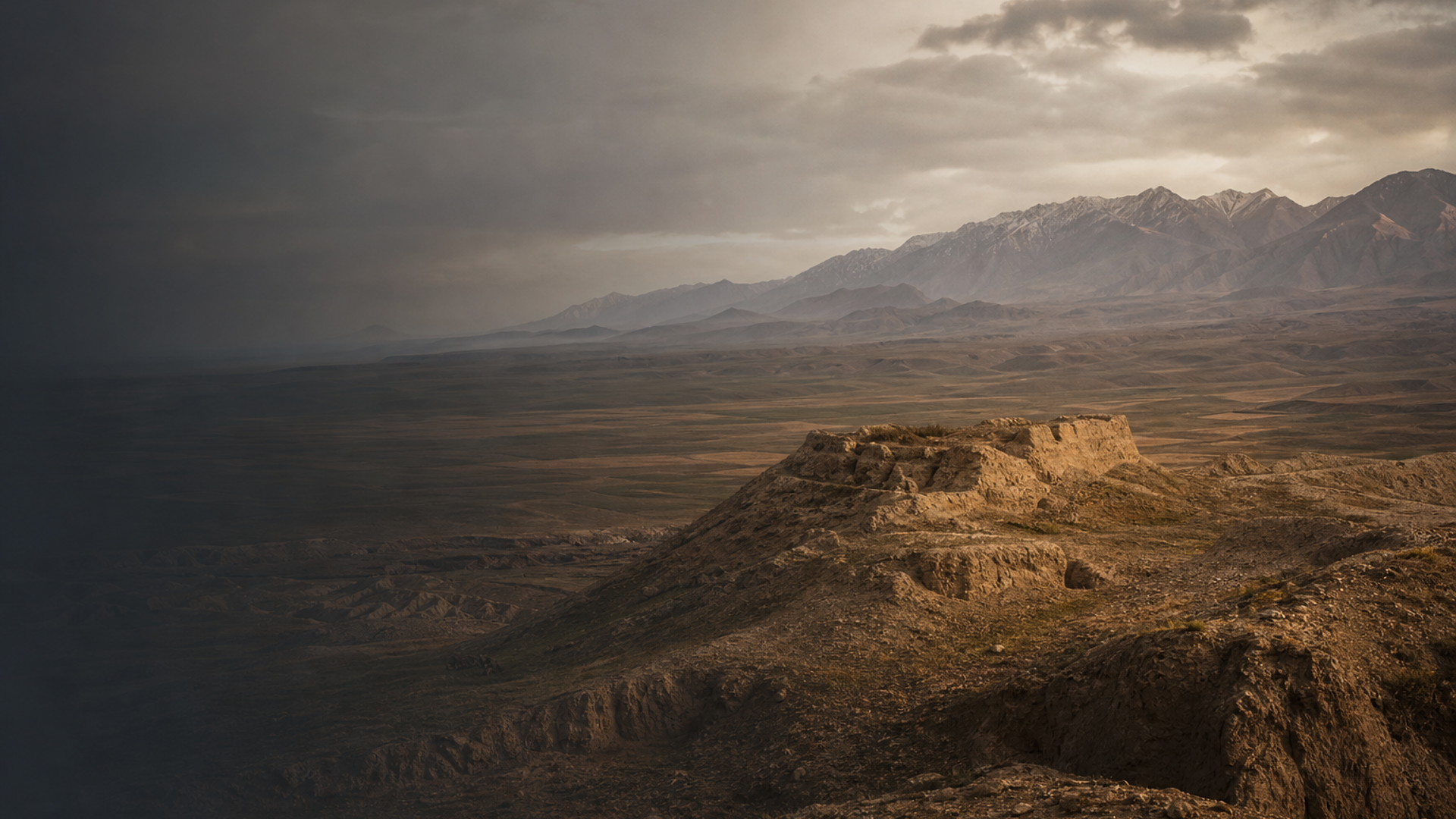
Across the harsh, sunbaked floodplains of southern Turkmenistan, the Namazga Chalcolithic world took shape between the late 4th and early 3rd millennia BCE. Archaeological sites such as Kara-Depe, Geoksyur and the small locality Takhirbai 3 preserve layers of mudbrick architecture, craft debris and burial deposits that point to settled communities experimenting with metallurgy, irrigation and long-distance exchange. Ceramic typologies and building plans align these sites with the broader Namazga horizon, a cultural trajectory that archaeologists place within the Chalcolithic Namazga sequence.

Limited radiocarbon dates cluster in the window provided (c. 3482–3000 BCE), marking a period of local intensification rather than sudden migration. Material culture suggests growing social complexity: public architecture, standardized pottery styles and craft specialization hint at regional networks. Yet the archaeological record also preserves signs of continuity with earlier Neolithic traditions—household continuity in craft and subsistence—indicating emergence through local transformation as much as external influence.

Because the genetic sample set for this culture is small (n = 4), any model of population origin or movement must be treated as provisional. Archaeological data indicates points of contact and adaptation; when combined with genetic evidence (see Genetics), a cautious, layered picture of Namazga Chalcolithic lifeways begins to emerge.

  • Sites: Kara-Depe, Geoksyur, Takhirbai 3
  • Dates: c. 3482–3000 BCE (Chalcolithic Namazga)
  • Evidence: mudbrick architecture, ceramics, craft debris
Chapter IV

Daily Life & Society

Daily life in Namazga Chalcolithic settlements likely unfolded around courtyard houses, workshops and communal spaces where pottery, weaving and early copper working shaped household economies. Archaeological excavation at Kara-Depe reveals remains of hearths, storage vessels and animal bones, indicating mixed farming economies with domesticated sheep, goats and cattle supplemented by cultivated cereals.

Craft specialization — visible in distinctive ceramics and metallurgical residues — suggests the presence of artisans who supplied both local needs and wider exchange networks. Burials found at Geoksyur and nearby sites reveal mortuary variability: some individuals received simple inhumations while others were interred with grave goods, implying social differentiation. Ornament styles and raw material sources point to connections across the Amu Darya plains and possibly further afield, yet many practices show deep local roots.

The cinematic image is of sunlit courtyards where daily labor and ritual overlapped: pots turned on a wheel, copper hammered on stone anvils, and routes of exchange bringing exotic materials to arid river valleys. However, sparse written records and limited burial sampling mean reconstructions remain interpretive and contingent on new discoveries.

  • Mixed farming with sheep, goats, cattle and cereals
  • Evidence for craft specialization and regional exchange
Chapter V

Genetic Profile

Four genomes from the Turkmenistan_C_Namazga assemblage (Kara-Depe, Geoksyur, Takhirbai 3) provide a tantalizing but limited window into maternal ancestry during the Chalcolithic. All four samples yield mitochondrial haplogroups: U2b, C, T and J (each observed once). This mix spans lineages commonly associated with West Eurasian (U2b, T, J) and more eastern/eastern-steppe or northern distributions (haplogroup C), hinting at a region of intersection between western and eastern maternal ancestries.

No consistent Y‑chromosome signal is reported in this small dataset, so male-line inferences remain undetermined. With only four individuals, population-level conclusions are preliminary: small sample size (n < 10) means observed haplogroup frequencies may not reflect the community as a whole. Nevertheless, the presence of U2b aligns with broader patterns of ancient West Eurasian maternal continuity in parts of Central Asia, while C indicates episodic eastern contributions or the persistence of eastern maternal lineages locally.

When combined with the archaeological picture—settled communities, trade links and craft specialization—these mitochondrial results suggest Chalcolithic Namazga communities were biologically diverse at least at the maternal level. Future, larger datasets including Y‑DNA and autosomal data will be required to clarify population structure, mobility and admixture dynamics.

  • mtDNA diversity: U2b, C, T, J (each n=1)
  • Low sample count (n=4) — conclusions are preliminary
Chapter VI

Legacy & Modern Connections

The echoes of Chalcolithic Namazga resonate across millennia in the material rhythms of southern Turkmenistan. Architectural plans, ceramic forms and craft traditions trace lines of cultural inheritance that later communities adapted and transformed. Genetically, maternal lineages observed in this small sample reflect a tapestry of ancestries that would be reshaped by subsequent Bronze Age movements and local developments.
For modern genetic studies, these four genomes are an opening chapter: they illustrate the potential for ancient DNA to anchor narratives of local continuity, contact and admixture. Given the limited sample size, direct links to present-day populations should be proposed cautiously. Still, archaeological continuity at sites like Kara-Depe and Geoksyur paired with diverse maternal haplogroups hints at long-term regional complexity—an inheritance both cultural and biological that invites further study.

  • Archaeological continuity informs regional cultural heritage
  • Genetic signals are preliminary but point to maternal diversity
AI 电源

AI 助手

就 Namazga Chalcolithic Echoes 文化提问

AI 助手 由DNAGENICS公司制作

解锁此特性
Ask questions about the Namazga Chalcolithic Echoes culture. Our AI assistant can explain genetic findings, historical context, archaeological evidence, and modern connections.
AI 样本分析

Namazga Chalcolithic Echoes 文化是人类历史中值得了解的一章……

遗传分析揭示了与早期种群的联系,同时显示了独特的适应和文化创新的证据。 古代DNA样本提供了对迁徙模式、社会结构以及古代种群之间的生物关系的深刻见解。

这是人工智能分析的预览。 解锁全AI 助手, 以探索关于:

  • 遗传组成和祖先
  • 移徙模式和起源
  • 日常生活和文化习俗
  • 现代遗传遗产

探索更古老的文化

揭开古代世界文明的故事

使用优惠码 可减免 35% • 11月12日 到期




