Neolithic Sardinians (4442–3050 BCE)

下载的 PDF 是图像副本。如需可选中文本及更好的辅助技术支持,请使用打印功能。

Neolithic Sardinians (4442–3050 BCE)

揭开一个失落的文明

正在加载考古记录……

正在收集古代记录

跳转到主内容
Neolithic Sardinians (4442–3050 BCE)
文明焦点

Neolithic Sardinians (4442–3050 BCE)

A coastal, cavernous world where farmers and foragers shaped Sardinia’s first villages and genes

4442 CE - 3050 BCE
Sardinia, Italy (various sites)
滚动开始
Chapter I

剧情

了解 Neolithic Sardinians (4442–3050 BCE) 文化

Archaeological remains from Sardinian caves and necropolises (4442–3050 BCE) reveal a Neolithic community shaped by maritime farming, cave burials, and mixed ancestry. Ancient DNA from 16 individuals shows farmer-linked Y lineages (G) alongside local hunter-gatherer signals (I).

Time Period

4442–3050 BCE

Region

Sardinia, Italy (various sites)

Common Y-DNA

G (most frequent), I, H, R

Common mtDNA

J, U, K, V, R-a

Chapter II

时间线

这种文化历史上的关键时刻

2500 BCE

Consolidation of Neolithic funerary use

Around 2500 BCE, cave and necropolis burials at Anghelu Ruju and Su Crucifissu Mannu show repeated, structured use, reflecting stable communities and intergenerational ties (archaeological and genetic evidence).

Chapter III

Origins & Emergence

Sardinia's Neolithic horizon unfolds like a shoreline lit by new practices: domesticated cereals and herds arrive by sea, and people anchor themselves in caves and rock-cut tombs. Archaeological data from sites such as Sa Ucca de su Tintirriolu, Anghelu Ruju (a large necropolis near Alghero), Su Crocefissu, Grutta I de Longu Fresu (Seulo), and the funerary contexts at Porto Torres (Su Crucifissu Mannu t.22) document occupation and ritual between roughly 4442 and 3050 BCE.

Material culture — impressed and decorated ceramics, polished stone tools, and curated grave assemblages — suggests links with broader Cardial/Impressed Ware traditions across the western Mediterranean, though Sardinia also develops local forms. Limited evidence suggests early seafaring and exchange networks brought farmers with Anatolian-derived ancestries to the island; archaeological contexts imply these arrivals integrated with resident coastal foragers rather than replacing them outright.

Genetic data from 16 individuals provide a time-stamped glimpse of this process: Y-lineages dominated by haplogroup G align with continental Neolithic farmer signals, while the presence of haplogroup I points to enduring hunter-gatherer male ancestry. Radiocarbon dates from skeletal remains anchor these biological signals to the island's cave burials and necropolises. While the picture is increasingly coherent, archaeological and genetic gaps remain — coastal settlements are under-sampled and many burial contexts are disturbed — so interpretations should be treated as evolving.

  • Neolithic sites: Anghelu Ruju, Sa Ucca de su Tintirriolu, Su Crocefissu, Grutta I de Longu Fresu, Su Crucifissu Mannu
  • Material links to Cardial/Impressed Ware traditions across western Mediterranean
  • Evidence points to integration of incoming farmers with local foragers
Chapter IV

Daily Life & Society

Life in Neolithic Sardinia was anchored between sea and limestone: people cultivated cereals and legumes, herded sheep and goats, fished coastal waters, and exploited island woodlands and pastures. Archaeobotanical remains recovered at burial and cave sites indicate barley and emmer wheat cultivation, while faunal assemblages point to a pastoral economy supplemented by hunting and marine resources.

Caves and rock-cut tombs functioned as both homes of the dead and stages of social memory. Necropoleis such as Anghelu Ruju and Su Crucifissu Mannu contain multiple, often collective burials with varied grave goods — beads, polished stone tools, and sometimes pottery — suggesting differentiated access to imported or crafted items. The cave contexts at Grutta I de Longu Fresu and Sa Ucca de su Tintirriolu provide intimate snapshots of funerary practice: repeated use, secondary burial treatments, and spatial clustering of related individuals.

Craft and exchange matter in the archaeological record. Obsidian — likely from sources in central Sardinia or nearby islands — and stylistic affinities in ceramics indicate regional networks of raw material movement and idea exchange. Social organization likely ranged from small kin-based farming units to larger ritual gatherings at necropolis sites; however, the archaeological record is fragmentary and many aspects of daily life, such as household architecture on the open coast, remain poorly documented.

  • Mixed economy: farming, herding, fishing, and hunting
  • Cave and necropolis burials show repeated communal use and social differentiation
Chapter V

Genetic Profile

Genetic data from 16 Neolithic Sardinian individuals provide a window into the island's biological formation. Y-chromosome haplogroup counts in this sample are dominated by G (4 individuals), followed by I (3), with single occurrences of H and R. On the maternal side, mitochondrial lineages include J (3), U (3), K (3), V (1), and an R-a lineage (1).

The prominence of Y haplogroup G is consistent with patterns observed among early European farmers, who carried Anatolian-derived ancestry into the Mediterranean. Maternal lineages J and K likewise often signal Near Eastern farmer contributions. The presence of haplogroup I and U-bearing mtDNA points to a persisting hunter-gatherer substrate on the island — a genetic echo of pre-Neolithic inhabitants integrated into farming communities.

Together, the autosomal and uniparental markers suggest admixture: incoming farmer groups brought new genes and practices, while local forager ancestry remained detectable in both male and female lines. Because sample size is modest (16 individuals), some haplogroups are represented by low counts; rare lineages such as H and R appear only once and should be treated cautiously. Spatially, the sampled individuals span cave burials and necropoleis (Anghelu Ruju, Su Crucifissu Mannu, Grutta I de Longu Fresu, Sa Ucca de su Tintirriolu), allowing correlation of genetic signals with funerary contexts, but additional coastal settlements and unsampled regions may alter the pattern as more data emerge.

  • Y-DNA: G most frequent — aligns with Neolithic farmer ancestry
  • mtDNA mix of J, K (farmer-associated) and U (hunter-gatherer-associated) indicates admixture
Chapter VI

Legacy & Modern Connections

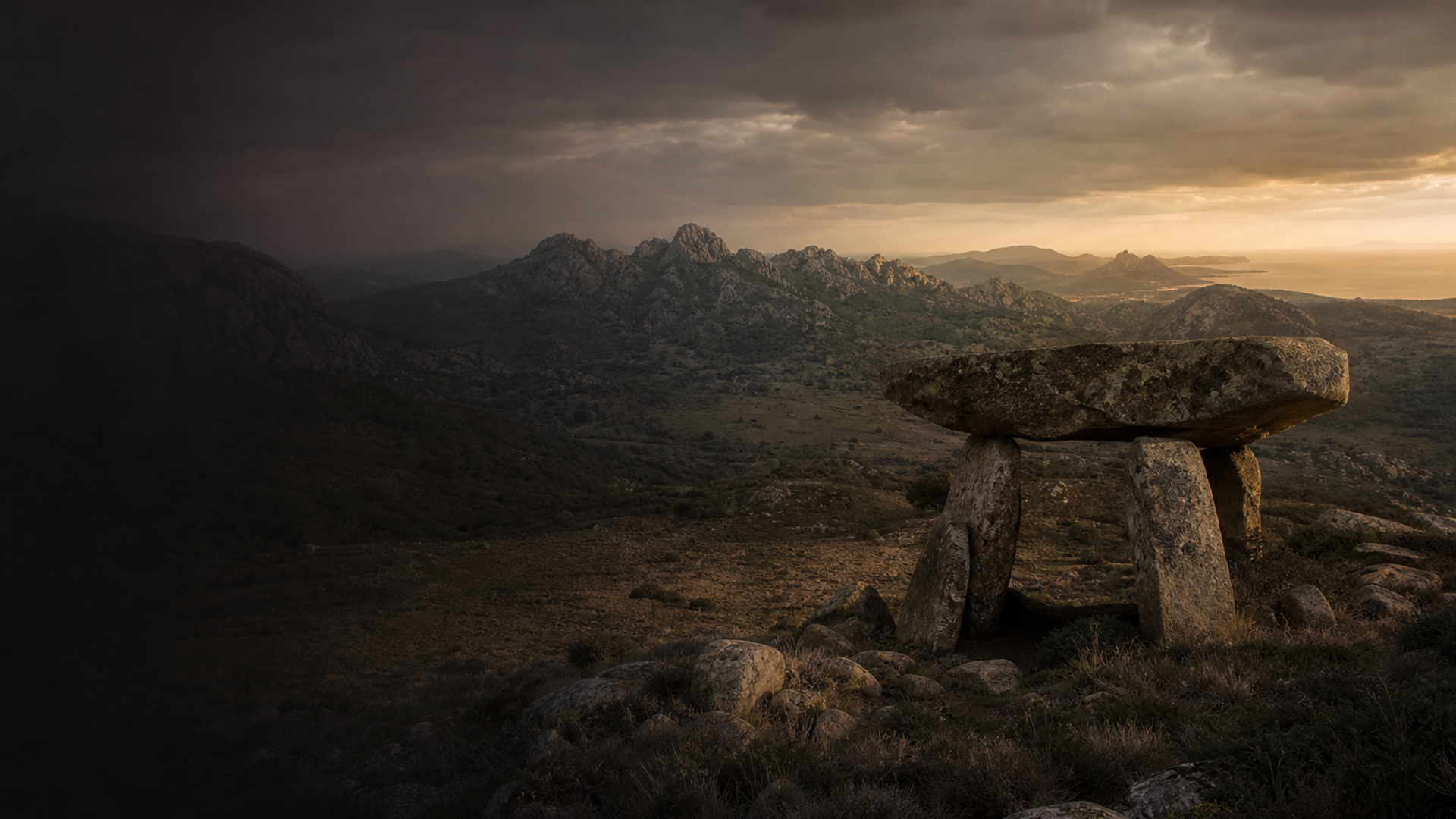
The Neolithic communities of Sardinia left enduring traces in both material and genetic landscapes. Modern Sardinians show relatively high proportions of early farmer ancestry compared with many mainland Europeans, and ancient genomes from the island contribute to that continuity. Archaeologically, the island's ritual landscapes — necropoleis, rock-cut tombs, and later megalithic monuments — echo practices that crystallized in the Neolithic and were reshaped in subsequent millennia.

Caution is warranted: continuity is not uniform across time or place. Later movements in the Bronze Age and historic periods introduced new genetic inputs and cultural transformations. Still, the Neolithic period set deep roots: agricultural lifeways, maritime connections, and family-based burial traditions that would influence Sardinia’s complex prehistory. Ongoing sampling of settlement sites and more complete genomic datasets will refine how strongly these early islanders connect to present-day Sardinians.

  • Substantial genetic continuity: Neolithic farmer ancestry contributes to modern Sardinians
  • Neolithic funerary and maritime traditions shaped long-term cultural landscapes
AI 电源

AI 助手

就 Neolithic Sardinians (4442–3050 BCE) 文化提问

AI 助手 由DNAGENICS公司制作

解锁此特性
Ask questions about the Neolithic Sardinians (4442–3050 BCE) culture. Our AI assistant can explain genetic findings, historical context, archaeological evidence, and modern connections.
AI 样本分析

Neolithic Sardinians (4442–3050 BCE) 文化是人类历史中值得了解的一章……

遗传分析揭示了与早期种群的联系,同时显示了独特的适应和文化创新的证据。 古代DNA样本提供了对迁徙模式、社会结构以及古代种群之间的生物关系的深刻见解。

这是人工智能分析的预览。 解锁全AI 助手, 以探索关于:

  • 遗传组成和祖先
  • 移徙模式和起源
  • 日常生活和文化习俗
  • 现代遗传遗产

探索更古老的文化

揭开古代世界文明的故事

使用优惠码 可减免 35% • 11月12日 到期




