Ovaören: Threads of Early Bronze Anatolia

下载的 PDF 是图像副本。如需可选中文本及更好的辅助技术支持,请使用打印功能。

Ovaören: Threads of Early Bronze Anatolia

揭开一个失落的文明

正在加载考古记录……

正在收集古代记录

跳转到主内容
Ovaören: Threads of Early Bronze Anatolia
文明焦点

Ovaören: Threads of Early Bronze Anatolia

Three maternal genomes illuminate a fleeting moment in 2750–2500 BCE Turkey

2750 CE - 2500 BCE
Ovaören, Central Anatolia (Turkey)
滚动开始
Chapter I

剧情

了解 Ovaören: Threads of Early Bronze Anatolia 文化

Archaeogenetic and archaeological data from Ovaören (Turkey, 2750–2500 BCE) reveal three maternal lineages (J, H, W5). Limited samples suggest a mosaic of Anatolian and Near Eastern connections during Early Bronze Age II; conclusions remain preliminary.

Time Period

2750–2500 BCE (Early Bronze Age II)

Region

Ovaören, Central Anatolia (Turkey)

Common Y-DNA

Not reported / no Y-DNA data

Common mtDNA

J, H, W5 (one each)

Chapter II

时间线

这种文化历史上的关键时刻

2500 BCE

Ovaören: A Moment Captured

Three maternal genomes (J, H, W5) sampled from Ovaören provide a preliminary glimpse of Early Bronze Age II population diversity in central Anatolia.

Chapter III

Origins & Emergence

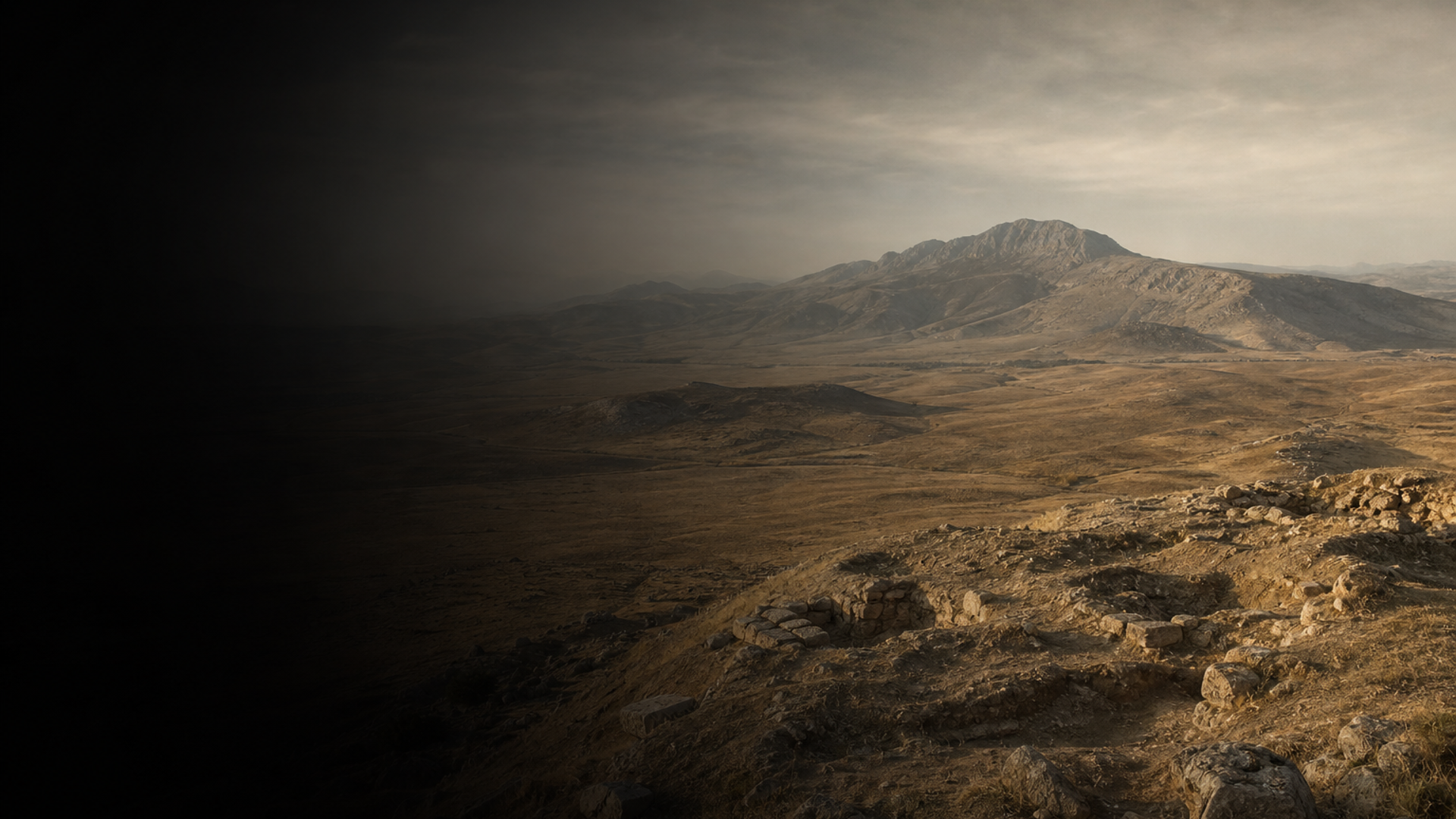
Ovaören sits within the dramatic swell of Early Bronze Age II in Anatolia (c. 2750–2500 BCE), a period when local traditions intersected with long-distance exchange. Archaeological data indicates intensified metallurgy, changing settlement hierarchies, and expanding trade routes that stitched central Anatolia to the Aegean, Levant and the highlands to the east. The material record at sites across the region—fortified settlements, craft production debris and exotic raw materials—speaks of communities negotiating new economic and social scales.

Genetically, the tiny Ovaören sample set offers a tantalizing glimpse rather than a full portrait. Limited evidence suggests maternal lineages associated with both Near Eastern (haplogroup J) and broadly European/Anatolian (H, W5) mitochondrial backgrounds were present in this locale. Archaeological context supports a picture of mobility and interaction, but whether these signals reflect recent migration, persistent local diversity, or social practices like exogamy remains uncertain. The complexity of Early Bronze Age Anatolia resists simple origin stories—what we can say with confidence is that Ovaören was part of a dynamic landscape where local lifeways and incoming influences met.

  • Located in central Anatolia during Early Bronze Age II (2750–2500 BCE)
  • Archaeological indicators of metallurgy and long-distance exchange
  • Genetic signals point to mixed maternal ancestry but are preliminary
Chapter IV

Daily Life & Society

The lived world at Ovaören would have been textured and tactile: fields and herds surrounding compact settlements, workshops ringing with the clink of copper and bronze, and storerooms holding redistributed goods. Archaeological data indicates households engaged in mixed farming, animal husbandry and specialized crafts; exchange networks likely brought raw materials and finished objects into local economies. Settlement architecture in contemporaneous Anatolian sites shows both domestic continuity and institutional buildings that may reflect emerging social differentiation.

Burial practices across Early Bronze Age Anatolia are varied; at some sites simple inhumations occur alongside richer offerings. For Ovaören specifically, the archaeological record is limited, so reconstructions of social hierarchy, ritual life, and gendered roles must remain cautious. Material culture paints a scene of communities adapting traditional lifeways to new opportunities: metallurgy and long-distance trade appear to reshape status, craft specialization, and perhaps the movement of people and ideas.

The cinematic image is of a landscape in motion—smoke from kilns on the horizon, caravans threading valleys, and family households negotiating change—yet the material traces that survive are fragmentary and demand restrained interpretation.

  • Economy centered on mixed farming, herding, and craft production
  • Metalworking and exchange likely influenced social differentiation
Chapter V

Genetic Profile

Three mitochondrial genomes recovered from Ovaören (sample count = 3) date to 2750–2500 BCE and carry haplogroups J, H and W5 (one individual each). These maternal lineages offer a slender but meaningful window into maternal ancestry during Early Bronze Age II in central Anatolia. Haplogroup H is widespread across Europe and Anatolia since the Neolithic and Bronze Age; its presence here may reflect long-standing local continuity or broader regional admixture. Haplogroup J has strong affinities with Near Eastern lineages and is frequently seen in Anatolian and Levantine contexts, hinting at connections to southern or eastern networks. W5 is rarer and can signal deep Eurasian ties or localized maternal diversity.

Crucially, no Y-chromosome assignments are reported for these samples, so sex-biased migration patterns (e.g., incoming male vs female groups) cannot be assessed. With only three samples, statistical power is extremely limited: any demographic inference must be framed as provisional. Archaeological signals of exchange and craft specialization align with a scenario of increased mobility and interaction, but whether the mtDNA diversity at Ovaören reflects incoming groups, persistent mixed ancestries from earlier Neolithic populations, or social practices like female exogamy cannot be resolved yet.

Future sampling—more individuals, genome-wide data and comparative context across Anatolia—will be needed to transform these initial maternal glimpses into robust models of population history.

  • Mitochondrial lineages: J (1), H (1), W5 (1)
  • Sample count is low (n=3); conclusions are preliminary and require more data
Chapter VI

Legacy & Modern Connections

The human threads from Ovaören reach forward into the genetic tapestry of modern Anatolia, but with caution. Archaeological continuity in settlement and craft traditions suggests cultural persistence in central Anatolia, and the mix of maternal haplogroups is consistent with the region’s long history of population interconnection. Modern populations in Turkey carry a mosaic of lineages shaped by millennia of continuity and movement; the mtDNA signals at Ovaören may represent part of that deep heritage.

However, with only three maternal genomes, we cannot claim direct lineal descent or precise affinities to specific modern groups. Instead, Ovaören offers a cinematic snapshot: a crossroads where local lifeways met distant influences, whose echoes may still be detectable in broad genetic patterns. Expanding ancient DNA sampling across Anatolia will clarify how these early Bronze Age communities contributed to the genetic and cultural landscape of later millennia.

  • Potential contribution to the deep maternal diversity of modern Anatolia
  • Current evidence is limited; broader sampling needed to clarify connections
AI 电源

AI 助手

就 Ovaören: Threads of Early Bronze Anatolia 文化提问

AI 助手 由DNAGENICS公司制作

解锁此特性
Ask questions about the Ovaören: Threads of Early Bronze Anatolia culture. Our AI assistant can explain genetic findings, historical context, archaeological evidence, and modern connections.
AI 样本分析

Ovaören: Threads of Early Bronze Anatolia 文化是人类历史中值得了解的一章……

遗传分析揭示了与早期种群的联系,同时显示了独特的适应和文化创新的证据。 古代DNA样本提供了对迁徙模式、社会结构以及古代种群之间的生物关系的深刻见解。

这是人工智能分析的预览。 解锁全AI 助手, 以探索关于:

  • 遗传组成和祖先
  • 移徙模式和起源
  • 日常生活和文化习俗
  • 现代遗传遗产

探索更古老的文化

揭开古代世界文明的故事

使用优惠码 可减免 35% • 11月12日 到期