Ovilava (Wels): Romans on the Danube

下载的 PDF 是图像副本。如需可选中文本及更好的辅助技术支持,请使用打印功能。

Ovilava (Wels): Romans on the Danube

揭开一个失落的文明

正在加载考古记录……

正在收集古代记录

跳转到主内容
Ovilava (Wels): Romans on the Danube
文明焦点

Ovilava (Wels): Romans on the Danube

A glimpse into Roman-period life at Ovilava through archaeology and a small set of ancient genomes

124 CE - 774 CE
Upper Austria — Wels (Ovilava)
5 Ancient Samples
滚动开始
Chapter I

剧情

了解 Ovilava (Wels): Romans on the Danube 文化

Archaeological evidence from Ovilava (modern Wels, Upper Austria) and five ancient genomes (124–774 CE) reveal a Roman-period town on the Danubian frontier. Limited genetic data suggest local continuity with Mediterranean influences; conclusions remain preliminary due to small sample size.

Time Period

124–774 CE (Roman–Early Medieval)

Region

Upper Austria — Wels (Ovilava)

Common Y-DNA

Undetermined / not reported (5 samples)

Common mtDNA

Undetermined / not reported (5 samples)

Chapter II

时间线

这种文化历史上的关键时刻

124 CE

Earliest sample in dataset

Genetic and archaeological material dated to 124 CE provides an early Roman-period snapshot of Ovilava.

260 CE

Crisis and regional change

Third-century instability across the Roman Empire likely affected frontier towns like Ovilava with economic and military disruptions.

476 CE

Western Roman transformations

The collapse of central Roman authority reshaped provincial life; towns adapted to new political realities.

774 CE

Latest sample in dataset

Genetic material dated to 774 CE captures an Early Medieval phase during Frankish/Carolingian consolidation.

Chapter III

Origins & Emergence

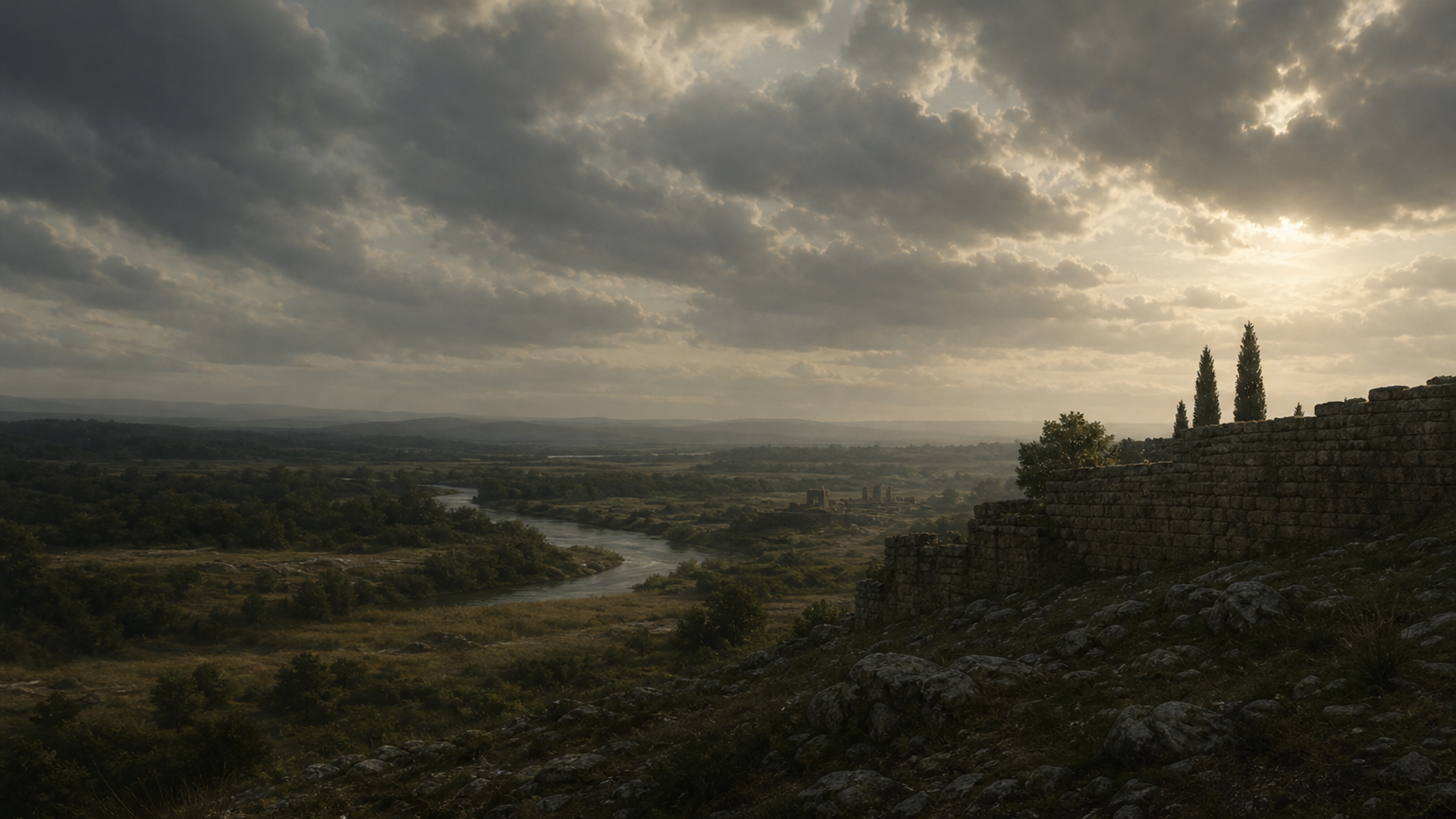
Ovilava—today Wels in Upper Austria—sits like a palimpsest on the edge of the Roman world. Archaeological data indicate occupation and urban development during the Roman imperial centuries, when the region formed part of the Danubian frontier network. Excavations around Ovilava have revealed traces of built streets, public architecture, and cemeteries that point to a settled municipal life linked into broader Noric and provincial Roman systems.

This settlement emerged in a landscape of older Iron Age communities; Roman urbanism layered new forms of administration, trade routes and material culture onto local traditions. Material remains—pottery, metalwork, and the organization of burials—suggest long-term interaction between indigenous Alpine populations and newcomers associated with Roman military, administrative, and commercial activity. Limited evidence suggests that Ovilava functioned as a local hub rather than a major imperial metropolis: its power lay in controlling riverine routes and connecting hinterland resources with provincial markets.

Archaeology indicates continuity and adaptation rather than wholesale replacement: local traditions persisted in craft and burial choices even as Roman institutional and material elements became visible across the townscape. The result is a layered origin story—an ancient frontier town born of local roots and imperial circulations.

  • Ovilava corresponds to modern Wels in Upper Austria
  • Archaeological traces show urban structures and cemeteries dating to Roman period
  • Local Iron Age roots persisted beneath Roman municipal forms
Chapter IV

Daily Life & Society

Walking through Ovilava would have meant encountering a compact town where commerce, craft and the rhythms of provincial life converged. Archaeological finds point to a mix of household pottery, imported tableware and locally made goods—evidence of everyday trade and a population accustomed to material diversity. Public buildings, workshops and burial grounds outline a community organized around municipal needs and ties to the wider Roman economy.

Social life in Ovilava was likely shaped by mobility: soldiers, traders, artisans and local families shared streets and markets. Funerary evidence indicates a range of burial practices, suggesting social differentiation and enduring local customs. Environmental data (pollen, seeds) from comparable sites in Upper Austria suggest agricultural hinterlands that supplied towns with grain, livestock and raw materials. The archaeological record thus paints a cinematic scene: smoke from hearths, the rhythm of cart wheels, inscriptions scratched on stone, and the steady turnover of imported goods that linked Ovilava to the Mediterranean and beyond.

Archaeological data indicates that by the later centuries, the town adapted to the transformations of Late Antiquity—changes in craft production, shifting settlement patterns, and new political realities as imperial structures weakened.

  • Material culture shows a blend of local manufacture and imported Roman goods
  • Burials and household assemblages indicate social differentiation and cultural continuity
Chapter V

Genetic Profile

Genetic data from Ovilava are tantalizing but limited: five ancient genomes spanning 124–774 CE provide initial points of comparison between archaeology and ancestry. Because the sample count is small (<10), any genetic inference must be treated as preliminary. The dataset does not report clear, dominant Y-chromosome or mitochondrial haplogroups, so broad conclusions about lineage frequencies are not possible from these individuals alone.

Despite these limitations, the observable patterns are consistent with wider trends seen in Roman-period Central Europe. Archaeogenetic studies across the Roman world commonly reveal a base of local Central European ancestry combined with varying degrees of Mediterranean and extra-regional input—reflecting the mobility of soldiers, merchants and administrators. Limited evidence from the Ovilava samples suggests a similar picture: substantial genetic continuity with preceding regional populations, overlaid by signatures compatible with gene flow from southern and western provinces. This pattern aligns with the archaeological narrative of cultural mixing rather than replacement.

Future sampling—larger numbers, targeted chronologies, and comparison with Iron Age and medieval genomes from Upper Austria—will be essential to quantify admixture proportions, track sex-biased mobility, and detect fine-scale ancestry shifts. Until then, genetic interpretations for Ovilava remain provisional and best read alongside the material record.
  • Only five genomes available — conclusions are preliminary
  • Data indicate broad local continuity with hints of Mediterranean/imperial-era gene flow
Chapter VI

Legacy & Modern Connections

The echoes of Ovilava persist in the modern city of Wels and in regional cultural landscapes. Archaeology preserves the town’s imprint—street plans, burial grounds and artifacts—while genetics offers a complementary window into the people who lived there. Although the small genetic sample prevents definitive statements about direct ancestry to modern Austrians, the combined archaeological and genomic picture supports continuity: the population history of Upper Austria is one of layered influences rather than abrupt replacement.

For museums and scientific platforms, Ovilava illustrates how local communities were woven into imperial networks. Its legacy is a story of adaptation: civilian life threaded into military and administrative circuits, producing a population that contributed to the demographic foundations of early medieval and later Austrian communities. Continued excavation and larger-scale ancient DNA sampling will refine how Ovilava’s inhabitants fit into the broader tapestry of European ancestry.

  • Ovilava contributes to the layered ancestry of modern Upper Austria
  • Further sampling is needed to clarify population continuity and Roman-period mobility
Chapter VII

样本目录

5 份与 Ovilava (Wels): Romans on the Danube 文化相关的古 DNA 样本,为研究该时期的人群提供遗传线索。

5 / 5 samples
纵向 样本 国家 大纪元 日期 文化 性别 Y-DNA mtDNA
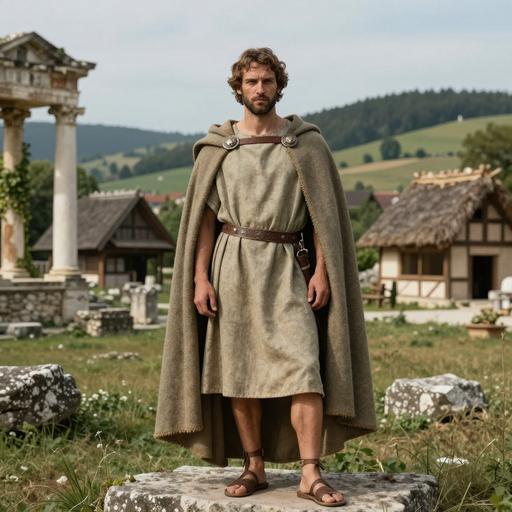
重建的肖像画 Imperial Roman-o Africa-o Levant individual, Austria
Imperial Roman-o Africa-o Levant individual, Austria
Austria Austria_Ovilava_Roman 124-217 calCE (1875±15 BP, UCIAMS-235912) Roman Empire M I-PF692 -
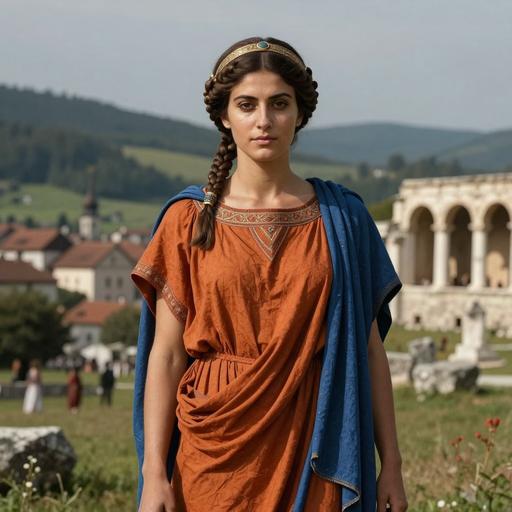
重建的肖像画 Imperial Roman-o Levant individual, Austria
Imperial Roman-o Levant individual, Austria
Austria Austria_Ovilava_Roman 131-245 calCE (1835±15 BP, UCIAMS-235893) Roman Empire M J-Z39726 -
重建的肖像画 Avar individual, Austria
Avar individual, Austria
Austria Austria_Ovilava_Roman 660-774 calCE (1315±15 BP, UCIAMS-237560) Roman Empire M R-FGC12770 -
重建的肖像画 Avar individual, Austria
Avar individual, Austria
Austria Austria_Ovilava_Roman 657-774 calCE (1320±15 BP, UCIAMS-237561) Roman Empire F - -
重建的肖像画 Imperial Roman individual, Austria
Imperial Roman individual, Austria
Austria Austria_Ovilava_Roman 216-325 calCE (1800±15 BP, UCIAMS-235921) Roman Empire M R-BY163695 -
AI 电源

AI 助手

就 Ovilava (Wels): Romans on the Danube 文化提问

AI 助手 由DNAGENICS公司制作

解锁此特性
Ask questions about the Ovilava (Wels): Romans on the Danube culture. Our AI assistant can explain genetic findings, historical context, archaeological evidence, and modern connections.
AI 样本分析

Ovilava (Wels): Romans on the Danube 文化是人类历史中值得了解的一章……

遗传分析揭示了与早期种群的联系,同时显示了独特的适应和文化创新的证据。 古代DNA样本提供了对迁徙模式、社会结构以及古代种群之间的生物关系的深刻见解。

这是人工智能分析的预览。 解锁全AI 助手, 以探索关于:

  • 遗传组成和祖先
  • 移徙模式和起源
  • 日常生活和文化习俗
  • 现代遗传遗产

探索更古老的文化

揭开古代世界文明的故事

使用优惠码 可减免 35% • 11月12日 到期