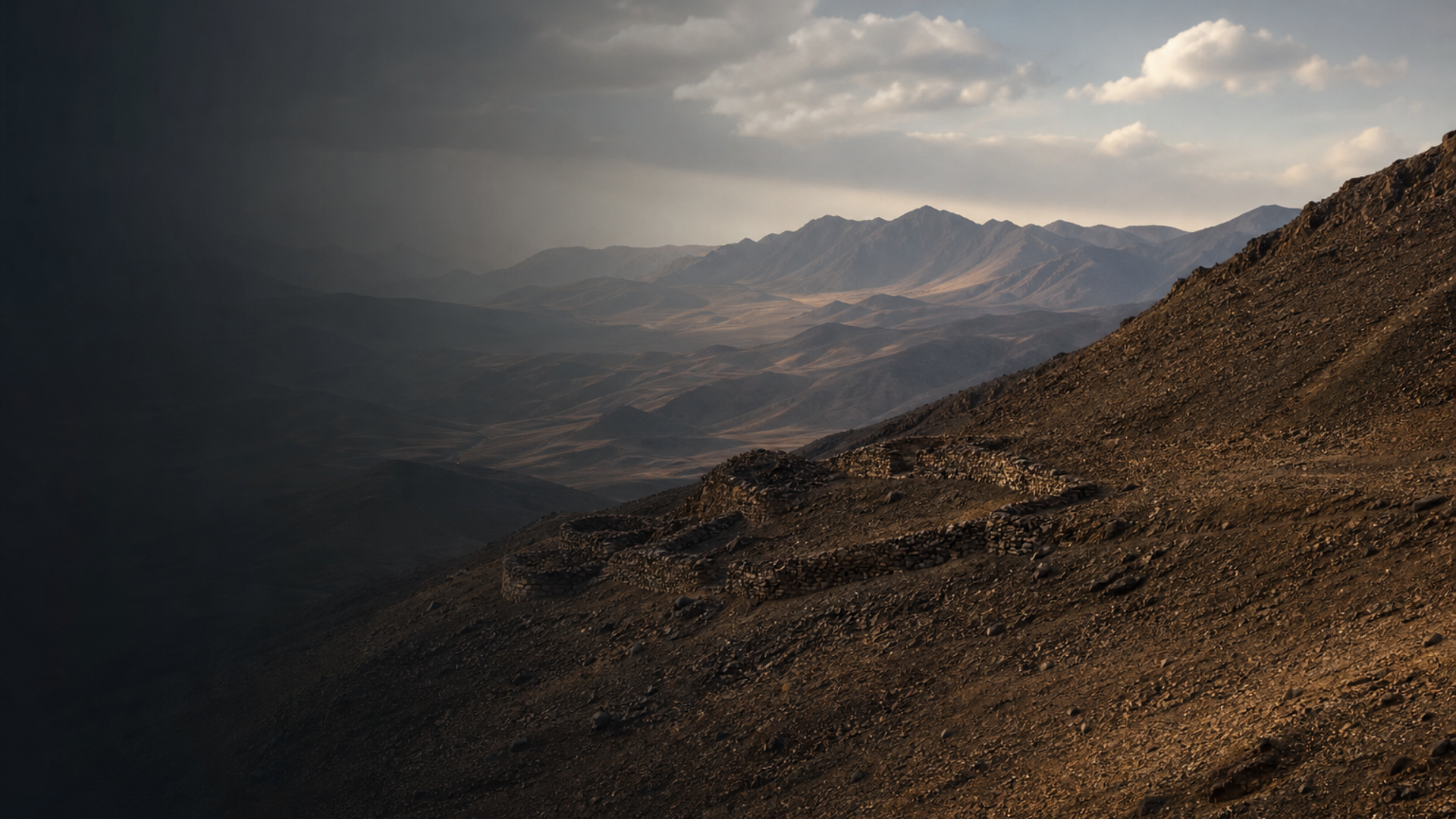
Pukara of the Precordillera — 700 BP

下载的 PDF 是图像副本。如需可选中文本及更好的辅助技术支持,请使用打印功能。

Pukara of the Precordillera — 700 BP

揭开一个失落的文明

正在加载考古记录……

正在收集古代记录

跳转到主内容
Pukara of the Precordillera — 700 BP
文明焦点

Pukara of the Precordillera — 700 BP

A lone Late Intermediate Period individual from the Atacama highlands, where archaeology meets DNA

1155 CE - 1260 CE
Atacama Desert, Precordillera, Chile
滚动开始
Chapter I

剧情

了解 Pukara of the Precordillera — 700 BP 文化

Single Late Intermediate Period (1155–1260 CE) individual from a Pukara-associated site in the Atacama Precordillera, Chile. Archaeological context and ancient DNA (Y: Q; mt: B2) offer a tentative glimpse of highland lifeways and genetic continuity; conclusions are preliminary (n=1).

Time Period

1155–1260 CE (Late Intermediate Period)

Region

Atacama Desert, Precordillera, Chile

Common Y-DNA

Q (1 sample)

Common mtDNA

B2 (1 sample)

Chapter II

时间线

这种文化历史上的关键时刻

1155 CE

Dated burial from a Pukara-associated site

Radiocarbon dates place the sampled individual between 1155 and 1260 CE, within the Late Intermediate Period in the Precordillera of the Atacama.

Chapter III

Origins & Emergence

Carved by wind and light, the Precordillera foothills of the Atacama hold the traces of communities active during the Late Intermediate Period (c. 12th–13th centuries CE). Archaeological data indicates occupation at Pukara-linked loci where small settlements clustered near seasonal water sources and caravan routes that threaded between coastal and highland ecologies. Radiocarbon-calibrated materials framing this individual place it between 1155 and 1260 CE, a time of regional reorganization after earlier highland polities.

Material culture in nearby sites suggests localized forms of architecture, pottery styles, and exchange in obsidian and marine goods, pointing to networks of mobility rather than large-scale empire. Limited evidence suggests that Pukara-associated groups in this part of the Precordillera adapted highland lifeways to an arid margin: mixed herding, opportunistic cultivation where microclimates allowed, and intensified trade across ecological zones.

Because this dataset currently rests on a single sampled individual, interpretive caution is essential. The archaeological context offers atmospheric, place-based clues about social grouping and landscape use, but broader claims about population movements, cultural boundaries, or sociopolitical structure require larger and better-dated series of sites and human remains.

  • Dated to 1155–1260 CE, during the Late Intermediate Period
  • Occupation near Pukara-associated sites in the Atacama Precordillera
  • Evidence points to mobility and exchange across coastal and highland zones
Chapter IV

Daily Life & Society

Imagine sun-baked terraces and wind-scoured corrals: inhabitants of the Precordillera margin balanced the harsh beauty of the Atacama with adaptive strategies. Archaeological indicators from Pukara contexts in this region point to small-scale settlements where households combined pastoralism—likely camelid herding—with opportunistic gardens fed by ephemeral streams and irrigation in favoured micro-valleys.

Ceramic assemblages cataloged nearby include utilitarian wares and decorated forms that may signal local identity and interregional contacts. Faunal remains and botanical traces suggest a diet mixing highland staples and coastal imports, revealing participation in long-distance exchange. Social life was probably organized around kin-based compounds and seasonal circuits that followed water and grazing availability; ritual practice and ancestor veneration are plausible given regional Andean patterns, though direct evidence at this specific site remains sparse.

Archaeological data indicates resilience and flexibility: craft production, trade in lithic and marine materials, and adaptive land use strategies underpinned daily life. Yet with only one genetic sample from the site, linking individual life histories to community-level social roles is provisional. Continued excavation and multidisciplinary sampling are needed to flesh out household composition, labor, and ritual landscapes.

  • Household economies combined pastoralism with opportunistic agriculture
  • Material culture implies local identity amid long-distance exchange
Chapter V

Genetic Profile

Ancient DNA from the Pukara-associated individual yields Y-chromosome haplogroup Q and mitochondrial haplogroup B2 — lineages common among Indigenous peoples of the Americas. These assignments align broadly with continental patterns in South America where haplogroup Q is frequently observed on the paternal line and haplogroup B2 on the maternal line.

Because the dataset comprises only one genome (sample count = 1), genetic inferences must remain tentative. The presence of Q and B2 is consistent with genetic continuity in the Central Andean and coastal-Highland contact zones, but it does not by itself resolve questions about population structure, migration pulses, or local admixture events during the Late Intermediate Period. Archaeological signals of exchange and mobility could correspond to genetic gene flow, but linking specific cultural interactions to demographic change requires larger sample sizes and comparative datasets spanning the region and time periods before and after 1155–1260 CE.

Future aDNA sampling from neighboring Pukara sites, contemporaneous coastal settlements, and highland centers will be essential to test whether this individual reflects local continuity, incoming groups, or broader networked ancestry. For now, the genetic profile offers a cinematic but cautious bridge between a single life and the longue durée of Andean population history.

  • Y haplogroup Q and mtDNA B2 observed — typical in Indigenous South American lineages
  • n=1: conclusions are preliminary; larger comparative datasets required
Chapter VI

Legacy & Modern Connections

The genetic and archaeological traces from this Pukara-associated individual suggest threads that may continue into the present: shared haplogroups, cultural practices adapted to harsh environments, and networks linking coast and highland. Archaeological continuity in artifact styles and settlement patterns sometimes mirrors genetic continuity, but the relationship is complex and mediated by trade, marriage, and mobility.

For descendant communities in northern Chile and the broader Andean world, such finds can illuminate ancestral ties to particular landscapes and lifeways. However, given the single-sample evidence, any claims about direct ancestry to specific modern groups must be made with humility and in consultation with Indigenous stakeholders. Ongoing collaborations that pair expanded aDNA sampling, robust archaeological context, and community engagement will best reveal how the Pukara of the Precordillera contributed to the mosaic of Andean heritage.

  • Findings hint at continuity with wider Andean genetic patterns but are preliminary
  • Responsible interpretation requires more samples and engagement with descendant communities
AI 电源

AI 助手

就 Pukara of the Precordillera — 700 BP 文化提问

AI 助手 由DNAGENICS公司制作

解锁此特性
Ask questions about the Pukara of the Precordillera — 700 BP culture. Our AI assistant can explain genetic findings, historical context, archaeological evidence, and modern connections.
AI 样本分析

Pukara of the Precordillera — 700 BP 文化是人类历史中值得了解的一章……

遗传分析揭示了与早期种群的联系,同时显示了独特的适应和文化创新的证据。 古代DNA样本提供了对迁徙模式、社会结构以及古代种群之间的生物关系的深刻见解。

这是人工智能分析的预览。 解锁全AI 助手, 以探索关于:

  • 遗传组成和祖先
  • 移徙模式和起源
  • 日常生活和文化习俗
  • 现代遗传遗产

探索更古老的文化

揭开古代世界文明的故事

使用优惠码 可减免 35% • 11月12日 到期