Punta Candelero: Coastal Ceramic World

下载的 PDF 是图像副本。如需可选中文本及更好的辅助技术支持,请使用打印功能。

Punta Candelero: Coastal Ceramic World

揭开一个失落的文明

正在加载考古记录……

正在收集古代记录

跳转到主内容
Punta Candelero: Coastal Ceramic World
文明焦点

Punta Candelero: Coastal Ceramic World

Pottery, middens, and fragile DNA traces illuminate Humacao's 500–1050 CE coastal communities.

500 CE - 1050 CE
Puerto Rico — Humacao (Punta Candelero)
滚动开始
Chapter I

剧情

了解 Punta Candelero: Coastal Ceramic World 文化

Archaeological and genetic glimpses from Punta Candelero (Humacao, Puerto Rico) illuminate a Ceramic-period coastal community (500–1050 CE). Limited ancient DNA (5 samples) shows Indigenous American mtDNA lineages (A2, C) and a low-resolution Y haplogroup (CT). Conclusions remain preliminary.

Time Period

500–1050 CE

Region

Puerto Rico — Humacao (Punta Candelero)

Common Y-DNA

CT (low-resolution, 1/5 samples)

Common mtDNA

C (2), A2h (1), A2a (1), A2z (1)

Chapter II

时间线

这种文化历史上的关键时刻

500 CE

Onset of Ceramic occupation

Archaeological deposits at Punta Candelero indicate established Ceramic-period settlement and pottery use beginning around 500 CE.

1050 CE

Transition and regional change

By ca. 1050 CE material culture patterns shift across Puerto Rico, marking transitions in settlement and inter-island interactions.

Chapter III

Origins & Emergence

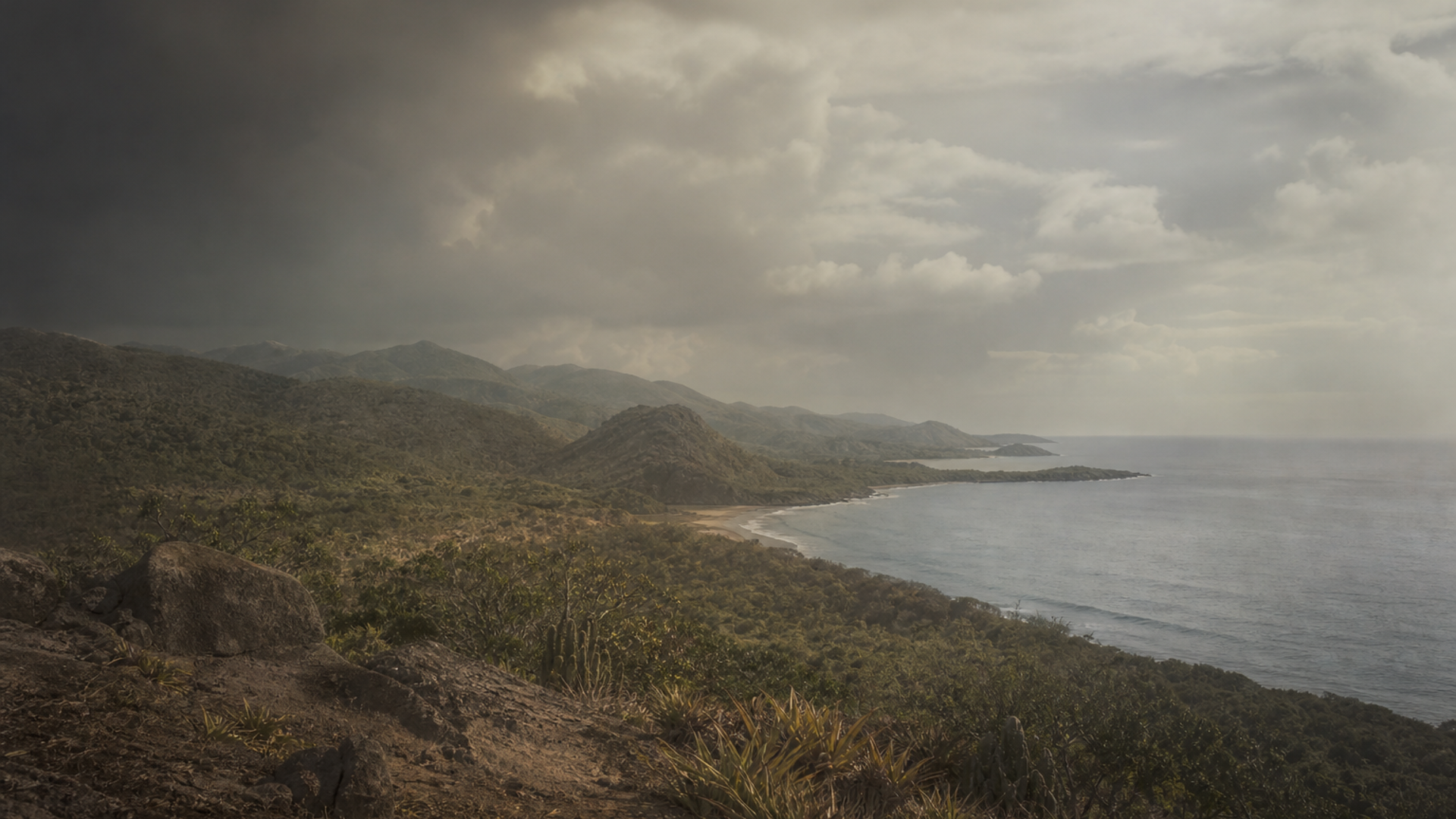
Along the sunlit coasts of Humacao, horizon lines of sherds and shell reveal the slow choreography of the Ceramic Period. Punta Candelero sits within a broad Caribbean tradition in which pottery-making, coastal settlement, and intensified maritime foraging coalesced into recognizable village life. Archaeological data indicates occupation between roughly 500 and 1050 CE, a window when decorated ceramics, ground-stone tools, and midden deposits become common at the site.

These material patterns point to long-standing connections across the eastern Caribbean: stylistic affinities in pottery suggest networks of exchange and shared craft traditions rather than isolated invention. Excavations at Punta Candelero have documented habitation features and deposits that reflect repeated seasonal or permanent occupation. Bioarchaeological remains—when preserved—tie people to marine-based diets and nearshore resources, while plant remains hint at cultivated staples such as tubers and other domesticates that complemented fishing and shellfish gathering.

Limited evidence suggests Punta Candelero's community formed through local development of Ceramic-period lifeways and interaction with neighboring island groups. As with many Caribbean sites, the archaeological record is patchy; stratigraphic complexities and coastal taphonomy mean that our reconstruction is provisional and benefits from integration with genetic results.

  • Occupied ca. 500–1050 CE within Puerto Rico’s Ceramic Period
  • Material culture shows pottery production and coastal subsistence
  • Regional stylistic ties indicate inter-island connections
Chapter IV

Daily Life & Society

Imagine dawn light on a low sandy ridge where pottery smoke mingles with the salt breeze. At Punta Candelero, households likely clustered near the shore to exploit abundant marine resources—fish, crustaceans, and shellfish visible today in midden deposits. Archaeological indicators such as concentrated hearths, broken ceramics, and tool fragments point to a domestic economy centered on cooking, shellfish processing, and small-scale horticulture.

Social life would have been organized around kin groups and craft specialists. Pottery styles—decorated rims, incised motifs, and specific tempers—are signals of identity and social ties; they could mark lineage, exchange partnerships, or ritual practice. Burial practice in the Ceramic Period across Puerto Rico is variable; at many coastal sites, human remains are recovered in contexts that suggest episodic interment near living areas or in discrete cemetery locales. Such patterns are consistent with communities that maintained strong ties to particular coastal landscapes.

Archaeological data indicates a resilient coastal adaptation, but the picture is incomplete. Preservation biases, looting, and the relatively small sample sizes available for genetic study mean our reconstructions of daily life remain inferential, best considered as informed snapshots rather than full portraits.

  • Households concentrated on shorelines with mixed fishing and horticulture
  • Pottery and tool types reflect craft specialization and social ties
Chapter V

Genetic Profile

Ancient DNA from Punta Candelero is tantalizing but limited: five analyzed individuals provide preliminary glimpses into ancestry. The mitochondrial results are dominated by Indigenous American founder lineages—two individuals carry haplogroup C and three carry subgroups of haplogroup A2 (A2h, A2a, A2z). These mtDNA types are widespread across pre-contact populations in the Americas and support deep maternal continuity with Indigenous lineages of the Caribbean and mainland regions.

On the paternal side, one low-resolution Y-DNA call falls within haplogroup CT. CT is a broad ancestral clade from which most non-African Y-lineages derive; a solitary CT call at low resolution cannot be interpreted as a precise paternal affiliation and likely reflects limits of preservation or sequencing depth rather than a unique ancestral signal.

Because the sample count is very small (<10), all population-level interpretations must be cautious. The mtDNA mix of A2 and C is consistent with expectations for Ceramic-period Caribbean peoples and suggests maternal links with wider Indigenous American gene pools. Future sampling with higher genomic coverage, additional Y-chromosome resolution, and comparison to contemporary and regional ancient genomes will be essential to test continuity, migration models, and sex-biased demographic processes.

  • mtDNA: A2 subclades (A2h, A2a, A2z) and C dominate—consistent with Indigenous American lineages
  • Y-DNA: single CT call; low resolution—preliminary and inconclusive
Chapter VI

Legacy & Modern Connections

Punta Candelero's fragments of pottery and handful of ancient genomes form a delicate bridge to Puerto Rico's living heritage. The presence of A2 and C maternal lineages echoes patterns seen in many pre-contact Caribbean and mainland populations, suggesting maternal lines that may persist, in diluted or recombined forms, within modern Puerto Rican ancestry.

Archaeological continuity in craft and coastline use hints that cultural practices evolved rather than disappeared, even as later centuries brought new peoples and dramatic demographic shifts. It is important to stress that with only five ancient samples, genetic continuity claims are provisional: these data provide signposts, not final answers. Collaborative work that combines archaeology, expanded ancient DNA sampling, and Indigenous community perspectives offers the most promising path to honoring the deep past revealed at Punta Candelero.

  • Maternal lineages align with broader Indigenous American ancestry seen in the region
  • Small sample size means genetic continuity with modern Puerto Ricans is suggestive, not proven
AI 电源

AI 助手

就 Punta Candelero: Coastal Ceramic World 文化提问

AI 助手 由DNAGENICS公司制作

解锁此特性
Ask questions about the Punta Candelero: Coastal Ceramic World culture. Our AI assistant can explain genetic findings, historical context, archaeological evidence, and modern connections.
AI 样本分析

Punta Candelero: Coastal Ceramic World 文化是人类历史中值得了解的一章……

遗传分析揭示了与早期种群的联系,同时显示了独特的适应和文化创新的证据。 古代DNA样本提供了对迁徙模式、社会结构以及古代种群之间的生物关系的深刻见解。

这是人工智能分析的预览。 解锁全AI 助手, 以探索关于:

  • 遗传组成和祖先
  • 移徙模式和起源
  • 日常生活和文化习俗
  • 现代遗传遗产

探索更古老的文化

揭开古代世界文明的故事

使用优惠码 可减免 35% • 11月12日 到期




