Rabat Iron Age Mosaic

下载的 PDF 是图像副本。如需可选中文本及更好的辅助技术支持,请使用打印功能。

Rabat Iron Age Mosaic

揭开一个失落的文明

正在加载考古记录……

正在收集古代记录

跳转到主内容
Rabat Iron Age Mosaic
文明焦点

Rabat Iron Age Mosaic

Archaeology and DNA from Rabat, Surxondaryo (170 BCE–235 CE)

170 BCE - 235 CE
Surxondaryo Region, Uzbekistan
滚动开始
Chapter I

剧情

了解 Rabat Iron Age Mosaic 文化

Archaeological remains and ancient DNA from 23 individuals at Rabat in Uzbekistan reveal a local Iron Age community shaped by steppe, Iranian, and eastern maternal influences. Genetic signals complement burials, ceramics, and metallurgy from 170 BCE–235 CE.

Time Period

170 BCE–235 CE

Region

Surxondaryo Region, Uzbekistan

Common Y-DNA

R (2), CF (1)

Common mtDNA

U (4), D (4), T (2), H (2), K (2)

Chapter II

时间线

这种文化历史上的关键时刻

170 BCE

Earliest dated burials at Rabat

Radiocarbon and stratigraphic data place initial funerary contexts at Rabat around 170 BCE, marking documented community use of the cemetery.

235 CE

Latest dated contexts in the current sample

The most recent analyzed contexts at Rabat fall near 235 CE, closing the sampled window for this assemblage.

Chapter III

Origins & Emergence

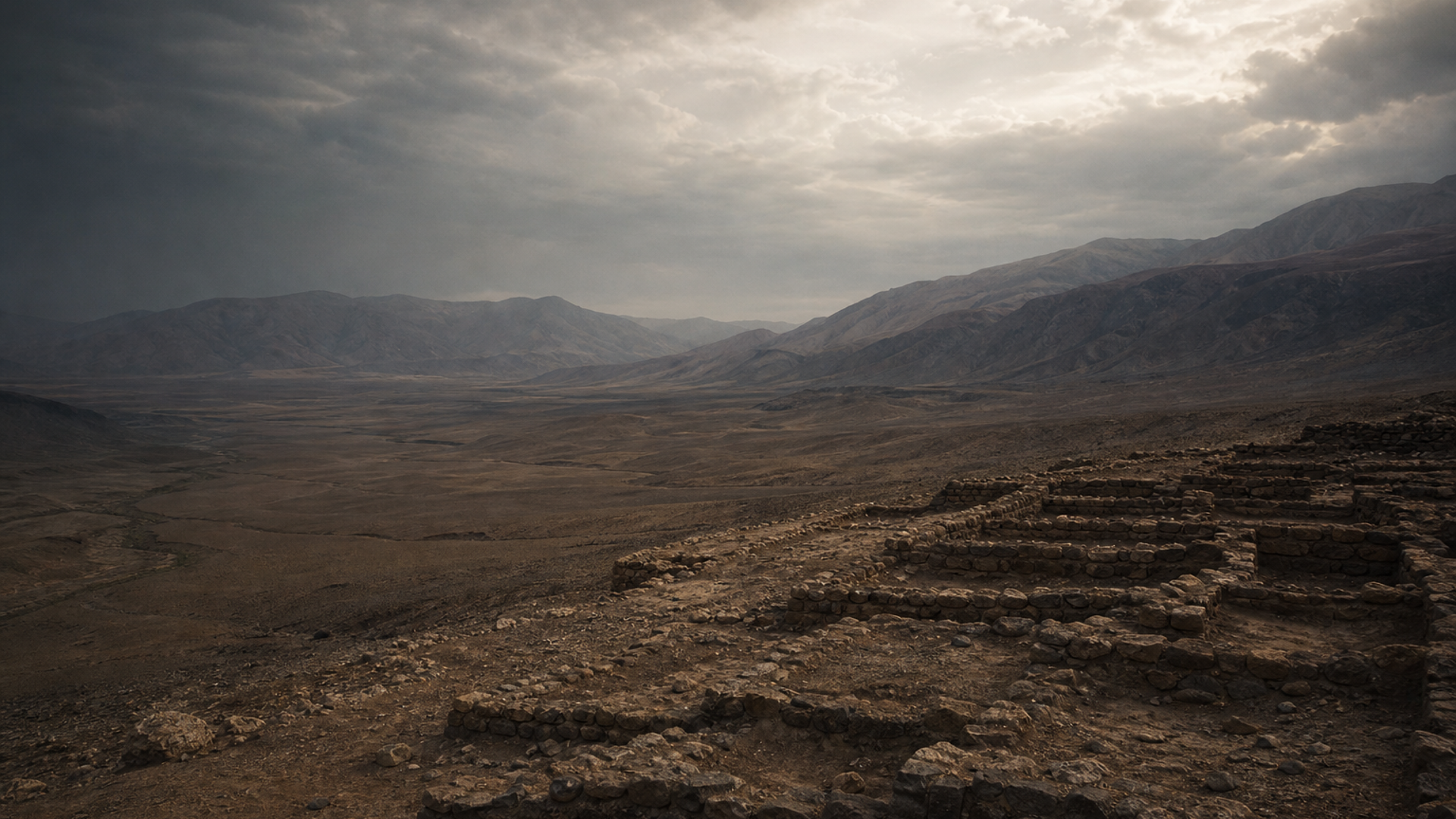
The Rabat assemblage in the Surxondaryo Region sits on a crossroads of landscapes: irrigated river valleys, foothills, and steppe approaches that funneled contacts between Bactria, Sogdiana and nomadic pastoralists. Archaeological data indicates occupation at Rabat during the later Iron Age, with the dated window 170 BCE–235 CE reflecting funerary contexts and settlement debris recovered in systematic excavations. Ceramic styles combine local wheel-thrown tablewares with forms echoing Hellenistic and Central Asian designs, suggesting cultural borrowing rather than wholesale population replacement.

Burials at Rabat include both compact inhumations and chambered deposits with varied grave goods—bronze fittings, iron tools, and simple adornments—which point to a mixed economy of farming, herding and craft production. Limited evidence suggests elite displays were modest compared with contemporary Hellenistic centers; social differentiation appears, but the scale is constrained by the cemetery sample. Geographic position and material culture imply continuing interaction networks across southern Central Asia during the first centuries BCE and CE, where mobility and exchange shaped local trajectories.

Caveat: while 23 analyzed individuals provide a useful window, the corpus represents a slice of the community and a specific chronological span. Interpretations about deep origins should therefore be considered provisional and tested against future finds.

  • Situated at a contact zone between Bactria, Sogdiana and steppe routes
  • Material culture shows local traditions with Hellenistic and regional influences
  • Evidence of mixed farming, pastoralism, and small-scale craft production
Chapter IV

Daily Life & Society

Daily life in the Rabat hinterland would have been textured by irrigation agriculture, seasonal herding, and artisanal activity. Archaeobotanical fragments and storage features recovered near habitation loci indicate cultivation of cereals and pulses, while faunal remains show a reliance on sheep and cattle—animals that tethered households to both valley fields and higher pastures. Workshops produced iron tools and simple bronze ornaments; the tonal glint of metalwork from house contexts evokes a practical aesthetic rather than ostentatious display.

Burial practices speak to social identity: grave goods vary in quantity, and some individuals are interred with utilitarian implements while others carry personal ornaments. This pattern implies household-level differences and possibly age or gendered roles. Evidence for long-distance exchange—imported beads, nonlocal metallurgy—suggests that Rabat inhabitants participated in wider economic webs without necessarily being a political center. Ritual life likely combined household ancestor observances with communal rites connected to seasonal cycles and water management—an elemental rhythm that shaped social cohesion.

Archaeological data indicates a resilient rural society negotiating imperial horizons: interaction with Hellenistic forms and later Central Asian polities appears in material culture, yet everyday practices remained grounded in local environmental knowledge.

  • Irrigated agriculture and sheep pastoralism structured the economy
  • Workshops for iron and bronze production reflect local craft specialization
Chapter V

Genetic Profile

Genetic analysis of 23 individuals from Rabat offers a measured glimpse into the biological ancestry of an Iron Age Surxondaryo community. Mitochondrial haplogroups are diverse: U (4), D (4), T (2), H (2), K (2), which indicates a mix of maternal lineages that are common across West Eurasia and East-Central Asia. The co-occurrence of U and H lineages suggests connections to West Eurasian/Iranian-related maternal ancestry, while D lineages point to eastern Eurasian maternal contributions—consistent with the region’s role as a conduit between western and eastern gene pools.

On the paternal side, Y-DNA is limited in diversity in this sample: two individuals carry haplogroup R and one carries CF. R lineages are often associated with Steppe-derived ancestry across Eurasia, whereas CF is a broad clade ancestral to many East and West Eurasian Y lineages; the single CF detection should be interpreted cautiously. The modest number of Y profiles relative to mtDNA may reflect preservation biases, sampling skew, or true demographic processes such as male-biased migration or patrilineal social structures that affect lineage visibility.

When integrated with archaeology, the genetic signal supports a narrative of admixture: local agricultural communities absorbing mobile steppe elements and eastern inputs over generations. However, with 23 samples covering ~400 years, conclusions about population structure, migration episodes, or continuity with earlier/later groups remain provisional and sensitive to future expanded sampling.

  • Maternal lineages show both West Eurasian (U, H, T, K) and eastern (D) inputs
  • Paternal data limited: R (2) suggests steppe links; CF (1) requires cautious interpretation
Chapter VI

Legacy & Modern Connections

The biological and material traces from Rabat resonate in the modern genetic landscape of southern Uzbekistan, where mixed West and East Eurasian ancestries persist. Shared mitochondrial haplogroups (U, D, H) are widespread today across Central and Inner Asia, hinting at long-term maternal continuity in the region. Archaeological continuities—irrigation-based agriculture, craft traditions, and regional exchange networks—also echo in later historic practices of Surxondaryo’s communities.

Nevertheless, linking ancient individuals directly to contemporary populations requires caution: population movements, admixture, and cultural transformation across two millennia complicate direct lines of descent. The Rabat dataset provides a valuable snapshot that contributes to a broader mosaic; future sampling across time and space will help resolve how much genetic and cultural continuity persisted in this vibrant crossroads.

  • Mitochondrial continuity suggests long-term shared maternal lineages across Central Asia
  • Cultural practices at Rabat anticipate later regional agricultural and craft traditions
AI 电源

AI 助手

就 Rabat Iron Age Mosaic 文化提问

AI 助手 由DNAGENICS公司制作

解锁此特性
Ask questions about the Rabat Iron Age Mosaic culture. Our AI assistant can explain genetic findings, historical context, archaeological evidence, and modern connections.
AI 样本分析

Rabat Iron Age Mosaic 文化是人类历史中值得了解的一章……

遗传分析揭示了与早期种群的联系,同时显示了独特的适应和文化创新的证据。 古代DNA样本提供了对迁徙模式、社会结构以及古代种群之间的生物关系的深刻见解。

这是人工智能分析的预览。 解锁全AI 助手, 以探索关于:

  • 遗传组成和祖先
  • 移徙模式和起源
  • 日常生活和文化习俗
  • 现代遗传遗产

探索更古老的文化

揭开古代世界文明的故事

使用优惠码 可减免 35% • 11月12日 到期