Restigouche River, ca. 1250 CE

下载的 PDF 是图像副本。如需可选中文本及更好的辅助技术支持,请使用打印功能。

跳转到主内容
文明焦点

Restigouche River, ca. 1250 CE

A lone mtDNA A from Old Mission Point hints at 13th‑century coastal lifeways

1231 CE - 1295700 CE
Restigouche River, Atholville, New Brunswick, Canada

剧情

Archaeogenetic profile of a 1231–1295 CE individual from Old Mission Point, Restigouche River (Atholville, New Brunswick). One mtDNA A sample links archaeological coastal lifeways to Indigenous maternal lineages; conclusions are preliminary and require community collaboration.

Time Period

1231–1295 CE (700 BP)

Region

Restigouche River, Atholville, New Brunswick, Canada

Common Y-DNA

Not detected / no data (single sample)

Common mtDNA

A (1)

时间线

1250 CE

Occupation at Old Mission Point

Radiocarbon-dated occupation (1231–1295 CE) at Old Mission Point on the Restigouche River, reflecting late Holocene coastal use.

Origins & Emergence

The individual sampled from Old Mission Point (prehistory Tjigog), on the lower Restigouche River near Atholville, dates to 1231–1295 CE — a late Holocene coastal moment when shorelines, riverine fisheries and intertidal resources shaped seasonal settlement. Regional archaeological data indicates long-term use of river corridors and estuaries in what is now northern New Brunswick, with repeated occupation of river mouths and sheltered coves by mobile family groups.

Archaeological surveys in the wider Restigouche valley and adjacent Gulf of St. Lawrence document shell middens, lithic scatters and fish-processing areas that speak to a rhythm of seasonal migration: upriver fishing during salmon runs, wintering in sheltered bays, and exchanges with interior groups. The Old Mission Point sample sits within this landscape of riverine abundance, but it represents a single data point. Limited evidence suggests continuities in coastal resource use through the Late Holocene, yet we must emphasize uncertainty: one genomic sample cannot reconstruct population histories or migration events on its own.

Future excavation, careful radiocarbon calibration, and respectful collaboration with local Indigenous communities will be essential to place this genetic signal within broader archaeological and oral histories.

  • Sample from Old Mission Point (prehistory Tjigog), Restigouche River
  • Radiocarbon date: 1231–1295 CE (700 BP)
  • Regionally consistent with estuarine shell middens and seasonal river camps

Daily Life & Society

The material world around Old Mission Point would have been shaped by the river and sea: Atlantic salmon runs, anadromous fish, shellfish beds, and migratory birds provided predictable seasonal resources. Archaeological traces across the Maritimes — middens, hearths, bone tools and chipped stone — suggest activities such as fish-netting, weir construction, drying and smoke-curing of fish, and shellfish harvesting. Wooden technologies (canoes, traps) and perishable structures leave faint signatures, so archaeologists infer them from toolkits and site location.

Social life likely revolved around kin-based camps and seasonal gatherings for resource exchange and craft specialization. Long-distance exchange networks connected river valleys to coastal and interior zones; stone raw materials and marine products moved along these pathways. Material culture patterns imply flexible mobility tuned to ecological cycles rather than large, permanent settlements.

Archaeological data indicates varied household sizes and a landscape of repeated occupation. However, the direct association of the single genetic sample with particular household or community practices is speculative. Ethnohistoric and oral traditions, combined with more archaeological sampling, provide the best route to understand lived experience in the 13th century Restigouche.

  • Subsistence focused on salmon, shellfish, and riverine resources
  • Seasonal kin-based camps and exchange networks across river and coast

Genetic Profile

Ancient DNA analysis of the Old Mission Point individual recovered mitochondrial haplogroup A. Haplogroup A is one of several founding maternal lineages common across Indigenous peoples of the Americas, and its presence here is consistent with regional Indigenous ancestry. No Y‑DNA was reported for this sample, and the dataset comprises a single individual (n = 1), so population-level inferences are not possible.
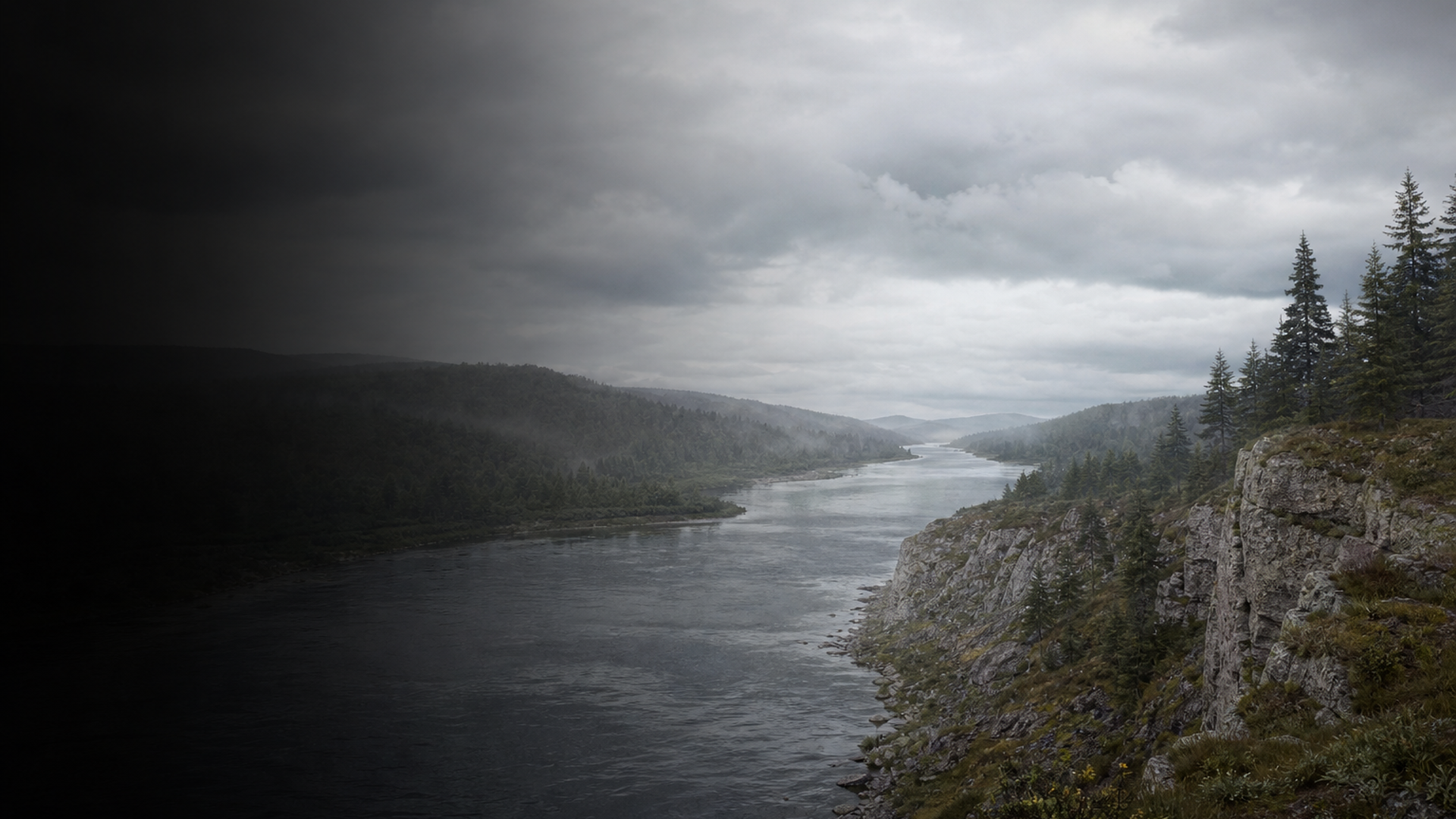
With only one mitochondrial genome, interpretations must be cautious. mtDNA reflects only the maternal line and does not capture the full genetic diversity or sex-biased demographic processes that shaped populations. Preservation, contamination risk, and limited genomic coverage can further constrain conclusions. Archaeogeneticists therefore treat this result as a preliminary indicator: it confirms Indigenous maternal ancestry at Old Mission Point but cannot resolve questions about continuity, migration, or relationships to specific contemporary communities.

Future work that increases sample numbers, obtains nuclear genomes, and pairs genetic results with stratigraphic, isotopic and artifact data will allow stronger statements about population structure, mobility, and diet. Equally important is research led in partnership with local Indigenous communities to contextualize genetic findings alongside oral histories and cultural knowledge.

  • mtDNA haplogroup A recovered — consistent with Indigenous maternal lineages
  • Single sample (n = 1): results are preliminary and cannot define population history

Legacy & Modern Connections

This genetic glimpse from Old Mission Point speaks to a deep human presence along the Restigouche that endures in the landscape and in descendant communities. While mtDNA A resonates with broader Indigenous maternal lineages across northeastern North America, it does not by itself establish direct genealogical links to any particular modern group. Responsible interpretation requires collaboration with local Indigenous nations — including those who identify ancestral connections to the Restigouche valley — and integration of archaeological, linguistic and oral traditions.

The discovery underscores the importance of expanding datasets in ways that respect community priorities. When combined with more samples and multidisciplinary study, ancient DNA can illuminate migration patterns, kinship networks, and resilience strategies that shaped coastal life centuries ago. For now, the Old Mission Point result is a cinematic yet cautious whisper from the past: compelling, locally grounded, and an invitation to deeper collaborative inquiry.

  • Invites collaboration with Indigenous communities to contextualize findings
  • Points to future research: more samples, nuclear data, isotopes, and oral histories

AI 助手

AI 助手 由DNAGENICS公司制作

解锁此特性
Ask questions about the Restigouche River, ca. 1250 CE culture. Our AI assistant can explain genetic findings, historical context, archaeological evidence, and modern connections.
AI 样本分析

Restigouche River, ca. 1250 CE 文化是人类历史中值得了解的一章……

遗传分析揭示了与早期种群的联系,同时显示了独特的适应和文化创新的证据。 古代DNA样本提供了对迁徙模式、社会结构以及古代种群之间的生物关系的深刻见解。

这是人工智能分析的预览。 解锁全AI 助手, 以探索关于:

  • 遗传组成和祖先
  • 移徙模式和起源
  • 日常生活和文化习俗
  • 现代遗传遗产
使用优惠码 可减免 30% • 11月15日 到期




