Riverine Foragers of Early Belgium

下载的 PDF 是图像副本。如需可选中文本及更好的辅助技术支持,请使用打印功能。

Riverine Foragers of Early Belgium

揭开一个失落的文明

正在加载考古记录……

正在收集古代记录

跳转到主内容
Riverine Foragers of Early Belgium
文明焦点

Riverine Foragers of Early Belgium

Mesolithic cave and shelter occupants in Namur revealed by archaeology and a small set of ancient genomes

9160 CE - 8294 BCE
Wallonia, Namur province (Belgium)
滚动开始
Chapter I

剧情

了解 Riverine Foragers of Early Belgium 文化

Early Mesolithic foragers from Wallonia (9160–8294 BCE). Four individuals from Abri des Autours, Malonne Petit Ri and Waulsort Caverne X link archaeological life by rivers to preliminary ancient-DNA evidence (mtDNA U present). Small sample size makes conclusions tentative.

Time Period

9160–8294 BCE

Region

Wallonia, Namur province (Belgium)

Common Y-DNA

Not reported / unknown (limited data)

Common mtDNA

U (observed in 2 of 4 samples)

Chapter II

时间线

这种文化历史上的关键时刻

9160 BCE

Earliest sampled occupation in Namur

First radiocarbon-dated individual from Abri des Autours (~9160 BCE) provides the earliest genetic anchor for this local Mesolithic sequence.

Chapter III

Origins & Emergence

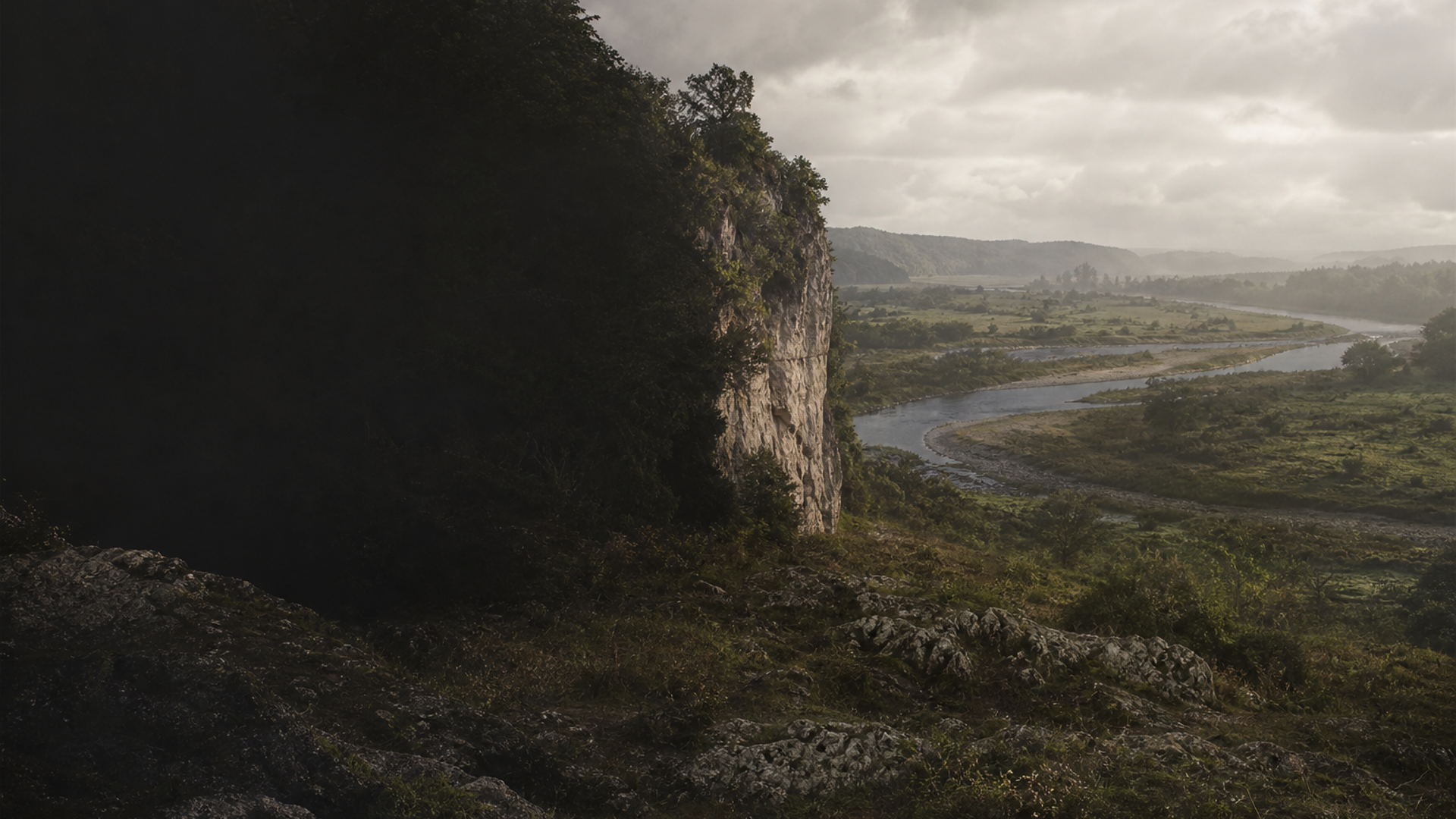
Along the meandering valleys of the Sambre and Meuse, the first postglacial people returned to a landscape of mixed woodlands, wetlands and newly generous rivers. Archaeological horizons at Abri des Autours, Malonne Petit Ri and Waulsort Caverne X record human activity in a narrow window between 9160 and 8294 BCE, a period when rising temperatures and shifting resources restructured hunter‑gatherer lifeways.

Material culture is fragmentary: lithic scatters, ephemeral hearth lenses, and faunal remains indicate small, mobile groups exploiting fish, freshwater mussels and seasonally available game. Archaeological data indicates repeated short-term occupation of sheltered riverbanks and caves, suggesting logistical mobility tied to riverine resources. Limited evidence suggests these groups were part of broader postglacial recolonization networks across northwestern Europe, though local adaptations appear distinct.

Because only four individuals are sampled genetically, any reconstruction of origins remains provisional. Archaeology provides the landscape and behaviour; the DNA — sparse but evocative — offers genetic contours that complement, rather than replace, the material record.

  • Occupations dated 9160–8294 BCE in Namur (Wallonia)
  • Sites include Abri des Autours, Malonne Petit Ri, Waulsort Caverne X
  • Small, mobile groups exploiting riverine and woodland resources
Chapter IV

Daily Life & Society

The daily scenes implied by the sites are cinematic: women and men tending fires in cave mouths, children darting between brush, groups gutting fish and cracking open freshwater mussels on stone anvil sites. Faunal assemblages and worked flint suggest seasonal scheduling — late spring fishing, summer hunting of forest game, autumn gathering of plant resources and nuts. Hearth features and lithic refitting at these shelters point to short-term residential or task-specific camps rather than long sedentary occupation.

Mobility would have structured social life. Tools and raw materials indicate both local production and intermittent movement along rivers, which acted as highways for people and ideas. Social networks likely linked these Namur occupations to neighbouring Mesolithic groups across the Ardennes and the Low Countries, visible in shared tool types and subsistence choices.

Archaeological data indicates craft specializations were minimal but effective: composite tools, microlith retouching, and organic use-wear consistent with fishing and hide processing. The human remains, rare and fragmentary, underline a taphonomy biased toward ephemeral camps rather than permanent cemeteries.

  • Seasonal riverine foraging and fishing
  • Short-term camps with task-specific activity areas
Chapter V

Genetic Profile

Genetic sampling from four individuals provides a first glimpse into the biological affinities of Mesolithic Namur populations but must be read as preliminary. Two of the four individuals carry mitochondrial haplogroup U, a lineage commonly associated with hunter‑gatherer populations across Upper Paleolithic and Mesolithic Europe. This mtDNA signal aligns with broader patterns of Western European Hunter‑Gatherer (WHG)–like ancestry seen in many postglacial sites, suggesting maternal continuity with regional forager groups.

No consistent Y‑chromosome pattern is reported in this small set, so paternal-line inferences remain unresolved. With only four genomes, statistical power is low: apparent affinities to WHG or other regional groups should be treated as tentative. Nevertheless, the combined archaeological and genetic picture points to small forager groups with maternal links to widespread Mesolithic lineages and likely genetic continuity with neighboring hunter‑gatherers.

Future sampling from additional burials, higher coverage genomes, and isotope data will be required to clarify mobility, kinship patterns, and the degree of genetic isolation or exchange with adjacent populations. Current DNA evidence complements material culture but is insufficient to map detailed demographic events.

  • mtDNA U observed in 2 of 4 samples — compatible with Mesolithic hunter‑gatherer lineages
  • Y‑DNA not reported; small sample size makes paternal conclusions tentative
Chapter VI

Legacy & Modern Connections

The legacy of these early Namur foragers survives faintly in river terraces and genetic echoes. Archaeological traces reveal lifeways adapted to postglacial waterways — seasonal mobility, fishing specialization, and nimble toolkits — patterns that helped shape later Mesolithic networks across northwestern Europe. Genetically, the presence of mtDNA U in these individuals connects them to a deep maternal line that persists, at low levels, in modern European populations and in many ancient hunter‑gatherer genomes.

Because conclusions rest on four samples, links to contemporary populations should be presented cautiously. Rather than discrete ancestors, these individuals are snapshots within long histories of movement, interaction and replacement. They remind us that modern genetic landscapes are mosaics woven from many such small, often ephemeral communities.

  • Maternal haplogroup U connects to broader European hunter‑gatherer lineages
  • Small sample size means modern connections are suggestive, not definitive
AI 电源

AI 助手

就 Riverine Foragers of Early Belgium 文化提问

AI 助手 由DNAGENICS公司制作

解锁此特性
Ask questions about the Riverine Foragers of Early Belgium culture. Our AI assistant can explain genetic findings, historical context, archaeological evidence, and modern connections.
AI 样本分析

Riverine Foragers of Early Belgium 文化是人类历史中值得了解的一章……

遗传分析揭示了与早期种群的联系,同时显示了独特的适应和文化创新的证据。 古代DNA样本提供了对迁徙模式、社会结构以及古代种群之间的生物关系的深刻见解。

这是人工智能分析的预览。 解锁全AI 助手, 以探索关于:

  • 遗传组成和祖先
  • 移徙模式和起源
  • 日常生活和文化习俗
  • 现代遗传遗产

探索更古老的文化

揭开古代世界文明的故事

使用优惠码 可减免 35% • 11月12日 到期




