Riverlands of the Murray: NSW Pre‑European

下载的 PDF 是图像副本。如需可选中文本及更好的辅助技术支持,请使用打印功能。

Riverlands of the Murray: NSW Pre‑European

揭开一个失落的文明

正在加载考古记录……

正在收集古代记录

跳转到主内容
Riverlands of the Murray: NSW Pre‑European
文明焦点

Riverlands of the Murray: NSW Pre‑European

Late Holocene lifeways along the Murray and Willandra—archaeology and maternal DNA converge

400 CE - 1788 CE
New South Wales, Australia
滚动开始
Chapter I

剧情

了解 Riverlands of the Murray: NSW Pre‑European 文化

Archaeological evidence from Barham Forest/Koondrook‑Perricoota and the Willandra Lakes Region (400–1788 CE) reveals riverine adaptations and deep Indigenous continuity. Two ancient mtDNA samples (haplogroup S) suggest maternal links to broader Aboriginal Australian lineages, but conclusions are preliminary.

Time Period

400 CE – 1788 CE

Region

New South Wales, Australia

Common Y-DNA

Not reported / no data

Common mtDNA

S (2)

Chapter II

时间线

这种文化历史上的关键时刻

50000 BCE

Initial peopling of Sahul

Early human arrival in Sahul (the ancient Australia–New Guinea landmass) established the deep time foundation for later regional cultures, including NSW riverine groups.

Chapter III

Origins & Emergence

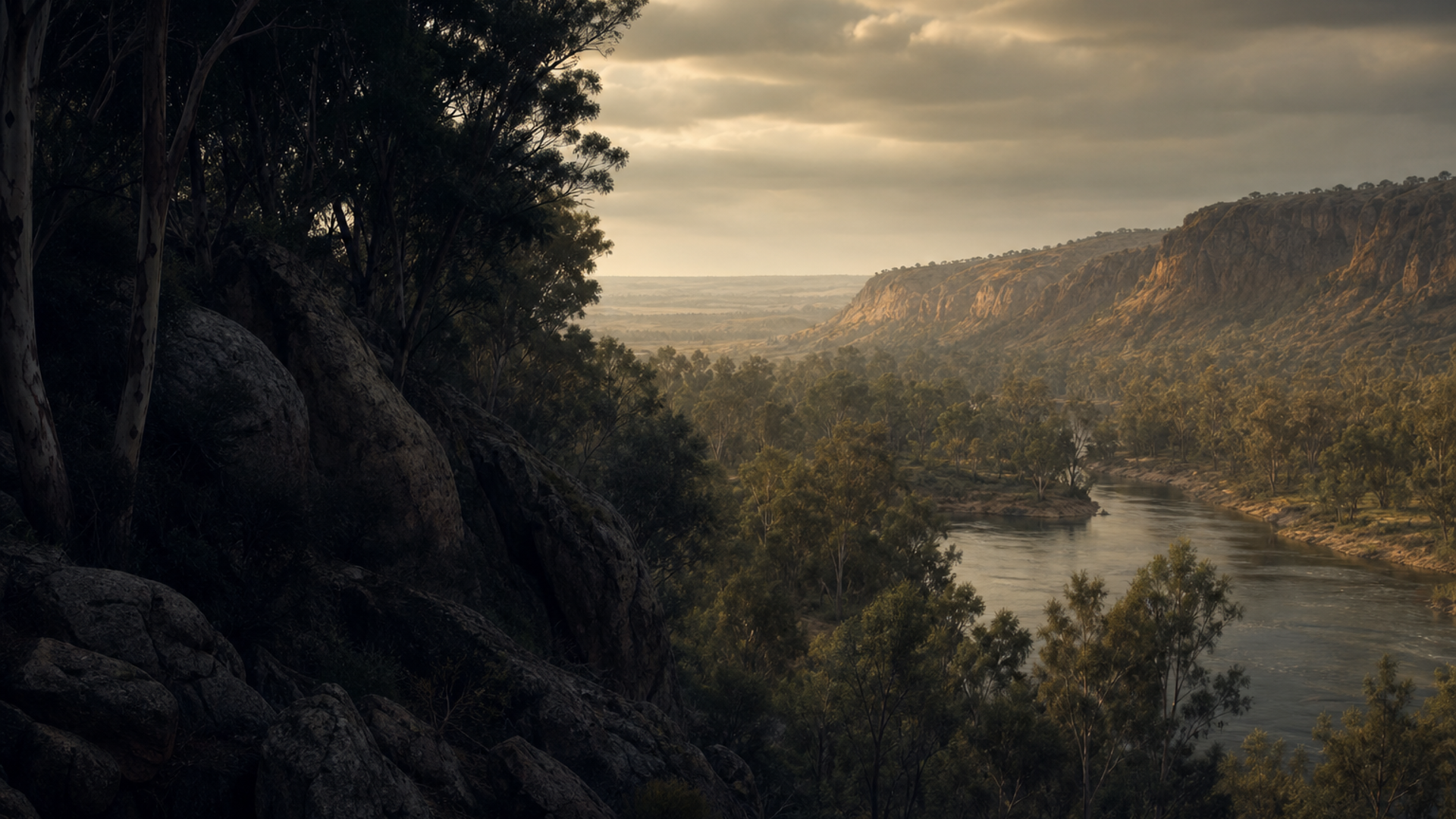
Across the low, braided river plains and ephemeral lakes of south‑western New South Wales, human presence in the Late Holocene reads like a palimpsest of campfires, tool scatters and seasonal pathways. Archaeological data indicates that communities occupying the Barham Forest/Koondrook‑Perricoota corridor (Murray River floodplain) and the Willandra Lakes Region continued long traditions of exploiting wetlands, reedbeds and lunettes well into the centuries before European contact (roughly 400 CE to 1788 CE for the samples considered here).

Environmental shifts—changing lake levels in the Willandra basin and fluctuations in river flow along the Murray—shaped mobility, site placement and resource calendars. Material culture recovered from open camps and hearth sites points to continuity in stone tool manufacture, ochre use and complex landscape knowledge. While deep time in this region extends back tens of thousands of years, the archaeological signature for the 400–1788 CE window is one of resilient adaptation: people woven into riparian ecologies, practicing seasonal rounds that balanced hunting, fishing and plant processing.

Limited evidence suggests local groups maintained enduring place‑based identities, with trade and exchange connecting river corridors to upland zones. Because only two genetic samples accompany these archaeological contexts, any narrative that links specific genetic lineages to detailed cultural practices must remain cautious and provisional.

  • Late Holocene occupation of Murray floodplains and Willandra lakes
  • Adaptations to variable wetland and riverine environments
  • Strong archaeological continuity but limited genetic sampling
Chapter IV

Daily Life & Society

Daily life in the riverlands of New South Wales was governed by the pulse of water. Fish, freshwater mussels, waterfowl and plants such as riverine tubers and seeds formed predictable seasonal staples, supplemented by terrestrial game from nearby woodlands. Archaeological remains—hearths, shell and bone scatters, and flaked stone assemblages—attest to repeated occupations of sandbars, levees and lunettes where raw materials for tools and firewood were available.

Communities practiced mobility attuned to resource calendars: short residential moves during floods, longer seasonal journeys to trade ochre, stone and plant products. Material signals of social life included ground stone tools, hafted spear points, and ochre fragments used in paint and ceremony. Architectural traces are ephemeral—leaners, windbreaks and hearth structures—but ethnographic and archaeological synthesis suggests tightly knit social networks, with songlines and oral geographies encoding place names, resource rights and ceremonial obligations.

Archaeological data indicates burial and mortuary practices were regionally varied; Willandra contains some of the most compelling ancient burial evidence in Australia, underscoring long‑term landscape attachment. Nevertheless, many aspects of social organization, ritual and identity remain best accessed through continued collaboration with descendant Aboriginal communities.

  • Riverine subsistence: fish, mussels, waterfowl, seasonal plants
  • Seasonal mobility and exchange networks tied to water cycles
Chapter V

Genetic Profile

Two ancient mitochondrial genomes sampled from sites associated with the Australia_NSW_PreEuropean grouping—one from Barham Forest/Koondrook‑Perricoota and one from the Willandra Lakes Region—both carry mtDNA haplogroup S. Haplogroup S is recognized among Indigenous Australian maternal lineages and contributes to a picture of deep maternal continuity across the continent. Mitochondrial DNA, inherited only through mothers, provides a focused lens on maternal ancestry but does not capture the full complexity of autosomal ancestry or paternal lineages.

No Y‑chromosome haplogroups are reported for these two samples, so the paternal side remains uncharacterized here. Importantly, with a sample count of two, any population‑level inferences are preliminary. Limited evidence suggests these individuals share maternal affinities with broader Aboriginal Australian mtDNA diversity, consistent with archaeological indications of long‑term regional occupation and continuity. Ancient DNA from Willandra and other Australian sites has also shown that Indigenous Australian populations separated early from Eurasian lineages tens of thousands of years ago; the presence of haplogroup S in late Holocene samples aligns with that deep history.

Future work—larger sample sizes, high‑coverage genomes, and respectful collaboration with Indigenous communities—will be essential to test hypotheses about local continuity, migration, and kinship patterns.

  • Both samples (n=2) carry mtDNA haplogroup S
  • No reported Y‑DNA; conclusions are highly preliminary
Chapter VI

Legacy & Modern Connections

The material and genetic traces from these river corridors gesture toward continuity between past and present: contemporary Aboriginal communities in New South Wales maintain languages, songlines and custodial responsibilities tied to the same landscapes recorded archaeologically. Genetic data here—two mtDNA S results—tentatively echo deep maternal ties across the region, but the small sample size requires humility in interpretation.

Archaeology and genetics together emphasize the antiquity of Indigenous relationships to place and the resilience of cultural practices through environmental change. Ethical research in this context means prioritizing Indigenous leadership, supporting cultural heritage protection, and ensuring that any genetic interpretations are communicated in partnership with descendant communities. Repatriation, joint stewardship of sites, and community‑led research agendas are essential components of responsible scholarship that honors living traditions as the primary legacy of these lands.
  • Genetic and archaeological evidence support deep regional continuity
  • Research must center Indigenous collaboration, stewardship and rights
AI 电源

AI 助手

就 Riverlands of the Murray: NSW Pre‑European 文化提问

AI 助手 由DNAGENICS公司制作

解锁此特性
Ask questions about the Riverlands of the Murray: NSW Pre‑European culture. Our AI assistant can explain genetic findings, historical context, archaeological evidence, and modern connections.

AI 样本分析

Riverlands of the Murray: NSW Pre‑European 文化是人类历史中值得了解的一章……

遗传分析揭示了与早期种群的联系,同时显示了独特的适应和文化创新的证据。 古代DNA样本提供了对迁徙模式、社会结构以及古代种群之间的生物关系的深刻见解。

这是人工智能分析的预览。 解锁全AI 助手, 以探索关于:

  • 遗传组成和祖先
  • 移徙模式和起源
  • 日常生活和文化习俗
  • 现代遗传遗产

探索更古老的文化

揭开古代世界文明的故事

使用优惠码 可减免 35% • 11月12日 到期




