Riverways of Middle Neolithic France

下载的 PDF 是图像副本。如需可选中文本及更好的辅助技术支持,请使用打印功能。

Riverways of Middle Neolithic France

揭开一个失落的文明

正在加载考古记录……

正在收集古代记录

跳转到主内容
Riverways of Middle Neolithic France
文明焦点

Riverways of Middle Neolithic France

Genetic echoes of farmer and forager encounters across French sites (5209–3400 BCE)

5209 CE - 3400 BCE
France (multiple river valley sites)
滚动开始
Chapter I

剧情

了解 Riverways of Middle Neolithic France 文化

France_MN (5209–3400 BCE) captures Middle Neolithic communities across French river valleys. Archaeology and ancient DNA from 49 individuals reveal farmer-linked lineages alongside forager ancestry, illuminating mobility, social practice, and population mixing in prehistoric France.

Time Period

5209–3400 BCE

Region

France (multiple river valley sites)

Common Y-DNA

G (15), I (7), H2 (6), C (1)

Common mtDNA

K (10), U (7), J (7), T (4), H3 (3)

Chapter II

时间线

这种文化历史上的关键时刻

2500 BCE

Late Neolithic transformations begin

By 2500 BCE, post-Middle Neolithic cultural shifts accelerate; France_MN communities had already laid agricultural and genetic foundations that later groups would inherit and transform.

Chapter III

Origins & Emergence

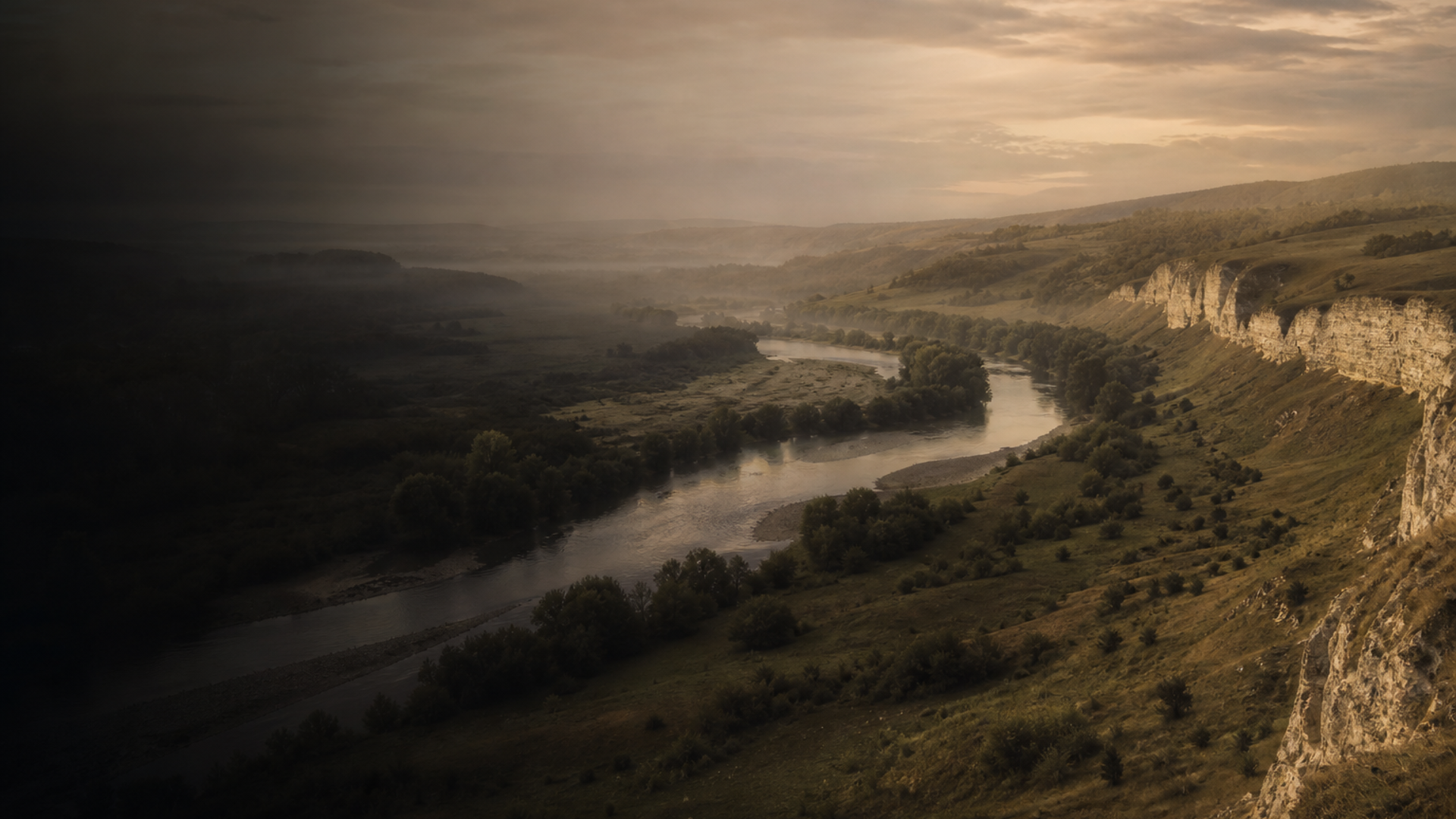
The France_MN group represents Middle Neolithic communities that settled and reshaped river valleys and lowland plains of what is now France between roughly 5209 and 3400 BCE. Archaeological sites named in this corpus — Clos de Roque, Collet Redon, Fleury-sur-Orne in Calvados, Gurgy “Les Noisats” in Yonne, Obernai in Bas-Rhin and Prissé-la-Charrière in Deux-Sèvres — form a cinematic map of fields, funerary pits and long-term occupation near waterways. Material culture from these sites shows regional variants of pottery, polished stone tools and agricultural economy consistent with the broader Middle Neolithic of Western Europe.

Archaeological data indicates that these communities built on the earlier wave of Neolithic farmers who arrived into western Europe from Anatolia and the Balkans, while also interacting with remnants of Mesolithic hunter-gatherers. This is echoed in the genetic tapestry recovered from 49 ancient individuals: farmer-associated lineages are prominent, but signatures of local hunter-gatherer ancestry persist. Limited evidence of long-distance exchange — exotic raw materials or stylistic traits — suggests both local continuity and intermittent connections with neighboring regions. Chronologically, the range 5209–3400 BCE spans phases when settlement patterns and funerary habits were in flux; the archaeological record preserves nuanced transitions rather than abrupt replacement. Where the material record is thin, genetic data helps trace ancestry shifts, but interpretative caution is necessary when connecting single sites to broad cultural processes.

  • Sites cluster along rivers and fertile lowlands in modern France
  • Material culture shows farmer practices with regional variation
  • Evidence of continuity and interaction with Mesolithic groups
Chapter IV

Daily Life & Society

The daily life of Middle Neolithic communities in France unfolded against a backdrop of fields, riparian gardens and communal ritual. Archaeological excavation at Gurgy, Fleury-sur-Orne and other sites reveals domestic structures, storage pits, and concentrations of animal bone indicating mixed farming of cereals, pulses and domesticated cattle, sheep and pigs. Pottery styles and toolkits speak to daily tasks: grinding, cooking and textile working likely accompanied seasonal rhythms dictated by sowing and harvest.

Burial practices vary across sites. Some graves contain multiple individuals and artefactual assemblages, suggesting differentiated social roles or kin-based burial groups. Durable artifacts — polished stone axes, personal ornaments — point to craft specialization and symbolic expression. At the same time, stable isotope studies from similar regions often show diets dominated by terrestrial staples with modest local variation.

Mobility was neither absent nor unrestricted: skeletal and isotopic evidence from comparable Neolithic contexts indicate local lifetime residence for many individuals, combined with periodic long-distance contacts for exchange or marriage. Archaeological patterns therefore present communities that were rooted in place yet linked by networks of goods, ideas and people.

  • Mixed farming with domesticates and cereals dominated subsistence
  • Burial and artifact variation imply household and community differentiation
Chapter V

Genetic Profile

The France_MN assemblage of 49 ancient genomes offers a robust window into Middle Neolithic ancestry in France. Y-chromosome haplogroup G is the most frequent (15 samples), a lineage widely associated with early European farmers of Anatolian origin. Haplogroups I (7) and H2 (6) appear at meaningful frequencies and are often linked to northern/Western European hunter-gatherer ancestry or lineages that persisted locally after the arrival of farming. A rare C (1) Y-chromosome occurs, reminding us that low-frequency lineages may persist in complex prehistoric populations. On the mitochondrial side, K (10), J (7), and T (4) are common — mtDNA markers typically found in farming communities — while U (7) and H3 (3) signal continued maternal contributions from hunter-gatherer backgrounds.

Population modeling that combines archaeological context with DNA indicates that France_MN individuals largely derive from Anatolian-farmer related ancestry admixed to varying degrees with western hunter-gatherer ancestry. The proportion of hunter-gatherer ancestry varies by individual and site, reflecting local interactions and social practices such as exogamy. Although 49 samples provide strong evidence for these patterns, the geographic distribution of samples is uneven; therefore, fine-scale demographic reconstructions (e.g., precise migration routes or household-level kinship across all sites) remain tentative. Nevertheless, the genetic signal coheres with archaeological indicators of farmer lifestyle blended with persistent hunter-gatherer legacy.

  • Dominant farmer-related ancestry with measurable hunter-gatherer admixture
  • Y haplogroup G and mtDNA K/J/T common; U and I/H2 mark forager heritage
Chapter VI

Legacy & Modern Connections

The biological and cultural imprint of France_MN lives on in subtle ways. Modern populations of western Europe retain components of ancestry that trace back to Neolithic farmers and their admixture with local foragers; haplogroups and mitochondrial lineages found in the France_MN dataset contribute to that long-term genetic mosaic. Archaeological continuities — agricultural techniques, settlement in river valleys, certain ceramic traditions — influenced later Bronze Age societies even as new migrations reshaped the genetic landscape.

Genetic continuity is not absolute: subsequent population movements, especially in the later Neolithic and Bronze Age, altered allele frequencies and introduced new lineages. Still, the France_MN evidence helps anchor models of how farming lifeways spread, mixed and adapted in western Europe, providing a human-scale narrative that ties bones, pottery and genomes into a single story of persistent place-making across millennia.

  • Contributes to ancestral components still detectable in modern Western Europeans
  • Provides a baseline for later demographic shifts during the Late Neolithic and Bronze Age
AI 电源

AI 助手

就 Riverways of Middle Neolithic France 文化提问

AI 助手 由DNAGENICS公司制作

解锁此特性
Ask questions about the Riverways of Middle Neolithic France culture. Our AI assistant can explain genetic findings, historical context, archaeological evidence, and modern connections.
AI 样本分析

Riverways of Middle Neolithic France 文化是人类历史中值得了解的一章……

遗传分析揭示了与早期种群的联系,同时显示了独特的适应和文化创新的证据。 古代DNA样本提供了对迁徙模式、社会结构以及古代种群之间的生物关系的深刻见解。

这是人工智能分析的预览。 解锁全AI 助手, 以探索关于:

  • 遗传组成和祖先
  • 移徙模式和起源
  • 日常生活和文化习俗
  • 现代遗传遗产

探索更古老的文化

揭开古代世界文明的故事

使用优惠码 可减免 35% • 11月12日 到期




