Salzmünde Echoes

下载的 PDF 是图像副本。如需可选中文本及更好的辅助技术支持,请使用打印功能。

跳转到主内容
文明焦点

Salzmünde Echoes

A brief, DNA‑inflected glimpse into Salzmünde life (3400–3025 BCE) at Salzmünde‑Schiepzig

3400 CE - 3025 BCE
Central Germany (Salzmünde‑Schiepzig)

剧情

Archaeological remains from Salzmünde‑Schiepzig (3400–3025 BCE) illuminate a Middle Neolithic community in central Germany. Limited ancient DNA from three individuals links local farmers to wider Neolithic ancestry and hints at population complexity; conclusions are preliminary.

Time Period

3400–3025 BCE

Region

Central Germany (Salzmünde‑Schiepzig)

Common Y-DNA

IJK (1), G (1) — Y data in 2 of 3 samples

Common mtDNA

H3*, H, U — mtDNA from all 3 samples

时间线

3400 BCE

Emergence of the Salzmünde horizon

Archaeological recognition of Salzmünde cultural traits in central Germany, including finds at Salzmünde‑Schiepzig marking a distinct Middle Neolithic expression.

Origins & Emergence

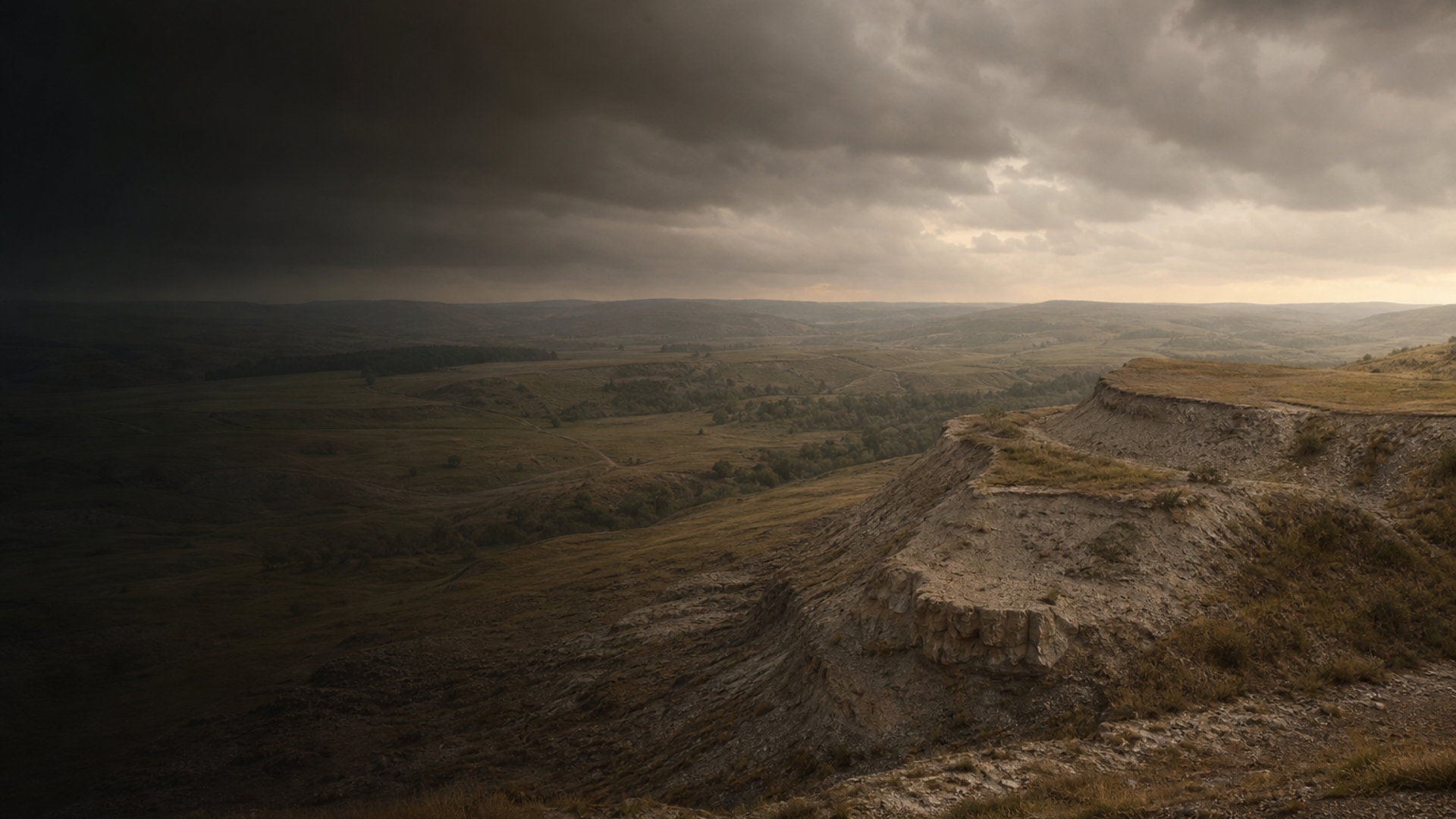
The Salzmünde horizon appears in central Germany during the Middle Neolithic, roughly 3400–3025 BCE, with Salzmünde‑Schiepzig among its documented localities. Archaeological data indicates a community shaped by farming economies derived from earlier Funnel Beaker (TRB) traditions and by regional interaction along river valleys such as the Saale and Elbe. Pottery styles, settlement traces and burial practices reveal a distinct local expression within the broader North‑Central European Neolithic mosaic.

Cinematic scenes of the past — reed‑lined riverbanks, fields opened by polished flint sickles, and households forming small nucleations — come into focus through ceramics and site layouts. Yet the picture is fragmentary: many interpretations rely on surface finds, limited stratigraphic contexts and cemeteries with variable preservation. Material culture suggests continuity with earlier farming groups, but also local innovations in vessel forms and mortuary behavior.

Limited genetic and isotopic sampling can complement this archaeological narrative by tracing ancestry and mobility, but the evidence remains sparse. Where DNA is available, it speaks to connections across Europe and to the complex demographic processes that underpinned the rise of Middle Neolithic communities. Archaeological caution is warranted: emerging narratives are provisional and must be tested with more dated sites and larger sample sets.

  • Salzmünde Culture active ca. 3400–3025 BCE in central Germany
  • Archaeology shows Neolithic farming lifeways with regional pottery styles
  • Interpretations are provisional due to fragmentary contexts and few samples

Daily Life & Society

Archaeological traces from Salzmünde contexts evoke a world crafted around cultivation, animal husbandry and skilled craft. Homes were likely modest timber dwellings clustered near arable plots and pastures. Toolkits recovered in the region include polished stone axes, flint sickles and woodworking implements consistent with forest clearance and field maintenance. Pottery, often robust and utilitarian, bears fingerprints of household routines: cooking, storage and the ceremonial deposition of offerings or grave goods.

Economically, the community would have relied on mixed farming — cereals, pulses, and managed herds — although direct plant and faunal assemblages vary by site. Social life was probably organized at the household and extended kin levels, inferred from cemetery organization and shared grave goods at nearby Salzmünde cemeteries. Ritual and memory are visible in burial arrangements, but variability hints at social differentiation rather than rigid hierarchy.

Archaeological data indicates mobility and exchange: non‑local flint and stylistic influences point to regional networks. Stable isotope and DNA work, still limited for Salzmünde, promise to reveal patterns of childhood origin, diet and kinship once more samples are available. For now, reconstructions of daily life remain richly suggestive but preliminary.

  • Mixed farming economy with polished stone tools and robust pottery
  • Household and kin-based social organization inferred from cemeteries

Genetic Profile

Three ancient individuals from Salzmünde‑Schiepzig provide a tantalizing but small genetic window into this Middle Neolithic community. Mitochondrial DNA was obtained for all three: H3*, H, and U. Y‑chromosome results are available for two individuals, showing IJK (one sample) and G (one sample). Because the total sample count is three, and Y data exist for only two, any population‑level inference is preliminary and must be treated with caution.

Interpretive context: haplogroup G is commonly associated in published studies with early European farmers whose ancestry traces partly to Anatolian/near‑eastern Neolithic expansions; its presence in Salzmünde individuals is consistent with a farming-derived genetic component. IJK is an upstream paternal lineage that sits above later branches such as I, J and K; its assignment here signals an ancestral branch whose downstream diversification occurred in subsequent millennia, but precise downstream affinities cannot be resolved from an 'IJK' label alone.

On the maternal side, mtDNA H lineages are widespread in Neolithic Europe and often become more frequent through time; U variants are frequently linked to Mesolithic hunter‑gatherer ancestry in northern Europe. The coexistence of H and U in these three individuals suggests admixture between farmer and local forager-derived ancestries, a pattern echoed across many Neolithic contexts. However, with fewer than ten samples, genetic patterns for the Salzmünde group remain provisional: larger, well‑dated series are required to robustly quantify ancestry proportions, kinship structures, and demographic dynamics.

  • mtDNA: H3*, H, U in all three samples — suggests mixed maternal ancestries
  • Y‑DNA: IJK (1), G (1) — limited paternal data; interpretations remain tentative

Legacy & Modern Connections

Salzmünde communities contributed to the tapestry of central European Neolithic life that later populations inherited. Archaeologically, their pottery styles, burial practices and settlement choices influenced neighboring groups in the Middle Neolithic. Genetically, the mingling of farmer‑associated and local hunter‑gatherer lineages visible in Salzmünde individuals mirrors a pan-European pattern by which incoming agriculturalists and resident populations blended over generations.

For modern populations, the connection is indirect: many contemporary Europeans carry ancestry components that trace, in part, to Neolithic farmers and to indigenous hunter‑gatherers. The tiny Salzmünde sample hints at those deep threads but cannot map direct lines to living communities. As ancient DNA datasets grow, sites like Salzmünde‑Schiepzig will help clarify how regional Neolithic groups contributed to the genetic and cultural foundations of later European societies. Until then, the legacy remains evocative and incompletely known.

  • Contributes to regional Neolithic cultural and genetic blending
  • Modern links are indirect; small sample size prevents direct ancestry claims

AI 助手

AI 助手 由DNAGENICS公司制作

解锁此特性
Ask questions about the Salzmünde Echoes culture. Our AI assistant can explain genetic findings, historical context, archaeological evidence, and modern connections.
AI 样本分析

Salzmünde Echoes 文化是人类历史中值得了解的一章……

遗传分析揭示了与早期种群的联系,同时显示了独特的适应和文化创新的证据。 古代DNA样本提供了对迁徙模式、社会结构以及古代种群之间的生物关系的深刻见解。

这是人工智能分析的预览。 解锁全AI 助手, 以探索关于:

  • 遗传组成和祖先
  • 移徙模式和起源
  • 日常生活和文化习俗
  • 现代遗传遗产
使用优惠码 可减免 30% • 11月14日 到期




