Sargat Iron Age: Echoes of the Forest‑Steppe

下载的 PDF 是图像副本。如需可选中文本及更好的辅助技术支持,请使用打印功能。

跳转到主内容
文明焦点

Sargat Iron Age: Echoes of the Forest‑Steppe

Burial mounds in Bashkortostan and Western Siberia revealing a blended Siberian–West Eurasian ancestry

500 CE - 1 BCE
Bashkortostan & Western Siberia (Russia)

剧情

Archaeological and genetic evidence from 19 Sargat Iron Age individuals (500–1 BCE) from Bogdanovka and the Bitiya burial ground reveal a mosaic of paternal N and maternal U/H lineages, reflecting interactions across the Ural–steppe corridor during the late Iron Age.

Time Period

500–1 BCE

Region

Bashkortostan & Western Siberia (Russia)

Common Y-DNA

N (9), Q (4), R (3), CT (1)

Common mtDNA

U (5), H (3), D4j (2), K (1), H5b (1)

时间线

500 BCE

Sargat cultural horizon recorded

Burials at Bogdanovka and Bitiya date to around 500–1 BCE, defining the Sargat Iron Age presence in the southern Urals and adjacent Western Siberia.

Origins & Emergence

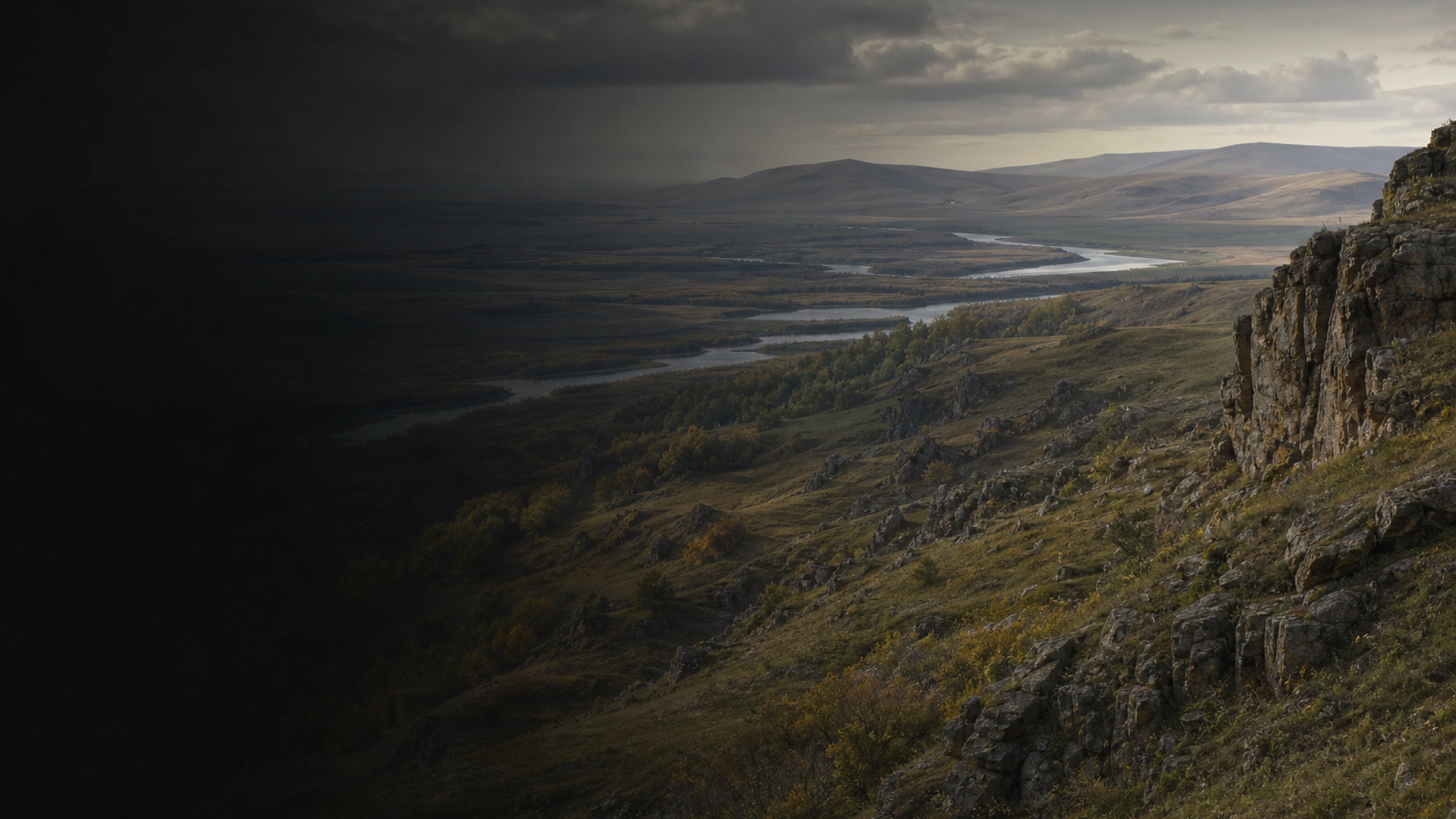
Across the low hills and riverine forests of the southern Urals, archaeological data indicate a distinctive Sargat horizon emerging in the first millennium BCE. Excavations at Bogdanovka (Zianchurinsky District, Bashkortostan) and the Bitiya burial ground in Western Siberia reveal clustered kurgan mounds and inhumation practices that archaeologists associate with the Iron Age Sargat cultural complex.

Material culture and funerary architecture suggest this was a landscape of contact: the steppe’s mobile lifeways met the forest’s riverine economies. Limited evidence suggests Sargat communities engaged in pastoralism, horse use, and long‑distance exchange across the Ural corridor. Chronologically, the sampled individuals fall between 500 and 1 BCE, a period of intensifying regional interactions across the Eurasian forest‑steppe.

Genetic data complement the archaeology by pointing to a mixed ancestry rather than a single origin. The spatial clustering of burials at named sites like Bogdanovka #228 and Bitiya mounds 1–4 anchors these genetic signals to precise places in the southern Urals and adjacent Western Siberia. While the archaeological record provides the cultural frame, the DNA paints the portrait of people moving, marrying, and burying across ecological boundaries.

  • Sargat horizon centered in southern Urals, 500–1 BCE
  • Key sites: Bogdanovka (Zianchurinsky District) and Bitiya burial mounds
  • Archaeology indicates forest‑steppe lifeways and regional exchange

Daily Life & Society

Archaeological data indicates Sargat communities lived at the interface of forest and steppe. Settlement traces and funerary contexts point to mixed subsistence strategies: pastoral herding adapted to open landscapes, combined with hunting, fishing, and exploitation of riverine resources in wooded zones. Burial mounds at Bitiya and Bogdanovka suggest social recognition of lineage or status; mounded inhumations often cluster, implying family or kin groups.

Grave assemblages are variable, which may reflect local diversity in wealth, role, or cultural ties. Limited evidence suggests the presence of horses and associated gear in some funerary contexts, consonant with broader Iron Age mobility. The region’s geography — river valleys funneling movement across the Urals — would have facilitated trade and cultural exchange, making Sargat communities active participants in networks that connected Siberia, the steppe, and forested zones.

Caution is warranted: many aspects of daily life remain inferred from burial data rather than well‑preserved settlements. Future excavations of habitation sites will be critical to refine interpretations of economy, craft, and household organization.

  • Mixed forest‑steppe economy: herding, hunting, fishing
  • Kurgan burials indicate kin clustering and variable grave goods

Genetic Profile

Nineteen individuals sampled from Bogdanovka (#228/1, #228/2, #228/4) and Bitiya mounds (mounds 1, 3, 4: samples #228/12, #228/14, #228/15, #228/20, #228/21, #228/23, #228/24) provide a snapshot of Sargat biological ancestry. The Y‑chromosome record is dominated by haplogroup N (9/19), with additional lineages Q (4/19), R (3/19), and one individual assigned to CT (1/19). Mitochondrial DNA shows a mix of West Eurasian and East Eurasian maternal lines — U (5), H (3), D4j (2), K (1), H5b (1) among others.

These patterns suggest a mosaic population: the prevalence of Y‑haplogroup N points to substantial paternal connections to northern Eurasian or Uralic‑associated gene pools, while mtDNA U and H reflect substantial West Eurasian maternal ancestry. The presence of D4j and Q indicates Siberian‑linked inputs as well. Archaeological data indicating contacts along the Ural corridor align with this genetic mosaic — gene flow from both forested north and steppe regions likely shaped community ancestry.

Because the sample set is moderate (19 individuals), these conclusions are reasonably supported but still provisional: finer subclade resolution, wider geographic sampling, and isotopic studies would help clarify migration directionality, marriage practices, and the temporal dynamics of admixture.

  • Paternal bias toward haplogroup N with Siberian/Uralic affinities
  • Maternal lineages show mixed West Eurasian (U,H) and East Eurasian (D4j) inputs

Legacy & Modern Connections

The Sargat Iron Age occupies a cinematic place where forests meet the open steppe, and their genetic legacy hints at that liminal character. Modern populations in the southern Urals and adjacent Siberia carry echoes of this mosaic ancestry, although millennia of later movements — medieval steppe migrations, Turkic expansions, and more recent demographic shifts — have reshaped regional gene pools.

Archaeological continuity in funerary customs and the genetic signal of mixed paternal and maternal ancestries suggest that the Sargat horizon contributed to the genetic and cultural fabric of later groups in the Ural‑steppe zone. Limited evidence means direct lines of descent to specific modern ethnicities cannot be asserted; instead, the Sargat samples illuminate one episode in a long, dynamic history of human movement and exchange across Eurasia.

  • Contributes to the genetic mosaic of the southern Urals and Western Siberia
  • Direct modern links are complex and obscured by later migrations

AI 助手

AI 助手 由DNAGENICS公司制作

解锁此特性
Ask questions about the Sargat Iron Age: Echoes of the Forest‑Steppe culture. Our AI assistant can explain genetic findings, historical context, archaeological evidence, and modern connections.

AI 样本分析

Sargat Iron Age: Echoes of the Forest‑Steppe 文化是人类历史中值得了解的一章……

遗传分析揭示了与早期种群的联系,同时显示了独特的适应和文化创新的证据。 古代DNA样本提供了对迁徙模式、社会结构以及古代种群之间的生物关系的深刻见解。

这是人工智能分析的预览。 解锁全AI 助手, 以探索关于:

  • 遗传组成和祖先
  • 移徙模式和起源
  • 日常生活和文化习俗
  • 现代遗传遗产
使用优惠码 可减免 30% • 11月14日 到期