Scythian Hungary: Steppe Echoes

下载的 PDF 是图像副本。如需可选中文本及更好的辅助技术支持,请使用打印功能。

Scythian Hungary: Steppe Echoes

揭开一个失落的文明

正在加载考古记录……

正在收集古代记录

跳转到主内容
Scythian Hungary: Steppe Echoes
文明焦点

Scythian Hungary: Steppe Echoes

Iron Age Scythian presence on the Great Hungarian Plain revealed by archaeology and DNA

4000 BCE - 100 CE
Great Hungarian Plain, Hungary
滚动开始
Chapter I

剧情

了解 Scythian Hungary: Steppe Echoes 文化

Archaeological sites on the Great Hungarian Plain, including Kesznyéten-Szérűskert and Borsodi-Mezőség, preserve traces of Scythian-era life. Limited ancient DNA from 8 samples hints at local maternal continuity and diverse paternal lines, but conclusions remain preliminary.

Time Period

c. 4000 BCE–100 CE (samples)

Region

Great Hungarian Plain, Hungary

Common Y-DNA

G, R (each observed once; low sample size)

Common mtDNA

H (4 samples), HV (1 sample)

Chapter II

时间线

这种文化历史上的关键时刻

700 BCE

Scythian cultural elements appear in Carpathian Basin

Archaeological evidence indicates the arrival of Scythian-style material culture in the Carpathian Basin, introducing steppe artifacts and new burial practices (description limited by regional variation).

Chapter III

Origins & Emergence

The Carpathian Basin sits at a crossroads where steppe migrations and Central European traditions met. Archaeological data indicates Scythian-style material culture appears in the region during the Iron Age, broadly between the 7th and 3rd centuries BCE, though the set of genetic samples labeled Hungary_IA_Scythian spans a far broader chronological range (c. 4000 BCE–100 CE). Excavations at sites such as Kesznyéten-Szérűskert and locations across the Great Hungarian Plain and Borsodi-Mezőség reveal burial contexts and artefact types with steppe affinities — horse gear, weaponry, and certain decorative motifs — layered atop long-standing local traditions.

Limited evidence suggests that the Scythian horizon in Hungary did not represent a single mass movement but rather a mosaic of mobile groups, local adopters, and long-distance contacts. Archaeological continuity in settlement patterns and ceramic styles implies substantial local resilience: local populations often incorporated steppe elements into existing lifeways. Genetic sampling from eight individuals provides tantalizing, but preliminary, glimpses into this complex emergence. Because the samples cover millennia and the count is small, linking specific genetic signatures directly to distinct archaeological phases remains tentative. Future, denser sampling with careful stratigraphic control will be needed to resolve when and how steppe-related gene flow reached the Hungarian plain.

  • Scythian-style material appears in Carpathian Basin c. 7th–3rd centuries BCE
  • Key sites: Kesznyéten-Szérűskert; Borsodi-Mezőség; Great Hungarian Plain contexts
  • Small, temporally broad sample set limits precise origin conclusions
Chapter IV

Daily Life & Society

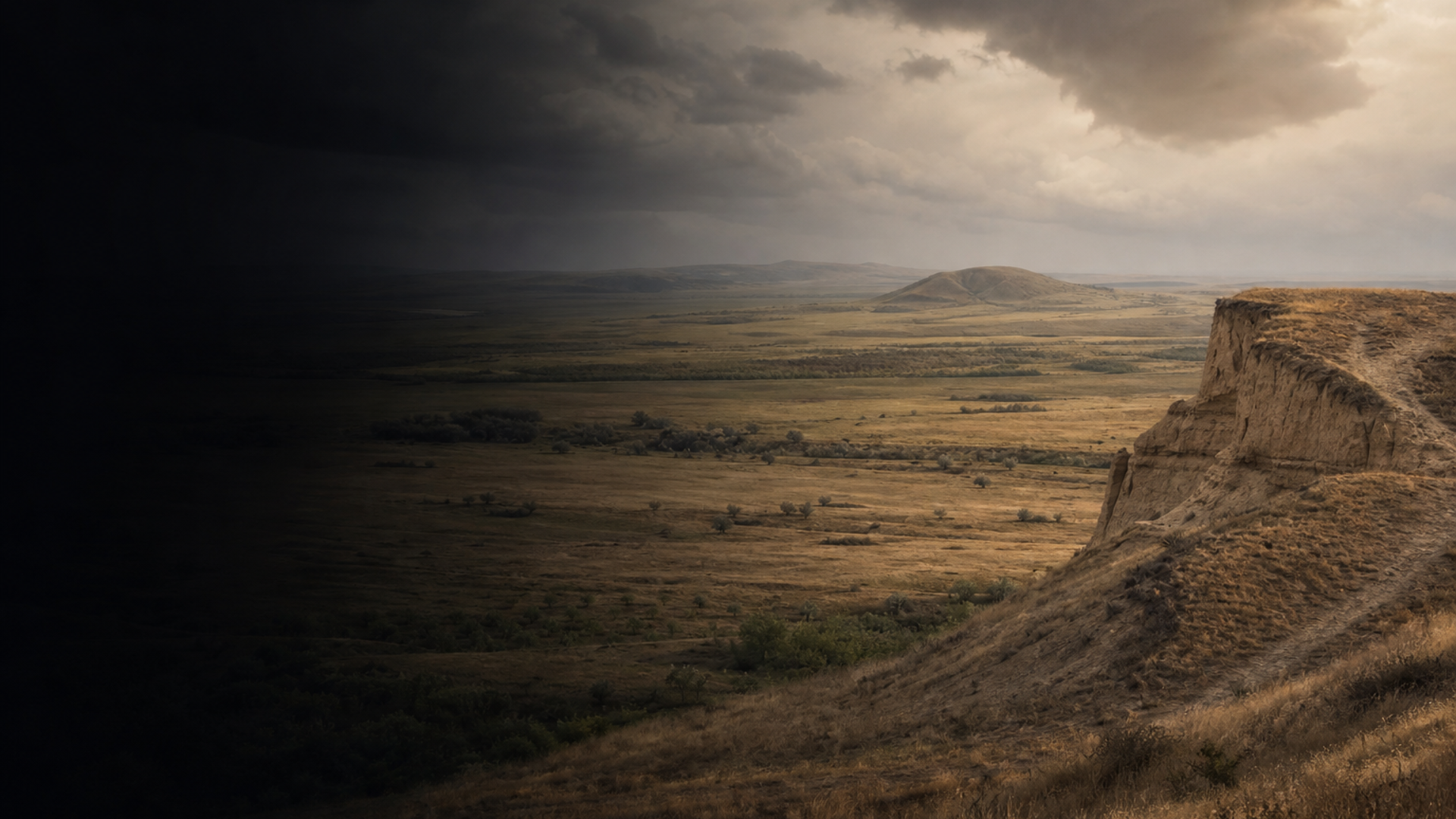
The Great Hungarian Plain is a cinematic landscape of open grasslands that favored mobile herding, seasonal movement, and wide-ranging exchange. Archaeological contexts associated with Scythian horizons in Hungary show a blending of pastoral practices — horse use and cattle herding — with local agriculture and craft production. Graves sometimes contain horse trappings or weaponry emblematic of steppe prestige, while settlement traces suggest mixed economies: households cultivating cereals alongside keeping livestock.

Material culture reflects interaction: metalwork with steppe motifs sits alongside locally made pottery and house plans inherited from earlier Bronze and Iron Age communities. Social organization likely ranged from warrior-elite networks who displayed steppe-style accoutrements to more sedentary farming families who adopted select elements of steppe culture. Trade routes across the plain connected the Carpathian Basin to the Pontic steppe, Central Europe and the Balkans, carrying objects, ideas, and people.

Caution is essential: the human stories we reconstruct from burials and stray finds are partial. In Hungary_IA_Scythian contexts, small sample numbers and broad dating mean that impressions of mobility, hierarchy, and everyday economy are provisional and should be tested against further excavations and DNA sampling.

  • Mixed pastoral and agricultural lifeways on the Great Hungarian Plain
  • Material culture shows synthesis of steppe prestige items and local crafts
Chapter V

Genetic Profile

The genetic dataset labeled Hungary_IA_Scythian comprises eight individuals from the Great Hungarian Plain (sites including Kesznyéten-Szérűskert and Borsodi-Mezőség). Among these limited samples, Y-chromosome lineages include single observations of haplogroups G and R, while mitochondrial DNA is dominated by haplogroup H (four individuals) and includes HV (one individual). These patterns hint at predominantly West Eurasian maternal ancestry within this small group, and a diversity of paternal lineages rather than a single founding male lineage.

It is critical to emphasize the preliminary nature of these findings. With fewer than ten samples, statistical power is low and the temporal span of the material (c. 4000 BCE–100 CE) blurs chronological signal: some samples may predate or postdate the Scythian horizon proper. In broader studies of Scythian-associated populations on the Pontic steppe, archaeogenetic research has often detected mixtures of steppe-derived ancestry with varying eastern contributions; the Hungarian samples neither confirm nor refute those wider patterns on their own.

Interpretive possibilities consistent with the data include: local maternal continuity paired with incoming or mobile paternal lines; exogamous marriage patterns bringing non-local men or women into local groups; and complex, regionally specific admixture over generations. Robust conclusions await larger, temporally controlled datasets that include genome-wide autosomal data, which can resolve proportions of steppe-related and other ancestries.

  • mtDNA dominated by H (4) and HV (1) — suggests local West Eurasian maternal continuity
  • Y-DNA diversity (G, R each observed once) and sample size (8) make conclusions provisional
Chapter VI

Legacy & Modern Connections

The archaeological and genetic traces on the Great Hungarian Plain are echoes rather than direct lines. Scythian material influences contributed to the region's cultural mosaic and left mark on burial rites, metalwork, and social displays. Genetically, limited ancient DNA from Hungary hints that maternal lineages common in modern Europe (haplogroup H) were already present, but the small dataset cannot establish continuity or quantify contribution to contemporary populations.

Modern genetic landscapes are the product of many successive movements and interactions. While steppe-related ancestries associated with Scythian horizons played a role in shaping Iron Age Europe, claiming direct descent from these eight individuals would be unjustified. Instead, these samples offer a cinematic, tentative window into past lives: travelers, traders, horsemen, and farmers whose interactions left both material and genetic traces that future research will clarify.

Visitors and researchers should take away the dual lesson of wonder and caution: the past is rich and evocative, but small datasets require humility and further study.

  • Material and genetic traces suggest influence but not direct, exclusive descent
  • Larger, well-dated ancient DNA studies are needed to map links to modern populations
AI 电源

AI 助手

就 Scythian Hungary: Steppe Echoes 文化提问

AI 助手 由DNAGENICS公司制作

解锁此特性
Ask questions about the Scythian Hungary: Steppe Echoes culture. Our AI assistant can explain genetic findings, historical context, archaeological evidence, and modern connections.
AI 样本分析

Scythian Hungary: Steppe Echoes 文化是人类历史中值得了解的一章……

遗传分析揭示了与早期种群的联系,同时显示了独特的适应和文化创新的证据。 古代DNA样本提供了对迁徙模式、社会结构以及古代种群之间的生物关系的深刻见解。

这是人工智能分析的预览。 解锁全AI 助手, 以探索关于:

  • 遗传组成和祖先
  • 移徙模式和起源
  • 日常生活和文化习俗
  • 现代遗传遗产

探索更古老的文化

揭开古代世界文明的故事

使用优惠码 可减免 35% • 11月12日 到期